Dog owners know the struggle—your furry companion bounds over for a loving nuzzle, only to hit you with a blast of foul breath. While occasional dog breath is normal, persistent odor often signals underlying dental issues. Many pet parents turn to chew treats like rawhide or dental sticks in hopes of freshening their dog’s mouth. But do these products actually help with bad breath, or are they just masking the problem? More importantly, which option is safer and more effective?
This article breaks down the science behind both rawhide chews and dental sticks, evaluates their impact on oral hygiene, and offers evidence-based recommendations to keep your dog’s breath fresher—and their teeth healthier.
The Root Cause of Bad Dog Breath
Before choosing between rawhide and dental sticks, it's essential to understand what causes bad breath in dogs. The most common culprit is plaque buildup. When food particles remain in the mouth, bacteria multiply, forming a sticky biofilm known as plaque. Over time, plaque hardens into tartar, leading to gingivitis, periodontal disease, and chronic halitosis (bad breath).
Other potential causes include:
- Diet high in protein or low-quality ingredients
- Digestive issues or gut imbalances
- Kidney or liver disease (often accompanied by ammonia-like breath)
- Diabetes (sweet or fruity-smelling breath)
- Oral infections or tumors
If your dog has consistently bad breath despite regular chewing, consult a veterinarian. Chronic halitosis may indicate a medical condition requiring professional treatment.
Tip: Check your dog’s gums regularly. Redness, swelling, or bleeding can signal early gum disease—even if breath seems normal.Rawhide Chews: Benefits and Risks
Rawhide chews have long been a staple in many households. Made from the inner layer of cow or horse hides, they’re tough and long-lasting, encouraging prolonged chewing that can mechanically dislodge some plaque.
How Rawhide Works (and Where It Falls Short)
The act of gnawing on rawhide may reduce surface plaque through abrasion. However, rawhide does not contain active ingredients that target odor-causing bacteria or neutralize volatile sulfur compounds responsible for bad breath.
Moreover, rawhide presents several concerns:
- Digestive hazards: Swallowed chunks can cause choking or intestinal blockages.
- Bacterial contamination: Some rawhide products have been recalled due to Salmonella or E. coli.
- Chemical processing: Lower-quality rawhide may be treated with bleach, formaldehyde, or other preservatives.
- Minimal breath-freshening effect: No enzymatic or antibacterial action means no real improvement in oral microbiome balance.
“Rawhide provides mechanical chewing activity, but it doesn’t address bacterial load or pH imbalance in the mouth—the real drivers of bad breath.” — Dr. Laura Bennett, DVM, Veterinary Dental Specialist
While rawhide keeps dogs busy, its benefits for oral health and breath freshness are limited and come with notable risks.
Dental Sticks: Designed for Oral Health
Dental sticks, also called dental chews or veterinary oral health council (VOHC)-approved treats, are formulated specifically to improve canine oral hygiene. Unlike rawhide, many are engineered with texture, shape, and active ingredients to combat plaque, tartar, and odor.
Key Features of Effective Dental Sticks
- Texture: Grooved or bristle-like surfaces that scrub teeth during chewing.
- Size and shape: Designed to reach molars and back teeth where plaque accumulates.
- Active ingredients: Enzymes (like glucose oxidase), chlorophyll, zinc, or polyphosphates that inhibit bacterial growth.
- VOHC certification: Indicates clinical proof of efficacy in reducing plaque or tartar by at least 10–20%.
Brands like Greenies, Dentastix, and C.E.T. Chews have undergone clinical testing showing measurable reductions in plaque and improvements in breath quality when used daily.
Tip: Look for the VOHC seal on packaging—it’s the gold standard for proving a dental product works.Comparative Analysis: Rawhide vs Dental Sticks
| Feature | Rawhide Chews | Dental Sticks |
|---|---|---|
| Plaque Reduction | Minimal (mechanical only) | Moderate to high (mechanical + chemical) |
| Tartar Control | None proven | Yes, clinically tested options available |
| Breath Freshening | Temporary masking only | Active odor neutralization |
| Safety Profile | Risk of choking, obstruction, contamination | Generally safe; monitor for overconsumption |
| VOHC Approval Available? | No | Yes (select brands) |
| Active Ingredients | None | Enzymes, zinc, chlorophyll, polyphosphates |
| Recommended by Vets? | Rarely | Frequently (for approved products) |
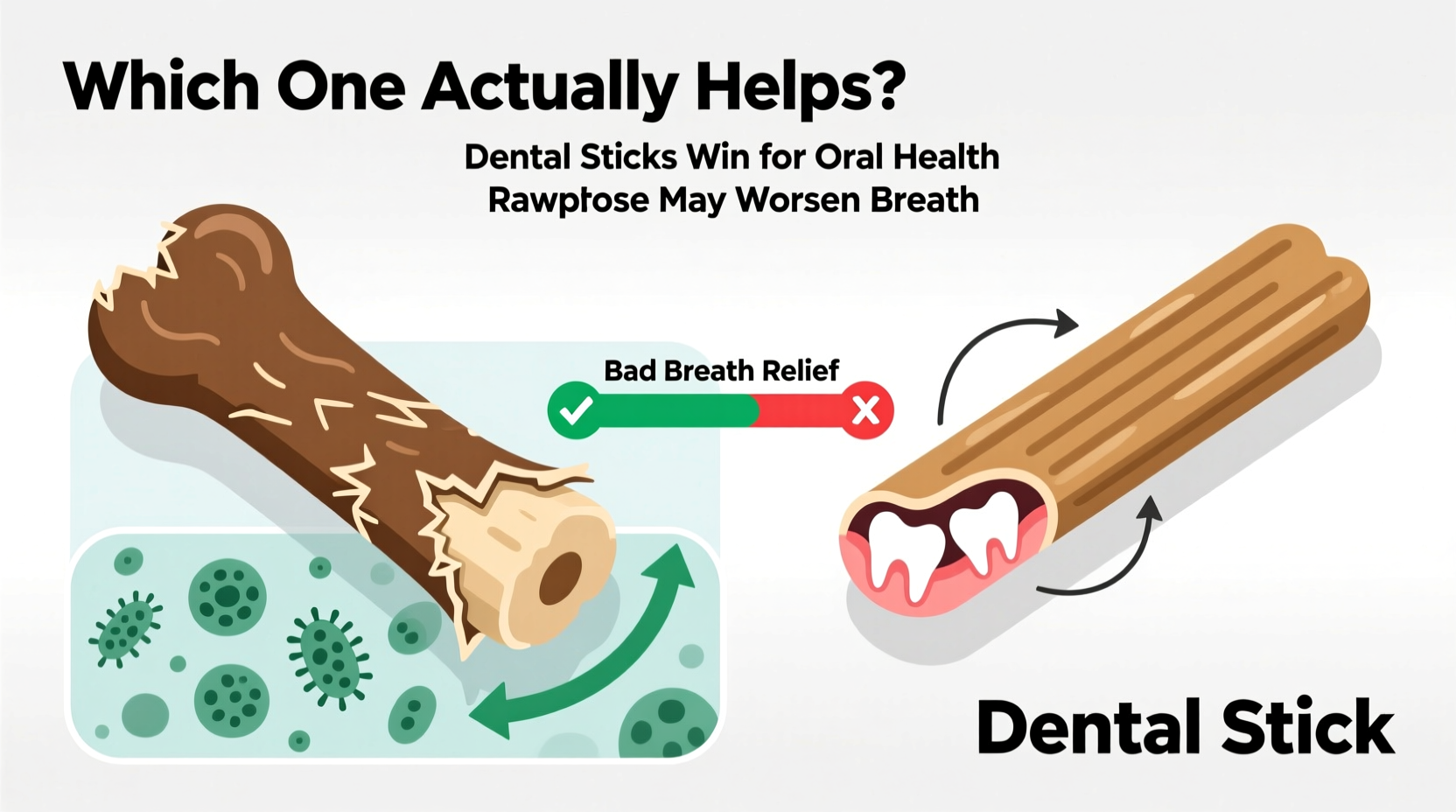
The data clearly favors dental sticks when the goal is measurable improvement in breath and oral health. While rawhide offers chewing satisfaction, it lacks targeted functionality and carries greater risk.
Real-World Example: Max the Beagle
Max, a 5-year-old beagle, had persistent bad breath despite daily rawhide chews. His owner, Sarah, assumed the chews were helping since Max seemed to enjoy them. During a routine checkup, the vet discovered moderate tartar buildup and early gingivitis.
The vet recommended switching from rawhide to a VOHC-approved dental stick (Greenies Daily Dental Treats) and adding weekly tooth brushing. Within six weeks, Sarah noticed Max’s breath was significantly fresher. A follow-up exam confirmed a 30% reduction in plaque and improved gum health.
“I thought rawhide was enough,” Sarah said. “But once we switched to a real dental chew and added brushing, the difference was obvious—not just in his breath, but in how much more comfortable he seemed eating.”
Max’s case illustrates a common misconception: chewing alone isn’t sufficient. Effective breath control requires targeting the biological causes of odor.
Step-by-Step Plan to Combat Bad Dog Breath
Choosing between rawhide and dental sticks is just one part of a broader oral care strategy. Follow this timeline to make lasting improvements:
- Week 1: Assess Current Routine
Track what your dog chews, eats, and how often you clean their mouth. Note breath severity on a scale of 1–10. - Week 2: Schedule a Vet Checkup
Rule out medical causes. Request a dental evaluation. Ask about VOHC-approved products suitable for your dog’s size and breed. - Week 3: Replace Rawhide with Dental Sticks
Choose a VOHC-certified dental chew. Introduce gradually to avoid digestive upset. Monitor for allergies or intolerance. - Week 4: Begin Tooth Brushing (Even 2–3x/Week Helps)
Use dog-safe toothpaste and a soft brush. Start slow—licking the paste off the brush is progress. - Ongoing: Combine Methods
Pair daily dental chews with weekly brushing and annual professional cleanings. Reassess breath monthly.
“Consistency beats intensity. Even five minutes of brushing twice a week, combined with a good dental chew, can prevent up to 70% of periodontal disease.” — Dr. Anita Patel, Board-Certified Veterinary Dentist
Checklist: Choosing the Right Chew for Better Breath
- ☐ Does the product carry VOHC certification for plaque or tartar control?
- ☐ Is it sized appropriately for my dog’s weight and chewing strength?
- ☐ Does it contain breath-fighting ingredients (e.g., chlorophyll, enzymes)?
- ☐ Is it easily digestible and free from artificial colors or fillers?
- ☐ Has my vet approved it, especially if my dog has health conditions?
- ☐ Am I willing to combine it with brushing and regular checkups?
Avoid products that list “wheat, corn, or soy” as primary ingredients—these can promote inflammation and bacterial growth in the mouth.
Frequently Asked Questions
Can dental sticks completely eliminate bad dog breath?
Not always. While high-quality dental sticks significantly reduce plaque and neutralize odor-causing bacteria, they work best as part of a full oral care plan. If bad breath persists despite using dental chews, consult your vet to rule out systemic illness.
Are there natural alternatives to rawhide and commercial dental sticks?
Yes. Some dogs benefit from raw meaty bones (under supervision), beef trachea, or yak milk chews. However, few natural chews have clinical backing for breath improvement. Always prioritize safety—avoid weight-bearing bones or anything too hard that could crack teeth.
How often should my dog use dental sticks?
Most manufacturers recommend one dental stick per day. Overuse can lead to excess calorie intake or digestive discomfort. Adjust portions if your dog is overweight or on a restricted diet.
Conclusion: Prioritize Science Over Tradition
When it comes to combating bad dog breath, dental sticks outperform rawhide in every meaningful category: safety, efficacy, and veterinary endorsement. Rawhide may satisfy a dog’s instinct to chew, but it does little to address the bacterial and structural causes of halitosis. Dental sticks, particularly those with VOHC approval, offer a targeted, research-backed approach to fresher breath and better oral health.
The best outcome comes not from choosing one chew over another in isolation, but from adopting a comprehensive routine—daily dental chews, regular brushing, and professional care. Your dog can’t tell you their teeth hurt, but fresher breath, brighter gums, and enthusiastic chewing are signs they’re feeling better.
🚀 Take action today: Swap out rawhide for a VOHC-approved dental stick, schedule a dental checkup, and try brushing your dog’s teeth—even once this week. Small steps lead to big changes in your dog’s health and comfort.








