When the last slice of pepperoni pizza has been devoured, many diners at Pizza Hut reach for one final indulgence: the chain’s iconic cinnamon roll dessert. Soft, buttery, and generously swirled with cinnamon-sugar, these warm pastries have become a cultural staple in American casual dining. More than just a menu item, Pizza Hut’s cinnamon rolls represent a carefully engineered balance of comfort, convenience, and craveability. Understanding what makes them distinctive—their texture, sweetness level, ingredient composition, and service style—offers insight not only for fans but also for home bakers aiming to replicate or innovate upon this classic treat.
Definition & Overview
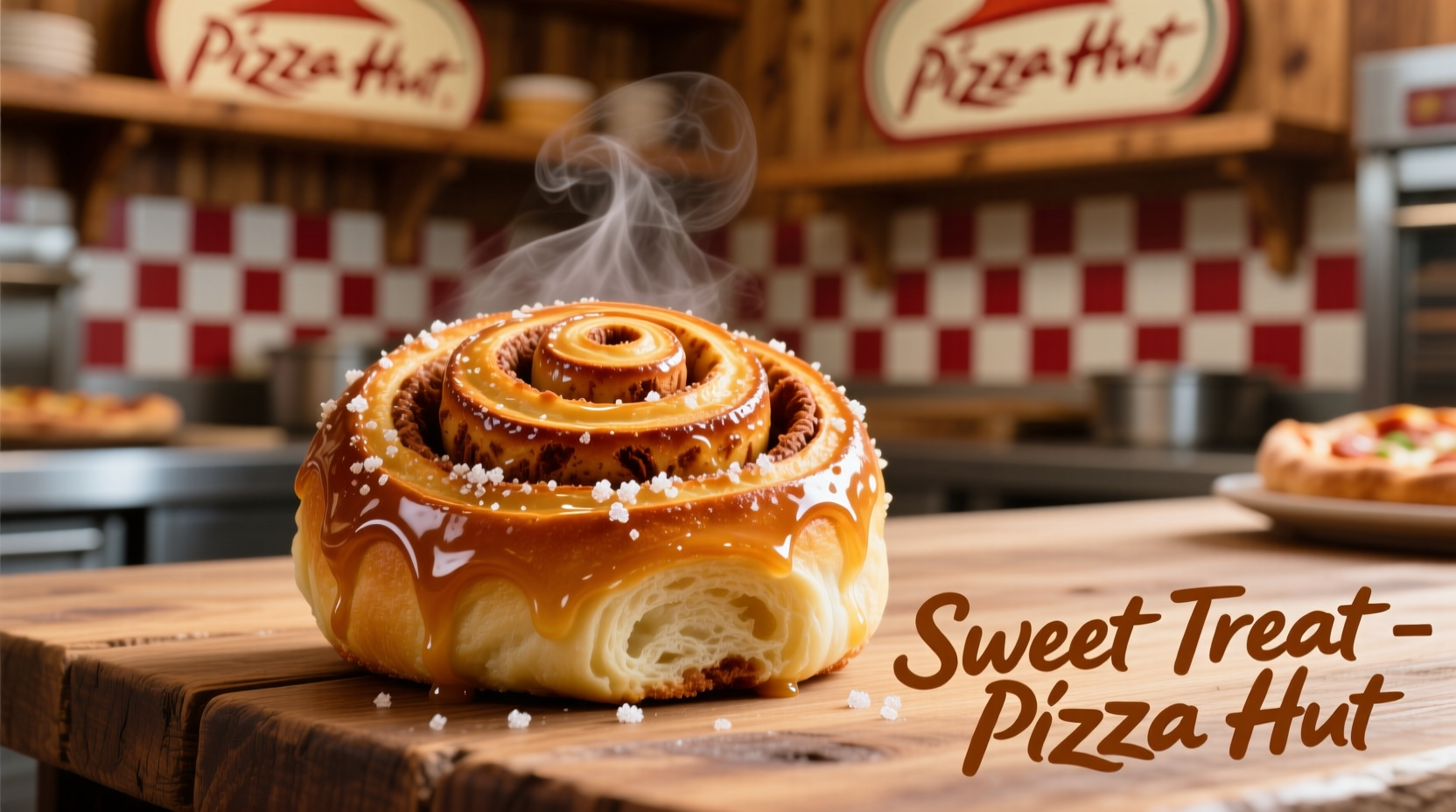
Pizza Hut’s Cinnamon Roll Dessert is a baked sweet roll made from enriched yeast dough, rolled with a cinnamon and sugar filling, then baked until golden and finished with a creamy vanilla icing. Unlike traditional homemade cinnamon rolls that may feature nuts, raisins, or complex spice blends, Pizza Hut’s version focuses on simplicity and consistency, designed for mass production across thousands of locations. Each roll is typically served warm, individually portioned, and presented with a thick drizzle of icing that melts slightly upon contact. The dessert debuted as part of Pizza Hut’s strategy to expand beyond savory offerings and establish itself as a full-meal destination, including dessert.
Categorized as a “bakery-style” dessert, it sits within the broader family of sweet yeast breads. Its flavor profile leans heavily into nostalgic Americana—warm spices, rich dairy notes, and a pronounced sweetness that appeals particularly to younger palates. While variations exist by region and promotional cycle, the core formula remains remarkably consistent, reflecting standardized commercial baking practices used in fast-casual restaurant chains.
Key Characteristics
| Attribute | Description |
|---|---|
| Flavor | Dominant notes of ground cinnamon and granulated sugar, supported by buttery richness from the dough and dairy-based icing. |
| Aroma | Warm, spiced scent detectable immediately upon opening the package; evokes freshly baked goods due to oven-reheating before service. |
| Texture | Soft, pillowy interior with a slight chew; outer crust is tender but not crisp. Filling forms distinct ribbons rather than being fully integrated. |
| Sweetness Level | High—designed for immediate gratification. Icing contributes significantly to overall sugar content. |
| Size & Portion | Approximately 4–5 inches in diameter, meant for individual consumption (one roll per serving). |
| Temperature | Served warm (typically reheated in convection oven or microwave), enhancing aroma and softness. |
| Shelf Life | Pre-baked and frozen at central facilities; once thawed and reheated, best consumed within 2 hours for optimal quality. |
| Allergens | Contains wheat, milk, eggs, soy; produced in facilities where tree nuts may be present. |
Practical Usage & Serving Context
In a restaurant setting, Pizza Hut’s cinnamon roll functions as a closing note—a dessert that provides emotional satisfaction through warmth, sweetness, and familiarity. It is most commonly ordered after a meal of pizza and breadsticks, acting as a palate reset with its sugary contrast to savory flavors. The rolls are often marketed as “limited-time offers” or bundled with meals during holiday seasons, though they remain available year-round in most U.S. locations.
For home culinary application, the key to mimicking Pizza Hut’s version lies in understanding their operational workflow. The rolls are not baked fresh daily on-site but are instead shipped frozen and reheated quickly to order. This means replicating them requires either using a high-quality frozen dough base or preparing a batch of enriched dough ahead of time and finishing it under controlled heat.
To serve like Pizza Hut:
- Reheat the roll in a preheated oven at 325°F (163°C) for 5–7 minutes until center reaches 140°F (60°C).
- Apply icing immediately after removal from oven so it slightly melts into the surface.
- Use tongs or parchment paper to transfer without compressing the delicate structure.
- Present on a small plate or branded container, ideally with a napkin and optional plastic fork.
Pro Tip: For enhanced authenticity, brush the reheated roll with melted butter before applying icing. This recreates the glossy sheen and richer mouthfeel found in-store.
Variants & Types
While the original cinnamon roll remains the flagship dessert, Pizza Hut has introduced several variants over the years, adapting to seasonal trends and regional preferences:
- Original Cinnamon Roll: Standard version with cinnamon-sugar swirl and vanilla icing. Available individually or in two-packs.
- Doubles Cinnamon Rolls: Larger format, approximately twice the size, intended for sharing. Often promoted during value campaigns.
- Seasonal Flavors: Limited editions such as pumpkin spice (fall), peppermint (winter holidays), or caramel apple (autumn). These modify the filling or topping while retaining the same dough base.
- Mini Cinnamon Bites: Bite-sized pieces served in cups, sometimes offered as samples or kids’ meal options. Ideal for tasting without full commitment.
- Chocolate Swirl Version: Experimental product tested in select markets, replacing cinnamon with cocoa-nutella blend. Did not achieve widespread rollout.
The choice between types depends on context: individuals seeking quick satisfaction opt for singles, families may prefer doubles, and adventurous eaters look for seasonal releases. Notably, all versions maintain the same underlying dough formulation—rich with milk, butter, sugar, and eggs—which ensures brand continuity even when fillings vary.
Comparison with Similar Desserts
Pizza Hut’s cinnamon roll occupies a unique space between artisanal bakery items and mass-market convenience foods. To understand its position, consider how it compares to other well-known versions:
| Dessert | Similarities | Differences |
|---|---|---|
| Homemade Cinnamon Rolls | Same basic components: yeast dough, cinnamon, sugar, icing. | Artisan versions use higher butter content, proof longer, and often include custom spices (nutmeg, cardamom). Texture is airier and less uniform. |
| McDonald’s Cinnamon Melts | Both are fast-food sweet rolls served warm with icing. | McDonald’s uses flaky pastry similar to croissants; smaller, crispier exterior, less doughy interior. |
| Pillsbury Canned Cinnamon Rolls | Nearly identical processing method: pre-made, frozen, oven-ready. | Pillsbury rolls are smaller, drier, and contain more artificial preservatives. Icing is thicker and sweeter. |
| Great Harvest Bakery Rolls | Both emphasize freshness and handcrafted appeal. | Great Harvest uses whole grains, natural leavening, and local ingredients. Significantly pricier and less accessible. |
This comparison reveals Pizza Hut’s strategic middle ground: fresher-tasting than ultra-processed grocery store options, yet more affordable and scalable than boutique bakeries. The chain leverages industrial efficiency without entirely sacrificing sensory pleasure.
Ingredient Breakdown & Culinary Function
The success of Pizza Hut’s cinnamon roll hinges on precise ingredient ratios optimized for taste, shelf stability, and reheating performance. A close analysis of publicly disclosed formulations (via nutrition labels and supplier data) suggests the following composition:
Dough Base
- Enriched Wheat Flour: Provides gluten structure and browning capability.
- Milk Solids: Enhance tenderness and contribute to golden crust color.
- Butter (or Butter Oil): Adds richness and mouthfeel; partially hydrogenated versions may be used for extended shelf life.
- Eggs: Improve elasticity and help retain moisture during freezing/thawing cycles.
- Sugar: Feeds yeast during initial fermentation and contributes to caramelization.
- Yeast: Activated during factory baking; residual activity minimal by point of sale.
Filling
- Granulated Sugar: Primary sweetener, creates textural contrast when melted.
- Ground Cinnamon: Sourced for consistent potency; likely Indonesian or Chinese cassia for bold flavor.
- Vegetable Shortening: Acts as binder to prevent leakage during transport and ensure even distribution.
Icing
- Powdered Sugar: Base for smooth, spreadable consistency.
- Partially Hydrogenated Soybean Oil: Prevents separation and maintains viscosity at room temperature.
- Vanilla Flavoring: Artificial or nature-identical compound for cost-effective aroma delivery.
- Whey Powder: Adds slight tang and improves adhesion to warm surfaces.
Each component serves both a functional and sensory role. For example, the inclusion of shortening in the filling prevents syrup formation during reheating—a common flaw in amateur attempts where sugar liquefies and burns. Similarly, the icing’s oil content allows it to remain pliable even after cooling, avoiding the chalky dryness seen in some homemade frostings.
Practical Tips & FAQs
Can you buy Pizza Hut cinnamon rolls in stores?
No, Pizza Hut does not currently sell its cinnamon rolls in retail supermarkets. They are exclusive to restaurant locations and delivery channels. However, third-party brands like Rhodes or Annie’s offer frozen rolls inspired by the concept.
How do you reheat them at home for best results?
If you’ve brought leftovers home, reheat in a 300°F (150°C) oven for 6–8 minutes. Avoid microwaving unless necessary—while faster, it can create sogginess. If using a microwave, cover loosely with a paper towel and heat in 15-second intervals.
Are they vegan or dairy-free?
No. The dough contains milk and butter, and the icing includes whey and powdered dairy. There is no plant-based alternative currently offered by Pizza Hut in the U.S.
What’s the calorie count?
One standard cinnamon roll contains approximately 580–620 calories, with 22–25 grams of fat and 90–100 grams of carbohydrates. The icing accounts for nearly 30% of total sugar content.
Can you make them from scratch to taste like Pizza Hut’s?
Yes—with careful attention to technique. Use a high-hydration enriched dough (brioche-style), roll thinly, apply a paste-like filling (mix sugar, cinnamon, and softened butter), and finish with an oil-stabilized icing. Proof properly before baking, then freeze individually. Reheat before serving with fresh icing.
Do they contain trans fats?
As of 2024, major Pizza Hut markets comply with FDA bans on artificial trans fats. Most locations use reformulated shortenings free of partially hydrogenated oils, though trace amounts may still occur due to supply chain variability.
Why do they always serve them warm?
Heat amplifies aroma compounds in cinnamon and vanilla, increasing perceived flavor intensity. Warmth also softens the icing, allowing it to integrate with the roll rather than sit inertly on top. From a psychological standpoint, warmth signals freshness and care, elevating customer satisfaction.
Storage Tip: Unbaked frozen rolls can be stored in a home freezer for up to 3 months. Thaw overnight in the refrigerator before reheating to preserve texture.
Expert Insight: The Science of Comfort Food
“Cinnamon rolls succeed because they engage multiple senses simultaneously—warmth, smell, sweetness, and soft texture. Chains like Pizza Hut optimize for ‘hedonic eating,’ where pleasure outweighs nutritional logic. The consistency of the experience is just as important as the taste.” — Dr. Elena Torres, Food Psychologist & Sensory Researcher, Cornell University
This observation underscores why Pizza Hut invests heavily in maintaining tight control over preparation protocols. Even minor deviations—such as under-heating or delayed icing application—can diminish the multisensory impact that drives repeat purchases.
Summary & Key Takeaways
Pizza Hut’s Cinnamon Roll Dessert is more than a simple after-dinner treat—it’s a calculated exercise in food engineering, sensory psychology, and operational scalability. By combining an enriched yeast dough with a stable cinnamon-sugar filling and a melt-in-the-mouth icing, the chain delivers a reliably satisfying experience across diverse locations and service modes.
The key elements that define its success include:
- A soft, buttery texture achieved through enriched dough and controlled baking.
- A bold cinnamon-sugar swirl that maintains integrity during freezing and reheating.
- An oil-based icing designed to adhere and slightly penetrate the warm surface.
- Consistent portioning and temperature management to maximize consumer appeal.
- Strategic deployment of limited-time variants to sustain interest and drive traffic.
For culinary enthusiasts, studying this dessert offers valuable lessons in balancing flavor, function, and feasibility. Whether enjoyed in-store or recreated at home, Pizza Hut’s cinnamon roll endures as a symbol of accessible indulgence—one that continues to shape expectations for dessert in the fast-casual landscape.
Challenge Yourself: Try making a homemade version using brioche dough, a cinnamon-butter paste, and a stabilized glaze with vegetable shortening. Compare side-by-side with the original to refine your technique.









