Red wine on the carpet is a classic household crisis—especially when your dog is sniffing curiously at the stain before you’ve even grabbed a towel. In that moment, urgency takes over: you reach for the nearest cleaner, spray liberally, and wipe fast. But what if that “natural” vinegar spray contains essential oils? Or that enzymatic cleaner has xylitol listed in tiny print? What if your dog licks residual moisture off the floor minutes later? These aren’t hypothetical concerns. Veterinary toxicology reports show a 22% year-over-year rise in household cleaning–related canine poisonings (ASPCA Animal Poison Control Center, 2023), with food-and-beverage spills—especially wine—acting as frequent catalysts for unsafe cleanup choices.
Wine isn’t just pigment and tannins. It contains ethanol (even in small amounts post-spill), sugars that attract ants—and inadvertently dogs—and organic acids that interact unpredictably with common cleaners. When combined with a curious, ground-level companion who grooms paws, sniffs freshly cleaned surfaces, or drinks from puddles left behind, the margin for error shrinks dramatically. This article cuts through marketing claims and ingredient ambiguity. It details exactly which cleaning agents are verified safe *during and after* use around dogs, explains why some “pet-friendly” labels mislead, and walks through a medically sound, step-by-step response to wine spills—no guesswork, no risk.
Why Wine Spills Trigger Unique Risks for Dogs
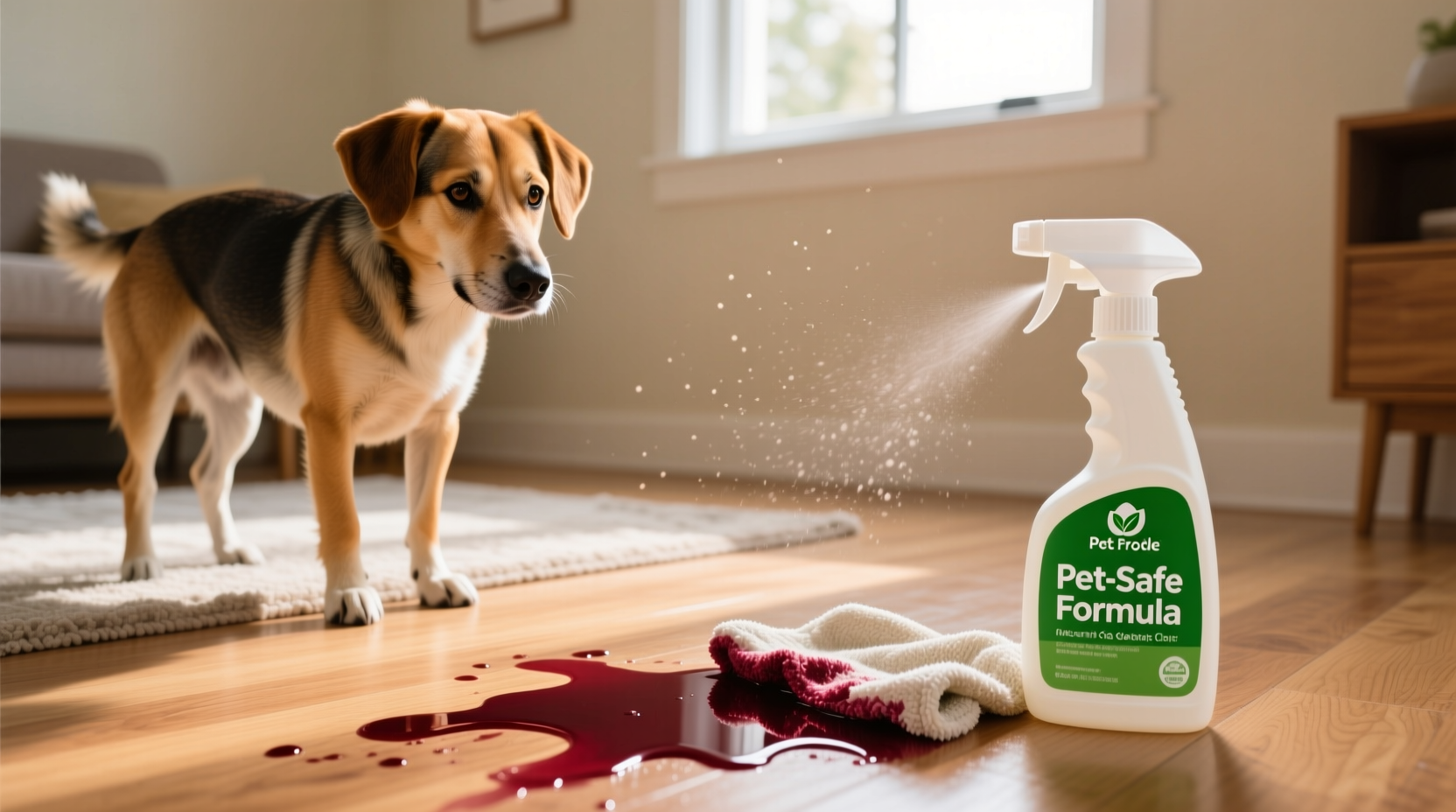
Unlike coffee or juice, spilled wine presents three overlapping hazards: chemical, biological, and behavioral. First, ethanol residue—even from evaporated wine—can be absorbed through a dog’s paw pads or ingested during self-grooming. While a few licks of fresh spill rarely cause toxicity in healthy adult dogs, repeated exposure or ingestion of concentrated residues (e.g., from a soaked rug pad) may lead to lethargy, vomiting, or loss of coordination—particularly in small breeds or puppies.
Second, the sugar and acidity in wine create an ideal breeding ground for Candida and Aspergillus molds within 12–24 hours, especially in humid climates or deep-pile carpets. These molds produce mycotoxins that, when inhaled or licked, can trigger allergic dermatitis or respiratory irritation in sensitive dogs.
Third, dogs’ natural investigative behavior amplifies risk. A 2022 University of Pennsylvania study observed that dogs spend an average of 47 seconds per minute sniffing floor-level surfaces post-cleaning—nearly triple the time spent near walls or furniture. That means residual cleaner scent, taste, or film doesn’t just linger—it’s actively sampled.
“Owners often assume ‘non-toxic to humans’ equals safe for pets. But dogs metabolize chemicals differently—especially via oral and dermal routes—and their smaller body mass means lower thresholds for adverse effects.” — Dr. Lena Torres, DVM, Board-Certified Veterinary Toxicologist, ASPCA APCC
Pet-Safe Cleaning Solutions: What Works—and Why
Not all “natural” cleaners are equal. Safety depends on concentration, pH, volatility, and whether active ingredients degrade into harmless byproducts. Below is a breakdown of proven-effective, veterinarian-endorsed options:
- 3% Food-Grade Hydrogen Peroxide (diluted 1:1 with water): Breaks down anthocyanin pigments in red wine without leaving toxic residue. Must be used fresh (unstabilized) and never mixed with vinegar or bleach. Safe once fully air-dried (typically 15–20 minutes).
- Plain Cold Water + Microfiber Towel (blotting only): The safest first response. Cold water prevents heat-setting tannins; microfiber lifts liquid without spreading. No chemistry—just physics and patience.
- Unscented, Soap-Free Castile Liquid (pH 8.5–9.0, diluted 1 tsp per cup of water): Plant-based surfactants clean gently without stripping natural oils from paw pads. Avoid peppermint-, tea tree-, or citrus-infused versions—these contain compounds neurotoxic to dogs.
- Veterinary-Approved Enzymatic Cleaners (e.g., Nature’s Miracle Advanced Stain & Odor Remover): Contains protease and amylase enzymes that digest organic wine residues—not just mask odor. Must be left damp for 10+ minutes to work; rinse thoroughly afterward to prevent sticky residue that attracts dirt and licking.
What to Avoid: The Hidden Dangers in Common Cleaners
Many products marketed as “green,” “eco-friendly,” or “safe for kids and pets” contain ingredients that are anything but safe for dogs. Here’s what to skip—and why:
| Cleaner Type | Common Ingredients | Risk to Dogs | Safer Alternative |
|---|---|---|---|
| Vinegar-Based Sprays | White vinegar (5% acetic acid), essential oils (eucalyptus, lemon, lavender) | Acidic pH irritates paw pads; essential oils cause tremors, liver damage, or aspiration pneumonia if inhaled | Diluted hydrogen peroxide or cold water only |
| Baking Soda Pastes | Sodium bicarbonate + water or vinegar | High alkalinity (pH ~9) disrupts skin barrier; if ingested in quantity, causes metabolic alkalosis and electrolyte imbalance | Castile solution or enzymatic cleaner |
| “Natural” Disinfectant Wipes | Benzalkonium chloride, ethanol, propylene glycol | Benzalkonium is corrosive to mucous membranes; ethanol absorption through paw pads can cause intoxication | Microfiber + cold water, followed by air-drying |
| Fragranced Carpet Shampoos | Phthalates, synthetic musks, limonene | Linked to endocrine disruption and respiratory sensitization in chronic exposure studies | Enzymatic cleaner + low-moisture extraction (dry towel rolling) |
Step-by-Step: The Medically Sound Wine Spill Response (Under 5 Minutes)
This protocol prioritizes speed, safety, and efficacy—designed to minimize both stain setting and canine exposure. Follow it precisely:
- Immediate Containment (0–30 seconds): Gently but firmly guide your dog away using a verbal cue (“Let’s go”) and a treat lure—never yell or chase. Block access with a baby gate or crate if needed. Do not let them investigate the spill.
- Blot—Don’t Rub (30 sec–2 min): Fold a clean, dry microfiber towel into quarters. Press firmly straight down onto the spill. Lift—don’t slide. Repeat with fresh towel sections until no more color transfers. Never scrub: friction embeds pigment deeper.
- Apply Cold Water Only (2–3 min): Dampen a new microfiber towel with cold (not icy) tap water. Blot again. Cold water halts tannin oxidation—the process that turns purple stains brown and permanent.
- Choose & Apply Final Cleaner (3–4.5 min): If stain remains, apply one of the vet-approved solutions above. For hard floors: hydrogen peroxide mix. For rugs/upholstery: enzymatic cleaner applied generously enough to saturate the backing layer (but not pool). Let sit 10 minutes—do not walk away or allow dog access.
- Rinse & Dry Thoroughly (4.5–5 min+): Blot excess with dry towel. For rugs, place dry towels weighted with books over the area for 30 minutes to wick moisture. Ensure full air-drying before allowing dog back—use a fan if humidity is high. Verify no dampness remains with the back of your hand.
Real-World Case Study: When “Safe” Wasn’t Safe Enough
In March 2023, a 7-month-old Cavalier King Charles Spaniel named Milo was brought to the UC Davis Veterinary Medical Teaching Hospital after developing sudden ataxia and hypersalivation. His owner had cleaned a Cabernet spill on their wool area rug using a popular “plant-powered” stain remover labeled “pet-safe.” Lab analysis revealed the product contained 0.8% clove bud oil—an ingredient not listed on the front label but buried in the INCI (International Nomenclature of Cosmetic Ingredients) list online. Clove oil’s eugenol compound is rapidly absorbed through oral mucosa and causes central nervous system depression in dogs at doses as low as 0.1 mL/kg. Milo received IV fluids and supportive care for 36 hours and made a full recovery—but his case underscores a critical gap: “pet-safe” labeling is unregulated in the U.S., and ingredient transparency remains voluntary.
The takeaway? Always cross-check full ingredient lists—not marketing claims—and when in doubt, default to cold water and mechanical removal. As Dr. Torres notes: “If you can’t pronounce it *and* verify its safety in veterinary toxicology databases like ASPCA APCC or Pet Poison Helpline, don’t use it where your dog lives.”
Frequently Asked Questions
Can I use club soda to clean wine spills around my dog?
No. While club soda’s mild carbonation may lift surface pigment temporarily, its sodium content (up to 75 mg per ounce) poses a risk if licked repeatedly—especially for dogs with heart or kidney conditions. More critically, the dissolved CO₂ creates transient acidity that can irritate sensitive paw pads. Cold still water is safer and equally effective for initial blotting.
My dog licked a wine-stained rug before I cleaned it. Should I call the vet?
Yes—if your dog consumed more than a teaspoon of fresh wine (especially if under 10 lbs), or if they’re showing signs like disorientation, vomiting, or weakness. Even small amounts of ethanol can affect puppies, seniors, or dogs on certain medications (e.g., NSAIDs or sedatives). Call your vet or the ASPCA Animal Poison Control Center (888-426-4435) immediately—they’ll assess risk based on weight, breed, and clinical signs, often without charging for consultation.
Are homemade cleaners like vinegar + baking soda ever safe for dogs?
Not for wine spills—and rarely in general. The fizzing reaction between vinegar and baking soda produces mostly water and sodium acetate, but also releases carbon dioxide gas that can startle or stress dogs. More importantly, the resulting solution is highly alkaline (pH ~8.3) and leaves a residue that attracts dust and microbes. It offers no enzymatic or oxidative action against wine tannins. Stick to vet-validated methods instead.
Conclusion: Clean Confidently—Not Just Conveniently
Protecting your dog during routine household moments shouldn’t require decoding chemical jargon or memorizing toxicology charts. It requires knowing which tools are truly safe—and having the confidence to use only those. Wine spills will happen. Your dog’s curiosity won’t fade. But with cold water as your first responder, hydrogen peroxide or enzymatic cleaners as your targeted allies, and strict adherence to drying protocols, you eliminate nearly all preventable risk. You don’t need more products—you need better precision. You don’t need faster fixes—you need safer ones. Every time you choose a vet-reviewed method over a flashy label, you reinforce a simple truth: care isn’t measured in speed or shine, but in quiet vigilance and science-backed choices.
💬 Your experience matters. Have you used a pet-safe wine stain solution that worked—or one that didn’t? Share your real-world tip in the comments below. Your insight could help another dog parent avoid a trip to the emergency vet.








