Hosting friends for drinks shouldn’t mean holding your breath every time someone sets down a glass—or worse, rushing to wipe up a spill while your dog sniffs the floor like it’s a forensic crime scene. Dogs don’t understand “this is wine, not water.” They understand scent, texture, movement—and opportunity. A spilled cocktail, a forgotten beer on the coffee table, or even a dropped olive skewer can trigger curiosity that leads to ingestion, choking, or alcohol toxicity. According to the ASPCA Animal Poison Control Center, alcoholic beverages rank among the top 10 human foods reported as toxic to dogs each year—and many incidents occur during casual home entertaining. Creating truly pet-safe drink zones isn’t about restricting hospitality; it’s about thoughtful design, proactive boundaries, and consistent habits that protect your dog without compromising your guests’ comfort.
Why “Just Watch Him” Isn’t Enough
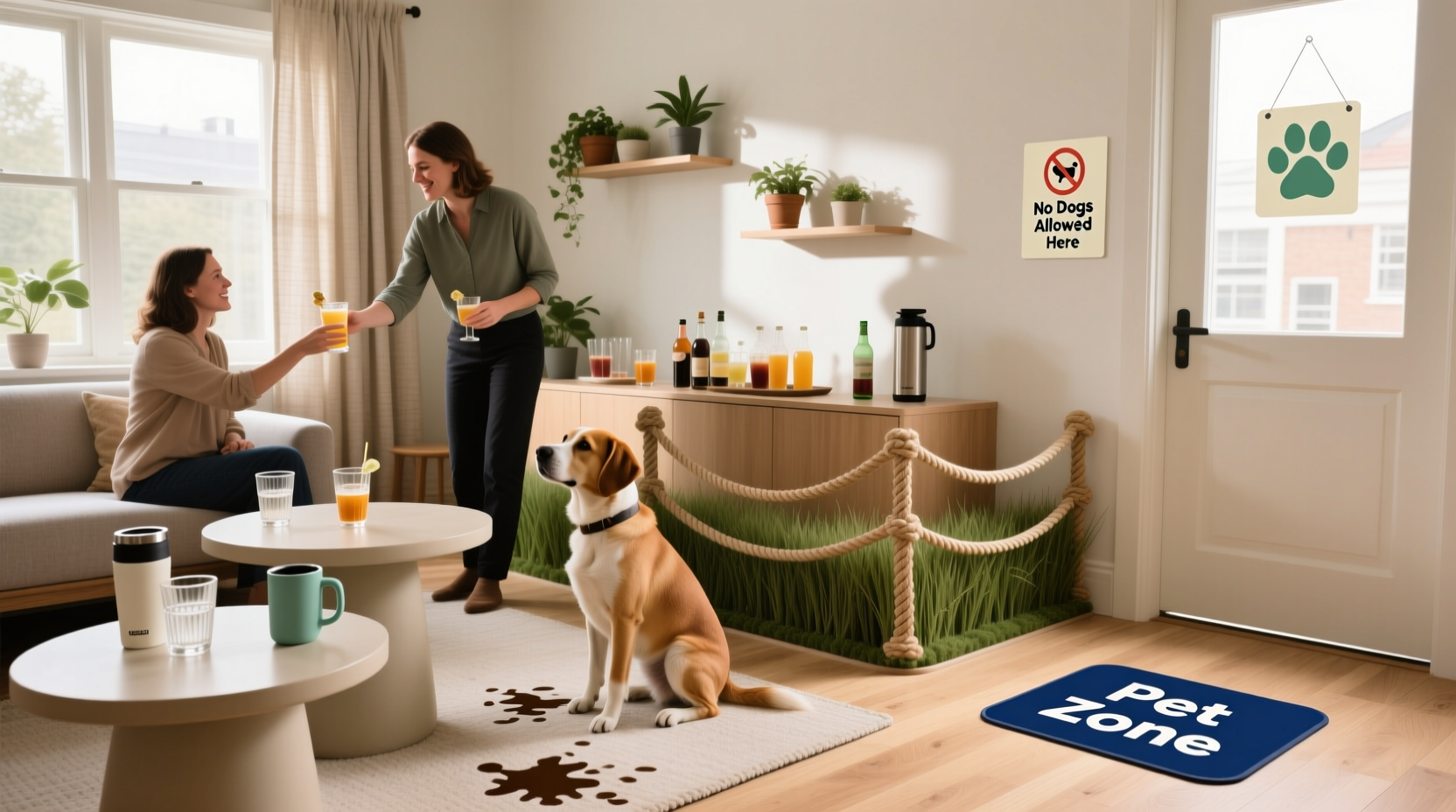
Well-meaning advice like “keep an eye on him” fails under real-world conditions. When you’re greeting guests at the door, refilling ice buckets, or stepping into the kitchen to grab more napkins, attention fractures. Dogs operate on instinct—not intention. A curious nose, a quick lean, a momentary lapse in supervision: that’s all it takes. Research published in Frontiers in Veterinary Science shows that dogs exhibit peak exploratory behavior in novel social environments—especially around unfamiliar scents and objects placed at nose level (like low-slung trays or unattended coasters). Their olfactory receptors are 40 times denser than ours, making spilled citrus, fermented hops, or sugary syrups intensely compelling. Worse, many common drink components—grapes (in wine), xylitol (in sugar-free mixers), caffeine (in energy drinks), and ethanol itself—are rapidly absorbed and metabolized differently in dogs than in humans. Even small amounts can cause vomiting, disorientation, tremors, or life-threatening drops in blood sugar and body temperature.
Tip: Never assume your dog “knows better.” Dogs learn through repetition and consequence—not abstract rules. If he’s ever gotten a treat or attention after investigating a drink station, he’s been reinforced to do it again.Designing the Pet-Safe Drink Zone: 5 Non-Negotiable Principles
A pet-safe drink zone isn’t just a corner with a bowl of water—it’s a deliberately engineered space that minimizes temptation, eliminates access points, and redirects natural behavior. These five principles form the foundation:
- Elevation & Containment: All drink service must occur above canine reach (minimum 36 inches) and within enclosed or barrier-protected surfaces (e.g., bar carts with enclosed lower shelves, countertops with defined edges, or freestanding drink stations with built-in railings).
- Zero-Tolerance Spill Protocol: Every spill—even a single drop—is cleaned immediately using pet-safe enzymatic cleaners (never vinegar or citrus-based solutions, which can attract rather than deter). Towels or cloths used for cleanup go straight into a sealed laundry bin—not draped over chairs where scent lingers.
- Strategic Distraction Anchoring: Place your dog’s high-value chew (e.g., a frozen KONG stuffed with pumpkin and peanut butter) or interactive puzzle toy *away* from the drink zone—but within sightline and earshot—15 minutes before guests arrive. This establishes calm anticipation, not reactive guarding or scavenging.
- Guest Communication Without Guilt: Brief, warm, non-apologetic cues work best: “Hey, we’ve got a curious pup who loves investigating new smells—would you mind keeping glasses on the bar? I’ll bring coasters right over!” Most guests appreciate clarity and feel empowered to help.
- Exit Path Clarity: Ensure your dog has unobstructed access to his designated quiet zone (crate, bed, or gated room) with familiar bedding, water, and a long-lasting chew. This isn’t punishment—it’s offering choice and reducing stress-induced scavenging.
Do’s and Don’ts: The Host’s Quick-Reference Table
| Action | Do | Don’t |
|---|---|---|
| Drink Placement | Use tiered bar carts with upper shelves only for drinks; reserve lower shelves for non-food items (napkins, stirrers, coasters) | Place drinks on low furniture (ottomans, coffee tables, floor-level trays) or unsecured ledges |
| Spill Response | Clean immediately with a 1:1 white vinegar + water solution *only* on non-porous surfaces (tile, sealed wood); follow with pet-safe enzymatic spray | Leave spills unattended—even for “just a minute”—or use citrus-scented cleaners (which mimic food odors) |
| Guest Beverages | Offer clearly labeled “Dog-Safe Hydration Station” with fresh water, ice, and mint-infused cucumber slices in a separate, elevated bowl | Allow guests to place personal drinks on any surface—including sofas, armrests, or side tables near dog beds |
| Dog Supervision | Assign one trusted guest or family member as the “Pup Patrol” with light duties: redirecting sniffs, offering approved chews, checking crate comfort | Rely solely on children, distracted guests, or intermittent glances from the host |
| Post-Event Reset | Inspect all surfaces—including baseboards, chair legs, and under furniture—for sticky residue or stray garnishes before releasing your dog | Assume “it’s fine” once guests leave—residue attracts dogs hours later |
Real Example: How Maya Prevented a Crisis During Her Backyard Brunch
Maya hosted eight friends for a Saturday mimosa brunch. Her 3-year-old Labrador, Leo, had previously licked spilled orange juice off the patio stones—and then vomited twice. She knew citrus wasn’t toxic, but the pattern worried her: Leo associated outdoor gatherings with “findable treats.” So she redesigned her approach. First, she moved the entire drink station to a repurposed antique secretary desk (42 inches tall, with a locked lower cabinet for supplies). She added a removable acrylic guard along the front edge—low enough not to block conversation, high enough to prevent paw-reach. She pre-filled mason jars with chilled OJ and prosecco in separate, clearly labeled pitchers—and served only in stemmed glasses. Before guests arrived, she gave Leo a frozen bone broth cube in his crate with the door open, placed beside his favorite blanket. When a guest accidentally knocked over a glass, Maya’s partner—who’d volunteered as Pup Patrol—immediately wiped it with a pre-moistened pet-safe pad while Maya handed Leo a fresh bully stick. No sniffing. No licking. No incident. Later, Maya found three stray blueberries (a garnish) stuck in the grout near the deck stairs—picked up before Leo ever wandered that way. “It wasn’t about restriction,” she told us. “It was about removing the question. He didn’t have to choose between curiosity and safety—because safety was already built in.”
Expert Insight: What Veterinarians See in the ER
Dr. Lena Torres, DVM, DACVECC, who oversees emergency cases at the MetroVet Critical Care Center, sees predictable patterns every holiday season and summer weekend: “We get two types of alcohol-related cases: the ‘one sip’ scenario—where a dog laps up spilled sangria or champagne—and the ‘hidden hazard’ case, where owners think ‘it’s just a little rum cake’ or ‘they won’t notice the grapes in the fruit platter.’ But dogs don’t parse intent. They parse volatility. Ethanol depresses the central nervous system faster in dogs because they lack the liver enzymes humans use to metabolize it efficiently. A 25-pound dog drinking two tablespoons of wine can develop ataxia—wobbly gait, drooling, lethargy—within 30 minutes. And if that same dog also ingests xylitol from a sugar-free mixer? That’s hypoglycemia on top of neurologic depression. Prevention isn’t cautious—it’s architectural. It’s designing the environment so the dangerous choice isn’t physically available.”
“Alcohol toxicity in dogs isn’t rare—it’s underreported. By the time owners recognize symptoms, the dog may already be in crisis. The safest dose of alcohol for your dog is zero. Full stop.” — Dr. Lena Torres, Board-Certified Veterinary Emergency & Critical Care Specialist
Step-by-Step: Building Your Drink Zone in Under 20 Minutes
You don’t need to renovate your home. With focused preparation, you can establish a fully functional pet-safe drink zone before your next gathering:
- Identify Your Anchor Surface (2 min): Choose one stable, elevated surface—kitchen island, dining buffet, bar cart, or even a sturdy folding table. Measure height: if under 36”, add non-slip risers or stack books beneath legs (secure with tape).
- Install Physical Boundaries (5 min): Use removable acrylic or wooden railings (available at hardware stores), tension-mounted curtain rods across open shelves, or even rolled-up towels secured with rubber bands along the front edge. Goal: no paws or noses can cross the plane.
- Pre-Stage Supplies (4 min): Fill pitchers with non-alcoholic bases (sparkling water, cold brew concentrate, ginger beer). Pre-chill glasses. Store garnishes (olives, cherries, citrus wheels) in lidded containers—not open bowls. Keep a dedicated “spill kit” nearby: microfiber cloths, pet-safe enzymatic cleaner, and a small trash bag.
- Set Up Dog Distraction (3 min): Prepare one high-value chew (e.g., a stuffed Kong frozen overnight) and place it in your dog’s quiet zone. Add a soft blanket and fresh water in a non-tip bowl. Turn on calming music or a low-volume nature podcast—auditory cues reduce environmental arousal.
- Brief Your Team (3 min): Tell one or two guests: “Leo’s crate is open and he’s got a chew—he might pop in and out. If you see him heading toward the bar, a gentle ‘Hey Leo, come here!’ and tossing a treat *away* from the drinks works wonders. No need to shoo—just redirect.”
- Final Walkthrough (3 min): Crawl on your hands and knees. Look for anything within 18 inches of the floor that smells or looks like food/drink: stray ice cubes, fallen herbs, damp coasters, sticky chair legs. Remove or clean it.
Frequently Asked Questions
What if my dog is crate-trained but hates being confined during parties?
Respect that boundary. Instead, use a baby gate to section off a quiet room with his bed, water, and enrichment toys—keeping the door open so he can enter and exit freely. Pair the space with positive associations: give him a special chew only during gatherings, play his favorite calming audio track, and avoid using the space for timeouts or corrections.
Are “dog-safe” cocktails or mocktails actually safe to share?
No—and never intentionally offer them. While some ingredients (like plain coconut water or diluted bone broth) are non-toxic in small amounts, flavor enhancers, preservatives, or trace alcohol in “alcohol-free” beers can still pose risks. Dogs don’t need variety in hydration. Fresh, cool water is always the safest, most biologically appropriate choice.
My dog doesn’t usually go near drinks—do I still need these precautions?
Yes. Novelty changes behavior. New people, new scents, altered routines, and heightened household energy all lower inhibition thresholds. A dog who ignores drinks at home may investigate intently when guests bring unfamiliar aromas—like bergamot in Earl Grey syrup or smoked salt on a rim. Consistency protects against the outlier moment—the one time everything aligns for a mistake.
Conclusion: Safety Is a Design Choice, Not a Compromise
Pet-safe drink zones reflect deep respect—for your dog’s instincts, your guests’ ease, and your own peace of mind. They’re not about exclusion or inconvenience. They’re about recognizing that hospitality includes responsibility: to the four-legged family members who live by scent, impulse, and trust. When you elevate the drinks, contain the spills, and anchor your dog in calm, you aren’t limiting joy—you’re expanding it. You’re ensuring laughter isn’t interrupted by panic, that toasts aren’t followed by frantic calls to poison control, and that your dog remains exactly who he is: curious, present, and safely himself. Start small. Pick one principle from this article—elevation, distraction, or guest briefing—and apply it at your next gathering. Notice what shifts. Then build from there. Because the best parties aren’t the ones without spills. They’re the ones where everyone—two-legged and four—leaves feeling relaxed, respected, and entirely unharmed.
💬 Your experience matters. Have you created a pet-safe drink zone that worked? What surprised you? Share your practical tip in the comments—we’ll feature the most helpful insights in our next community roundup.








