
Choosing how to transport your pet safely and comfortably isn’t just about convenience—it’s about their well-being. Whether you’re navigating city sidewalks, hiking trails, or airport terminals, two popular options dominate: pet carrier backpacks and pet strollers. Each has strengths, but when it comes to your furry companion’s comfort, the decision hinges on more than personal preference. Understanding your pet’s temperament, size, health, and travel needs is essential to making a truly informed choice.
Understanding Pet Carrier Backpacks
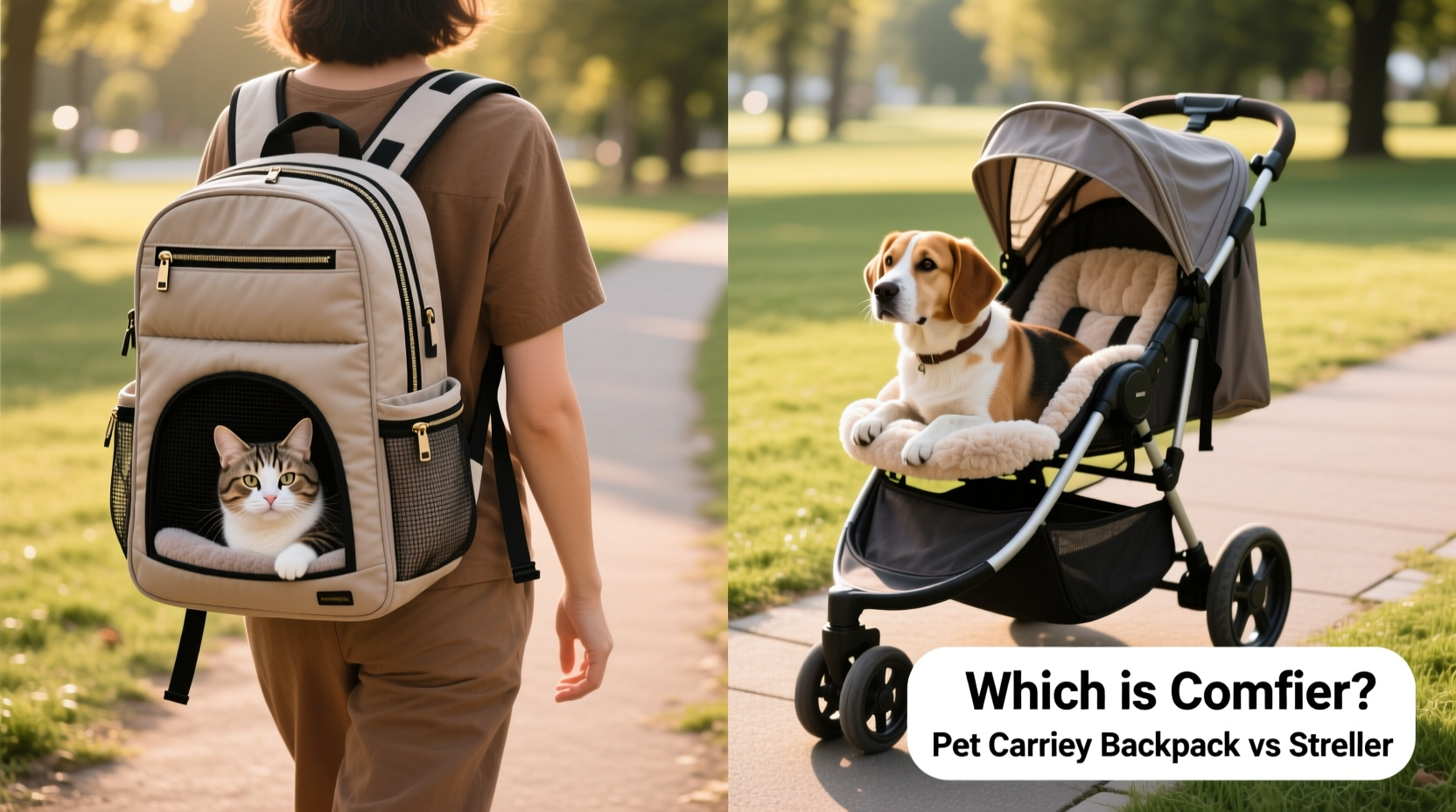
Pet carrier backpacks are compact, wearable carriers designed to carry cats, small dogs, or other petite pets on your back or chest. They typically feature mesh ventilation panels, padded straps, and secure zippers. These carriers promote close contact between pet and owner, offering reassurance through proximity and body warmth.
Backpacks excel in urban environments where stairs, crowded spaces, or public transit make wheeled options impractical. Many models allow pets to sit upright with a view, reducing motion sickness and anxiety. However, they require physical effort from the owner and may not suit larger or heavier animals.
Tip: Always introduce your pet to the backpack at home first—let them explore it with treats and positive reinforcement before attempting a journey.The Case for Pet Strollers
Pet strollers resemble baby joggers but are tailored for animals. They offer spacious interiors, suspension systems, UV-protected canopies, and large wheels suitable for uneven terrain. Unlike backpacks, strollers let pets ride hands-free while giving owners greater mobility, especially over long distances or rough paths.
Strollers are ideal for senior pets, those with joint issues, or anxious animals who benefit from stability and reduced motion. The enclosed yet ventilated design provides shelter from weather, traffic noise, and overstimulation. Some models even convert into backpacks or have detachable carriers, blending both worlds.
“Mobility aids like strollers aren’t indulgences—they’re tools that extend quality of life, especially for aging pets.” — Dr. Lena Torres, DVM, Veterinary Behavior Specialist
Comfort Comparison: What Matters Most to Pets?
Comfort isn’t one-size-fits-all. It depends on sensory input, physical support, and emotional security. Let’s break down key factors:
- Posture and Space: Backpacks often limit movement; pets must remain seated or crouched. Strollers provide room to turn around, lie down, or shift positions.
- Ventilation and Temperature: Both styles offer mesh windows, but strollers generally have superior airflow due to larger surface areas and canopy vents.
- Motion Sensitivity: Carried pets feel every step and sway, which can be calming or disorienting depending on the animal. Strollers glide more smoothly, minimizing jolts.
- Visibility: Some pets enjoy seeing their surroundings; others find it stressful. Adjustable privacy flaps in both types help manage visual exposure.
- Noise Levels: Backpacks place pets closer to street-level sounds and vibrations. Strollers, elevated slightly off the ground, reduce auditory overload.
Real Example: A Trip to the Park
Sophie, a 7-year-old French Bulldog with mild hip dysplasia, used to dread walks beyond her driveway. Her owner, Mark, tried a lightweight backpack initially, but Sophie became restless after ten minutes, whining and trying to climb out. Concerned about strain on her joints, he switched to a three-wheeled pet stroller with all-terrain tires and shock absorption. Now, Sophie rides comfortably during longer outings, napping under the sunshade when tired. “It’s given her confidence back,” Mark says. “She still gets to smell the grass and hear birds—just without pain.”
Detailed Comparison Table: Backpack vs Stroller
| Feature | Pet Carrier Backpack | Pet Stroller |
|---|---|---|
| Weight Capacity | Typically 12–25 lbs | Up to 50+ lbs (varies by model) |
| Mobility Ease | Great for stairs, subways, hiking | Better on flat or paved surfaces |
| Pet Movement Inside | Limited space; mostly sitting | Can lie down, stretch, reposition |
| User Physical Effort | Moderate to high (back/shoulder strain) | Low to moderate (pushing only) |
| Weather Protection | Basic rain cover (if included) | UV canopy, windscreen, full enclosure |
| Storage & Portability | Folds small; easy to store | Bulkier; requires storage space |
| Ideal For | Young, active, small pets; frequent travelers | Seniors, special needs, multi-pet households |
How to Choose Based on Your Lifestyle
Your daily routine plays a crucial role in determining the better fit. Consider these scenarios:
- You live in a walk-up apartment or use public transit: A backpack is likely more practical. Strollers can be cumbersome on buses or narrow staircases.
- You take long walks or visit parks regularly: A stroller allows extended outings without tiring your pet—or yourself.
- Your pet has anxiety or gets startled easily: Test both. Some respond better to being held close; others prefer the stable, predictable motion of a stroller.
- You travel frequently by air: Airlines permit only specific backpack-style carriers in cabins. Check size and airline regulations carefully.
- You own multiple small pets: Larger strollers can accommodate two pets (with dividers), whereas backpacks are strictly single-use.
Step-by-Step Guide to Testing Comfort
Before committing, evaluate how your pet responds:
- Introduce the gear indoors: Place treats inside and encourage exploration. Never force entry.
- Simulate short trips: Carry the backpack around the house or push the stroller down the hallway.
- Monitor behavior: Signs of stress include panting, trembling, excessive meowing/barking, or attempts to escape.
- Try a brief outdoor test: Walk one block using each option separately, noting energy levels and posture.
- Assess after 15 minutes: Did your pet relax? Stay alert? Show signs of discomfort? Repeat over several days.
FAQ: Common Questions Answered
Can I use a pet stroller for a cat?
Absolutely. Many cats adapt well, especially if introduced gradually. Use a harness and leash inside the stroller for added security. Opt for models with top-loading access to ease entry.
Are backpack carriers safe for airplanes?
Yes—but only if they meet airline size requirements (usually under 18” x 11” x 11”). Always confirm with your carrier ahead of time and ensure the backpack is IATA-compliant.
Do vets recommend strollers for older pets?
Increasingly, yes. Veterinarians specializing in geriatric care often suggest strollers to maintain mental stimulation through outdoor exposure without overexertion. As Dr. Torres notes, “Mental health declines faster than physical ability in aging pets. Mobility tools keep them engaged.”
Checklist: Choosing the Right Transport Option
- ✅ Measure your pet’s weight and dimensions
- ✅ Research airline or transit rules (if applicable)
- ✅ Assess your typical walking terrain (sidewalks, trails, hills)
- ✅ Observe your pet’s reaction to confinement and motion
- ✅ Prioritize ventilation, ease of cleaning, and structural durability
- ✅ Try rentals or borrow before buying
- ✅ Ensure secure closures and escape-proof design
Final Thoughts: Comfort Is Personal
There’s no universal answer to whether a pet carrier backpack or stroller is more comfortable. The right choice aligns with your pet’s physical needs, personality, and your shared lifestyle. A young, curious kitten might thrive in a backpack, feeling safe against your chest while taking in the world. An arthritic senior dog may find profound relief in a cushioned stroller with smooth-rolling wheels.
Ultimately, comfort isn’t just about padding or space—it’s about reducing stress, supporting health, and enhancing bonding. Whichever option you choose, prioritize gradual acclimation, consistent positive reinforcement, and regular check-ins on your pet’s well-being during travel.
🚀 Ready to upgrade your pet’s travel experience? Start by testing one option this week—observe, adjust, and share what works. Your furry friend will thank you with calmer eyes and a happier tail wag.








