Leaving a dog alone at home can be stressful—for both pet and owner. Many dogs experience separation anxiety, manifesting in destructive chewing, excessive barking, or house soiling. As pet owners seek solutions, two popular tools have emerged: pet cameras with treat-dispensing capabilities and automatic feeders. While both serve practical purposes, their impact on canine emotional well-being varies significantly. Understanding how each device functions—and how they influence a dog’s psychological state—is key to choosing the right support system for an anxious companion.
Understanding Canine Separation Anxiety
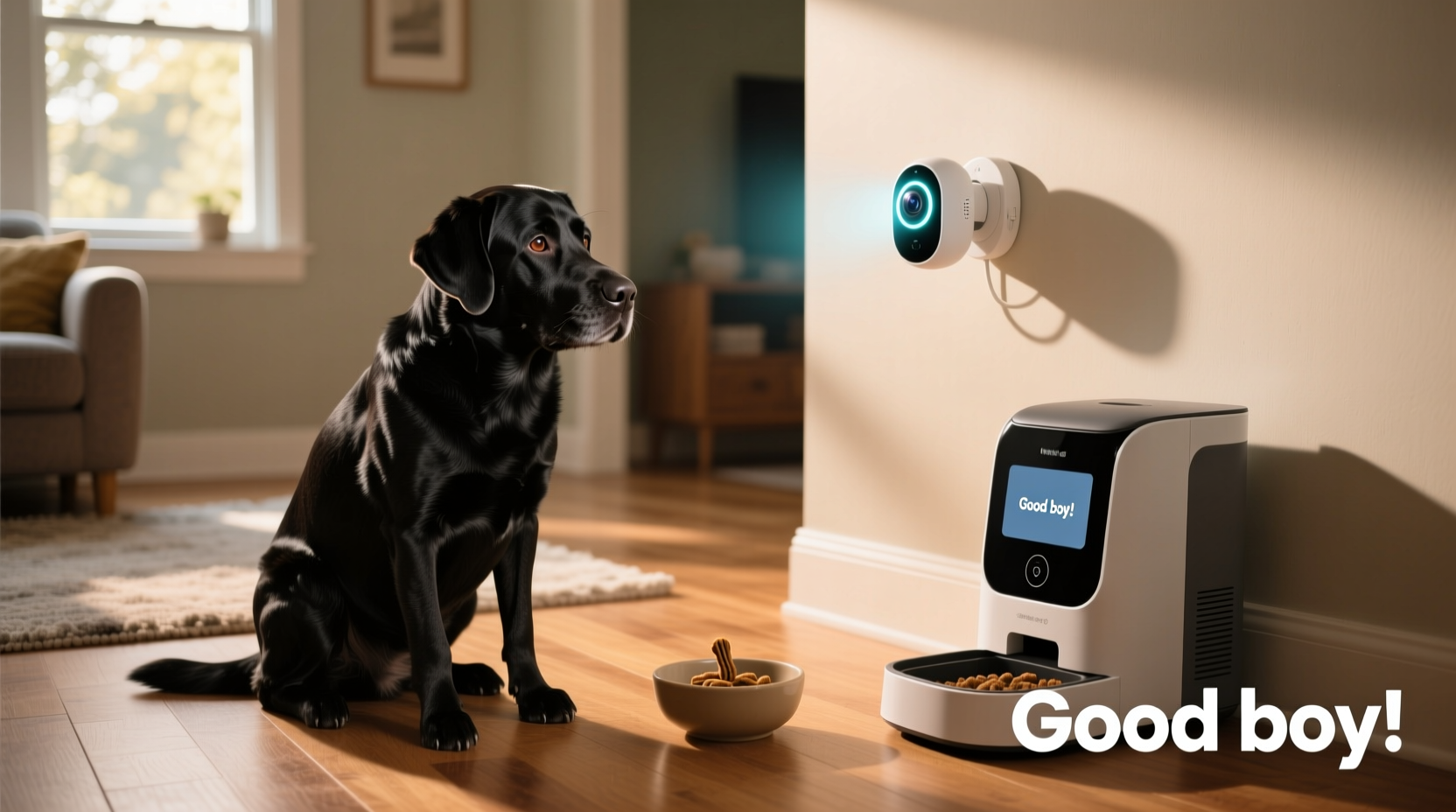
Separation anxiety affects up to 20% of dogs, according to veterinary behaviorists. It occurs when a dog becomes distressed upon being left alone, often due to over-attachment, lack of independence training, or past trauma. Symptoms include pacing, whining, drooling, and attempts to escape. Left unaddressed, chronic stress can lead to long-term behavioral issues and even health complications like gastrointestinal upset or weakened immunity.
Dogs are social animals. Their evolutionary roots as pack creatures mean isolation triggers instinctive alarm. The absence of familiar humans disrupts their sense of safety. While physical needs like food and water are essential, emotional reassurance plays a critical role in calming an anxious mind. This is where technology enters the picture—not just to automate care, but to provide connection.
Tip: Observe your dog's behavior during short absences to identify early signs of anxiety before investing in tech solutions.Pet Camera Treat Dispensers: Remote Reassurance
Pet camera treat dispensers combine real-time video monitoring with remote-controlled treat release. These devices allow owners to see, speak to, and reward their dogs from anywhere via smartphone apps. Brands like Furbo, Petcube, and Wyze offer models with high-definition night vision, two-way audio, and treat-launching mechanisms.
The psychological value lies in interaction. When a dog hears its owner’s voice or receives a treat mid-anxiety episode, it experiences a moment of positive reinforcement. This isn’t merely distraction—it’s communication. A study published in *Applied Animal Behaviour Science* found that auditory contact from owners reduced vocalization and movement in isolated dogs by up to 35%.
Treat dispensing adds another layer. The sudden appearance of a snack acts as a cognitive interrupt, redirecting focus from stress to anticipation. Over time, consistent use conditions the dog to associate solitude with potential rewards, gradually reshaping emotional responses.
“Real-time interaction through treat cameras provides emotional continuity. It bridges the gap between presence and absence.” — Dr. Lisa Jacobson, Veterinary Behaviorist, Cornell University College of Veterinary Medicine
Automatic Feeders: Predictability Over Presence
Automatic feeders schedule meals at set times, ensuring dogs eat even when owners are away. Some advanced models include portion control, multiple compartments, and app-based programming. However, most do not offer live interaction or real-time treat delivery.
For anxious dogs, predictability can be comforting. A consistent feeding routine reduces uncertainty, which may ease baseline stress. But this benefit is passive. Unlike treat cameras, automatic feeders don’t respond dynamically to emotional states. They cannot detect when a dog is pacing or whining and intervene accordingly.
Moreover, feeding time might actually heighten anxiety if a dog associates the machine’s noise with the owner’s absence. In some cases, dogs become hyper-focused on the feeder, leading to food-related stress or obsessive behaviors.
That said, automatic feeders excel in routine management. For dogs with medical conditions requiring strict meal timing, or households with irregular schedules, these devices ensure nutritional consistency—a foundational element of overall well-being.
Comparative Analysis: Which Helps Anxious Dogs More?
To evaluate effectiveness, consider three dimensions: emotional engagement, behavioral intervention, and long-term conditioning.
| Feature | Pet Camera Treat Dispenser | Automatic Feeder |
|---|---|---|
| Real-Time Interaction | Yes – voice, video, treat launch | No (except smart models with limited alerts) |
| Emotional Support | High – direct owner contact | Low – indirect, routine-based |
| Behavioral Interruption | Yes – treats distract during anxiety spikes | Limited – only during scheduled meals |
| Training Potential | High – enables positive reinforcement | Minimal – supports routine, not retraining |
| Best For | Dogs with moderate to severe separation anxiety | Dogs needing structured feeding, low anxiety |
The data suggests that while automatic feeders maintain physical health, pet camera treat dispensers address emotional needs more directly. For dogs whose anxiety manifests immediately after departure, the ability to intervene remotely offers tangible relief.
Real-World Example: Bella the Rescue Beagle
Bella, a three-year-old beagle adopted from a shelter, exhibited severe separation anxiety. Her owner, Maria, returned home to chewed shoes, scratched doors, and accidents despite crate training and gradual departures. Concerned, she consulted a behaviorist who recommended environmental enrichment and remote interaction tools.
Maria installed a Furbo 360° camera with treat-tossing capability. Initially, she used it to monitor Bella’s behavior. She noticed that 10 minutes after leaving, Bella would begin pacing near the door. Using the app, Maria began speaking calmly and launching treats during these episodes. Within two weeks, Bella started looking toward the camera instead of the exit when anxious. After a month, her destructive behaviors decreased by 70%, and she began resting earlier during solo periods.
Notably, Maria did not rely solely on the device. She paired treat tosses with puzzle toys and calming music. The camera became part of a broader strategy—but served as the emotional anchor. “Hearing my voice and getting a surprise treat changed everything,” Maria said. “It was like I never fully left.”
Step-by-Step Guide to Supporting an Anxious Dog
Technology should complement, not replace, behavioral training. Follow this timeline to maximize effectiveness:
- Week 1: Assess Behavior
Leave the house for 5–10 minutes while recording your dog’s response. Note signs of distress—vocalizing, trembling, hiding. - Week 2: Introduce Routine
Set a consistent schedule for feeding, walks, and quiet time. Use an automatic feeder if mealtimes vary. - Week 3: Add Remote Engagement
Install a pet camera. Begin using voice commands and treats during observed anxiety windows. - Week 4: Pair with Positive Stimuli
Give treats via camera only when playing calming music or offering a stuffed Kong. This builds positive associations with solitude. - Week 5+: Gradual Desensitization
Increase absence duration slowly—from 15 minutes to 1 hour—while continuing remote check-ins.
When to Combine Both Devices
In many homes, the best solution isn’t either/or—it’s both. An automatic feeder ensures nutritional stability, while a treat camera provides emotional support. For example:
- A dog with diabetes requires precise meal timing via an automatic feeder.
- During midday anxiety peaks unrelated to hunger, the owner uses a treat camera to deliver encouragement and a calming snack.
This dual approach covers physiological and psychological bases. The feeder maintains order; the camera offers empathy.
Checklist: Choosing the Right Tool for Your Dog
Use this checklist to determine which device—or combination—best suits your dog’s needs:
- ✅ Does your dog bark, whine, or destroy things within 10–15 minutes of you leaving? → Pet camera likely more effective
- ✅ Is your dog primarily calm but eats at inconsistent times? → Automatic feeder may suffice
- ✅ Do you want to monitor behavior remotely? → Pet camera required
- ✅ Does your dog have a medical condition requiring timed meals? → Automatic feeder essential
- ✅ Are you seeking long-term behavioral improvement? → Pet camera supports training better
- ✅ Is budget a concern? → Automatic feeders are typically cheaper ($40–$80 vs. $100–$250)
Frequently Asked Questions
Can a treat camera replace professional training for separation anxiety?
No. While treat cameras provide valuable support, they work best alongside behavior modification techniques such as desensitization, counter-conditioning, and environmental enrichment. Severe cases may require veterinary-prescribed anti-anxiety medication or consultation with a certified dog behavior consultant.
Do automatic feeders help reduce anxiety at all?
Indirectly. A predictable feeding schedule can reduce general stress, especially in dogs sensitive to routine changes. However, they do not actively soothe acute anxiety episodes. If your dog ignores food when alone, this indicates emotional distress beyond what feeding automation can resolve.
Are there downsides to using treat-dispensing cameras?
Potential drawbacks include overfeeding if treats aren't accounted for in daily intake, technical glitches (e.g., jammed treats), and creating attention-seeking behavior. To prevent misuse, limit treat distribution to 2–3 times per day and use low-calorie options like freeze-dried liver bits.
Final Recommendation
For dogs struggling with separation anxiety, a pet camera with treat-dispensing functionality offers superior emotional support compared to an automatic feeder. Its ability to deliver real-time interaction, redirect anxious behavior, and reinforce positive conditioning makes it a dynamic tool in managing stress. Automatic feeders, while useful for maintaining dietary routines, lack the responsive, empathetic component essential for soothing an anxious mind.
The ideal setup often includes both: a feeder for structure and a camera for connection. Technology should enhance, not replace, thoughtful care. By combining devices with proven behavioral strategies—consistent routines, mental stimulation, and gradual acclimation—you give your dog the best chance to feel secure when alone.
💬 Have experience with pet cameras or automatic feeders? Share your story in the comments—your insight could help another dog owner find peace of mind.








