When more than one cat in your home develops diarrhea at the same time, it's natural to feel concerned. Unlike isolated cases, widespread gastrointestinal upset among multiple cats often signals a shared cause—ranging from dietary missteps to infectious disease. While occasional soft stools may resolve on their own, persistent or severe diarrhea can quickly become dangerous, especially in kittens, seniors, or immunocompromised cats. Understanding the underlying triggers and recognizing warning signs is essential for timely intervention.
Common Causes of Diarrhea in Multiple Cats
When several cats in the same household exhibit diarrhea, the root cause is frequently environmental or contagious. Identifying the source early can prevent escalation and reduce transmission.
- Dietary changes or indiscretion: A new brand of food, table scraps, or ingestion of spoiled treats can affect all cats eating the same meal.
- Parasites: Intestinal worms (e.g., roundworms, hookworms) and protozoa like Giardia or Coccidia spread easily through shared litter boxes or outdoor exposure.
- Bacterial infections: Salmonella, Campylobacter, or E. coli can be introduced via raw diets or contaminated water sources.
- Viral infections: Feline panleukopenia virus (distemper) or feline coronavirus (which can lead to FIP) are highly contagious and may present with severe diarrhea.
- Stress-induced colitis: Environmental changes—such as moving, introducing a new pet, or loud noises—can trigger stress-related digestive issues in sensitive cats.
- Poisoning: Exposure to toxic plants, cleaning chemicals, or human medications affects multiple cats if they share space.
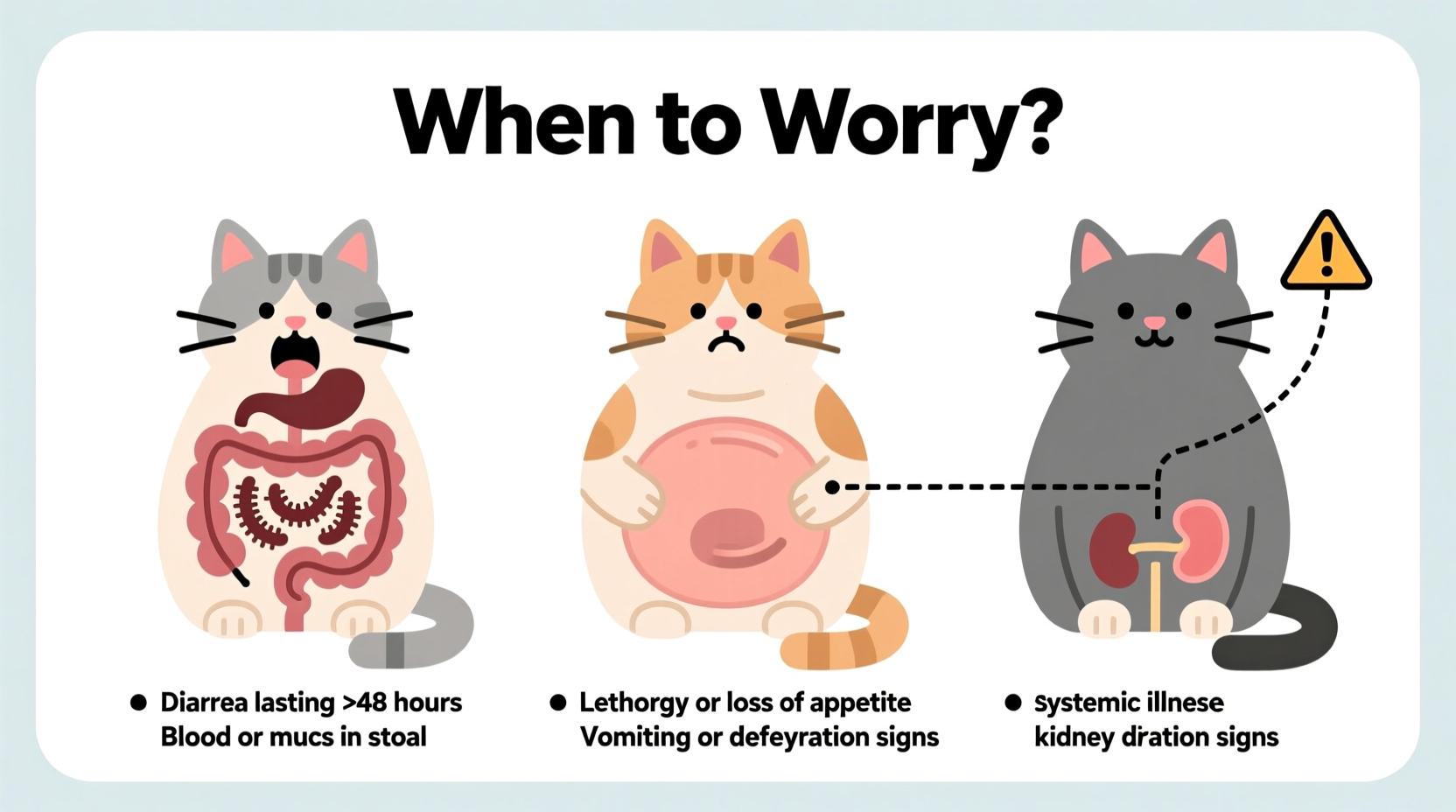
When to Worry: Red Flags That Demand Immediate Attention
Not all cases of diarrhea require urgent care, but certain symptoms indicate a serious condition. Watch closely when multiple cats are affected, as dehydration and systemic infection can progress rapidly.
“Diarrhea in more than one cat should never be dismissed as ‘just a stomach bug.’ It’s a signal that something in their shared environment is off.” — Dr. Lena Torres, DVM, Feline Internal Medicine Specialist
Seek veterinary care immediately if you observe any of the following:
- Blood or mucus in the stool
- Vomiting accompanying diarrhea
- Lethargy, weakness, or refusal to eat
- Fever (over 103°F or 39.4°C)
- Signs of dehydration (dry gums, sunken eyes, skin that tents when pinched)
- Symptoms lasting longer than 48 hours without improvement
Step-by-Step Guide: What to Do When Multiple Cats Have Diarrhea
Managing multi-cat diarrhea requires both immediate action and careful observation. Follow this timeline to ensure proper care and containment.
- Isolate symptomatic cats (if possible): Prevent contact between sick and healthy cats to reduce spread, especially if infection is suspected.
- Review recent changes: Consider new foods, treats, medications, or household products introduced in the past 72 hours.
- Collect stool samples: Use clean spoons or bags to gather fresh samples from each affected cat for veterinary testing.
- Withhold food for 12 hours (only if cats are not vomiting): This allows the gut to rest. Provide small amounts of water or unflavored electrolyte solution frequently.
- Reintroduce bland diet: Feed boiled chicken and rice or a veterinarian-prescribed gastrointestinal diet in small portions.
- Contact your vet: Describe symptoms, number of affected cats, and any observed behaviors. Many clinics prioritize multi-cat households due to outbreak risks.
- Disinfect the environment: Clean litter boxes, feeding areas, and bedding with a veterinary-grade disinfectant (e.g., diluted bleach solution—1:32 ratio).
Do’s and Don’ts: Managing Multi-Cat Diarrhea
| Action | Do | Don't |
|---|---|---|
| Hydration | Offer fresh water or vet-recommended oral rehydration fluids | Force-feed water with a syringe unless instructed by a vet |
| Diet | Transition to a simple, digestible diet after fasting | Give milk, fatty foods, or human leftovers |
| Medication | Use only vet-prescribed dewormers or antibiotics | Administer over-the-counter anti-diarrheal drugs (e.g., Pepto-Bismol) |
| Cleaning | Wash hands thoroughly after handling cats or waste | Use scented cleaners or ammonia-based products near litter boxes |
| Monitoring | Track frequency, consistency, and behavior hourly during acute phase | Assume improvement after one good stool; relapse is common |
Real-Life Scenario: The Case of the Shared Raw Diet
A household with four indoor cats recently began feeding a commercial raw diet for “healthier digestion.” Within 36 hours, three of the cats developed watery diarrhea, one vomited twice, and all became less active. The owner initially assumed it was an adjustment period. However, when the fourth cat showed signs of dehydration, a vet visit revealed Salmonella contamination in the raw food batch. Stool cultures confirmed infection in all symptomatic cats. After discontinuing the raw diet, administering antibiotics, and deep-cleaning all surfaces, the cats recovered within ten days. This case highlights how a single dietary choice can impact an entire feline group—and why rapid diagnosis matters.
Tip: Always freeze raw pet food until use and handle it with gloves. Thaw in sealed containers to avoid cross-contamination.Prevention Checklist for Multi-Cat Households
Reducing the risk of future outbreaks starts with proactive management. Use this checklist to strengthen your home’s defenses:
- ✅ Maintain separate feeding stations to prevent food stealing or overconsumption
- ✅ Provide one litter box per cat plus one extra, placed in different locations
- ✅ Schedule biannual fecal exams for all cats, even those showing no symptoms
- ✅ Avoid sudden diet changes; transition foods gradually over 5–7 days
- ✅ Keep vaccinations and parasite prevention up to date
- ✅ Quarantine new cats for at least two weeks before integration
- ✅ Store human food securely and keep toxic plants out of reach
Frequently Asked Questions
Can humans catch diarrhea from cats?
Yes, certain pathogens like Salmonella, Giardia, and Campylobacter are zoonotic, meaning they can transfer from cats to humans. Practice strict hand hygiene after handling sick cats or cleaning litter boxes, especially if infants, elderly individuals, or immunocompromised people live in the home.
Should I feed all my cats the same food if only some have diarrhea?
If the cause is dietary or contagious, it’s safest to switch all cats to a bland, easily digestible diet temporarily—even asymptomatic ones. Shared food bowls or scavenging can expose seemingly healthy cats to irritants or pathogens.
How long does infectious diarrhea last in cats?
Mild cases may resolve in 2–3 days with supportive care. However, infections like Giardia or viral illnesses can persist for weeks without treatment. Follow your vet’s protocol fully, including completing antibiotic or antiparasitic courses, even if symptoms improve.
Conclusion: Act Early, Protect Your Feline Family
Diarrhea affecting multiple cats is more than a messy inconvenience—it’s a potential health emergency. Because cats instinctively hide illness, visible symptoms like loose stools often mean the condition is already progressing. By understanding common causes, monitoring for red flags, and taking swift, informed action, you can prevent minor issues from becoming life-threatening crises. Your vigilance today could save your cats from unnecessary suffering tomorrow.
💬 Have experience managing multi-cat diarrhea? Share your insights below to help other pet owners navigate these challenging situations with confidence.








