For individuals with sensitive skin, clothing choices go beyond style—they directly impact daily comfort and well-being. Among the most debated wardrobe staples are mock neck tops and turtlenecks. Both offer warmth, sophistication, and a modern aesthetic, but their fit, fabric interaction, and collar height can lead to vastly different experiences for those prone to skin irritation, redness, or allergic reactions. Understanding the subtle yet significant differences between these two styles is essential for making informed, skin-friendly decisions.
The primary distinction lies in structure: mock necks sit slightly above the collarbone with a shorter, looser ribbed band, while turtlenecks extend higher, often folding over once or twice to rest snugly against the lower jawline. This variation in height and tightness plays a critical role in airflow, friction, and moisture retention—three factors that heavily influence comfort for sensitive skin types.
Anatomy of the Collar: Design Differences That Matter
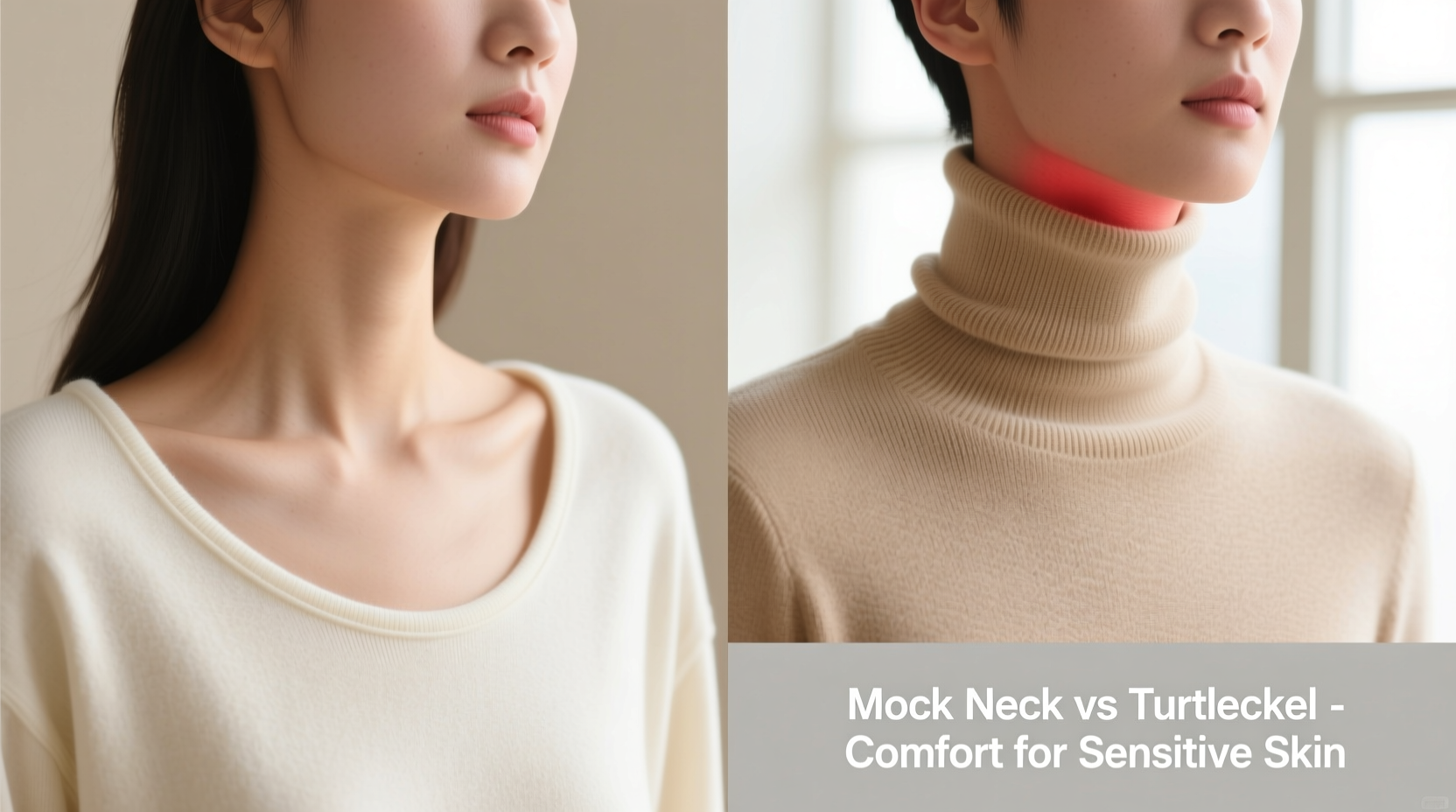
At first glance, mock necks and turtlenecks may appear similar, especially in minimalist fashion lines where clean lines dominate. However, their construction leads to divergent performance on the skin.
- Mock Neck: Typically rises 2–4 inches above the collarbone, with a tighter but not restrictive elastic band. It does not fold over and usually maintains a single-layer structure.
- Turtleneck: Extends 6–10 inches vertically, designed to be folded down (in double-roll styles) or worn upright. Often features thicker ribbing and multiple layers at the base of the neck.
The increased height and layered design of a turtleneck create more surface area in contact with the skin, particularly along the nape and sides of the neck—areas rich in nerve endings and sweat glands. For someone with dermatological sensitivities such as eczema, rosacea, or contact dermatitis, this prolonged coverage can trap heat and moisture, increasing the risk of flare-ups.
Tip: When trying on either style, move your head side-to-side and simulate walking to test for rubbing or constriction—this mimics real-world wear.Fabric Composition: The Real Determinant of Skin Comfort
While silhouette matters, fabric choice remains the most influential factor in determining comfort for sensitive skin. Even the softest-looking knit can cause irritation if made from coarse fibers or treated with harsh chemicals.
Natural fibers like organic cotton, bamboo viscose, and merino wool generally outperform synthetic blends (e.g., acrylic, polyester) in breathability and hypoallergenic properties. Merino wool, despite being wool, is exceptionally fine (often under 19 microns) and lacks the lanolin residue found in conventional wool, making it suitable even for many with wool sensitivities.
In contrast, cheaper turtlenecks—especially mass-market versions—are frequently made from acrylic or acrylic-blend yarns. These materials are less breathable, generate static, and can feel scratchy against delicate skin. Mock necks, often used in athleisure and layering pieces, are more commonly produced in cotton-spandex or modal blends, offering greater flexibility and reduced friction.
“For patients with reactive skin conditions, I recommend prioritizing seamless knits and natural, untreated fibers—even a small reduction in texture can prevent micro-abrasions.” — Dr. Lena Patel, Dermatologist & Textile Health Consultant
Comparative Analysis: Key Factors for Sensitive Skin
| Factor | Mock Neck | Turtleneck |
|---|---|---|
| Neck Coverage Height | Low (2–4 inches) | High (6–10 inches) |
| Fabric Layers at Collar | Single layer typical | Dual or triple layer common |
| Airflow & Breathability | Moderate to high | Low to moderate |
| Risk of Heat Trapping | Lower | Higher |
| Potential for Friction | Minimal | Moderate to high |
| Common Fabric Types | Cotton, modal, bamboo, fine merino | Acrylic, wool, wool-acrylic blends |
| Ease of Layering Without Overheating | High | Low |
This comparison highlights why mock necks often emerge as the preferred option for those managing skin sensitivity. Their design inherently limits occlusion—the sealing off of skin from air—which reduces the likelihood of sweat accumulation and bacterial growth, both known triggers for irritation.
Real-World Example: A Case Study in Winter Wear
Sophia, a 32-year-old graphic designer with mild facial eczema and neck sensitivity, routinely wore turtlenecks during winter months for their polished look under blazers. Over two consecutive seasons, she noticed recurring redness and itching along her hairline and posterior neck, particularly after full workdays. After consulting a dermatologist, she was advised to assess her clothing materials and fit.
She switched to long-sleeve mock neck tops made from 100% organic Pima cotton. Within three weeks, her symptoms decreased significantly. She also began using fragrance-free laundry detergent and avoided layered turtlenecks under high-collared coats—a combination previously trapping heat and moisture.
“I didn’t realize how much my sweater was suffocating my skin,” Sophia said. “The mock neck gives me the same sleek look without the constant scratching.”
Choosing the Right Fit: Practical Guidelines
Selecting between a mock neck and a turtleneck isn't just about preference—it's about aligning garment design with physiological needs. Follow this checklist to make a skin-safe decision:
Checklist: Choosing a Skin-Friendly Neckline- ✅ Check the fabric label: Prioritize natural, untreated fibers like organic cotton, bamboo, TENCEL™, or fine merino wool.
- ✅ Avoid wool-acrylic blends if you're sensitive to synthetics.
- �� Test the stretch: The collar should fit snugly without leaving indentations after removal.
- ✅ Feel the interior seam: Look for flatlock or seamless construction to minimize chafing.
- ✅ Assess layering potential: Will you wear this under another garment? Extra layers increase heat retention.
- ✅ Wash before wearing: Removes residual dyes, formaldehyde finishes, or starches used in manufacturing.
Additionally, consider seasonal context. In colder climates, a well-fitted turtleneck made from breathable merino wool can provide insulation without irritation—provided it’s not worn too tightly and is cleaned regularly. In transitional seasons or heated indoor environments, a lightweight mock neck offers warmth control and reduced risk of overheating.
Step-by-Step: How to Evaluate a New Knit Top for Skin Sensitivity
- Inspect the Label: Identify fiber content. Avoid fabrics with more than 20% acrylic or unknown synthetic blends.
- Touch Test: Rub the inside of the collar against your wrist or inner forearm for 30 seconds. If you feel itching or warmth, it may irritate your neck.
- Stretch Assessment: Gently pull the neckline. It should return to shape without excessive looseness or binding.
- Seam Examination: Run your finger along the inner seam. Raised stitching or tags indicate potential friction points.
- Wash Trial: Launder the garment once using a hypoallergenic detergent. Observe any shrinkage or texture changes.
- Short Wear Test: Wear the top for 1–2 hours during low-stress activity. Monitor for redness, itching, or discomfort.
This methodical approach helps eliminate guesswork and prevents repeated exposure to irritating materials—a crucial step for anyone managing chronic skin conditions.
Frequently Asked Questions
Can a turtleneck cause a rash even if I don’t have allergies?
Yes. Mechanical irritation from constant rubbing, combined with trapped sweat and heat, can lead to folliculitis or perioral dermatitis—even in individuals without diagnosed skin conditions. This is especially common with tight, non-breathable turtlenecks worn for extended periods.
Are there hypoallergenic turtlenecks available?
Yes. Several sustainable and medical-grade apparel brands produce turtlenecks from certified organic cotton, bamboo, or ultrafine merino wool. Look for Oeko-Tex® Standard 100 or GOTS (Global Organic Textile Standard) certification to ensure the fabric is free from harmful substances.
Is a mock neck better for acne-prone skin on the neck?
Generally, yes. Because mock necks cover less surface area and allow more airflow, they reduce humidity buildup that can clog pores. Tight, high collars like turtlenecks may exacerbate acne mechanica—an acne type triggered by pressure and friction.
Final Considerations: Style Shouldn’t Compromise Comfort
The debate between mock necks and turtlenecks ultimately centers on personal tolerance and environmental context. While turtlenecks offer superior warmth and a bold fashion statement, their design inherently increases risks for those with sensitive skin. Mock necks, with their moderate rise and typically lighter fabrics, strike a better balance between aesthetics and physiological comfort.
However, generalizations have limits. A poorly made mock neck with rough seams or synthetic fibers can be more irritating than a high-quality, loosely knit turtleneck in merino wool. The key is not to dismiss one style entirely but to evaluate each garment on its material integrity, construction quality, and individual fit.
Brands increasingly recognize the demand for inclusive, skin-conscious clothing. Labels like Pact, Icebreaker, and Underprotection specialize in seamless, chemical-free knits designed for reactive skin. Investing in such pieces—even at a higher upfront cost—can reduce dermatological issues and extend garment longevity through gentler care cycles.
“Clothing is the second skin. What touches it influences everything from immune response to psychological comfort.” — Dr. Arjun Mehta, Integrative Dermatology Researcher
Take Action for Healthier Skin and Smarter Style Choices
Your wardrobe should support your well-being, not undermine it. If you’ve experienced discomfort wearing either mock necks or turtlenecks, revisit your choices with a focus on fabric, fit, and function. Start by replacing one problematic piece with a certified gentle alternative. Track how your skin responds over time. Share your findings with others navigating similar challenges—because comfort shouldn’t be a luxury, it should be standard.
💬 Have a favorite skin-friendly knit brand or care tip? Join the conversation—your insight could help someone finally find relief.








