When choosing a lipstick, longevity is often more important than shade or brand. A bold red may look stunning in the mirror, but what happens after your morning coffee or lunch meeting? For many, the real test of a lipstick’s quality isn’t its pigment or finish—it’s how well it survives daily routines, especially eating and drinking. The debate between matte and glossy finishes has raged for years, but when it comes to staying power through meals, one type clearly outperforms the other. Understanding why—and how to maximize that performance—can save you from constant reapplication and midday touch-ups.
The Science Behind Lipstick Wear
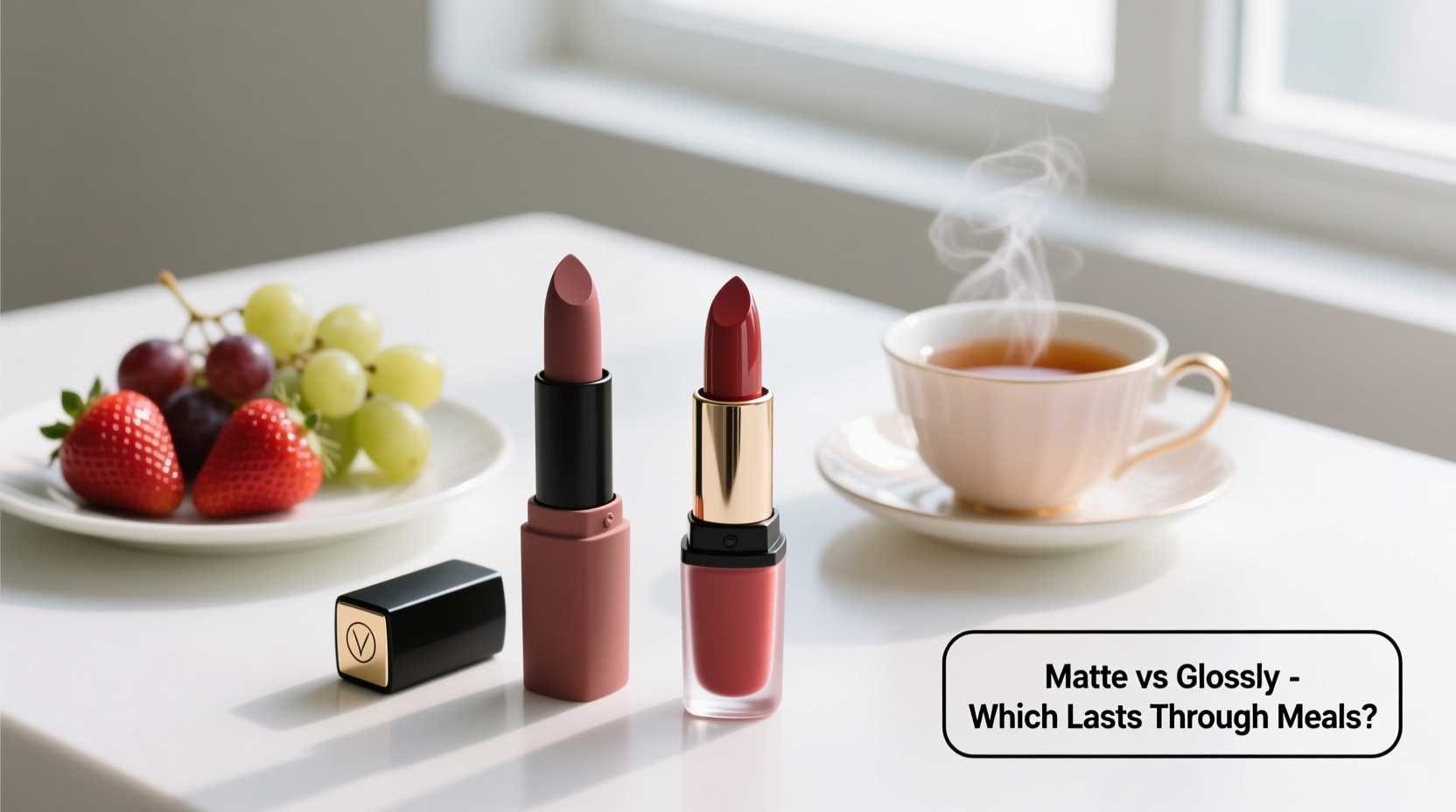
Lipstick longevity depends on formulation, texture, and interaction with skin. Matte lipsticks typically use waxes, silicones, and film-forming polymers that create a dry, flat finish adhering tightly to the lips. These ingredients form a flexible film that resists smudging and fading. Glossy finishes, on the other hand, rely heavily on oils, emollients, and shine-enhancing agents like castor oil or synthetic esters. While they deliver hydration and high-shine appeal, these components make them inherently more prone to migration and breakdown when exposed to friction or moisture.
Film-forming agents such as acrylates or polyurethanes are common in long-wear matte formulas. They bond to the lip surface, creating a barrier that withstands contact with utensils, cups, and food. Glossy lip products lack this structural integrity—their liquid base spreads easily and transfers readily upon contact. This fundamental difference in chemistry explains why mattes generally last significantly longer, particularly during and after meals.
Tip: Look for keywords like “long-wear,” “transfer-resistant,” or “liquid matte” on packaging—they usually indicate stronger staying power.Performance Comparison: Matte vs Glossy Through Meals
To evaluate real-world durability, consider three key factors: initial adhesion, resistance to transfer, and post-meal appearance.
Matte lipsticks, especially liquid formulas, set quickly and form a non-tacky layer within seconds. Once dried, they resist movement even when pressing lips together or sipping liquids. During meals, the color may fade slightly at the center due to natural oils in food, but the outline often remains intact. Reapplication is typically needed only after heavy eating or oily dishes.
Glossy finishes begin transferring the moment lips touch any surface. Even blotting doesn’t prevent gradual migration into fine lines around the mouth. After just one bite of a sandwich or sip of tea, noticeable loss occurs. Oily foods accelerate breakdown, as lipids in the product mix with those in food, causing slippage and uneven coverage.
“Long-wear matte lipsticks can retain up to 70% of their original pigment after a full meal, while traditional glosses rarely maintain more than 30%.” — Dr. Lena Torres, Cosmetic Chemist at DermForm Labs
Direct Comparison Table: Key Attributes
| Feature | Matte Lipstick | Glossy Finish |
|---|---|---|
| Initial Adhesion | Strong, fast-drying film | Slippery, immediate transfer |
| Transfer Resistance | High (minimal on cups/food) | Low (visible marks everywhere) |
| Post-Meal Appearance | Faded center, defined edges | Uneven patches, feathering |
| Reapplication Frequency | Every 6–8 hours (after meals) | Every 1–2 hours |
| Suitability for Eating | Excellent | Poor |
Why Glossy Finishes Fade Faster: The Role of Ingredients
The instability of glossy lip products under meal conditions stems directly from their composition. Most contain high concentrations of volatile oils and silicone fluids designed to evaporate slowly, leaving behind a shiny film. However, this film lacks mechanical strength. When food particles or cutlery scrape against the lips, the thin layer breaks apart easily.
In contrast, matte formulas utilize cross-linking polymers that create a web-like matrix across the lip surface. This network resists disruption even under pressure. Additionally, pigments in matte lipsticks are suspended in a low-oil environment, reducing migration into surrounding skin. Glossy products often include reflective mica or pearl particles that sit on top of the formula, making them more likely to flake off during chewing or drinking.
Another factor is hydration level. Glosses frequently market themselves as moisturizing, which sounds beneficial—but excess moisture interferes with adhesion. Lips naturally secrete small amounts of oil and saliva, and adding more emollients creates a slippery interface where pigment cannot anchor effectively.
Maximizing Longevity: A Step-by-Step Guide
Even the best matte lipstick benefits from proper application technique. Follow this sequence to ensure maximum hold through meals:
- Exfoliate gently: Use a soft toothbrush or sugar scrub to remove dead skin. Smooth lips provide a better surface for adhesion.
- Hydrate and blot: Apply a light balm, wait two minutes, then blot thoroughly. Avoid leaving residue that could interfere with drying.
- Prime if needed: For very dry lips, use a lip primer to create an even base without greasiness.
- Apply in thin layers: Start with a precise line using the wand tip, then fill in gradually. Thick layers crack and lift faster.
- Let it set: Wait 60–90 seconds before speaking or touching lips. Do not press them together immediately.
- Blot lightly (optional): For extra durability, place tissue over lips and dust translucent powder through it.
- Avoid oily foods initially: Wait at least 15 minutes after application before eating greasy meals.
Real-World Case Study: Lunch Test Evaluation
A beauty editor conducted a controlled experiment comparing two popular products: a liquid matte lipstick (Brand X) and a high-shine gloss (Brand Y). Both were applied following standard prep steps. The subject consumed a typical lunch consisting of grilled chicken wrap, fries, and iced tea, using standard utensils and napkins normally.
- Before Meal: Both products appeared flawless.
- After First Bite: Gloss showed immediate transfer onto the wrap; matte remained intact.
- Mid-Meal (30 min): Gloss had faded by over 50%, with visible ring around the mouth. Matte showed slight central fading but maintained edge definition.
- Post-Meal (45 min): Gloss required full reapplication. Matte needed only a quick touch-up at the center.
The results confirmed industry expectations: matte formulations offer superior endurance in practical scenarios involving food consumption. The editor noted that even blotting failed to preserve the gloss’s integrity, whereas the matte resisted removal despite frequent wiping.
Common Misconceptions About Matte Lipsticks
Despite their staying power, matte lipsticks face criticism for being drying or uncomfortable. While some early versions did cause tightness, modern formulas have evolved. Many now include hyaluronic acid microspheres, shea butter derivatives, or encapsulated oils that release moisture over time without compromising wear.
Another myth is that all mattes are created equal. In reality, performance varies widely between brands. Drugstore options may flake after four hours, while premium or niche lines use advanced polymer blends that flex with facial movement and resist cracking.
It’s also worth noting that “matte” doesn’t always mean long-wear. Some cream-matte hybrids prioritize comfort over durability and behave more like traditional bullet lipsticks. Always check product descriptions for claims like “smudge-proof” or “kiss-resistant” to identify true long-lasting formulas.
Checklist: Choosing a Lipstick That Lasts Through Meals
- ✅ Check ingredient list for film-formers (e.g., PVP, acrylates copolymer)
- ✅ Opt for liquid or stain formats over balms or sheer glosses
- ✅ Test drying time—should set within 30–60 seconds
- ✅ Assess flexibility—shouldn’t crack when smiling
- ✅ Avoid overly thick or sticky textures
- ✅ Perform a kiss test on the back of your hand to gauge transfer
- ✅ Read reviews mentioning “meal-proof” or “all-day wear”
Frequently Asked Questions
Does drinking water affect matte lipstick more than glossy?
Water alone has minimal impact on either type, but repeated sipping increases exposure to moisture and friction. Matte lipsticks handle hydration breaks far better because they don’t dissolve in water. Glosses tend to slide off with each sip, especially if the cup rim contacts the lips directly.
Can I make my glossy lipstick last longer?
You can extend wear slightly by layering: apply a matching lip liner, blot, then add a thin coat of gloss. However, this won’t match the staying power of a true matte. For events involving meals, switching to a matte or satin-finish alternative is the most reliable solution.
Are there any truly meal-proof glossy lip products?
Some newer “gloss stains” or “lacquers” combine shine with improved adherence. These use hybrid polymers that lock in color while delivering luster. Brands like Fenty Beauty, Rare Beauty, and KVD offer options that last 4–5 hours with moderate eating. Still, they don’t match the resilience of fully matte liquids.
Conclusion: Make Smarter Choices Based on Lifestyle
If your day involves frequent meals, coffee breaks, or social dining, matte lipsticks are the clear winner for lasting power. Their advanced formulations are engineered to endure real-life challenges without constant maintenance. Glossy finishes, while beautiful and hydrating, simply can’t compete in terms of practicality once food enters the equation.
That doesn’t mean you must give up shine entirely. Consider strategic layering or carrying a mini matte lipstick for touch-ups. Understanding the strengths and limitations of each finish allows you to choose based on context—not just aesthetics. Whether you're heading to a business lunch or a casual brunch, knowing which lipstick will stay put gives you confidence that goes beyond color.
🚀 Ready to upgrade your lipstick routine? Try a long-wear matte for your next meal-out and notice the difference. Share your experience or favorite lasting formula in the comments below!








