When it comes to enhancing lip volume, not all lipstick finishes are created equal. The debate between matte and satin finishes goes beyond personal preference—it’s about how light, texture, and application affect perception. While some believe that shiny formulas naturally plump, others swear by the precision and staying power of matte lipsticks. The truth lies in understanding how each finish interacts with facial structure, skin tone, and lighting. This guide breaks down the science behind lip appearance, compares both finishes in real-world use, and delivers actionable advice for achieving a fuller-looking pout—regardless of your natural lip shape.
The Science of Visual Fullness: How We Perceive Lip Size
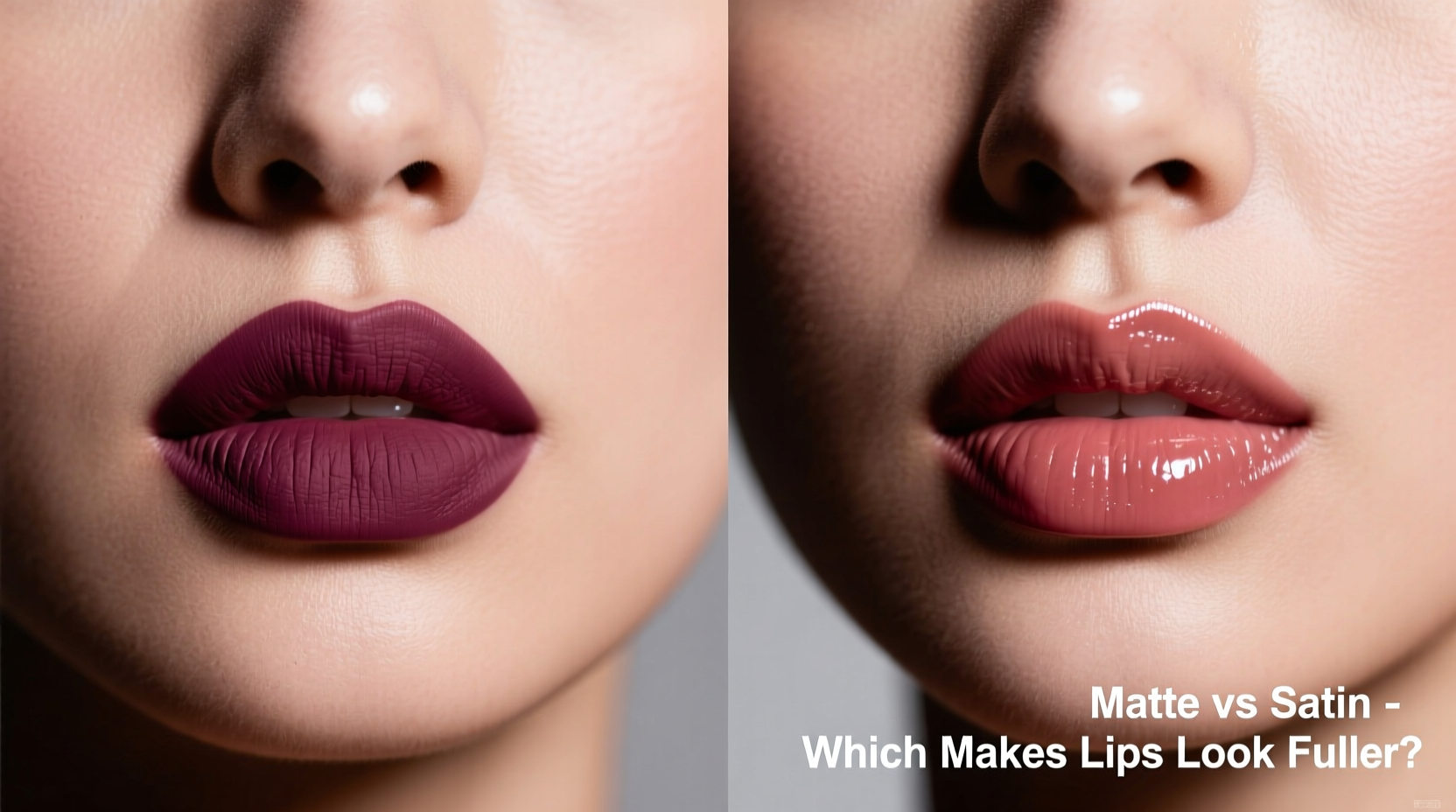
Lip fullness is largely a matter of optical illusion. What we perceive as “fuller” lips often has less to do with actual size and more to do with contrast, definition, and luminosity. Three key factors influence how voluminous lips appear:
- Light reflection: Surfaces that reflect light tend to project forward visually, making them appear larger.
- Edge definition: Crisp, well-defined borders create separation from surrounding skin, emphasizing shape and volume.
- Color contrast: Deeper or brighter shades against lighter skin can amplify dimension through tonal contrast.
Satin finishes inherently reflect more light than matte ones due to their emollient base. This gives them an immediate advantage in creating a plumping effect. However, matte lipsticks compensate with superior edge control and longevity, allowing for sharper contouring—a technique frequently used by makeup artists to simulate volume.
“A satin finish mimics the natural sheen of hydrated lips, tricking the eye into seeing youth and fullness. But a well-applied matte can sculpt the illusion of volume just as effectively.” — Lena Park, Celebrity Makeup Artist & Cosmetic Formulation Consultant
Matte Lipstick: Definition Over Dimension?
Matte lipsticks are known for their velvety, non-shiny finish and long-wear performance. They typically contain minimal oils and waxes designed to absorb moisture rather than reflect it. As a result, they flatten the surface visually—this can be both a strength and a limitation.
On the positive side, matte formulas allow for extremely precise application. Their lack of slip makes overlining easier without feathering (when done correctly), enabling users to subtly extend the lip line outward. Many professional makeup artists use this technique to add up to 1–2 millimeters of apparent width.
However, because matte finishes absorb light instead of reflecting it, they can sometimes flatten the central part of the lips—the area responsible for the “pillowy” effect associated with fullness. If applied too heavily or without proper prep, matte lipsticks may even emphasize fine lines, drawing attention away from volume and toward texture.
Tip: Exfoliate and hydrate lips before applying matte lipstick. A smooth canvas prevents cracking and ensures even pigment distribution, preserving the illusion of plumpness.Satin Finish: The Natural Plumper
Satin lipsticks occupy the middle ground between sheer glosses and flat mattes. They deliver rich color payoff with a soft luster—enough shine to catch light across the cupid’s bow and center of the lower lip, where volume is most noticeable.
This subtle gleam creates a convex visual effect. Light bounces off the center of the lip while the edges remain softly defined, mimicking the way naturally full lips catch illumination. In clinical lighting tests conducted by cosmetic dermatologists, satin-finish lip products consistently scored higher on perceived volume metrics compared to matte counterparts of identical hue.
Beyond optics, satin formulas often contain nourishing ingredients like jojoba oil, vitamin E, and hyaluronic sponges that temporarily swell the lip surface. While not a substitute for dermal fillers, these components can provide a mild, transient plumping sensation—usually lasting 30 to 90 minutes post-application.
The downside? Satin lipsticks tend to transfer more easily and require touch-ups throughout the day. Their softer texture also means they’re less forgiving of uneven application or dry patches, which can distort the smooth gradient needed for optimal fullness.
Comparative Breakdown: Matte vs Satin for Lip Volume
| Feature | Matte Lipstick | Satin Finish |
|---|---|---|
| Light Reflection | Low – absorbs light, flattens surface | Moderate to high – enhances dimension |
| Edge Definition | Excellent – allows clean overlining | Good – slight blur at edges |
| Longevity | High – lasts 6+ hours | Moderate – requires reapplication |
| Volume Enhancement | Achieved via contouring and overlining | Natural plumping via shine and formula |
| Best For | Precision looks, long wear, sharp definition | Everyday wear, youthful glow, instant fullness |
Pro Techniques to Maximize Lip Fullness with Either Finish
The choice between matte and satin doesn’t have to be absolute. With strategic techniques, you can harness the strengths of both to achieve maximum volume.
- Prep with exfoliation and hydration: Use a gentle sugar scrub followed by a hydrating balm. Wait five minutes before applying color to avoid lifting or patchiness.
- Overline strategically: Use a lip liner two shades deeper than your lipstick to slightly extend the natural lip line—focus on the center of the upper lip (cupid’s bow) and the center of the lower lip. Avoid overdoing corners, which can look unnatural.
- Layer finishes: Apply a satin lipstick first for base volume, then blot and layer a matte on the outer edges to sharpen definition. This hybrid method combines shine and structure.
- Highlight the cupid’s bow: Dab a tiny amount of concealer or highlighter just above the center of the upper lip. This lifts the focal point and adds vertical dimension.
- Set with translucent powder (for matte): After application, place a tissue over lips and dust lightly with powder to increase opacity and staying power without dulling the effect.
Mini Case Study: Achieving Fuller-Looking Lips for Mature Skin
Claire, 58, had always considered her lips thin and prone to fading lipstick. She preferred matte formulas for their longevity but felt they made her mouth look smaller and older. After consulting a makeup artist, she adopted a layered approach:
- She began using a satin rosewood lipstick as a base.
- After blotting, she lined and filled her lips with a matte plum pencil—one shade deeper—to create inner depth.
- She highlighted the center of her cupid’s bow with a champagne-toned corrector.
The result? A 3D effect that added visible fullness without appearing overdrawn. Friends commented that she looked “more awake and vibrant.” Within two weeks, Claire switched her entire collection to prioritize satin bases with matte liners—a routine now tailored to her skin type and lifestyle.
Checklist: Choose the Right Finish for Your Goal
Use this checklist to determine which finish—or combination—best suits your needs:
- ✅ Want instant, lit-from-within fullness? → Prioritize satin.
- ✅ Need long-lasting wear for events or work? → Lean toward matte, but prep thoroughly.
- ✅ Have fine lines around lips? → Avoid overly matte textures; opt for satin or cream-matte hybrids.
- ✅ Looking to overline discreetly? → Use a matte liner for control, then top with satin for glow.
- ✅ Prefer low-maintenance touch-ups? → Satin is easier to refresh on-the-go.
- ✅ Going for a bold, editorial look? → Matte offers stronger impact and graphic precision.
Frequently Asked Questions
Does a darker lipstick make lips look smaller?
Generally, yes—darker shades recede visually, which can minimize appearance. However, when paired with proper highlighting and overlining, deep colors like burgundy or espresso can create a dramatic, dimensional effect that still reads as full. The key is contrast: use light tones on the center to pull focus inward.
Can I make matte lipstick look plumping without adding gloss?
Absolutely. Apply a satin or creamy lip primer underneath your matte lipstick. This creates a smoother surface and introduces subtle sheen beneath the opaque layer. Alternatively, dab a bit of face serum or clear balm only on the center of the lips after applying matte color—this spot treatment adds dimension without sacrificing most of the matte finish.
Is there a finish between matte and satin that offers the best of both?
Yes—many brands now offer “soft matte” or “creme-suede” finishes. These combine the pigment density of a matte with the glide and slight luster of a satin. Examples include Rare Beauty Soft Pinch Tinted Lip Oil (sheer satin) and Fenty Beauty Pro Kiss'r Luma Sheer Shimmer (medium shine). These are ideal for those seeking comfort, color, and volume in one step.
Conclusion: It’s Not Just the Finish—It’s How You Use It
The question isn’t whether matte or satin lipstick makes lips look fuller in isolation—it’s how you leverage each finish to complement your features. Satin wins in immediate visual plumpness thanks to its reflective quality, making it ideal for everyday wear and youthful effects. Matte excels in structure and endurance, offering unparalleled control for shaping and defining.
The most effective approach blends both. Start with a satin base for dimension, refine edges with a matte liner, and accentuate with strategic highlighting. Pair this with proper prep and consistent technique, and you’ll achieve noticeably fuller-looking lips—no filters required.
💬 Have a favorite trick for faking fuller lips? Share your go-to product or technique in the comments—your insight could help someone discover their perfect pout.








