The Villalobos dog leash—popularized by renowned trainer Cesar Millan—is more than just a piece of rope; it’s a tool designed to foster balance, communication, and leadership between you and your dog. Unlike retractable or standard leashes, the Villalobos design emphasizes control without aggression, promoting calm energy during walks. However, improper use can lead to discomfort, reduced effectiveness, or even injury. This guide breaks down how to use the Villalobos leash correctly, ensuring both safety and comfort for you and your dog.
Understanding the Villalobos Leash Design
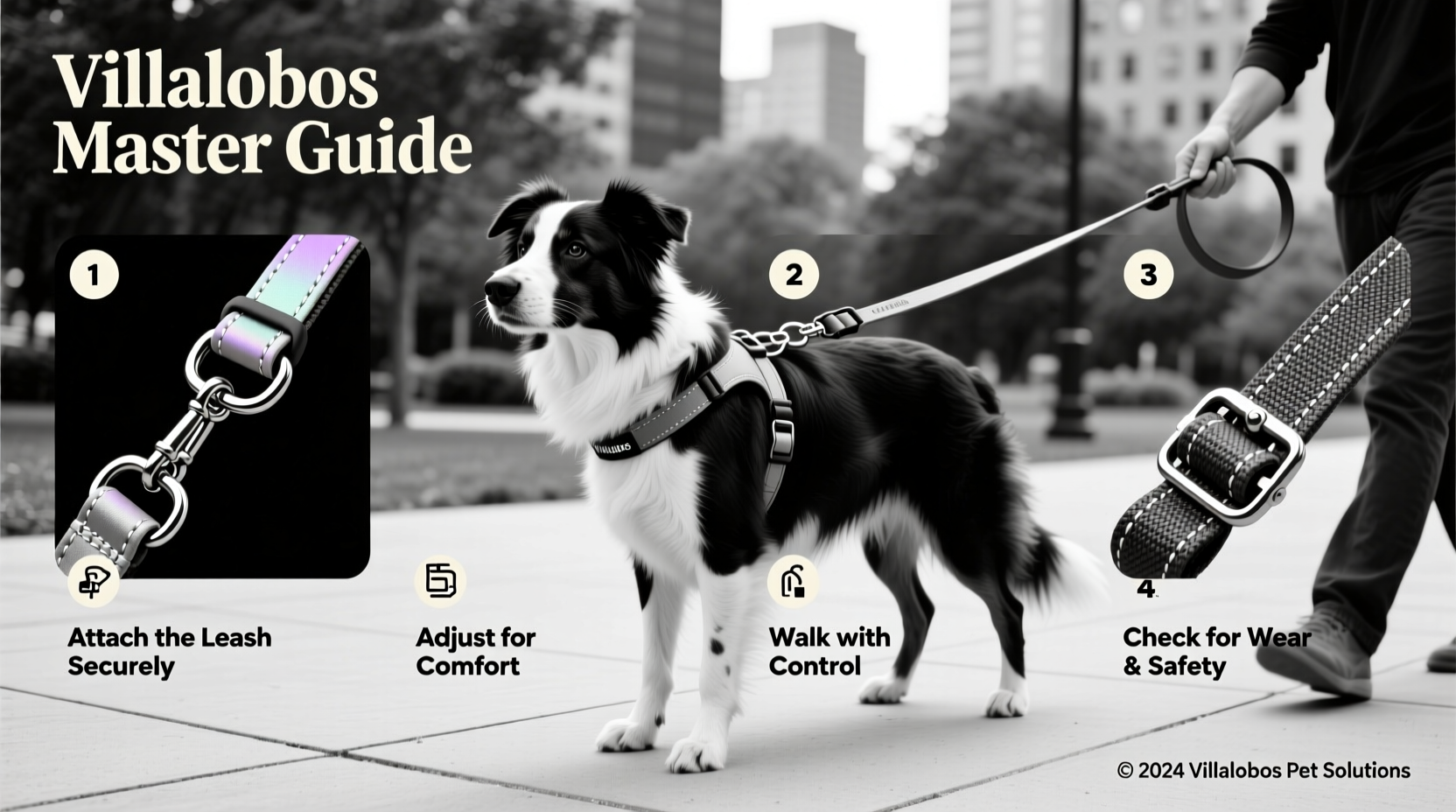
The Villalobos leash is typically a 6-foot-long, 1-inch-wide nylon webbing leash with a metal loop at one end and a handle formed by a stitched or reinforced section near the middle. It does not include clips on both ends like traditional leashes. Instead, the loop end goes over the dog’s head (behind the ears), while the handler holds the opposite end or uses the built-in handle. This configuration allows for quick corrections, improved control, and better posture alignment during walks.
Its design supports the principles of natural pack leadership: clear boundaries, consistent feedback, and physical awareness. The leash works best when used in conjunction with proper body language and timing from the handler.
Tip: Always inspect the stitching and metal loop before each use—fraying or weakened hardware can compromise safety.Step-by-Step Guide to Proper Use
Using the Villalobos leash effectively requires precision and consistency. Follow these steps to ensure correct application and maximize its benefits.
- Choose the Right Size: Select a leash appropriate for your dog’s breed and strength. A medium-sized dog (30–50 lbs) generally does well with a standard 6-foot model. Larger breeds may require reinforced versions.
- Position the Loop Correctly: Hold the metal loop open and slide it over your dog’s head from front to back, positioning it behind the ears and under the jaw—not around the neck like a collar. It should rest high on the shoulders, distributing pressure evenly across the chest and upper back.
- Secure Your Grip: Grasp the leash either at the handle (if present) or about 12–18 inches from the end. Keep your hand close to your waist, maintaining a short slack. Avoid holding it too tightly; tension should be applied only when necessary.
- Start Walking with Confidence: Begin walking forward with purposeful strides. Your dog should walk beside or slightly behind you—not pulling ahead. If they surge forward, apply a brief, firm tug upward and inward (a “correction”), then immediately release. This mimics natural canine communication.
- Maintain Calm Energy: Stay relaxed but assertive. Tension in your body transfers to your dog. Breathe steadily, keep your shoulders loose, and avoid jerking motions.
- End the Walk Properly: Remove the loop gently after returning home. Never yank it off. Reward calm behavior with verbal praise or a treat if part of your training plan.
Do’s and Don’ts When Using the Villalobos Leash
| Do’s | Don’ts |
|---|---|
| Use the leash for structured walks and behavioral training | Leave the leash on your dog unattended or as a regular collar |
| Apply corrections gently and only when needed | Pull continuously or use excessive force |
| Clean the leash regularly with mild soap and water | Machine-wash or expose to harsh chemicals |
| Store in a dry place away from direct sunlight | Allow it to sit damp or in humid environments |
| Supervise children using the leash | Let inexperienced handlers manage strong or reactive dogs |
Real-World Example: Transforming a Reactive Walker
Consider Max, a 45-pound Australian Shepherd mix adopted from a shelter. He lunged at other dogs, barked excessively, and pulled so hard his owner developed wrist pain. After switching to the Villalobos leash and applying structured walking techniques, changes began within two weeks.
The owner started by introducing the leash during low-distraction indoor sessions, allowing Max to get used to the feel. Outdoor walks began in quiet neighborhoods with plenty of space. Each time Max pulled, a controlled correction was applied—just enough to redirect attention—and followed by praise when he repositioned himself calmly beside the handler.
Within a month, Max walked with minimal pulling and responded promptly to directional cues. His confidence grew, and reactivity decreased significantly. The key wasn’t the leash alone, but consistent technique and calm leadership supported by the right tool.
“Tools are only as effective as the hands that wield them. The Villalobos leash isn’t about dominance—it’s about connection through clarity.” — Dana Reyes, Certified Canine Behavior Consultant
Essential Tips for Long-Term Success
- Practice Indoors First: Introduce the leash in a distraction-free environment to build familiarity.
- Avoid Over-Correction: Frequent or harsh tugs create fear and resistance. Corrections should be rare and precise.
- Pair with Positive Reinforcement: Combine gentle corrections with rewards for desired behavior to encourage learning.
- Replace Worn Leashes Promptly: Even high-quality nylon degrades over time. Replace if frayed, stretched, or discolored.
- Match Training to Your Dog’s Temperament: Shy dogs need gentler handling; strong breeds may require additional support like harness backups during early stages.
Frequently Asked Questions
Can I use the Villalobos leash on puppies?
Yes, but only under supervision and with extreme care. Puppies have developing joints and delicate tracheas. Use the leash briefly during structured training sessions, never for restraint or correction. Pair it with positive reinforcement and keep sessions short.
Is the Villalobos leash suitable for all dog breeds?
It works well for most medium to large breeds with moderate to high energy levels. Small or brachycephalic breeds (like Pugs or Chihuahuas) may be better suited to front-clip harnesses due to respiratory sensitivity. Always assess your dog’s individual needs.
How is this different from a slip collar or choke chain?
The Villalobos leash applies pressure across the chest and shoulder area rather than tightening around the neck. When used correctly, it avoids tracheal compression and focuses on posture and positioning, making it safer and more humane than traditional choke chains.
Conclusion: Take Control with Confidence
Mastering the Villalobos dog leash isn't about exerting power—it's about establishing respectful communication. With proper technique, consistent practice, and an understanding of canine psychology, this tool becomes an extension of your intent, guiding your dog toward balanced behavior. Whether you're managing a high-energy rescue or refining daily walks with a family pet, the Villalobos method offers a path to calmer, more connected outings.
💬 Have experience with the Villalobos leash? Share your story or tips below—your insights could help another dog owner find peace on the walk!








