
Squeaky toys are more than just a source of entertainment for dogs—they can be powerful tools in shaping behavior, reinforcing obedience, and building focus during training. When used strategically, these high-pitched playthings tap into a dog’s natural prey drive, making them highly motivating rewards. However, without proper technique, squeaky toys can become distractions or even encourage undesirable behaviors like possessiveness or overexcitement. The key lies in transforming a simple toy into a structured reinforcement tool within a consistent training framework.
The Science Behind Squeaky Toys and Canine Motivation
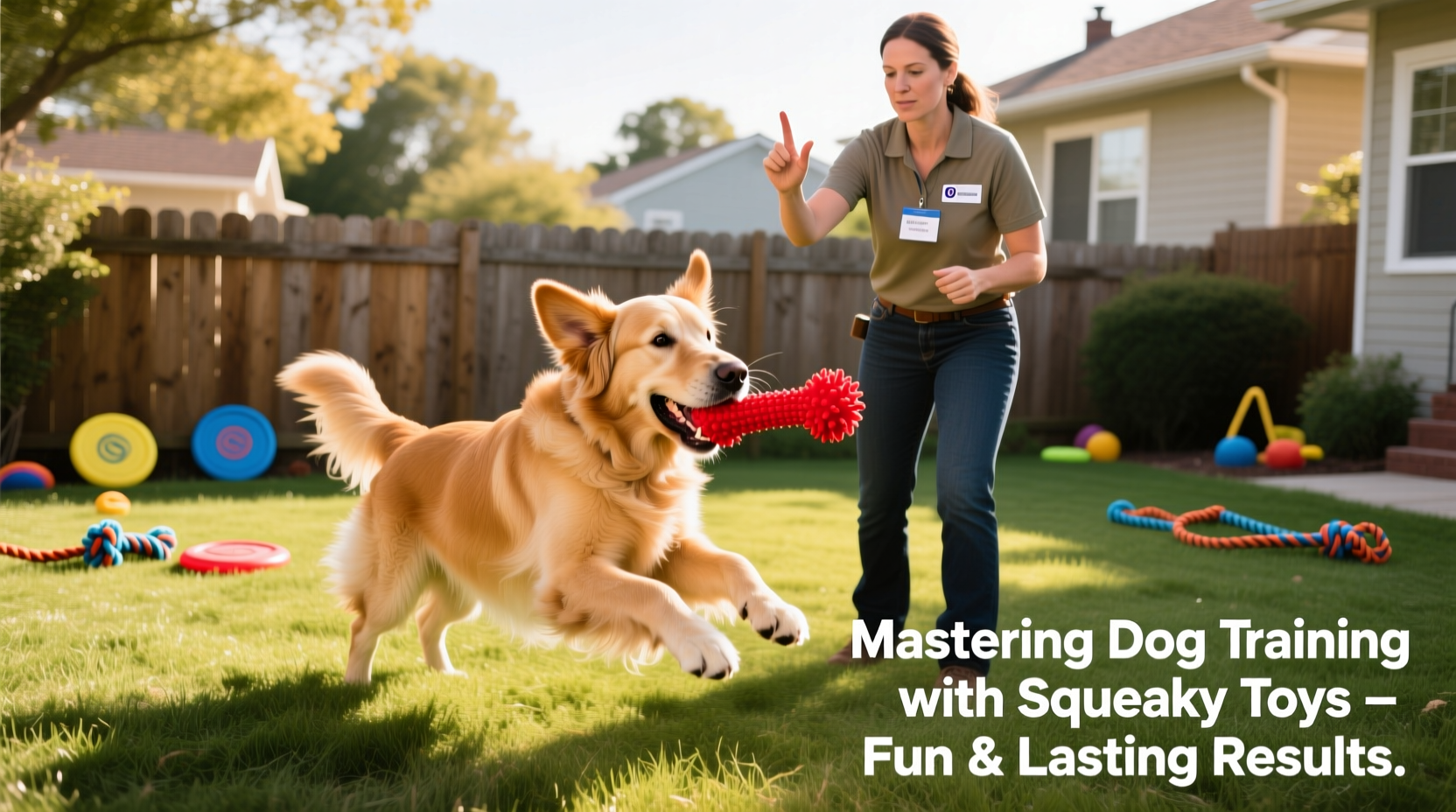
Dogs are instinctively drawn to sounds that mimic distressed prey. The sharp, high-frequency squeak closely resembles the cry of small animals, triggering a primal response in many breeds. This innate reaction makes squeaky toys exceptionally effective as positive reinforcers—especially for high-energy or working-dog breeds such as Border Collies, Jack Russells, or German Shepherds.
According to Dr. Karen Overall, a veterinary behaviorist, “The auditory feedback from a squeaky toy activates neural pathways associated with reward and pursuit. When paired correctly with desired behaviors, it becomes a conditioned reinforcer just like food or praise.”
Unlike treats, which satisfy hunger but may lose appeal over time, squeaky toys offer sensory stimulation and interactive engagement. This dual benefit keeps dogs mentally stimulated and physically involved, increasing their willingness to repeat trained actions.
Tip: Introduce the squeaky toy only during training or designated playtime to maintain its novelty and value.Building Focus: Using Squeaky Toys to Capture Attention
One of the most common challenges in dog training is maintaining attention amid distractions. A squeaky toy can serve as an excellent focus cue when introduced through controlled sequences.
Begin by holding the toy behind your back. Say your dog’s name clearly. The moment they make eye contact, produce the toy and give one quick squeak before immediately putting it away. Repeat this process five to six times per session, gradually increasing the delay between the name call and the reward. Over time, your dog learns that paying attention leads directly to access to the exciting toy.
This method is particularly useful for dogs easily distracted by environmental stimuli. It builds impulse control while reinforcing attentiveness—a foundational skill for advanced commands like “stay,” “leave it,” or off-leash responsiveness.
Step-by-Step Guide: Turning a Squeaky Toy into a Focus Tool
- Select a durable squeaky toy with a distinct sound.
- Wait until your dog is calm and not already fixated on toys.
- Say their name once; wait up to three seconds for eye contact.
- When eyes meet yours, quickly reveal the toy and squeak once.
- Immediately hide the toy again (even if dog looks away).
- Repeat 5–7 times per session, twice daily for best results.
- After one week, add mild distractions (e.g., light movement or background noise).
Shaping Desired Behaviors with Sound Cues
Beyond attention training, squeaky toys can be used in shaping complex behaviors through successive approximation. For example, teaching a dog to retrieve involves multiple steps: approaching the object, picking it up, holding it, turning toward you, and delivering it.
In this context, the squeak acts as a “bridge” signal—similar to a clicker—that marks the exact moment the dog performs the correct action. Instead of waiting until full retrieval, use the squeak the instant the dog touches the toy with their mouth. Pair this with immediate praise or a treat. Gradually raise the criteria: only squeak when the toy lifts off the ground, then only when brought two steps toward you, and so on.
This precision helps avoid confusion and accelerates learning. Because the sound is unique and attention-grabbing, it cuts through ambient noise better than verbal cues alone.
Do’s and Don’ts of Squeaky Toy Training
| Do’s | Don’ts |
|---|---|
| Use short bursts—one squeak per reward. | Don’t let your dog chew the toy to destruction during training. |
| Pair the squeak with praise or a treat initially. | Don’t use the toy excessively outside training sessions. |
| Rotate toys weekly to preserve motivation. | Don’t allow guarding or aggressive behavior around the toy. |
| Store the toy out of reach when not in use. | Don’t rely solely on the squeak without clear command pairing. |
Case Study: Transforming Reactivity in a Rescue Terrier
Max, a 3-year-old Jack Russell Terrier rescue, exhibited reactivity toward other dogs on walks. His owner struggled with traditional treat-based training because Max often ignored food under stress. A certified dog trainer introduced a red squeaky hedgehog toy reserved exclusively for training.
The process began at a distance where Max could see another dog but remain below threshold. Every time he glanced at his handler instead of lunging, the trainer gave a single squeak followed by a game of gentle tug. Within three weeks, Max began offering eye contact proactively upon spotting triggers. After six weeks, he walked calmly past other dogs with minimal intervention. The predictability and excitement of the squeaky toy created a reliable alternative behavior to reactivity.
“The squeaker became a switch,” said trainer Lisa Chen. “It redirected his arousal into a constructive channel. We replaced fear-driven lunging with focused engagement.”
“The squeaky toy isn’t just a reward—it’s a communication device. When timed precisely, it tells the dog exactly what we want.” — Lisa Chen, CPDT-KA Certified Dog Trainer
Advanced Techniques: Combining Commands and Retrieval Drills
Once basic obedience is established, integrate the squeaky toy into dynamic exercises that build reliability. One effective drill combines “drop it,” “come,” and “sit” into a continuous loop:
- Toss the toy a short distance after saying “get it.”
- Call your dog back using their name and “come.”
- Upon return, ask for “sit,” then “drop it” (offer a treat if needed).
- After release, give one celebratory squeak and initiate another round.
This sequence reinforces self-control, recall, and cooperation—all while keeping energy levels high and engagement strong. For dogs preparing for agility or field work, this mimics real-world task transitions where focus must shift rapidly between handler and environment.
Tip: Always end training sessions before your dog loses interest—this preserves enthusiasm for next time.Checklist: Maximizing Squeaky Toy Effectiveness
- ✅ Choose a toy that squeaks reliably but isn’t easily destroyed.
- ✅ Limit access to training and play sessions only.
- ✅ Use one squeak per reward—avoid continuous noise.
- ✅ Pair the squeak with verbal praise or treats in early stages.
- ✅ Rotate toys every 7–10 days to prevent habituation.
- ✅ Monitor for signs of resource guarding and address immediately.
- ✅ End each session positively, before excitement turns chaotic.
Frequently Asked Questions
Can I use squeaky toys for all dog breeds?
Most dogs respond well to squeaky toys, especially those with strong prey drives. However, some sensitive or anxious dogs may find the sound startling. Observe your dog’s reaction—if they flinch or avoid the toy, opt for quieter alternatives like soft plush toys without squeakers.
How do I stop my dog from destroying the toy?
Supervise all interactions. Remove the toy after a few minutes of chewing. Teach a solid “drop it” command using trade-ups (e.g., exchanging for a treat). Consider reinforced stitching or rubber-based squeaky toys designed for durability.
Should I phase out the squeaky toy once training is complete?
Not necessarily. While initial learning benefits from high-value rewards, you can transition to intermittent reinforcement. Use the toy occasionally to refresh skills and maintain motivation, much like occasional bonuses keep human employees engaged.
Conclusion: Turn Play Into Progress
Training doesn’t have to be rigid or repetitive. By harnessing the natural allure of squeaky toys, you transform ordinary play into meaningful learning experiences. The result? A dog who listens not out of obligation, but because cooperation leads to something they genuinely love.
Consistency, timing, and structure turn a simple squeak into a language of trust and clarity. Whether you’re teaching basic cues or managing complex behavioral issues, integrating squeaky toys thoughtfully amplifies your impact. Start small, stay patient, and celebrate every flicker of focus.
🚀 Ready to elevate your training game? Grab a squeaky toy today, set aside ten minutes, and begin building a stronger, more responsive bond—one precise squeak at a time.








