
Dog tag training—teaching your dog to “tag” or make physical contact with your hand on cue—is more than just a cute trick. It’s a foundational behavior that enhances focus, improves off-leash reliability, and strengthens communication between you and your dog. Whether you're preparing for agility, building everyday obedience, or simply deepening your bond, mastering the \"tag\" command offers practical benefits across environments. This guide walks you through the science-backed process of shaping the behavior from scratch, troubleshooting common challenges, and integrating it into real-world scenarios.
Understanding the Purpose of Tag Training
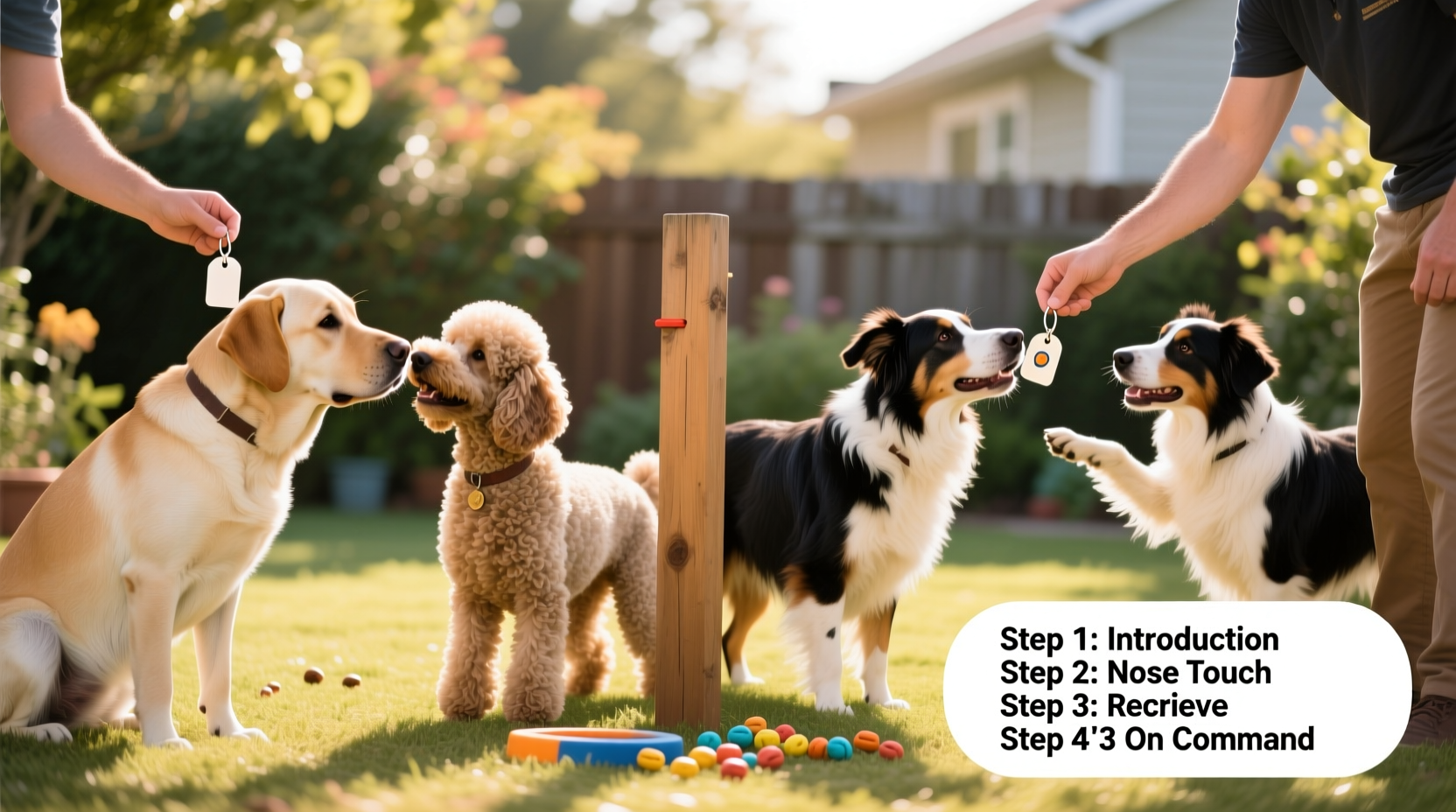
Tag training involves teaching your dog to intentionally touch the palm of your hand with their nose when given a verbal or visual cue. While it may seem simple, this behavior lays the groundwork for advanced skills such as directional cues, impulse control, and reliable recall. The act of tagging reinforces attention, encourages engagement, and gives dogs a clear way to check in with their handler.
In professional dog sports like agility and obedience trials, handlers use the tag as a reset point—a moment where the dog returns focus before proceeding to the next task. In daily life, it can serve as an alternative to jumping, a distraction during overstimulation, or a bridge to more complex behaviors.
“Targeting behaviors like tagging give dogs a job to do when they’re unsure what’s expected. That clarity reduces anxiety and increases confidence.” — Dr. Kendra Pope, Certified Animal Behaviorist
The Step-by-Step Process to Teach Tag on Command
Teaching your dog to tag requires patience, consistency, and positive reinforcement. Follow this structured approach to shape the behavior effectively.
- Choose Your Cue: Decide whether you’ll use a verbal cue like “tag,” “touch,” or a hand signal (e.g., open palm held low). Use only one cue consistently during training.
- Start in a Low-Distraction Environment: Begin indoors or in a quiet yard. Minimize noise, people, and other animals to help your dog focus.
- Lure with a Treat: Hold a treat close to your open palm. When your dog sniffs or touches your hand, immediately mark the behavior with a clicker or verbal marker like “yes!” then reward.
- Phase Out the Lure: After 5–10 successful repetitions, present your empty hand in the same position. If your dog touches it, mark and reward with a treat from your other hand.
- Add the Verbal Cue: Once your dog reliably targets your hand, say your chosen cue just before presenting your palm. Over time, the cue becomes associated with the action.
- Practice at Different Angles and Heights: Gradually vary how you present your hand—higher, lower, to the side—to generalize the behavior.
- Increase Duration and Distance: Ask your dog to tag from a few steps away, then gradually increase distance as accuracy improves.
- Introduce Distractions: Practice in busier areas—like a sidewalk or park—once your dog responds consistently in calm settings.
Common Challenges and How to Overcome Them
Even with consistent training, some dogs struggle with certain aspects of tag behavior. Recognizing these issues early allows for timely correction.
- Nose shyness: Some dogs hesitate to touch hands due to past experiences. Start by letting them sniff your hand freely, rewarding any interaction. Gradually shape the touch using treats placed near—but not on—the palm.
- Mouthing instead of touching: If your dog tries to bite or grab your hand, withdraw it calmly and wait. Only reward gentle nose contact. Using a flat palm (not fingers) reduces temptation to play-bite.
- Slow response: If your dog ignores the cue, ensure the environment isn’t too distracting. Revert to a quieter space and rebuild the association between cue and reward.
- Inconsistency outside the home: Generalization takes time. Practice in multiple locations, gradually increasing difficulty. Always set your dog up for success by starting close and rewarding generously.
Training Tools and Techniques Comparison
| Method | How It Works | Best For | Limitations |
|---|---|---|---|
| Luring with Treats | Guide dog’s nose to hand using food | Beginners, fast initial learning | Risk of dependency; must phase out lure |
| Clicker + Shaping | Reward successive approximations of the behavior | Precise timing, building complex behaviors | Requires practice with marker timing |
| Hand Targeting Mats | Train touch on a portable object first | Dogs hesitant to touch hands | Extra step needed to transfer to hand |
| Verbal Cue Only | Say cue and wait for initiation | Advanced dogs with strong cue recognition | Ineffective without prior foundation |
Real-Life Application: A Case Study
Sophie, a two-year-old Border Collie mix adopted from a shelter, struggled with reactivity toward cyclists and squirrels during walks. Her owner, Mark, found traditional recall unreliable in high-arousal situations. He began teaching “tag” as a default focus behavior.
Starting in his backyard, Mark used chicken cubes to reinforce nose touches. Within a week, Sophie was confidently tagging his palm on cue. He then practiced near the end of the driveway, rewarding her for checking in before distractions passed. After three weeks of progressive exposure, Sophie began offering tags spontaneously when she spotted a squirrel. The behavior became a self-reinforcing pause button, allowing Mark to redirect her before escalation.
Today, Sophie walks off-leash in controlled areas, using the tag as a bridge to sit-stays and recalls. The behavior didn’t eliminate reactivity, but it gave both dog and owner a shared language for managing it.
Integrating Tag into Daily Routines and Advanced Skills
Once your dog masters the basic tag, expand its utility:
- Recall booster: Call your dog and reward with a tag followed by a treat. This creates a fun, interactive return.
- Impulse control game: Ask for multiple tags before releasing your dog to eat, go outside, or greet someone.
- Directional training: Use the tag to guide movement—e.g., tag left hand = turn left, useful in agility or heeling.
- Calm greeting alternative: Replace jumping by asking visitors to offer a hand for tagging instead.
Frequently Asked Questions
Can all dogs learn to tag?
Yes. Tag training is suitable for dogs of all ages and breeds. Puppies often pick it up quickly due to natural curiosity, while older or shy dogs may need extra patience and higher-value rewards.
What if my dog loses interest during training?
Switch to a higher-value treat, shorten sessions, or take a break. Training should feel like a game. If motivation drops, reassess timing, distractions, or fatigue levels.
Should I use a clicker or verbal marker?
Both work. Clickers provide precise feedback, ideal for shaping subtle behaviors. Verbal markers (“yes!”, “got it!”) are more accessible for casual training. Choose one and stay consistent.
Final Tips for Long-Term Success
- Practice randomly throughout the day—not just in formal sessions.
- Vary rewards: sometimes food, sometimes praise, sometimes play.
- Gradually reduce treat frequency once the behavior is solid, switching to intermittent reinforcement.
- Always end on a positive note—even after setbacks.
Conclusion
Mastering dog tag training isn’t about adding another trick to your dog’s repertoire—it’s about building a reliable line of communication. The simple act of touching your hand becomes a powerful tool for focus, safety, and connection. With structured training, realistic expectations, and consistent reinforcement, any dog can learn to tag confidently on command. Start today in a quiet space, celebrate small wins, and watch how this foundational skill transforms your everyday interactions.
🚀 Ready to strengthen your bond and boost obedience? Grab some treats, call your dog over, and begin your first tag session now. Share your progress in the comments—we’d love to hear your story!








