
Trimming your dog’s nails is one of the most overlooked yet essential aspects of pet care. Neglecting this simple task can lead to discomfort, posture issues, or even joint pain over time. Yet, many pet owners avoid it—often due to fear of hurting their dog or causing stress during grooming. The truth is, with the right tools, timing, and technique, nail trimming can become a calm, routine part of pet care that both you and your dog can tolerate—or even enjoy.
This guide walks through every stage of the process, from recognizing when nails need cutting to mastering the trim without triggering anxiety. Whether you’re dealing with a wiggly puppy or a senior dog resistant to handling, these strategies build confidence and consistency.
Why Regular Nail Trimming Matters
Dog nails grow continuously, much like human fingernails. When left untrimmed, they can curl, split, or press into the paw pad, leading to pain and infection. Overgrown nails also alter how your dog walks, shifting weight distribution and potentially contributing to arthritis in older dogs.
Indoor dogs are especially prone to overgrowth since walking on soft surfaces doesn’t wear down nails naturally. Outdoor dogs may fare better, but still benefit from regular checks. A general rule: if you hear clicking on hard floors, it’s time to trim.
“Regular nail maintenance isn’t just cosmetic—it’s preventive healthcare.” — Dr. Lena Reyes, DVM, Canine Wellness Specialist
Essential Tools for Safe Nail Trimming
Using the correct tool makes all the difference in precision and safety. Here are the most common options:
- Guillotine clippers: Feature a hole where the nail inserts and a blade that slides across to cut. Best for small to medium dogs.
- Scissor-style clippers: Resemble small pruning shears. Offer more control and are ideal for larger breeds with thick nails.
- Grinders (Dremel tools): File down nails gradually. Excellent for dogs afraid of clipping sounds, though they require patience and training.
- Styptic powder: A must-have for stopping bleeding if you accidentally cut too close to the quick.
Step-by-Step Guide to Stress-Free Nail Trimming
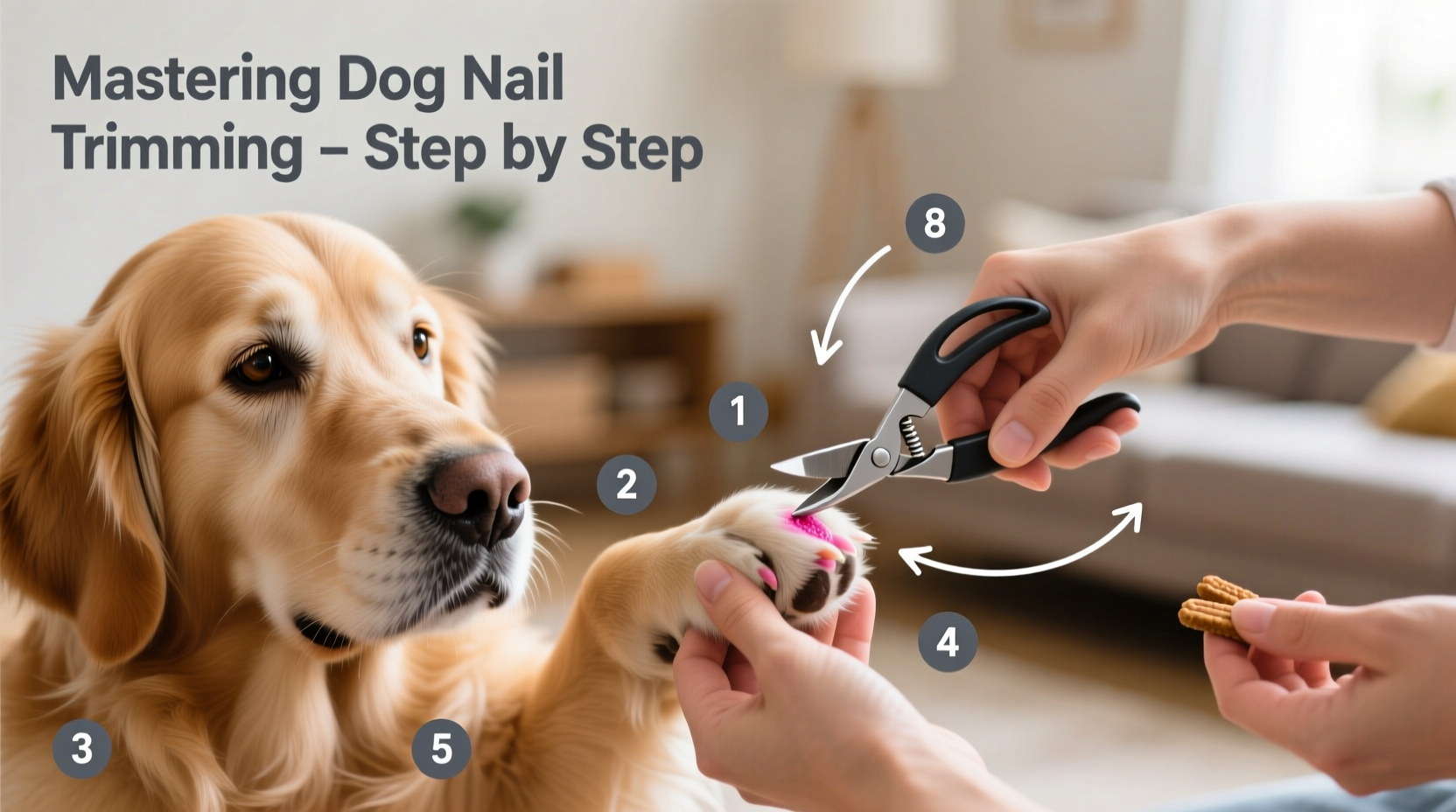
The key to success lies in preparation, pacing, and positive reinforcement. Follow this timeline to build trust and ensure safety:
- Desensitize your dog to handling. For several days before trimming, gently touch your dog’s paws while offering treats. Do this multiple times daily to build comfort.
- Introduce the tool. Let your dog sniff the clippers or grinder. Turn on a grinder at a low setting nearby while giving praise or snacks to create a positive association.
- Choose a quiet time. Pick a moment when your dog is relaxed—after a walk or play session works well.
- Restrain gently. Sit beside your dog, hold one paw firmly but calmly, and maintain soothing verbal cues.
- Locate the quick. In light-colored nails, the pinkish center is the blood-rich quick. Avoid cutting into it. For black nails, make small cuts and look for a dark dot in the center of the cut surface—that’s the beginning of the quick.
- Cut at a 45-degree angle. Clip just below the curve of the nail, removing only the sharp tip. Use multiple small trims rather than one deep cut.
- File sharp edges. Smooth rough ends with a file or grinder to prevent snagging.
- Reward immediately. Give a treat and praise after each nail, even if you only do one or two per session.
- Repeat as needed. Trim one or two nails per day if your dog resists longer sessions. Consistency builds tolerance.
Real Example: Helping a Nervous Rescue Dog
Milo, a three-year-old mixed breed rescue, flinched at any paw handling. His owner began by simply touching his feet for two seconds, then offering a high-value treat. Over ten days, the duration increased. By day 14, she introduced the clippers—first just holding them near his paw. On day 18, she clipped one nail. Within three weeks, Milo allowed all nails to be trimmed in one short session. The secret? No rushing, no force, and always ending on a positive note.
Do’s and Don’ts of Dog Nail Trimming
| Do’s | Don’ts |
|---|---|
| Trim every 3–4 weeks | Wait until nails click on the floor |
| Use sharp, clean tools | Use dull clippers that crush nails |
| Have styptic powder ready | Panic if you nick the quick |
| Work in a calm environment | Force your dog if stressed |
| Stop if your dog resists | Pinch or restrain aggressively |
Frequently Asked Questions
How often should I trim my dog’s nails?
Most dogs need trimming every 3 to 4 weeks. Active outdoor dogs may go slightly longer, while indoor or senior dogs typically require more frequent attention. Check weekly by listening for floor clicking or visually inspecting length.
What if I cut the quick?
Stay calm. Apply styptic powder or cornstarch with gentle pressure for 30–60 seconds until bleeding stops. Comfort your dog without overreacting, as your reaction can influence their future response. The incident isn’t harmful long-term, but it’s a signal to cut less next time.
Can I use human nail clippers?
No. Human clippers aren’t designed for the thickness and curvature of dog nails. They can cause splitting or crushing, leading to pain and resistance. Always use tools made specifically for dogs.
Building a Positive Grooming Routine
Nail trimming shouldn’t be an isolated chore. Integrate it into a broader care routine that includes ear cleaning, teeth brushing, and coat brushing. This normalizes handling and reduces fear.
Create a checklist to stay consistent:
- ☐ Check nails weekly
- ☐ Gather tools in advance
- ☐ Choose a quiet time
- ☐ Reward calm behavior
- ☐ Record last trim date
- ☐ Replace worn tools annually
Over time, your dog will associate nail care with safety and rewards. Some even learn to offer their paws on command—an impressive skill born from patience and positive reinforcement.
Final Thoughts
Mastering dog nail trimming isn’t about perfection—it’s about progress. Every small step toward comfortable handling strengthens your bond and supports your dog’s long-term health. You don’t need to be a professional groomer to get it right. What matters is consistency, care, and compassion.
Start today. Pick up your clippers, spend two minutes touching your dog’s paws, and offer a treat. That’s the foundation of a stress-free grooming habit. With time, what once seemed daunting becomes just another quiet moment of connection between you and your pet.
💬 Have a nail-trimming success story or tip? Share your experience in the comments—your insight could help another pet owner overcome their fears and build confidence.








