Choosing a small dog breed that’s not only adorable but also easy to train can make a significant difference in your daily life. The Maltipoo—a cross between a Maltese and a Poodle—and the Yorkshire Terrier (Yorkie) are two of the most popular companion dogs in homes across the U.S. Both are compact, affectionate, and full of personality. But when it comes to training, subtle differences in temperament, intelligence, and motivation can tip the scales in favor of one breed over the other.
Understanding how each breed learns, responds to commands, and handles consistency helps set realistic expectations and leads to a more harmonious relationship. While neither dog is inherently “difficult,” their distinct traits influence how smoothly training progresses.
Temperament and Trainability: A Core Comparison
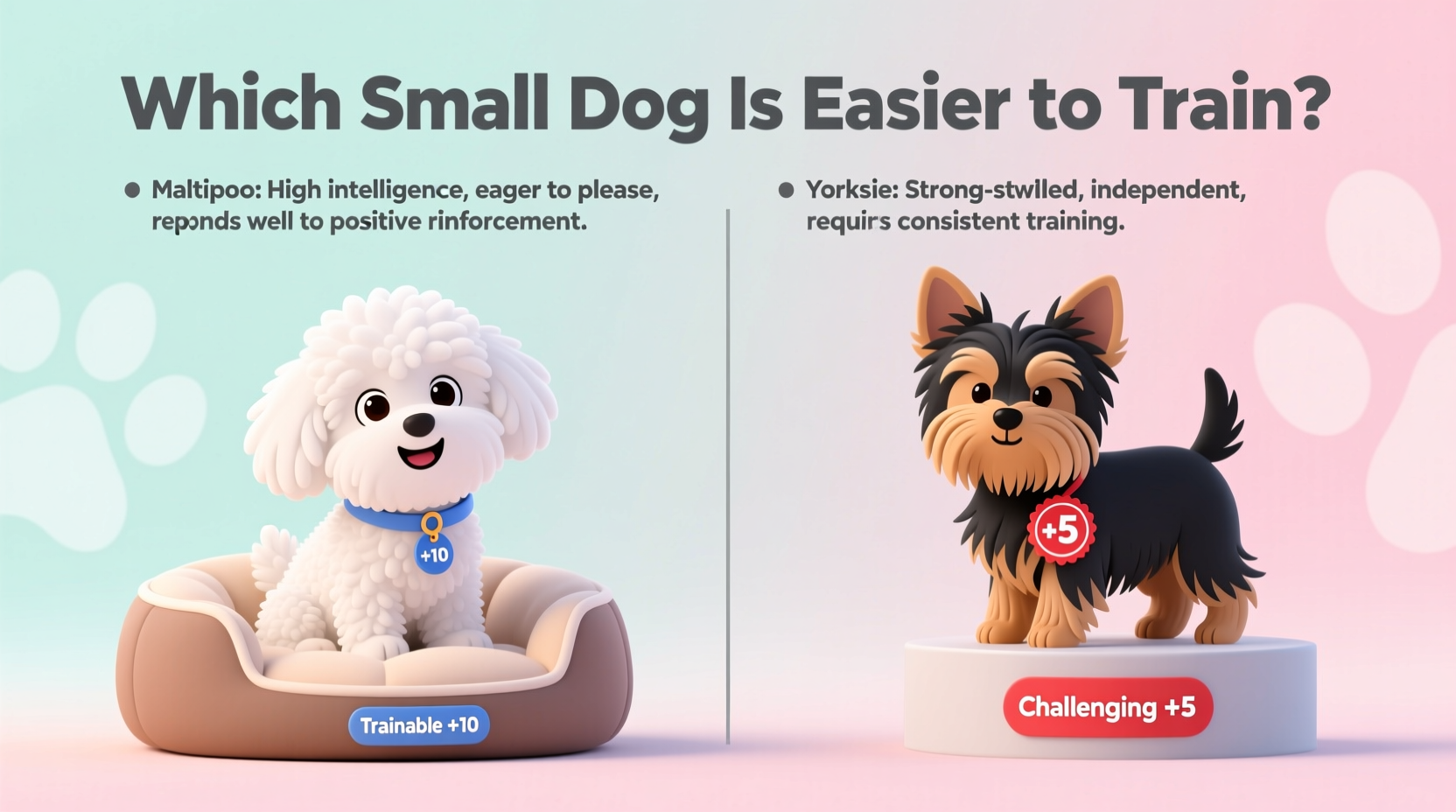
Trainability isn’t just about obedience—it’s shaped by a dog’s willingness to please, attention span, sensitivity to correction, and response to rewards. The Maltipoo inherits intelligence from its Poodle parent and gentleness from the Maltese, resulting in a highly adaptable and eager-to-please companion. This blend makes them naturally responsive to positive reinforcement techniques like treats, praise, and play.
In contrast, the Yorkie carries a bold, confident spirit despite its tiny size. Bred originally as ratters in 19th-century mills, Yorkies possess strong prey drives and independent streaks. While intelligent, they can be stubborn if they don’t see a reason to comply. Their alertness makes them excellent watchdogs, but this same trait can lead to excessive barking if not properly managed during training.
“Yorkies are smart enough to know exactly what they’re doing when they ignore you. Consistency and early socialization are non-negotiable.” — Dr. Linda Harper, Canine Behavior Specialist
The key distinction lies in motivation. Maltipoos typically aim to please their owners, making them quicker to pick up cues. Yorkies, while capable learners, often assess whether a command benefits them before acting—requiring firmer, structured guidance.
Training Milestones: What to Expect by Age
Puppies of both breeds begin learning from day one. However, the pace at which they master foundational skills varies. Below is a timeline outlining typical progress based on real-world training outcomes:
- 8–12 weeks: Both breeds can begin housebreaking and learn simple commands like “sit” and “come.” Maltipoos tend to catch on faster due to higher eagerness to bond.
- 3–6 months: Socialization becomes critical. Maltipoos adapt well to new people and environments with minimal resistance. Yorkies may show wariness or reactivity, requiring patient exposure.
- 6–9 months: Distraction management begins. Maltipoos maintain focus in moderate settings. Yorkies may test boundaries, especially around smaller animals or loud noises.
- 9–12 months: Advanced commands (e.g., “stay,” “leave it”) solidify. Maltipoos usually excel here. Yorkies need repetition and clear consequences for non-compliance.
- 12+ months: Behavioral habits are largely set. Well-trained individuals of either breed become reliable companions, though Yorkies may retain some feistiness without ongoing reinforcement.
Breed Comparison Table: Training Traits Side-by-Side
| Training Factor | Maltipoo | Yorkie |
|---|---|---|
| Intelligence & Learning Speed | High – quick learner, excels with repetition | High – clever but selective listener |
| Willingness to Please | Very high – motivated by owner approval | Moderate – acts independently if bored |
| Sensitivity to Correction | High – responds poorly to harsh tones | Moderate – tolerates firmness better than Maltipoos |
| Focus Span | Good – stays engaged with interactive training | Fair – easily distracted by stimuli |
| Barking Tendency | Low to moderate – alerts but less persistent | High – prone to frequent barking without training |
| Socialization Ease | Easy – generally friendly with strangers | Requires effort – can be territorial or wary |
| Best Training Method | Positive reinforcement, short sessions | Consistent rules, reward-based with structure |
Real-Life Example: Two Homes, Two Breeds, One Goal
Sarah adopted a Maltipoo named Milo at 10 weeks old. She used daily 10-minute training sessions with treats and verbal praise. By 5 months, Milo reliably responded to “sit,” “stay,” “come,” and “potty outside.” He adapted quickly to leash walking and rarely barked unnecessarily. Sarah attributed his progress to his eagerness to earn affection and low frustration threshold.
Meanwhile, James welcomed a Yorkie puppy named Bella into his apartment. Despite using similar methods, Bella resisted “come” commands when excited and barked at passersby through the window. It wasn’t until James introduced a clicker, set firm routines, and enrolled her in a puppy class that she began responding consistently. By 8 months, Bella was well-mannered—but only after intensive, daily effort.
This comparison illustrates that while both dogs can be trained successfully, the Maltipoo often requires less troubleshooting and emotional investment during the formative months.
Actionable Checklist: Set Your Small Dog Up for Training Success
- ✅ Begin basic commands (sit, stay, come) by 8–10 weeks
- ✅ Use small, soft treats as immediate rewards
- ✅ Limit training sessions to 5–10 minutes to match attention span
- ✅ Crate train from day one to establish routine
- ✅ Expose puppy to diverse sounds, surfaces, and people before 16 weeks
- ✅ Enroll in a positive-reinforcement puppy class by 12 weeks
- ✅ Address barking early with “quiet” command and redirection
- ✅ Maintain consistency across all family members—no mixed signals
- ✅ Practice leash walking daily, starting indoors
- ✅ Reinforce good behavior throughout adulthood
Frequently Asked Questions
Are Maltipoos smarter than Yorkies?
Both breeds rank high in canine intelligence, particularly in adaptive learning. Maltipoos often appear “smarter” because they’re more eager to follow directions. Yorkies are equally capable but apply their intelligence more independently—sometimes choosing not to obey unless motivated.
Which breed is better for first-time dog owners?
The Maltipoo is generally recommended for first-time owners due to its forgiving nature, lower tendency toward aggression, and responsiveness to gentle training. Yorkies can succeed in novice homes, but only with committed, consistent handling and early behavioral intervention.
Do Yorkies take longer to potty train?
Yes, many owners report that Yorkies take longer to fully housebreak—sometimes up to 6–8 months or more. Their small bladders require frequent outdoor trips, and some develop preferences for indoor pads, making full outdoor training challenging. Maltipoos typically grasp outdoor routines faster, especially with a strict schedule.
Final Verdict: Which Is Easier to Train?
If ease of training is your top priority, the Maltipoo holds a clear edge. Its hybrid vigor, affectionate nature, and desire to please create an ideal foundation for smooth learning. Most Maltipoo owners experience rapid progress with minimal setbacks, especially when using positive methods.
The Yorkie, while trainable and deeply loyal, demands greater patience, structure, and assertiveness. Without consistent leadership, their confidence can morph into dominance, and their alertness into nuisance barking. They thrive with experienced handlers or dedicated beginners willing to invest time in behavioral shaping.
Ultimately, success depends not just on breed but on the owner’s commitment. A well-trained Yorkie is just as capable as a Maltipoo—but getting there often involves more effort, repetition, and problem-solving.
💬 Have a Maltipoo or Yorkie? Share your training journey in the comments below! Your insights could help another pet parent make a confident choice.








