For pet owners who prioritize both style and safety, the choice between a luxury dog carrier and a standard plastic crate can be more than just logistical—it’s emotional. Whether you're traveling by car, flying with your dog, or simply need a secure space at home, the right containment solution matters. But does spending hundreds on a designer carrier actually improve your dog’s experience compared to a $50 plastic crate? The answer depends on your lifestyle, travel frequency, and what your dog values most: comfort, ventilation, or familiarity.
Understanding the Core Differences
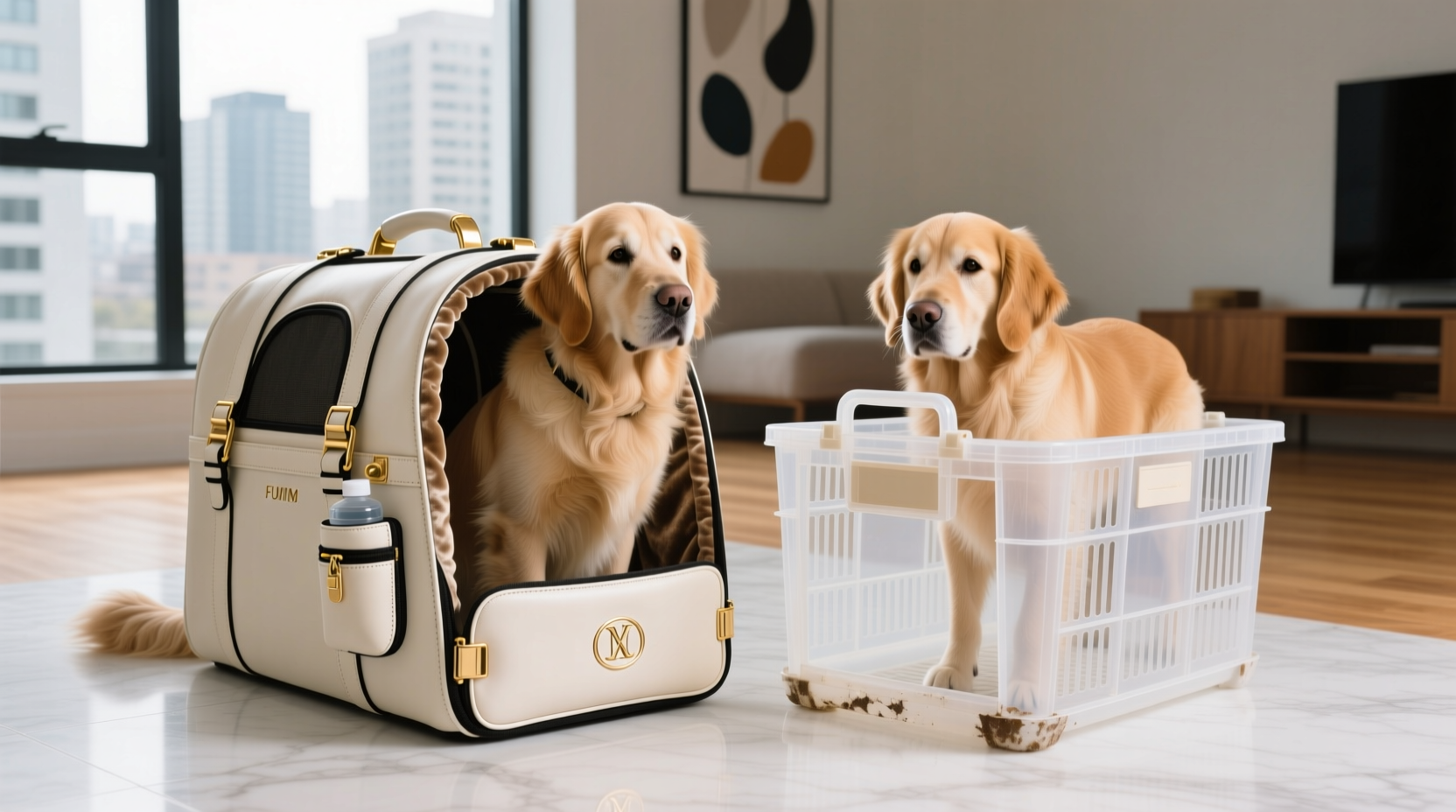
Luxury dog carriers and plastic crates serve the same fundamental purpose—safe, contained transport—but they diverge significantly in design, materials, and functionality. Plastic crates, often referred to as airline-approved hard-sided carriers, are molded from durable polypropylene and designed primarily for safety during travel. They typically feature metal mesh doors, ventilation slots on all four sides, and a smooth interior that's easy to clean.
Luxury carriers, on the other hand, are crafted from premium fabrics like ballistic nylon, vegan leather, or even real leather, often lined with memory foam padding. Brands like Sherpa, Sleepypod, and Fable Pets emphasize aesthetics, portability, and softness, positioning their products as fashion-forward accessories that double as functional carriers.
The key difference lies not just in appearance but in intended use. Plastic crates excel in high-stress environments—airports, vet visits, car rides—where durability and crash protection are paramount. Luxury carriers shine in urban settings, short trips, or when carried like a handbag, offering a cozy, den-like atmosphere that many small dogs prefer.
Safety: The Non-Negotiable Factor
When it comes to protecting your dog in an accident, independent crash testing reveals a stark contrast. According to the Center for Pet Safety, only a handful of carriers pass rigorous crash standards. Most luxury soft-sided carriers fail under impact, offering little structural integrity. In contrast, well-designed plastic crates—especially those labeled “crash-tested” or “certified”—distribute force more effectively and prevent collapse.
“Never assume a stylish carrier is safe for car travel. If it hasn’t been independently tested, it’s essentially a fabric sack with handles.” — Dr. Rachel Stern, DVM and Pet Travel Safety Advocate
For drivers, this means that while a plush carrier might soothe your dog’s anxiety, it may not protect them in a collision. Many luxury brands now offer “crash-certified” models, such as the Sleepypod Clickit Terrain harness-compatible carrier, which combines soft materials with internal rigid frames. These hybrids bridge the gap but come at a premium—often exceeding $200.
Tip: Always verify if a carrier has been crash-tested by a third party. Look for certification from the Center for Pet Safety or similar organizations.Comfort and Behavioral Impact
Dogs thrive on routine and environmental cues. A plastic crate, especially one used consistently at home, becomes a familiar den—a place of retreat and security. For anxious or noise-sensitive dogs, the enclosed, opaque nature of a hard crate can reduce overstimulation.
Luxury carriers, with their padded interiors and breathable fabrics, often provide superior cushioning and temperature regulation. Dogs with joint issues or senior pets may find the memory foam base far more comfortable than the hard floor of a plastic container. However, the open mesh panels common in soft carriers can expose dogs to visual stimuli, potentially increasing stress in busy environments.
One Boston terrier owner, Maria Lin, shared her experience: “I switched from a plastic crate to a Sherpa bag for weekend trips. My dog hated the hard surface and would whine the whole ride. With the padded carrier, he curls up and naps. But I only use it for short drives—I wouldn’t risk it on a long highway trip without a seatbelt tether.”
Comparative Breakdown: Features at a Glance
| Feature | Luxury Dog Carrier | Plastic Crate |
|---|---|---|
| Average Price | $80–$300+ | $40–$90 |
| Weight | Light (3–7 lbs) | Heavy (8–15 lbs) |
| Ventilation | Moderate (mesh panels) | Excellent (slots on all sides) |
| Crash Safety | Rarely certified (unless specified) | Often meets safety standards |
| Portability | High (shoulder straps, tote-style) | Low (bulky, less ergonomic) |
| Durability | Moderate (fabric wear over time) | High (resists chewing, impacts) |
| Airline Approval | Some models approved | Most IATA-compliant |
When the Extra Cost Makes Sense
Investing in a luxury carrier isn’t inherently wasteful—it’s about matching the product to your needs. Here are scenarios where the higher price tag delivers real value:
- Frequent urban commuting: If you’re hopping on subways, walking blocks to appointments, or carrying your dog often, a lightweight, stylish carrier reduces strain and blends seamlessly into city life.
- Senior or arthritic dogs: Memory foam and orthopedic support can make travel less painful for older pets.
- Emotional sensitivity: Dogs with anxiety may respond better to the snug, fabric-walled environment of a soft carrier versus the clinical feel of plastic.
- Brand-conscious lifestyle: For those who view pet gear as an extension of personal style, luxury carriers offer aesthetic cohesion with outfits and accessories.
However, if your primary use is air travel, road trips, or containing a strong or chew-prone dog, a sturdy plastic crate remains the smarter, safer investment—even if it lacks curb appeal.
Step-by-Step: Choosing the Right Option for Your Dog
- Assess your primary use: Will you mostly drive, fly, walk, or use it at home?
- Measure your dog: Ensure they can stand, turn, and lie down comfortably in any carrier.
- Check airline requirements: If flying, confirm size, material, and labeling compliance.
- Verify safety certifications: Look for crash-test results or IATA approval.
- Test portability: Carry the empty carrier for 10 minutes to gauge shoulder or hand fatigue.
- Introduce gradually: Let your dog spend time in the carrier at home with treats and blankets.
FAQ: Common Questions Answered
Can I use a luxury carrier for car travel?
Only if it’s explicitly labeled as crash-tested and used with a secure seatbelt system. Most soft carriers are not designed for impact protection and should not be used loose in a vehicle.
Are plastic crates cruel or uncomfortable?
No—when introduced properly, crates mimic a den and provide a sense of security. Many dogs choose to nap in their crates voluntarily. Comfort can be improved with bedding, ventilation, and positive reinforcement training.
Do luxury carriers last as long as plastic ones?
Generally, no. Fabric wears over time, zippers fail, and seams can tear—especially with active dogs. Plastic crates are more resilient and easier to sanitize, making them better for long-term, heavy-duty use.
Final Verdict: Value Over Vanity
The extra cost of a luxury dog carrier is justified only when it aligns with your dog’s physical needs and your real-world usage. For daily walks, boutique errands, or comforting a nervous pet, a well-made soft carrier offers tangible benefits in comfort and convenience. But when safety is non-negotiable—on highways, flights, or in unpredictable environments—plastic crates remain the gold standard.
The smartest approach? Own both. Use the plastic crate for travel and vet visits, and keep the luxury carrier for outings where style and softness matter. This dual-system strategy maximizes safety, comfort, and longevity without compromising either.
💬 Have you made the switch—or stuck with plastic? Share your experience and help fellow pet parents make informed choices.








