For cat owners tired of scooping litter daily, automated litter boxes promise convenience and cleaner homes. Two models have recently drawn significant attention: the Leos Loo Too and the Litter Robot. While both aim to simplify cat care, their price tags differ by hundreds of dollars. The Litter Robot 4 retails for around $700, while the Leos Loo Too comes in at just under $300. That gap raises a critical question: is the premium truly justified? Or can pet owners save money without sacrificing performance?
This article compares these two popular self-cleaning litter boxes across design, functionality, reliability, user experience, and long-term costs—helping you decide whether the higher price of the Litter Robot delivers proportionate value.
Design and Build Quality
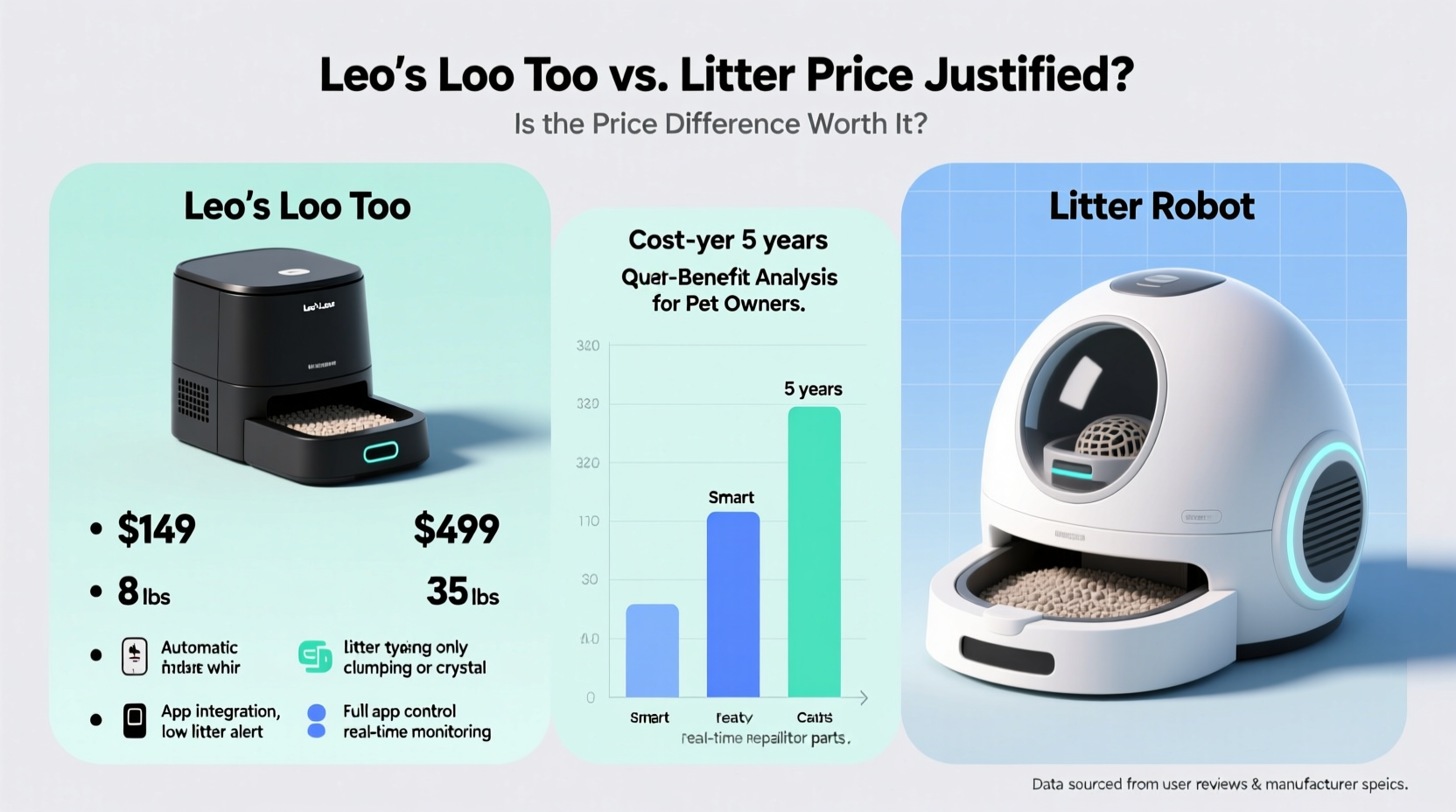
The first noticeable difference lies in aesthetics and engineering. The Litter Robot has a sleek, modern dome-shaped design with a weight-sensing system that waits until your cat exits before initiating cleaning. Its construction uses durable ABS plastic and includes features like whisper-quiet operation and an anti-odor seal.
In contrast, the Leos Loo Too adopts a more utilitarian look. It’s boxier, slightly louder during cycles, and uses a simpler timer-based cleaning mechanism. While it lacks the refined finish of the Litter Robot, its build is still solid, using BPA-free plastic designed for longevity. Importantly, both units are large enough to accommodate cats up to 20 pounds, which covers most domestic breeds.
Where the Litter Robot excels is in thoughtful design details—such as a removable bonnet for easy access and a sifting tray that efficiently separates waste. The Leos Loo Too requires more manual intervention when changing litter or clearing jams, which may frustrate some users.
Tip: Regardless of model, place your automatic litter box on a hard, level surface to reduce vibration noise and ensure proper alignment.Performance Comparison: How Well Do They Clean?
Cleaning efficiency is the core function of any self-cleaning litter box. Both devices use a rotating mechanism to sift clumps into a sealed waste drawer. However, their approaches differ significantly.
The Litter Robot employs a three-phase cleaning cycle: wait (after cat exit), rake (sifts waste), and return (resets for next use). This process minimizes false triggers and ensures complete separation of clean and soiled litter. Users report fewer missed clumps and consistent performance over time.
The Leos Loo Too operates on a fixed timer. After your cat uses the box, you must manually start the cycle or set a delay. This increases the risk of premature activation if your cat re-enters quickly, potentially trapping them inside—a concern echoed in multiple customer reviews.
Additionally, the Litter Robot’s patented oval design allows for more even distribution of litter during rotation, reducing waste and extending litter life. The Leos Loo Too tends to push litter toward the edges, requiring occasional redistribution by hand.
“Automated litter boxes should enhance safety and hygiene—not create new risks. Timing mechanisms without weight sensors can compromise both.” — Dr. Alan Tan, Feline Behavior Specialist
Feature Breakdown: What You Get for the Extra Cost
The price difference between these two units reflects more than branding—it reflects advanced technology and usability enhancements.
| Feature | Litter Robot 4 | Leos Loo Too |
|---|---|---|
| Weight-Sensing Technology | Yes – prevents cycling while cat is inside | No – relies on manual/timer activation |
| App Connectivity | Yes – Wi-Fi enabled with usage tracking | No |
| Cycle Noise Level | Quiet (~45 dB) | Moderate (~60 dB) |
| Waste Drawer Capacity | Holds up to 3 weeks for one cat | Requires emptying every 5–7 days |
| Litter Type Compatibility | Clumping litter only | Clumping litter only |
| Setup & Calibration | Guided app setup | Manual calibration required |
| Price (MSRP) | $699 | $299 |
The Litter Robot’s app integration allows remote monitoring—ideal for travelers or multi-cat households. You receive alerts when the waste drawer is full or if a cycle fails. These features add peace of mind but may be unnecessary for tech-averse users.
Real-World Example: One Household’s Experience
Sarah from Portland adopted two rescue cats last year and struggled with litter maintenance. She initially bought the Leos Loo Too for its affordability. Within six weeks, she noticed issues: her smaller cat startled by sudden cycles, and the unit occasionally failed to detect waste clumps. After one incident where the machine started mid-use (luckily no injury), she upgraded to the Litter Robot.
“The difference was night and day,” Sarah said. “The weight sensor gives me confidence. I don’t worry about my cats anymore. Yes, it cost more, but I’ve saved money on litter because it uses less, and I haven’t had to replace parts.”
Her experience highlights a key insight: lower upfront cost doesn’t always mean better long-term value.
Long-Term Costs and Reliability
When evaluating price, consider total ownership cost—not just the sticker price. The Litter Robot comes with a 1-year warranty (extendable), and replacement parts like rakes and power bases are available through official channels. Customer support is responsive, and firmware updates improve performance over time.
The Leos Loo Too offers a standard 6-month warranty. Some users report difficulty sourcing replacement components after the warranty expires. Given its mechanical simplicity, repairs might require third-party fixes or full replacement sooner than expected.
Also factor in litter consumption. Because the Litter Robot optimizes each cycle, users typically refill every 3–4 weeks. Leos Loo Too users often refill weekly due to inefficient sifting and spillage, increasing recurring expenses.
Checklist: Choosing the Right Model for Your Home
- ✅ Do you have multiple cats? → Litter Robot handles high traffic better.
- ✅ Is safety a top priority? → Weight sensing prevents accidents.
- ✅ Do you travel often? → App notifications provide remote oversight.
- ✅ Are you on a tight budget? → Leos Loo Too offers basic automation at half the cost.
- ✅ Do you dislike frequent maintenance? → Larger waste drawer reduces emptying frequency.
Frequently Asked Questions
Can both units handle large cats?
Yes. Both are rated for cats up to 20 lbs. However, very large or long-tailed cats may occasionally trigger false detections in the Litter Robot, though this is rare.
Do they work with all types of litter?
Both perform best with medium-grain clumping clay litter. Avoid lightweight or crystal litters, as they may not sift properly or could damage internal mechanisms.
Is the Litter Robot worth triple the price?
For many, yes—but it depends on priorities. If reliability, safety, and low maintenance matter, the investment pays off. For budget-focused users willing to accept trade-offs, the Leos Loo Too remains a functional entry-level option.
Final Verdict: Is the Price Difference Worth It?
The answer hinges on how much you value peace of mind, safety, and long-term convenience. The Litter Robot isn't merely a luxury; it's a refinement of automated litter technology. Its weight sensor, quiet operation, larger capacity, and smart features address real pain points experienced with cheaper alternatives.
The Leos Loo Too delivers core automation at a fraction of the cost, making it accessible. But compromises in safety, consistency, and durability mean it’s best suited for single-cat homes where supervision is possible and budgets are constrained.
If you’re investing in a product meant to last years and integrate seamlessly into daily life, the Litter Robot justifies its premium. It reduces stress for both cats and owners, minimizes ongoing costs, and performs reliably under varied conditions.
That said, the growing popularity of mid-tier options like the Leos Loo Too signals demand for affordable automation. As competition increases, we may see smarter, safer budget models emerge. Until then, understand what you're trading for savings—and decide whether those trade-offs align with your household’s needs.
🚀 Ready to make an informed decision? Evaluate your cat’s habits, your lifestyle, and your tolerance for maintenance. Whether you choose innovation or economy, the right choice is the one that works—for you and your feline family.








