Bringing nature indoors during the holiday season often means decorating with fresh pine branches, wreaths, and garlands. For many, a touch of sparkle elevates the festive mood—enter glitter sprays. But if you share your home with a parrot, this seemingly harmless decoration choice could pose serious health risks. Parrots have highly sensitive respiratory systems and metabolisms that react severely to airborne chemicals and particulates. This article examines whether applying glitter spray to real pine branches is safe when birds are present, explores the specific dangers involved, and provides actionable steps to maintain both holiday cheer and avian safety.
Why Parrots Are Uniquely Vulnerable to Household Toxins
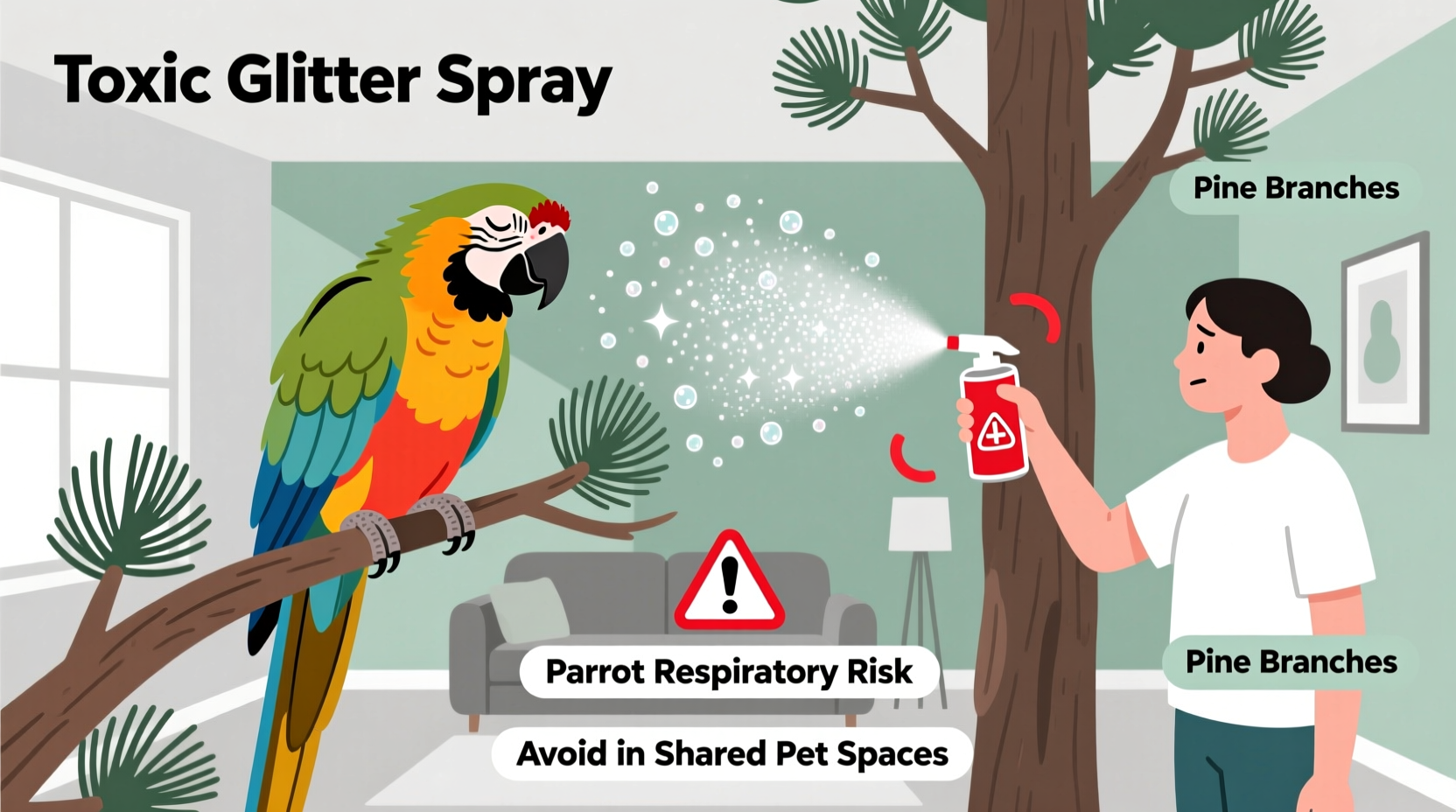
Parrots are not just pets—they are delicate biological systems finely tuned for survival in tropical or subtropical environments, not modern human homes filled with synthetic materials. Their respiratory anatomy differs significantly from mammals. Birds have air sacs and a unidirectional airflow system that makes them incredibly efficient at absorbing oxygen—but also at absorbing toxins. Unlike humans, who might cough or sneeze in response to irritants, parrots can inhale dangerous particles deeply into their lungs before showing any visible signs of distress.
Moreover, their high metabolic rate accelerates the absorption and processing of substances, meaning that even low-level exposure to volatile organic compounds (VOCs) or fine particulate matter can lead to rapid onset of illness. According to Dr. Laurie Hess, a board-certified avian veterinarian and director of the Veterinary Medical Center for Birds, “Birds are like canaries in coal mines—literally. They show signs of environmental toxicity faster than any other household pet.”
“Any aerosolized product used near birds should be treated as potentially hazardous until proven otherwise.” — Dr. Gregory Rich, Avian Veterinarian, Louisiana
The Hidden Dangers of Glitter Spray on Pine Branches
Glitter sprays marketed for holiday décor typically contain a mixture of plastic micro-particles (polyethylene terephthalate or PET), adhesive binders, solvents, and propellants such as butane or propane. When sprayed, these ingredients become airborne in fine mist form, which can linger in enclosed spaces for hours. Once settled, they continue to off-gas VOCs and shed microscopic particles that may be disturbed by movement or airflow.
When applied to porous organic material like pine branches, the risk increases. The natural oils in pine (such as pinene) can interact with synthetic chemicals, potentially creating new irritants. Additionally, dried resin on branches can trap and later release volatile compounds over time, especially when exposed to indoor heat sources like radiators or fireplaces.
Worse still, glitter particles themselves are problematic. If ingested—either directly through curious beak exploration or indirectly via preening contaminated feathers—they can cause gastrointestinal blockages. Inhaled particles can embed in lung tissue, leading to chronic respiratory disease or acute respiratory failure.
Tip: Never use any aerosol product—including hairspray, cleaning agents, or decorative sprays—in a room where your parrot lives or spends time.Chemical Breakdown: What’s Really in Glitter Spray?
To understand the full scope of risk, it's essential to examine common ingredients found in commercial glitter sprays. While formulations vary by brand, most share a core set of components:
| Ingredient | Purpose | Risk to Parrots |
|---|---|---|
| Butane/Propane | Propellant to disperse spray | Highly toxic when inhaled; depresses central nervous system |
| Polyethylene Terephthalate (PET) | Plastic glitter particles | Non-digestible; causes impaction if ingested |
| Acrylic Resin | Binder to adhere glitter | Irritates eyes, skin, and respiratory tract |
| Ethanol or Isopropyl Alcohol | Solvent carrier | Drying to mucous membranes; neurotoxic in high concentrations |
| Fragrance Additives | Scent enhancement | Unknown chemical mix; potential allergens and irritants |
This combination creates a perfect storm for avian toxicity. Even after the initial spray dissipates, residual chemicals can remain active on surfaces for days. A study published in *Avian Medicine and Surgery* noted that birds exposed to decorated holiday trees treated with artificial snow or glitter showed elevated stress markers and reduced lung capacity within 48 hours of exposure.
Real-Life Scenario: A Holiday Mishap with Lasting Consequences
In late December 2022, Sarah M., a parrot owner from Portland, Oregon, decorated her living room with a freshly cut pine garland. Wanting to add some seasonal shine, she lightly coated sections of the greenery with an off-the-shelf glitter spray. Her African grey parrot, Jasper, lived in an enclosure nearby but had daily out-of-cage time in the same room.
Within 36 hours, Jasper began sneezing, fluffing his feathers excessively, and breathing with audible wheezing. He stopped talking—a hallmark sign of distress in greys—and lost appetite. Rushed to an emergency avian clinic, he was diagnosed with acute inhalation pneumonitis. The vet linked the condition to recent exposure to aerosolized chemicals, likely exacerbated by the pine’s natural terpenes volatilizing indoors.
Jasper recovered after five days of nebulization therapy and antibiotics, but his recovery required ongoing respiratory monitoring. Sarah removed all decorated greenery immediately and switched to fabric-based holiday décor. “I thought a light spray wouldn’t hurt,” she said. “I didn’t realize how fast it could affect him. I’ll never use anything sprayed near him again.”
Safer Alternatives to Glitter Spray for Bird-Safe Holiday Decorating
You don’t need glitter or chemical sprays to create a festive atmosphere. With a little creativity, you can enjoy seasonal décor that’s safe for both humans and birds. Consider these non-toxic options:
- Natural embellishments: Use dried citrus slices, cinnamon sticks, whole cloves, or popcorn strings (unsalted, unbuttered).
- Fabric ribbons: Choose cotton or burlap in holiday colors instead of metallic or plastic ribbons.
- Wooden ornaments: Hand-carved or painted wooden shapes add charm without shedding particles.
- LED fairy lights: Battery-operated string lights provide sparkle without heat or fumes.
- Homemade paper chains: Made from recycled paper, these are safe, biodegradable, and fun to craft with family.
If you still wish to incorporate pine branches, keep them untreated. Display them in rooms your bird doesn’t access, or seal them in a sunroom or entryway. Always wash hands thoroughly after handling decorated greenery before interacting with your bird.
Step-by-Step Guide: Creating a Bird-Safe Holiday Environment
- Assess your space: Identify where your parrot spends most of its time and designate it a \"decoration-free zone\" for risky items.
- Choose materials carefully: Avoid anything aerosolized, metallic, or chemically treated. Opt for natural, static-free fabrics and untreated wood.
- Decorate outside the main habitat: Apply any sprays or treatments in a garage or outdoor area, far from bird zones.
- Allow off-gassing time: If you must bring in treated décor, let it sit sealed in a separate, ventilated area for at least 72 hours before introducing it indoors.
- Monitor air quality: Use an indoor air quality monitor to detect VOCs. Levels above 500 ppb should raise concern.
- Observe your bird closely: Watch for early signs of distress—sneezing, tail bobbing, lethargy, changes in vocalization.
- Have an emergency plan: Know the location of the nearest avian vet and keep their number saved in your phone.
Checklist: Pre-Decorating Safety Review for Parrot Owners
Before adding any holiday décor to your home, run through this checklist to ensure your bird’s safety:
- ☐ No aerosol products will be used near bird areas
- ☐ All pine branches are untreated and free of chemical residues
- ☐ Decorations are made of natural, non-shedding materials
- ☐ Electrical cords from lights are secured and inaccessible
- ☐ Christmas tree water is covered or inaccessible (contains bacteria and possible additives)
- ☐ Room has adequate ventilation
- ☐ Emergency avian vet contact information is posted and accessible
Frequently Asked Questions
Can my parrot be affected by glitter spray even if it’s not in the same room?
Yes. Aerosolized particles and VOCs travel easily through doorways, HVAC systems, and open spaces. Even distant spraying can result in low-level exposure, which is dangerous due to birds’ sensitivity. It’s best to avoid using such products in the home entirely.
Are \"non-toxic\" glitter sprays safe for homes with parrots?
Not necessarily. Products labeled “non-toxic” are typically tested on mammals and may still contain respiratory irritants. There are no standardized safety tests for birds. Until proven otherwise, assume all aerosol sprays are unsafe around parrots.
What should I do if my parrot shows signs of distress after exposure?
Remove the bird from the environment immediately. Place it in a quiet, warm, well-ventilated area with clean air. Do not attempt home remedies. Contact an avian veterinarian right away—even mild symptoms can escalate rapidly.
Conclusion: Celebrate Safely, Protect Your Feathered Family Member
Holiday traditions should bring joy, not risk. For parrot owners, the decision to use glitter spray on pine branches isn’t just about aesthetics—it’s a matter of health and responsibility. The evidence is clear: these sprays introduce multiple hazards that can compromise a bird’s fragile respiratory and digestive systems. Even minimal exposure can lead to severe consequences.
By choosing natural, non-aerosol alternatives and taking proactive steps to safeguard your bird’s environment, you can enjoy a festive season without compromising your companion’s well-being. Remember, your parrot isn’t just part of the household—it’s family. Treat their safety with the same care you’d give any loved one.
💬 Have you made changes to your holiday routine for your bird’s safety? Share your story or tips in the comments—your experience could help another parrot parent avoid a dangerous mistake.








