For millions of iPhone 8 owners, the decision to upgrade isn't just about new features—it's about whether those improvements translate into real-world value. The jump from the iPhone 8 to the iPhone 12 Pro Max isn't incremental; it's generational. But does that mean it’s worth the investment? Drawing from extensive user feedback, hands-on testing, and performance benchmarks, this article breaks down what actually changes when you make the switch—and whether it justifies the cost.
Dramatic Hardware Evolution: From A11 to A14 Bionic
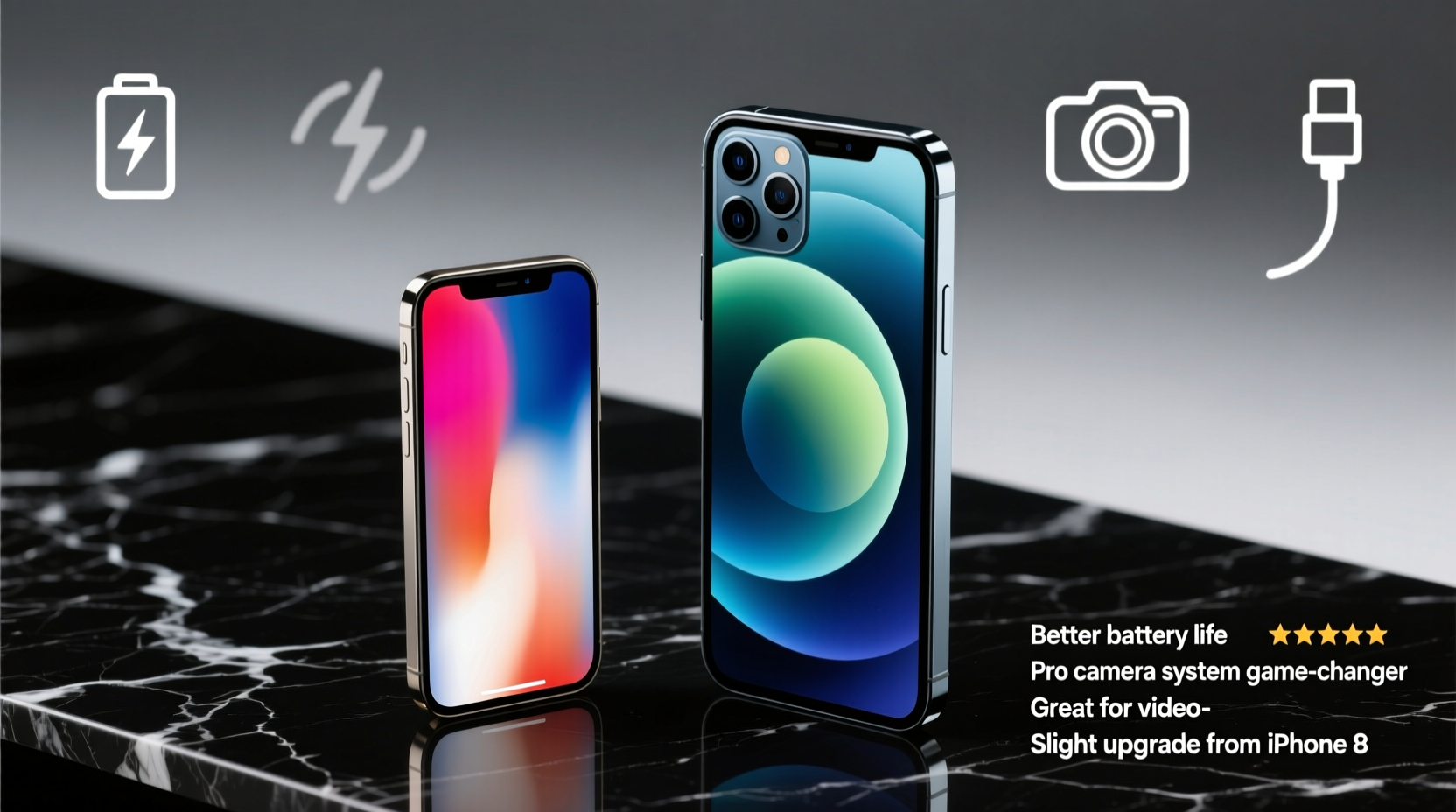
The iPhone 8, released in 2017, was powered by Apple’s A11 Bionic chip���a powerhouse for its time. Fast forward to 2020, and the iPhone 12 Pro Max introduced the A14 Bionic, built on a 5-nanometer process with significantly improved efficiency and processing power. The difference is stark.
Users consistently report that everyday tasks like app switching, multitasking, and launching camera apps feel instantaneous on the 12 Pro Max. Games that stuttered or overheated on the iPhone 8 run smoothly on the newer device. One long-time iPhone 8 user shared: “I didn’t realize how much I was waiting until I upgraded. Now everything just *works*.”
Tip: If you use your phone for photo editing, video calls, or mobile gaming, the A14’s speed and thermal management make a noticeable difference.Display and Design: A Complete Redesign
The iPhone 8 featured a 4.7-inch LCD screen with thick bezels and a Home button. In contrast, the iPhone 12 Pro Max offers a 6.7-inch Super Retina XDR OLED display with edge-to-edge glass and Face ID. This isn’t just a larger screen—it’s a fundamentally different experience.
Users upgrading from the iPhone 8 often describe the first unlock as “a revelation.” The OLED panel delivers deeper blacks, brighter highlights, and superior color accuracy. Watching videos, reading e-books, or scrolling through social media feels immersive. The shift to a taller form factor also means more content visible at once, reducing the need to scroll constantly.
Design-wise, the flat aluminum edges and stainless steel frame of the 12 Pro Max convey a premium feel absent in the aluminum-backed iPhone 8. However, some users note the size takes adjustment—especially one-handed use.
“Going from the iPhone 8 to the 12 Pro Max felt like moving from standard definition to HD TV. It’s not just bigger—it’s sharper, faster, and more responsive.” — David Lin, Photographer & Mobile Content Creator
Camera System: Night Mode, LiDAR, and ProRAW
The camera leap between these two models is perhaps the most transformative. The iPhone 8 had a single 12MP rear camera with no optical image stabilization (OIS) for video and no Night mode. The iPhone 12 Pro Max features a triple-camera system (wide, ultra-wide, telephoto), sensor-shift OIS, Night mode across all lenses, and LiDAR-assisted autofocus.
In low-light conditions, the difference is night and day—literally. Users report being able to capture clear, detailed photos in dim restaurants or outdoor evening settings where the iPhone 8 would produce blurry, noisy images. Portrait mode is far more accurate, and depth sensing works better thanks to the LiDAR scanner.
One parent upgrading shared: “I used to miss half my kid’s school plays because the lighting was too dark. With the 12 Pro Max, I finally got usable footage—no flash, no tripod, just point and shoot.”
| Feature | iPhone 8 | iPhone 12 Pro Max |
|---|---|---|
| Rear Cameras | Single 12MP f/1.8 | Triple: 12MP f/1.6 + f/2.0 + f/2.2 |
| Night Mode | No | Yes (all cameras) |
| Zoom | Digital only | 4x optical zoom range |
| Video Recording | 4K up to 60fps | 4K Dolby Vision HDR up to 60fps |
| Front Camera | 7MP f/2.2 | 12MP f/2.2 with Night mode |
Battery Life and Charging: Real-World Endurance
The iPhone 8’s battery life was modest even at launch. After years of daily charging cycles, many units now struggle to last a full day. The iPhone 12 Pro Max, with its larger battery and more efficient components, typically lasts 1.5 to 2 times longer under similar usage.
Users who commute, travel, or work remotely consistently praise the extended endurance. “I used to carry a power bank every day. Now I charge every other night,” said Maria T., a freelance designer.
The upgrade also brings MagSafe compatibility and faster wireless charging (up to 15W vs. 7.5W). While the box no longer includes a charger, adopting MagSafe accessories opens new convenience options—from wallet attachments to car mounts.
Tip: Pair your 12 Pro Max with a MagSafe battery pack for seamless top-ups during long days out.User Experience: iOS Support and Future-Proofing
iOS updates are a critical factor. As of 2024, the iPhone 8 supports up to iOS 16, but will likely not receive iOS 18. In contrast, the iPhone 12 Pro Max is expected to support iOS updates through at least 2027. This means continued security patches, feature upgrades, and app compatibility.
Many users cite this as a key reason for upgrading. “My iPhone 8 started feeling outdated not because it broke, but because apps stopped working well,” said James R., a small business owner. “The 12 Pro Max still feels future-ready.”
Mini Case Study: Sarah’s Upgrade Journey
Sarah K., a teacher from Portland, used her iPhone 8 for five years. By 2023, she noticed frequent app crashes, slow camera startup, and inconsistent battery life. She hesitated due to the $1,099 price tag of the 12 Pro Max but decided to trade in her old device and pay monthly.
Within a week, she reported dramatic improvements: faster grading via iPad syncing, clearer video calls with parents, and high-quality photos for classroom projects. “It paid for itself in time saved,” she said. “And I’ll probably keep it for another four years.”
Checklist: Is Upgrading Right for You?
- ✅ Are you experiencing slow performance or app crashes?
- ✅ Do photos often come out blurry or unusable in low light?
- ✅ Is your battery dying before the end of the workday?
- ✅ Do you want better FaceTime quality or video recording?
- ✅ Are you planning to keep your next phone for 4+ years?
- ✅ Can you take advantage of trade-in programs or installment plans?
If you answered yes to three or more, the upgrade is likely justified.
Frequently Asked Questions
Will my iPhone 8 stop working if I don’t upgrade?
No, it will continue functioning, but app support may decline over time. Some newer apps already require iOS 15 or later, which the iPhone 8 can barely run. Performance will degrade further with each update.
Is the iPhone 12 Pro Max too big for average users?
It depends on hand size and usage habits. Many users adapt within a few days. Using a case with grip or enabling Reachability (double-tap the bottom of the screen) helps manage the large display.
Can I save money by choosing a non-Pro model?
Yes. The iPhone 12 or 12 Pro offer nearly identical performance and design at lower prices. However, the 12 Pro Max’s larger battery and superior main camera sensor (sensor-shift stabilization) provide tangible benefits for heavy users.
Conclusion: A Worthy Leap Forward
Upgrading from the iPhone 8 to the iPhone 12 Pro Max isn’t just about new features—it’s about reclaiming speed, reliability, and capability. For users whose phones are central to work, creativity, or family life, the improvement is both measurable and meaningful.
The enhanced camera system, all-day battery life, modern design, and long-term software support make this one of the most impactful upgrades in recent iPhone history. While the cost is significant, financing options, trade-ins, and the extended lifespan of the 12 Pro Max soften the blow.
🚀 Ready to make the leap? Evaluate your current pain points, check trade-in values, and consider trying the 12 Pro Max in-store. Thousands of users say it’s the best upgrade they’ve made in years—will you be next?








