
When it comes to budget smartphones from the mid-2010s, two names often come up in nostalgic or practical discussions: the Asus ZenFone series and the Samsung Galaxy J7 Prime. Both devices carved out a reputation for offering solid value at accessible price points. But years later, users still debate: is the Asus really that much better than the Samsung J7 Prime? The answer isn’t black and white—it depends on what you prioritize in daily use, longevity, and software experience.
This article breaks down the real differences between these two popular budget contenders, not through marketing specs alone, but through actual user experiences, long-term reliability, and practical functionality. We’ll compare hardware, software, camera quality, durability, and upgrade potential—giving you an honest, no-hype perspective.
Hardware Showdown: Build Quality and Performance
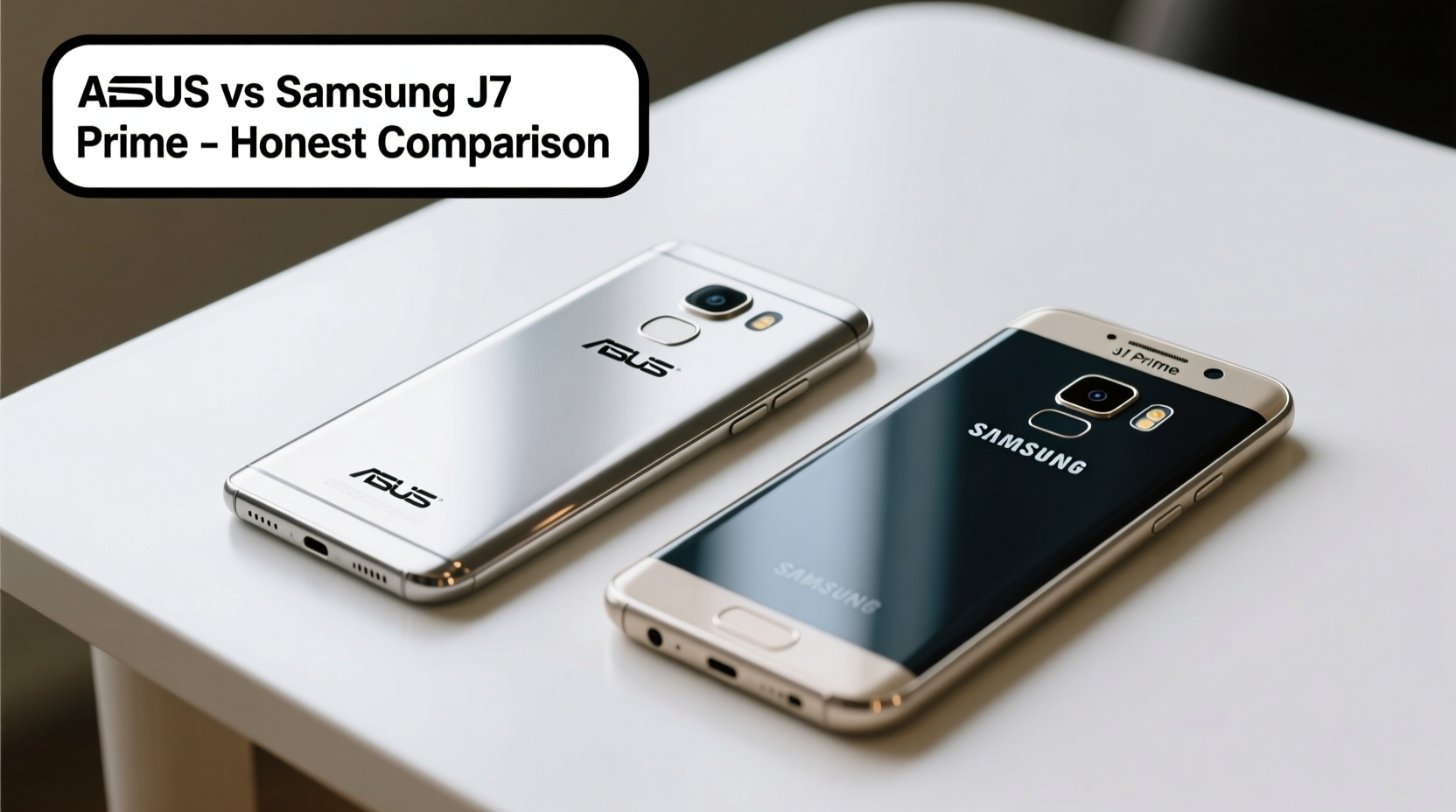
The Samsung Galaxy J7 Prime, released in 2016, featured a metal unibody design that was a step above many plastic competitors. It ran on an Exynos 7870 processor with 3GB of RAM and 32GB of storage (expandable). At the time, this was considered robust for its class. The device felt solid in hand, with a premium look and decent weight distribution.
Meanwhile, Asus countered with models like the ZenFone 3 Max (ZC520TL) and ZenFone 3S Max, which leaned heavily into battery life—offering 4100mAh and even 5000mAh variants. However, their build quality often used polycarbonate instead of metal, making them feel less premium despite similar pricing. Processors were typically MediaTek chips, which underperformed compared to Samsung’s Exynos in multitasking and app launch speed.
Tip: Don't judge a phone by battery size alone—efficiency matters more. A smaller battery with optimized software can last longer than a larger one with poor power management.In real-world usage, the J7 Prime consistently delivered smoother navigation and fewer stutters when switching between apps. Asus devices, while boasting bigger batteries, sometimes suffered from sluggish interfaces due to lower-tier chipsets and heavier UI skins.
Camera Comparison: Real Photos vs. Spec Sheets
On paper, both phones launched with 13MP rear cameras and 8MP front shooters. But megapixels don’t tell the whole story.
The J7 Prime included an f/1.9 aperture lens, which allowed more light intake—crucial for low-light photography. Samsung’s image processing also favored natural skin tones and balanced exposure. In indoor settings or during evening walks, the J7 Prime produced noticeably clearer, less grainy photos.
Asus models varied significantly across regions and versions. Some ZenFones had slower autofocus, inconsistent HDR, and over-sharpened images. While daylight shots could be acceptable, night photography often revealed noise and poor dynamic range.
“Many budget phones promise flagship-like cameras, but consistent tuning and sensor quality win over raw specs.” — David Lin, Mobile Imaging Analyst at TechPulse Asia
If photography is important—even casually—the J7 Prime holds up better over time simply because of more reliable processing and faster shutter response.
Software Experience and Longevity
This is where the gap widens. Samsung provided timely Android updates for the J7 Prime, eventually upgrading it from Android 6.0 (Marshmallow) to Android 8.1 (Oreo). That’s two major OS upgrades, rare for budget devices at the time. Samsung’s TouchWiz (later rebranded as Experience) was resource-heavy initially but improved with optimization.
Asus, on the other hand, generally offered only one major Android update—if any. Most ZenFone Max models stayed stuck on Android 6.0 or 7.0, limiting access to newer security patches and features. Their custom ZenUI, while feature-rich, added bloat and slowed performance on entry-level hardware.
| Feature | Samsung J7 Prime | Asus ZenFone Max (Typical Model) |
|---|---|---|
| Launch OS | Android 6.0 Marshmallow | Android 6.0 Marshmallow |
| Final OS | Android 8.1 Oreo | Android 7.0 Nougat |
| Ram | 3GB | 2–3GB |
| Processor | Exynos 7870 (14nm) | MediaTek MT6737/MT6750 (28nm) |
| Battery | 3300mAh | 4100–5000mAh |
| Software Updates | 2 major + regular security | 0–1 major, sporadic patches |
| Build Material | Metal unibody | Polycarbonate/plastic |
Longevity isn’t just about how long a phone lasts physically—it’s about how long it remains functional in a modern app ecosystem. The J7 Prime supported WhatsApp, Google Maps, and social media apps reliably well into 2020. Many Asus counterparts began lagging by 2018 due to outdated software and memory constraints.
Real-World Example: Two Users, Two Outcomes
Consider two users in Manila who bought their phones in early 2017. Maria chose the Asus ZenFone 3 Max for its 4100mAh battery, ideal for her commute. Juan picked the J7 Prime, swayed by Samsung’s brand trust.
By late 2018, Maria noticed her phone took longer to open Facebook, frequently froze during calls, and stopped receiving app updates. She couldn’t upgrade past Android 7.0, and replacement parts were scarce. She replaced it after 18 months.
Juan’s J7 Prime received Android 8.1 in 2019. Though the battery degraded, he replaced it affordably at a local shop. He used the phone for calling, messaging, and occasional YouTube until mid-2020—nearly three years of daily use.
This case illustrates that initial specs don’t guarantee long-term satisfaction. Ecosystem support, repairability, and software matter just as much as battery size or camera claims.
Key Tips for Choosing Between Legacy Budget Phones
Tip: Always check if a budget phone has a track record of software updates—even if it's older. Long-term support beats short-term power.- Prioritize brand service networks. Samsung has wider service coverage globally, making repairs easier.
- Avoid phones with non-removable batteries unless you’re certain about durability.
- Check APK compatibility. Older Android versions may not run current banking or ride-hailing apps.
- Test used units thoroughly. Look for screen burn-in, speaker crackling, and slow boot times.
- Assess storage realistically. 16GB fills up fast; expandable storage helps, but not all apps can move to SD cards.
Frequently Asked Questions
Can I still use either phone in 2024?
Possibly, but not practically as a primary device. Both lack modern security updates and struggle with current versions of Instagram, TikTok, or Google Meet. They may work as emergency phones or music players, but expect compatibility issues.
Which has better resale value today?
Neither holds significant resale value now, but the J7 Prime tends to fetch slightly higher prices in secondhand markets due to stronger brand perception and better condition retention.
Was the Asus battery advantage real?
Yes—but with caveats. Larger capacity helped, but inefficient processors and displays reduced gains. In mixed usage, the difference was about 2–3 hours. For heavy users, that mattered; for average users, optimization made more impact.
Final Verdict: Is the Asus Really Better?
No, not overall. While certain Asus models offered larger batteries and occasionally better screen brightness, the Samsung J7 Prime wins in critical areas: build quality, software support, camera consistency, and long-term usability. The Exynos processor proved more efficient than the typical MediaTek chips in Asus phones, and Samsung’s update policy gave users more lifespan per dollar spent.
That said, “better” depends on your needs. If you needed maximum offline battery life—say, for rural areas with spotty charging—the Asus Max series made sense. But for most users seeking a balanced, reliable daily driver, the J7 Prime was the smarter buy.
Today, both phones are obsolete for modern demands. But their legacy teaches a valuable lesson: in the budget segment, long-term support and ecosystem matter more than headline-grabbing specs.
What Should You Do Now?
If you're considering buying one secondhand for backup use, go for the J7 Prime—but test it rigorously. Check battery health, ensure it connects to Wi-Fi and cellular networks, and verify that essential apps install properly.
For new purchases, look at current budget leaders like Samsung’s Galaxy A series, Nokia G models, or Motorola’s Moto G line—all of which now offer multi-year updates and better hardware balance.
🚀 Take action: Audit your current phone’s update status. If it hasn’t received a security patch in over six months, consider upgrading—even modestly. Security and usability shouldn’t be compromised for nostalgia.








