
Talking to your dog while they tilt their head, narrating your grocery list to your cat, or whispering sweet nothings to your parrot may feel awkward at first—especially if someone walks in mid-conversation. But millions of pet owners do it every day. The real question isn’t whether people talk to their pets (they do), but whether it’s socially odd, psychologically healthy, or even beneficial for the animals themselves.
The truth is, talking to your pet is not only common—it’s a natural extension of the deep emotional bonds humans form with animals. Far from being strange, vocal interaction plays a significant role in strengthening trust, improving behavior, and enhancing mutual understanding between pets and their caregivers. Science, psychology, and behavioral studies increasingly support what pet lovers have long suspected: conversation with pets matters more than we think.
Why Humans Talk to Their Pets
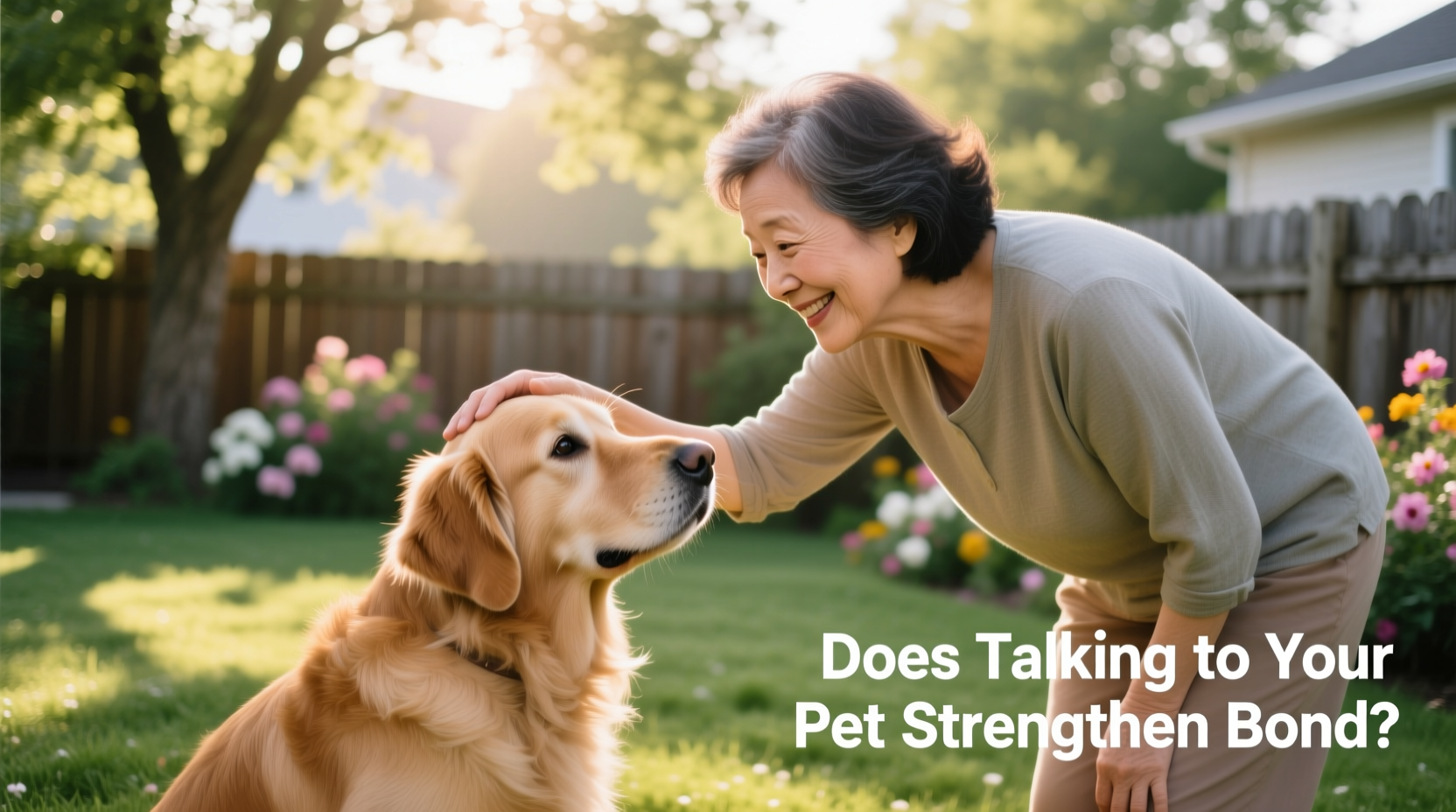
From an evolutionary standpoint, humans are wired to communicate. We interpret facial expressions, tone, and body language instinctively—even when the recipient doesn’t speak our language. When we adopt a pet, that innate drive to connect doesn’t disappear. Instead, it adapts.
Pets become family members. They share our homes, respond to our emotions, and often mirror our routines. In response, we naturally use speech as a tool to express affection, give instructions, or simply fill silence with companionship. A 2022 study published in *Animal Cognition* found that over 85% of pet owners regularly speak to their animals, with most doing so multiple times per day.
This behavior isn’t limited by species. Dog owners tend to use high-pitched “pet-directed speech,” similar to baby talk, while cat owners often engage in low, soothing tones. Bird keepers may repeat words deliberately to encourage mimicry. Even reptile and fish owners report narrating events aloud, despite knowing their pets likely don’t comprehend syntax.
Tip: Don’t worry about sounding silly—your pet responds more to tone and rhythm than grammar.The Science Behind Pet-Human Communication
While pets don’t understand language the way humans do, research shows they pick up on far more than previously believed. Dogs, for example, can recognize an average of 200 words, with some exceptional individuals like Rico the Border Collie demonstrating comprehension of over 200 spoken terms.
A landmark study conducted at Eötvös Loránd University in Budapest used fMRI scans to observe canine brain activity during speech exposure. Results showed that dogs process both the meaning of familiar words and the emotional tone of voice in separate brain regions—much like humans. This dual-processing ability means your dog knows not just *what* you’re saying (if it’s a trained command), but also *how* you’re feeling when you say it.
Cats, though often perceived as indifferent, are also attuned to human voices. A 2013 study from Tokyo University revealed that cats can distinguish their owner’s voice from strangers’, even if they choose not to respond physically. This selective attention suggests recognition, not ignorance.
“Animals may not understand sentences, but they read emotional cues in sound better than we assume. Tone, pitch, and repetition create patterns they learn to associate with safety, food, or play.” — Dr. Sarah Leonard, Animal Behavior Researcher
How Talking Strengthens the Human-Pet Bond
Verbal interaction fosters connection through consistency, emotional resonance, and positive reinforcement. When you talk to your pet, especially using consistent phrases tied to actions (like “time for dinner” or “let’s go for a walk”), you build predictable associations that reduce anxiety and increase trust.
Consider this: puppies and kittens learn social behaviors through repeated exposure to sounds and routines. Just as children benefit from verbal engagement during development, young animals develop stronger attachments when caregivers use voice as part of daily care.
- Emotional mirroring: Pets often reflect their owner’s mood. Calm, gentle speech helps soothe anxious animals.
- Behavioral training: Verbal cues reinforce obedience and help shape desired habits.
- Social enrichment: For intelligent species like dogs, parrots, and even pigs, auditory stimulation prevents boredom.
- Attachment security: Regular vocal contact signals presence and availability, reducing separation distress.
In multi-pet households, owners who narrate activities report higher levels of responsiveness and lower aggression among animals. The predictability created by routine speech appears to stabilize group dynamics.
Real Example: Building Trust with a Rescued Dog
Maria adopted Luna, a shy three-year-old mixed breed rescued from a hoarding situation. Initially, Luna flinched at sudden movements and avoided eye contact. Maria began a simple practice: speaking softly throughout the day, describing her actions (“Now I’m opening the fridge,” “I’m putting on my shoes”) and praising small interactions (“Good girl for looking at me”).
Within six weeks, Luna started approaching voluntarily, making eye contact, and responding to basic commands. Her transformation wasn’t due to intensive training—but to the steady stream of calm, predictable speech that helped her feel safe. Maria didn’t realize it at the time, but she was using auditory anchoring to rebuild trust.
Do’s and Don’ts of Talking to Your Pet
| Do’s | Don’ts |
|---|---|
| Use a consistent tone for commands | Yell or use harsh tones frequently |
| Pair words with actions (e.g., “treat” while giving one) | Repeat commands without follow-through |
| Speak calmly during stressful moments | Anthropomorphize excessively (e.g., blaming pets for “being spiteful”) |
| Engage in light, cheerful chatter during bonding time | Ignore body language cues that indicate discomfort |
| Use positive verbal markers like “yes!” or “good!” | Talk down to your pet in mocking tones |
Effective communication balances clarity with empathy. While pets appreciate interaction, they also rely on nonverbal signals—so always pair speech with appropriate body language.
Step-by-Step Guide to Using Speech for Better Bonding
If you're new to intentional verbal engagement with your pet, here’s a structured approach to make it effective and rewarding:
- Observe baseline reactions: Note how your pet responds to different tones—does a high pitch excite them? Does a firm voice cause retreat?
- Choose key phrases: Select 3–5 short, meaningful phrases (“Let’s go,” “Dinner time,” “Settle down”) to use consistently.
- Pair words with actions: Say “treat” every time you offer one. Repeat “outside” before leashing up. Reinforce connections daily.
- Incorporate into routines: Narrate feeding, grooming, or bedtime rituals. Predictability reduces stress.
- Monitor responses: Over two weeks, track changes in attentiveness, tail wagging, purring, or eye contact.
- Adjust tone and pace: Use upbeat tones for play, calm tones for relaxation. Match your voice to the desired outcome.
- Expand gradually: Once core phrases are recognized, introduce new ones slowly—no more than one per week.
This method works best when combined with treats or affection as secondary reinforcers. Over time, the voice itself becomes a reward.
Tip: Record yourself speaking to your pet and play it back quietly when you’re away. Familiar voices can comfort anxious animals.FAQ: Common Questions About Talking to Pets
Isn’t talking to pets just anthropomorphism?
Some level of anthropomorphism—the attribution of human traits to animals—is natural, but modern science supports that pets do perceive and respond to human speech. While they don’t interpret language abstractly, they detect patterns, emotions, and context. Speaking to them isn’t delusional; it’s relational.
Can talking actually change my pet’s behavior?
Yes. Consistent verbal cues help shape behavior by creating associative learning. For example, saying “sit” before gently guiding your dog into position builds word-recognition over time. Studies show pets trained with both verbal and physical cues perform better than those trained with gestures alone.
What if my pet never seems to listen?
Lack of response doesn’t mean lack of perception. Some animals, especially cats or independent breeds, may hear and understand but choose not to act. Focus on pairing speech with positive outcomes—like feeding or play—to increase motivation. Patience and repetition are key.
Expert Insights on Vocal Bonding
Veterinary neurologists and animal psychologists agree that speech is more than background noise—it’s a conduit for emotional regulation.
“When owners talk to their pets, they’re not just filling space. They’re regulating their own nervous systems—and often synchronizing with their animal’s. That co-regulation is foundational to secure attachment.” — Dr. Alan Prescott, Veterinary Ethologist
Another study from the University of Lincoln found that shelter dogs exposed to recorded human voices showed lower cortisol levels and spent more time near speakers than silent control groups. This indicates that even passive exposure to human speech has calming effects.
When Talking Might Be a Red Flag
While normal pet-directed speech is healthy, excessive isolation-focused dialogue could signal loneliness or emotional dependency. If someone exclusively confides in their pet instead of seeking human support during crises, it may reflect underlying social withdrawal.
However, occasional venting to a loyal listener—especially one who won’t judge or interrupt—is emotionally valid. The key difference lies in balance. Talking to your pet as part of a rich social life is normal. Relying solely on them for emotional survival may warrant reflection or professional support.
Conclusion: Embrace the Conversation
Talking to your pet isn’t weird—it’s a testament to the depth of your relationship. Whether you’re praising your parakeet, scolding the cat for knocking over a plant, or simply sharing your thoughts with a quiet companion, you’re engaging in a form of connection that transcends language.
Far from being one-sided, these conversations enrich your pet’s environment, reinforce learning, and deepen mutual trust. They reflect empathy, patience, and love—qualities that define responsible, attentive caregiving.
You don’t need scientific validation to know your pet listens in their own way. But now you have it: your voice matters to them more than you realize.
🚀 Start today: Choose one phrase to teach your pet through repetition and positive association. In a few weeks, you might be amazed at how much they understand—not just the words, but the love behind them.








