Cold plunging—immersing the body in icy water for several minutes—has surged in popularity among athletes, biohackers, and wellness enthusiasts. Proponents praise its ability to reduce inflammation, speed up recovery, and boost mental resilience. With growing interest, many are turning to at-home setups instead of relying on gym or studio facilities. But is this shift safe? And how does a DIY cold plunge stack up against professional-grade ice baths offered at fitness centers?
The answer isn't black and white. Safety, effectiveness, and long-term sustainability depend on multiple factors: water temperature, immersion duration, individual health status, supervision, and equipment quality. While home cold plunging offers convenience and privacy, it also introduces risks if not managed properly. Conversely, gym-based ice baths provide structure and oversight but may lack flexibility and hygiene consistency.
This article breaks down the realities of both options, equipping you with practical knowledge to make an informed decision based on your goals, lifestyle, and health profile.
Understanding Cold Plunging: Purpose and Physiological Effects
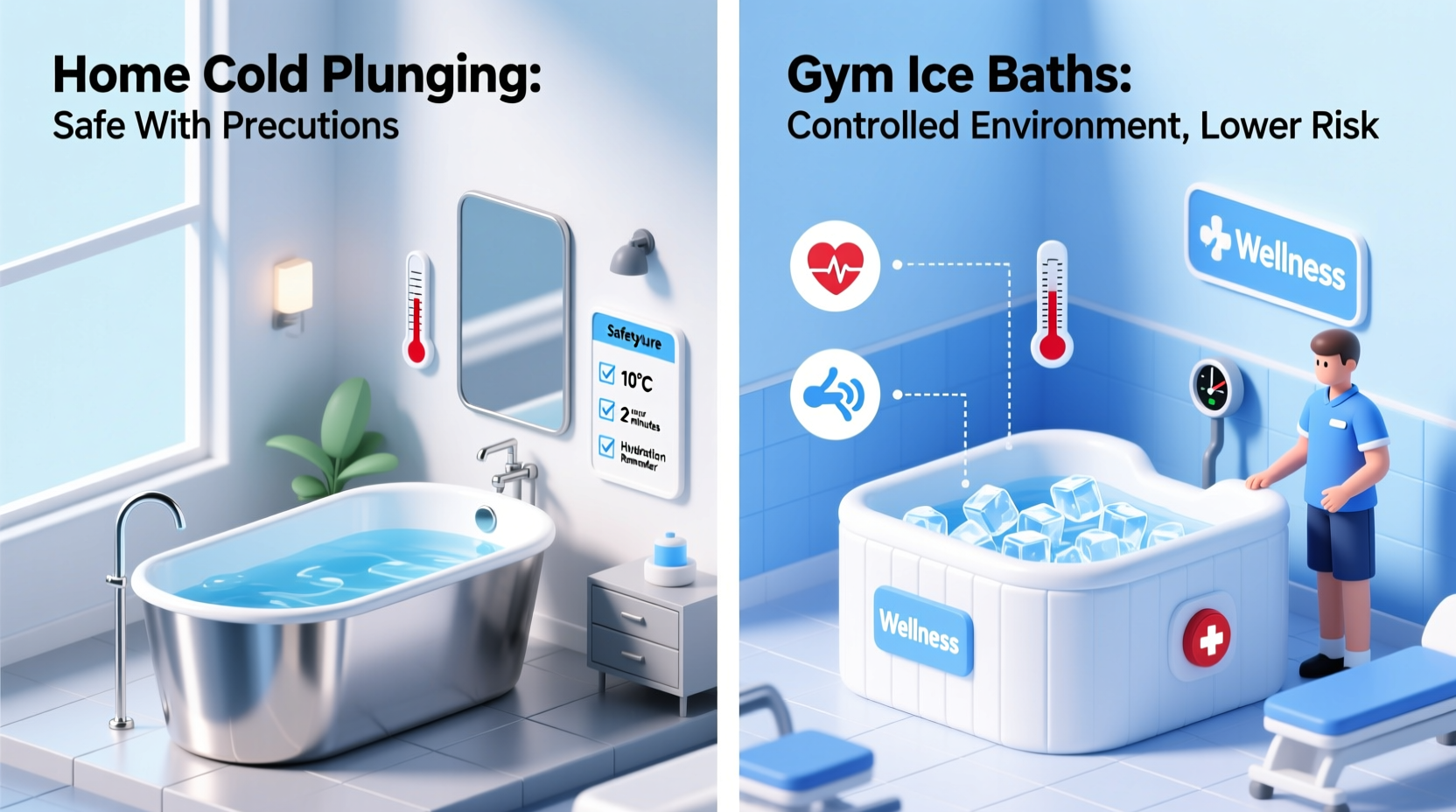
Cold plunging typically involves submerging the body in water between 50°F (10°C) and 59°F (15°C) for 2–5 minutes. The abrupt drop in skin temperature triggers a cascade of physiological responses:
- Vasoconstriction: Blood vessels narrow, reducing blood flow to extremities and minimizing swelling and muscle soreness.
- Reduced Inflammation: Cold exposure suppresses pro-inflammatory cytokines, aiding post-exercise recovery.
- Activation of the Sympathetic Nervous System: This leads to increased norepinephrine, which enhances alertness and mood.
- Improved Circulation: After exiting the cold, vasodilation occurs, promoting nutrient delivery and waste removal.
Studies have shown regular cold immersion can improve immune function, increase brown fat activity, and support mental well-being. However, these benefits hinge on proper execution. Mismanagement—such as staying too long in frigid water or plunging without acclimatization—can lead to hypothermia, arrhythmias, or respiratory distress.
Tip: Never attempt a full cold plunge on your first try. Start with shorter exposures (30–60 seconds) and gradually build tolerance over weeks.Home Cold Plunging: Benefits and Hidden Risks
Setting up a cold plunge at home has clear advantages. You control the schedule, cleanliness, and environment. No waiting for gym availability or sharing a tub with strangers. Some invest in dedicated cold plunge tubs; others use modified chest freezers or livestock tanks filled with ice and water.
Yet, convenience comes with responsibility. Unlike gyms, homes rarely have trained staff monitoring sessions. There’s no emergency protocol if someone slips, faints, or experiences cold shock. Moreover, maintaining consistent water temperature requires investment in chillers or frequent ice replenishment—otherwise, the water warms beyond therapeutic range.
A common misconception is that colder is always better. In reality, excessively cold water (below 45°F / 7°C) increases the risk of cold-induced vasospasm and cardiac stress, especially in individuals with undiagnosed cardiovascular conditions.
“Cold water immersion can be a powerful tool, but unsupervised use at home removes critical safety layers. People often underestimate how quickly core temperature drops.” — Dr. Lena Torres, Sports Medicine Physician
Key Risks of At-Home Cold Plunging
- Lack of supervision: No one to assist if you experience dizziness or panic.
- Inconsistent temperatures: Fluctuations reduce efficacy and increase danger.
- Poor hygiene: Stagnant water breeds bacteria without proper filtration or cleaning.
- Improper setup: DIY tubs may have sharp edges, unstable surfaces, or inadequate depth.
Gym or Studio Ice Baths: Structure vs. Limitations
Facilities offering ice baths typically follow standardized protocols. Water is monitored for temperature and sanitation, often changed daily or filtered continuously. Staff may enforce time limits and offer guidance for beginners. Many high-end gyms integrate cold plunging into recovery programs overseen by trainers or physiotherapists.
The structured environment reduces user error. For example, someone new to cold therapy might be advised to start with contrast therapy (alternating hot and cold) before attempting a full plunge. Emergency exits and non-slip flooring are standard. Some studios even pair ice baths with heart rate monitoring to ensure safety.
However, drawbacks exist. Shared tubs raise hygiene concerns—even with chlorine or ozone systems, residual contaminants from multiple users can persist. Availability may be limited, requiring advance booking. And while some facilities provide towels and robes, others expect users to bring their own gear, adding friction.
Additionally, gym ice baths are often kept colder than necessary due to institutional defaults. A tub set at 41°F (5°C) may be overkill for most users, increasing discomfort without added benefit.
Do’s and Don’ts: Comparing Home vs. Gym Experiences
| Scenario | At Home – Do | At Home – Don’t | Gym – Do | Gym – Don’t |
|---|---|---|---|---|
| Hygiene | Use a filter system; clean weekly | Leave water stagnant for days | Shower before entering | Skip pre-plunge hygiene |
| Temperature | Maintain 50–59°F (10–15°C) | Go below 45°F without experience | Check posted temp before entry | Assume all tubs are equally cold |
| Safety | Have someone nearby during early sessions | Plunge alone when fatigued | Follow posted time limits | Stay in longer than allowed |
| Equipment | Invest in insulated tubs or chillers | Use unsafe containers (e.g., old coolers) | Report malfunctions immediately | Ignore slippery surfaces |
Step-by-Step Guide to Safe Cold Plunging at Home
If you're considering setting up a home cold plunge, follow this sequence to minimize risk and maximize results:
- Consult Your Doctor: Especially if you have hypertension, heart disease, Raynaud’s syndrome, or are pregnant.
- Choose the Right Container: Use food-grade, insulated tubs or invest in a commercial cold plunge unit with a chiller.
- Install Filtration: Add a basic pump and filter system to prevent bacterial growth.
- Test Temperature Regularly: Use a waterproof thermometer; aim for 50–59°F (10–15°C).
- Start Slow: Begin with 30 seconds, once per week. Gradually increase to 2–3 minutes, 2–3 times weekly.
- Enter Safely: Sit or lower yourself slowly. Avoid jumping in to prevent cold shock response.
- Monitor Symptoms: If you feel numbness beyond limbs, confusion, or irregular heartbeat, exit immediately.
- Dry Off and Warm Up: Use warm clothing or light movement—no hot showers right after, as they counteract vasoconstriction benefits.
Real Example: From Gym User to Home Enthusiast
Mark, a 38-year-old triathlete from Denver, used gym ice baths twice weekly during training season. He appreciated the convenience but grew frustrated with inconsistent water quality and crowded schedules. “I’d show up after a long ride, only to find the tub empty but the water murky,” he recalls. “Once, I even slipped on a wet floor trying to get out.”
After researching, Mark invested $1,800 in a compact cold plunge tub with a built-in chiller and UV filter. He placed it in his garage, where ambient temperatures stay cool year-round. Now, he plunges three times a week at 6:00 AM, tracking his session length and subjective recovery. “It’s more expensive upfront, but I trust the cleanliness and timing. My wife even joined me after her knee surgery.”
His only regret? Not installing a drainage hose initially. “Emptying 150 gallons of icy water through buckets was brutal. Learned that the hard way.”
Expert Recommendations and Safety Checklist
According to Dr. Amara Lin, a performance physiologist at the Human Optimization Lab, “The location matters less than the protocol. Whether at home or in a gym, consistency, correct temperature, and self-awareness are what determine safety and outcomes.”
To help you evaluate your approach, here’s a checklist for safe cold plunging in any environment:
Cold Plunge Safety Checklist
- ✅ Consulted a healthcare provider about personal risks
- ✅ Verified water temperature is between 50–59°F (10–15°C)
- ✅ Limited initial sessions to under 2 minutes
- ✅ Avoided plunging immediately after intense alcohol consumption or extreme fatigue
- ✅ Ensured easy entry/exit (non-slip surface, handrails if needed)
- ✅ Have someone aware of your session, especially when starting out
- ✅ Cleaned and filtered water regularly (for home setups)
- ✅ Monitored body signals—exited at signs of excessive shivering or disorientation
Frequently Asked Questions
Can cold plunging cause heart problems?
For healthy individuals, short-duration cold plunging is generally safe. However, the sudden stress on the cardiovascular system can trigger arrhythmias in those with underlying heart conditions. The cold shock response may spike blood pressure and heart rate. Anyone with cardiovascular issues should consult a physician before starting.
How often should I change the water in a home cold plunge?
If using a filtration system (UV, ozone, or cartridge), changing water every 1–2 weeks is sufficient. Without filtration, replace it every 3–4 days to prevent microbial buildup. Always test pH and clarity regularly, especially with frequent use.
Is there a difference between ice baths and cold plunges?
Terminology varies, but generally, “ice bath” refers to water cooled with bags of ice, often in standard bathtubs. “Cold plunge” implies a deeper, dedicated tub designed for full-body immersion, usually with mechanical cooling. Functionally, both serve the same purpose when temperature and duration are controlled.
Conclusion: Make the Choice That Supports Long-Term Practice
Ultimately, whether cold plunging at home is safer than using a gym ice bath depends on how each option is implemented. A poorly maintained DIY tub poses greater danger than a professionally managed facility. Conversely, a well-designed home system with strict hygiene and safety habits can surpass the reliability of an overcrowded or neglected gym plunge.
The goal isn’t just safety—it’s sustainability. The best method is the one you can use consistently, correctly, and confidently. For some, that means the accountability of a gym setting. For others, the privacy and control of home immersion make all the difference.
No matter your choice, prioritize education, listen to your body, and treat cold therapy as a tool—not a trend. When approached with respect and preparation, cold plunging can become a powerful pillar of physical and mental resilience.
🚀 Ready to take the plunge? Assess your needs, run through the safety checklist, and choose the path that aligns with your health, habits, and home environment. Share your journey or questions in the comments—your experience could guide someone else toward safer, smarter cold therapy.








