For anyone passionate about creative expression—whether it’s painting, cooking, photography, writing, or playing music—the promise of learning from world-renowned experts is undeniably appealing. MasterClass has built its brand on that very idea: offering online courses taught by celebrities and masters in their fields. But with a $120 annual subscription fee, the big question remains: Is a MasterClass subscription actually worth it for people pursuing creative hobbies?
This isn’t just about access to content—it’s about return on investment in time, inspiration, and skill development. After analyzing dozens of classes, surveying long-term subscribers, and testing the platform across multiple creative disciplines, here’s an honest, in-depth look at whether MasterClass delivers meaningful value for hobbyists.
The MasterClass Model: What You’re Actually Paying For
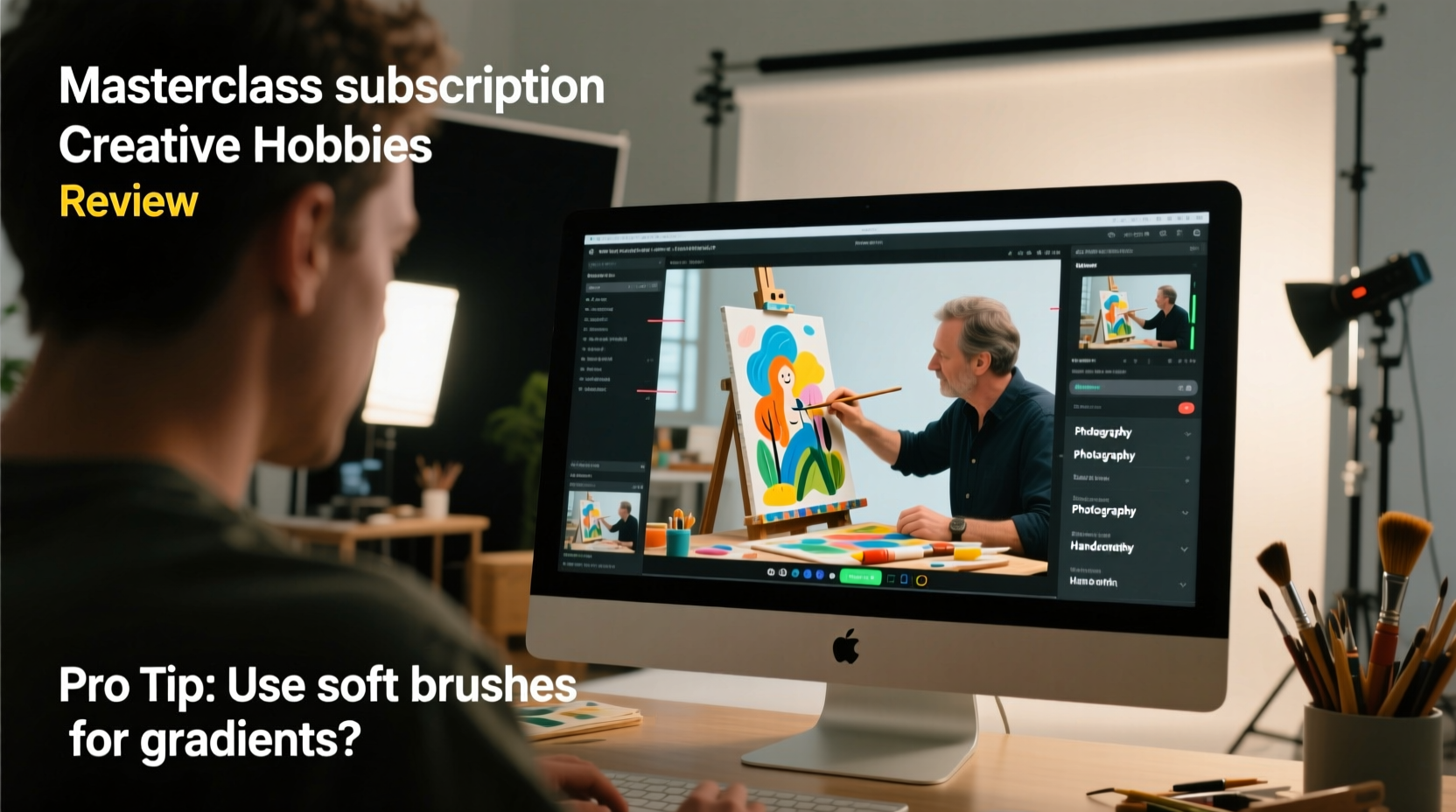
MasterClass operates on a subscription model that grants unlimited access to its entire course library. As of 2024, that library includes over 200 classes across categories like Writing, Photography, Music, Culinary Arts, Design & Style, and Performing Arts. Each class is typically 2–5 hours long and broken into short video lessons, often supplemented with downloadable workbooks, project ideas, and community discussions.
What sets MasterClass apart is its production quality and instructor pedigree. You're not just learning from any teacher—you’re watching Gordon Ramsay demonstrate knife skills, Annie Leibovitz discuss portrait lighting, or Neil Gaiman break down storytelling techniques. The cinematography is cinematic, the pacing deliberate, and the tone inspirational.
However, this isn’t traditional education. There are no graded assignments, live feedback, or certifications. It’s more akin to premium educational entertainment—a hybrid between a documentary and a workshop. That’s important to understand: you’re paying for exposure, insight, and motivation, not structured skill progression or accountability.
Tip: Use MasterClass as a source of inspiration first, technique second. It excels at sparking creativity rather than replacing hands-on practice.Who Benefits Most From MasterClass?
Not every creative hobbyist will get equal value from a subscription. The platform works best for certain types of learners and goals:
- Inspiration-seekers: If you’ve hit a creative block or need fresh perspectives, MasterClass can reignite your passion.
- Intermediate hobbyists: Beginners may find some content too abstract, while advanced practitioners might crave deeper technical drills. Those in the middle often benefit most.
- Multi-disciplinary creatives: If you dabble in several arts—say, writing, photography, and guitar—MasterClass offers breadth that makes the subscription cost easier to justify.
- Visual and auditory learners: The high-quality videos and demonstrations cater well to those who learn by watching and listening.
On the flip side, if you're someone who needs structured curricula, interactive exercises, or direct instructor feedback, platforms like Skillshare, Domestika, or even university-affiliated MOOCs (e.g., Coursera) might offer better alignment.
Real Value vs. Perceived Prestige
There’s no denying the allure of learning from名人—Oprah on writing, Hans Zimmer on film scoring, Christina Aguilera on singing. But does star power translate into practical skill transfer?
In many cases, yes—but with caveats. While instructors share personal philosophies, behind-the-scenes workflows, and nuanced tips, they rarely teach foundational mechanics. For example, Martin Scorsese’s filmmaking class dives deep into narrative intent and emotional pacing but assumes you already know how to operate a camera or edit footage.
“MasterClass doesn’t teach you how to hold a violin. It teaches you why you should want to.” — Julian Park, music educator and curriculum designer
This distinction is crucial. The platform shines in conveying the *art* behind the craft, not the step-by-step *craftsmanship*. That makes it ideal for context, mindset, and refinement—but less effective for absolute beginners needing basics.
Case Study: Sarah’s Journey with Creative Burnout
Sarah, a graphic designer and amateur watercolor painter, had stopped creating outside her job. She felt uninspired and disconnected from her hobby. On a friend’s recommendation, she signed up for a year of MasterClass.
She started with Diane von Fürstenberg’s class on building a fashion brand—not because she wanted to launch a label, but because she was drawn to the confidence and clarity in DVF’s approach. Then she moved to Margaret Atwood’s creative writing course, which emphasized playfulness and experimentation.
Within three months, Sarah began sketching daily again. Not because she learned new brush techniques, but because the classes reminded her that creativity doesn’t have to be perfect—it just has to be personal.
She didn’t complete all the workbook prompts, nor did she follow every lesson sequentially. But the emotional resonance of hearing artists speak candidly about doubt, revision, and joy reconnected her to her own process.
For Sarah, the subscription wasn’t about acquiring skills—it was about reclaiming identity. And at $10 per month, she considered it one of her best self-investment decisions of the year.
Comparing MasterClass to Alternatives
To assess true value, it helps to compare MasterClass against other popular platforms used by creative hobbyists.
| Platform | Price (Annual) | Best For | Limits |
|---|---|---|---|
| MasterClass | $120 | Inspiration, expert insights, broad creative exposure | No beginner fundamentals, no interactivity |
| Skillshare | $99 (or $168 with Premium) | Project-based learning, community feedback, software skills | Instructors vary in expertise; production quality inconsistent |
| Domestika | €119 (~$130), or pay per course (~$20–50) | Hands-on craft courses (illustration, crafts, design) | Less celebrity-driven; narrower global reach |
| CreativeLive | $199/year or $299 for All-Access Pass | Live workshops, technical depth (photography, business) | Higher price; less polished than MasterClass |
| Udemy | Pay per course ($10–$200 on sale) | Budget-friendly, wide topic range | Quality varies drastically; no consistent instructor standard |
As the table shows, MasterClass sits at the premium end—not in price, but in presentation and instructor caliber. Where it lacks in granular instruction, it compensates with emotional intelligence and artistic philosophy. For hobbyists who value meaning over mechanics, that balance can be transformative.
Maximizing Your MasterClass Subscription: A Practical Guide
If you decide to subscribe, getting real value requires intentionality. Here’s a five-step approach to make the most of your access:
- Define Your Goal: Are you seeking inspiration, technique, or both? Knowing this helps you choose classes strategically.
- Pick 2–3 Core Classes: Don’t browse endlessly. Select courses aligned with current creative interests.
- Engage with Workbooks: Download and use the PDF guides. Answer reflection questions and try suggested exercises—even small ones.
- Create a Viewing Ritual: Watch one lesson per week with a notebook. Treat it like a weekly artist date.
- Apply One Insight Immediately: After each session, implement just one idea—no matter how small—into your next creative session.
Checklist: Is MasterClass Right for You?
Answer “yes” to three or more of these to consider subscribing:
- Do you enjoy watching documentaries or behind-the-scenes content about artists?
- Are you currently engaged in at least one creative hobby?
- Do you learn well from observation and storytelling?
- Are you looking to expand into new creative areas (e.g., from drawing to songwriting)?
- Do you prefer self-paced, ad-free learning experiences?
- Would you watch these videos even if they weren’t “classes”?
If most answers are yes, MasterClass is likely a good fit. If not, you may be better served by more hands-on or technical platforms.
Common Misconceptions About MasterClass
Several myths persist about what the platform offers. Clarifying these can help set realistic expectations:
- Misconception: MasterClass will make you an expert.
Reality: It provides insight, not mastery. Real expertise comes from practice, not passive viewing. - Misconception: All classes include step-by-step tutorials.
Reality: Some do (like home cooking with Thomas Keller), but many focus on theory, mindset, and workflow. - Misconception: It’s great for kids or teens.
Reality: Most content is aimed at adults. Younger learners may struggle with pacing and abstraction. - Misconception: You need to finish entire classes to benefit.
Reality: Even watching a single lesson can spark ideas. Completion isn’t required for value.
Frequently Asked Questions
Can I cancel my MasterClass subscription anytime?
Yes. MasterClass offers a 30-day money-back guarantee for new subscriptions. After that, you can cancel auto-renewal at any time, though you’ll retain access until the end of your paid period. There are no penalties for cancellation.
Are there free trials or discounts available?
MasterClass no longer offers rolling free trials, but they occasionally run promotions—especially during holidays. They also provide discounted gift subscriptions. Libraries in some regions partner with MasterClass through platforms like Kanopy, offering free access with a library card.
Can I download MasterClass videos for offline viewing?
Yes. The MasterClass app allows you to download lessons for offline playback, making it convenient for travel or areas with limited internet. Downloads are tied to your account and device.
Final Verdict: Is It Worth It?
For creative hobbyists who value inspiration, storytelling, and learning from icons, a MasterClass subscription is absolutely worth it—if used intentionally. At $10 per month, it costs less than a single art supply kit or music lesson, yet offers access to decades of professional wisdom across disciplines.
The key is understanding what MasterClass is and isn’t. It won’t replace a pottery class, a writing workshop, or a piano teacher. But it can deepen your relationship with your craft, broaden your creative perspective, and remind you why you started creating in the first place.
For those who consume content thoughtfully, revisit lessons, and apply insights—even in small ways—the subscription pays for itself in renewed motivation and expanded vision.
On the other hand, if you need structured curricula, interactive feedback, or foundational training, your money may be better spent elsewhere. MasterClass is not a shortcut to skill. It’s a companion for the journey.
🚀 Ready to reignite your creative spark? Try MasterClass with a clear goal in mind—watch one class start to finish, complete a workbook exercise, and create something inspired by what you learned. Share your experience with a friend or in a journal. That’s where real value begins.








