
The iPhone 12 mini was a bold statement in a market shifting toward larger screens. Compact, lightweight, and powered by Apple’s A14 Bionic chip, it became a cult favorite among users who valued one-handed usability and minimalist design. Fast forward to 2024, and the iPhone 16 has arrived—packed with AI-driven features, advanced cameras, and next-gen processing power. For those still holding onto their 12 mini, the question isn’t just about specs; it’s personal. Is upgrading truly necessary, or does the mini still hold its ground?
Design and Usability: Small Form vs Modern Ergonomics
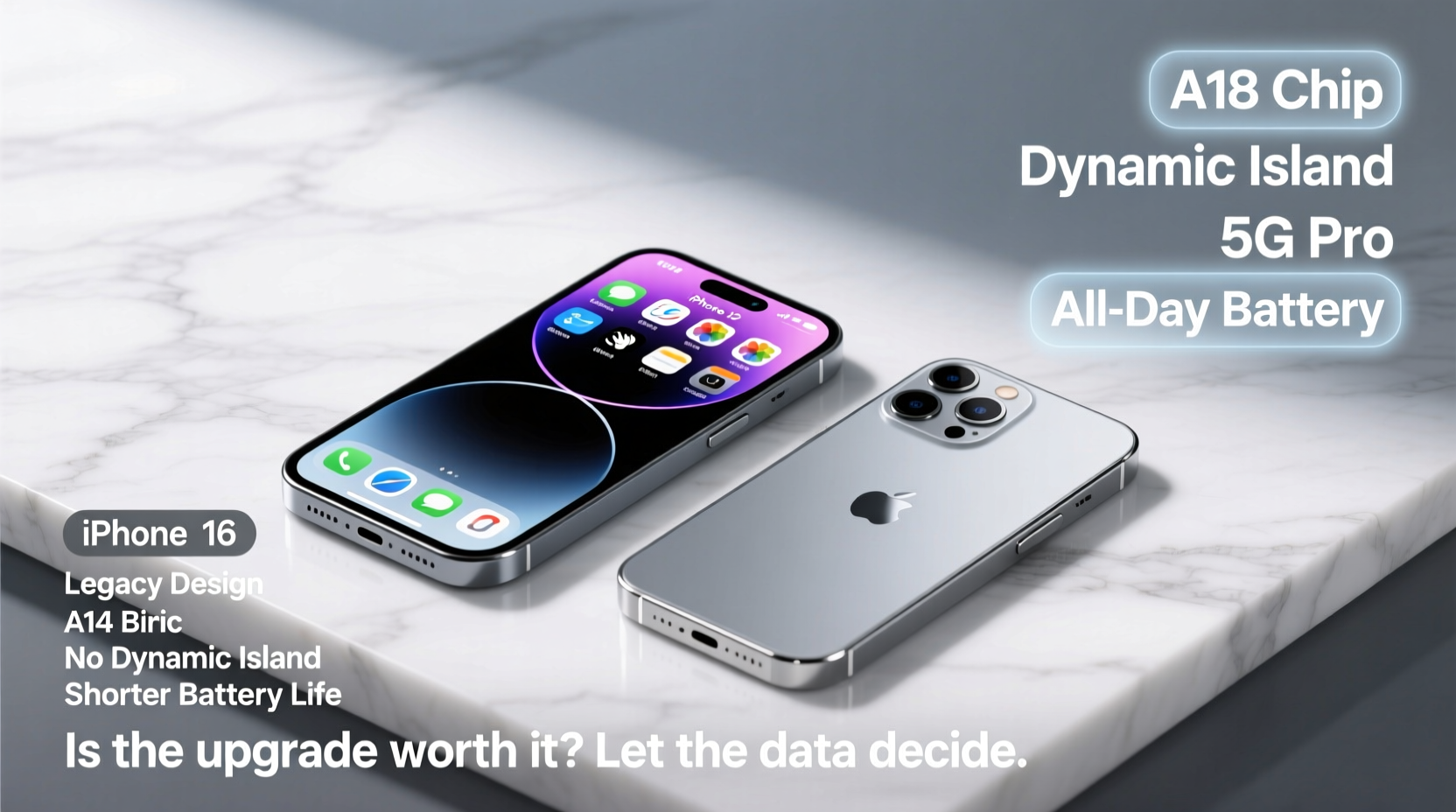
The most immediate difference between the iPhone 12 mini and iPhone 16 lies in size and ergonomics. The 12 mini measures 5.18 x 2.53 inches and weighs just 135 grams. It fits comfortably in tight pockets and requires no stretch of the thumb to navigate the 5.4-inch OLED display. In contrast, the iPhone 16 starts at 6.1 inches and weighs approximately 172 grams—making it significantly larger and heavier.
This shift reflects Apple’s broader trend: catering to media consumption, multitasking, and immersive experiences that favor larger displays. However, for users who prioritize portability—commuters, cyclists, or those with smaller hands—the 12 mini remains unmatched in comfort.
Tip: If pocket space and one-handed use are critical, test the iPhone 16 in person before upgrading—many find the jump from mini to standard size surprisingly jarring.Performance and Software Longevity
The iPhone 12 mini runs on the A14 Bionic chip, which was powerful in 2020 but now shows its age when handling intensive tasks like 4K video editing or high-end gaming. iOS updates remain compatible through 2025, but performance degradation under newer OS versions is noticeable—especially in app launch times and background task switching.
The iPhone 16, powered by the A18 chip built on a 3nm process, delivers up to 2x faster CPU performance and 3x better GPU efficiency. More importantly, it’s optimized for Apple Intelligence—a suite of on-device AI tools that enhance photo editing, text summarization, and voice interactions. These features are either absent or limited on older devices like the 12 mini.
Apple typically supports iPhones for five to six years with full software updates. The 12 mini will likely receive iOS 19 in 2025, but beyond that, support may taper off. The iPhone 16, meanwhile, is expected to receive updates until at least 2030.
“From a longevity standpoint, the iPhone 16 isn’t just a new phone—it’s a platform for future-facing features like generative AI and real-time language translation.” — David Lin, Mobile Technology Analyst at GadgetInsight
Camera Capabilities: Night Mode to Computational Photography
The camera gap between these two models is substantial. The iPhone 12 mini features a dual-camera system: 12MP wide and 12MP ultra-wide. While capable in daylight, low-light performance lacks the sophistication of newer models. Night mode exists but is slower and less detailed.
The iPhone 16 introduces a completely redesigned camera stack. The main sensor now captures 48MP photos with second-generation sensor-shift stabilization. The ultra-wide lens gains autofocus and night mode, while the new tetraprism telephoto lens offers 5x optical zoom—something the 12 mini doesn’t have at all.
More than hardware, computational photography sets them apart. The iPhone 16 uses machine learning to enhance dynamic range, reduce noise, and even reconstruct lost details in overexposed skies or shadowy corners. Portrait mode now works in video, and Photographic Styles are dynamically adjusted based on scene recognition.
| Feature | iPhone 12 mini | iPhone 16 |
|---|---|---|
| Chipset | A14 Bionic | A18 (3nm) |
| Display Size | 5.4\" | 6.1\" |
| Battery Life (Video Playback) | 15 hours | 24 hours |
| Rear Cameras | 12MP Wide + 12MP Ultra-Wide | 48MP Wide + 12MP Ultra-Wide + 12MP Telephoto (5x zoom) |
| Software Support Window | ~2025–2026 | Expected through 2030+ |
| AI Features | Limited | Full Apple Intelligence Suite |
Battery Life and Charging: From All-Day to Multi-Day Stamina
The 12 mini’s compact design comes at a cost: battery capacity. At 2,227 mAh, it struggles to last a full day under moderate to heavy use. Many owners report needing midday charging, especially when using GPS, streaming music, or toggling between apps.
The iPhone 16 improves dramatically here. With a larger chassis, Apple integrated a 4,000 mAh battery—nearly doubling effective usage time. Under typical conditions, users can expect 18–20 hours of screen-on time. Standby optimization via A18 also reduces background drain, making it viable for light-use days without charging.
Charging technology has evolved too. While both phones support MagSafe and Qi wireless charging, the iPhone 16 introduces 30W wired fast charging (up from 20W), cutting charge time in half compared to the 12 mini.
Mini Case Study: Sarah’s Upgrade Dilemma
Sarah, a freelance photographer and long-time 12 mini user, loved her phone’s pocketability. She carried it everywhere during shoots, using it for quick client previews and note-taking. But by late 2023, she began noticing issues: slow app launches in Lightroom, dropped frames when recording behind-the-scenes clips, and frequent shutdowns due to cold weather exposure.
After testing an iPhone 16 at a local store, she was struck by how seamlessly ProRAW images loaded and how much clearer her video footage looked—even in dimly lit cafes. The larger screen also made editing on the go far more practical. Though reluctant to give up the mini’s size, she upgraded and hasn’t looked back. “It’s not just faster,” she said. “It feels like a tool designed for what I actually do now.”
When to Upgrade—and When to Hold On
Upgrading isn’t always about having the latest tech. It’s about whether the new device solves problems your current one can’t.
If you’re still satisfied with the 12 mini’s performance, use it lightly (calls, messaging, occasional browsing), and value its small footprint above all else—there’s no urgent reason to upgrade. iOS 17 and 18 run well enough, and third-party apps continue to support it.
But if you’ve noticed sluggishness, struggle with battery life, want better photos, or plan to use upcoming AI-powered features, the iPhone 16 is a meaningful leap. It’s not just an incremental update; it’s a gateway to Apple’s next decade of innovation.
Checklist: Should You Upgrade?
- ✅ Do you regularly run out of battery before bedtime?
- ✅ Are apps becoming slower or crashing more often?
- ✅ Do you take photos in low light and wish they were sharper?
- ✅ Are you interested in trying Apple Intelligence features?
- ✅ Can you afford the upgrade without financial strain?
If you answered “yes” to three or more, the iPhone 16 is likely worth it.
Frequently Asked Questions
Can the iPhone 12 mini still handle everyday tasks?
Yes. For calls, texting, social media, and light web browsing, the 12 mini remains functional. However, multitasking and newer apps may feel constrained by memory and processing limits.
Will cases from the 12 mini fit the iPhone 16?
No. Despite both being “standard” form factor iPhones, dimensions, camera layouts, and button placements differ. You’ll need a new case designed specifically for the iPhone 16.
Is the iPhone 16 waterproof like the 12 mini?
Yes, and improved. Both have IP68 ratings, but the iPhone 16 withstands deeper submersion (up to 6 meters for 30 minutes) versus 6 meters for 30 minutes on the 12 mini—though real-world durability depends on wear and tear.
Conclusion: Make the Move When It Serves Your Life
The iPhone 12 mini was revolutionary for its time—a rare nod to minimalism in an era of bigness. But technology evolves, and so do our needs. The iPhone 16 isn’t just faster or prettier; it’s smarter, more durable, and built for the kind of seamless, intelligent interaction we now expect from our devices.
Sticking with the 12 mini makes sense if you cherish its size and don’t push your phone hard. But if you’re constantly charging, squinting at blurry night photos, or feeling left out of new features, the upgrade isn’t just worth it—it’s liberating.
💬 Still on the fence? Try borrowing an iPhone 16 for a day. Sometimes, holding the future in your hands is the best way to know it’s time to let go of the past.








