Choosing between the iPhone 12 and iPhone 11 isn’t just about new features—it’s a decision rooted in value, longevity, and personal usage. The iPhone 11 remains a capable device years after its release, while the iPhone 12 introduced pivotal upgrades that shaped Apple’s smartphone direction. For users weighing whether to upgrade—or which model to buy secondhand—understanding the real-world differences is essential.
The gap between these two models may seem subtle on paper, but certain changes impact daily use more than others. From display quality to network support and camera capabilities, the decision hinges on what matters most to you: cost savings or future-proofing your device.
Design and Build: A Shift in Form
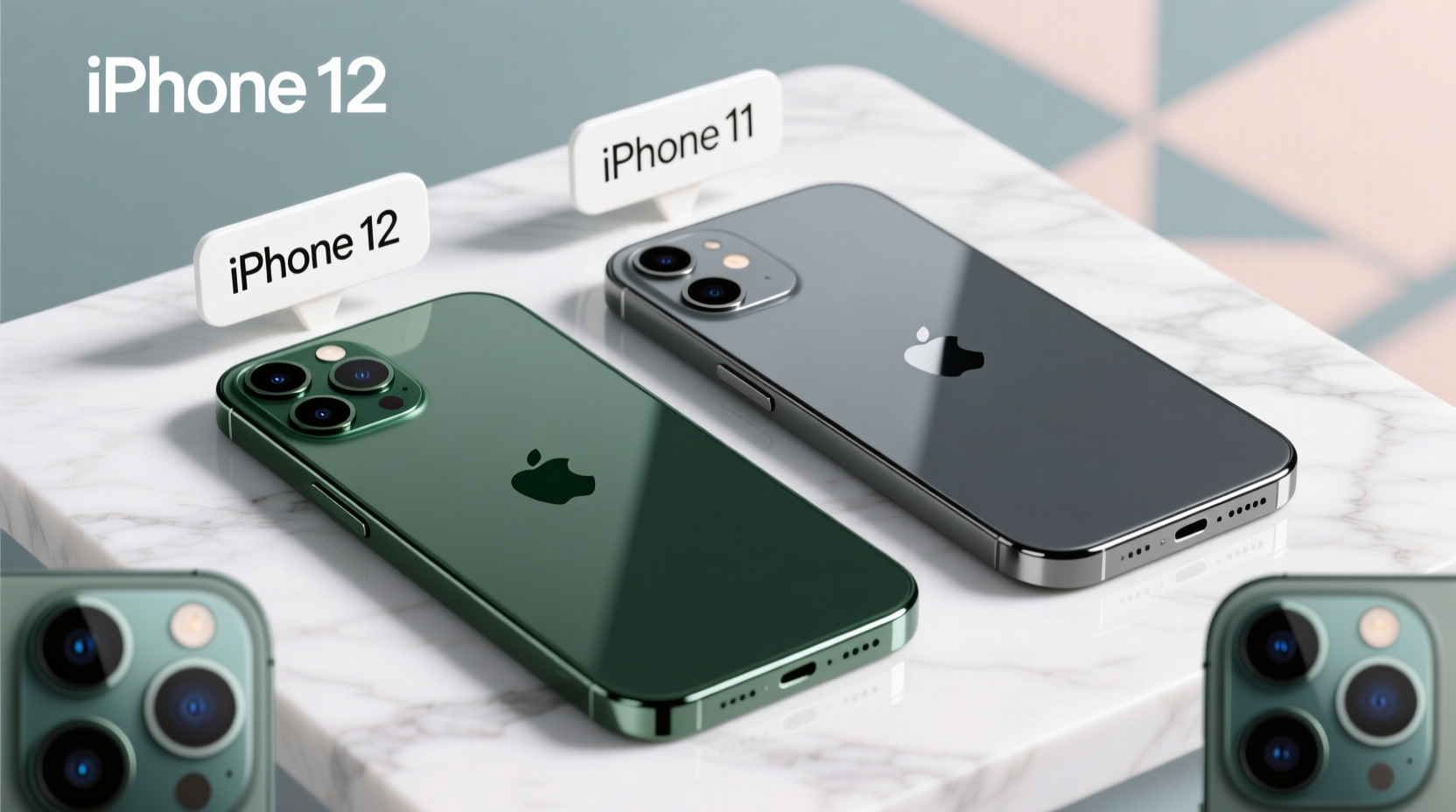
The most immediate difference between the iPhone 11 and iPhone 12 is design language. The iPhone 11 features softer, rounded edges and an aluminum frame, giving it a familiar, comfortable feel. In contrast, the iPhone 12 adopts a flat-edge stainless steel design reminiscent of the iPhone 5 era, offering a more modern, premium aesthetic and improved durability.
The iPhone 12 also introduced Ceramic Shield front cover glass, which Apple claims offers four times better drop protection. This advancement makes the iPhone 12 noticeably more resilient in everyday use, especially for those prone to dropping their phones.
Tip: If you frequently drop your phone, the iPhone 12’s Ceramic Shield and sturdier build offer meaningful real-world protection over the iPhone 11.Both devices are splash, water, and dust resistant, but the iPhone 12 carries an IP68 rating (up to 6 meters for 30 minutes), compared to the iPhone 11’s IP68 at 2 meters. That extra depth margin may not matter daily, but it reflects overall improvements in sealing and construction.
Display and Screen Experience
The iPhone 11 uses a 6.1-inch Liquid Retina LCD display with a resolution of 1792x828 pixels. While bright and colorful, LCD technology limits contrast ratios and true black reproduction. The iPhone 12, however, steps up to a 6.1-inch Super Retina XDR OLED display with a resolution of 2532x1170 pixels. This brings deeper blacks, higher brightness (up to 1200 nits HDR), and improved color accuracy.
OLED screens are particularly beneficial for media consumption. Watching videos on platforms like Netflix or YouTube reveals noticeable improvements in clarity and contrast on the iPhone 12. Text also appears sharper, and dark mode feels genuinely immersive due to pixel-level black rendering.
“Switching from an LCD to OLED screen is one of the most immediately perceptible upgrades in smartphone experience.” — David Kim, Mobile Display Analyst at TechPulse Insights
While the iPhone 11’s screen is still perfectly usable, the jump to OLED on the iPhone 12 represents a generational leap in visual quality—one that becomes hard to ignore once experienced.
Performance and Software Longevity
Under the hood, both phones feature Apple’s A-series chips—the iPhone 11 powered by the A13 Bionic and the iPhone 12 by the A14 Bionic. The A14 was Apple’s first chip built on a 5-nanometer process, delivering faster CPU and GPU performance along with improved power efficiency.
In real-world terms, the A14 ensures smoother multitasking, faster app launches, and better handling of graphics-intensive games. More importantly, newer processors typically receive software updates for longer. While both devices currently support iOS 17, the iPhone 12 is expected to receive updates through at least 2025, possibly into 2026, whereas the iPhone 11 may be phased out sooner.
| Feature | iPhone 11 | iPhone 12 |
|---|---|---|
| Chipset | A13 Bionic | A14 Bionic |
| RAM | 4GB | 4GB |
| Storage Options | 64GB, 128GB, 256GB | 64GB, 128GB, 256GB |
| Estimated OS Support End | 2024–2025 | 2025–2026+ |
| Benchmark (Geekbench 5 CPU) | ~1330 | ~1580 |
The extra performance headroom of the A14 means the iPhone 12 will likely remain snappy and responsive longer, especially as apps evolve and demand more resources.
Camera Capabilities: Subtle but Meaningful Gains
On paper, both the iPhone 11 and iPhone 12 feature dual-camera systems: a 12MP wide lens and a 12MP ultra-wide lens. However, the iPhone 12 introduces sensor improvements, better low-light processing, and Night mode across both rear cameras and the front-facing TrueDepth camera.
In practical use, this translates to cleaner night shots, more balanced HDR in challenging lighting, and slightly better detail retention in shadows. The iPhone 12 also supports Dolby Vision HDR video recording up to 4K at 30fps—a first for any smartphone. If you record and edit video, this feature alone can justify the upgrade.
For casual photographers, the differences may not be dramatic. Daylight photos from both phones are excellent. But when shooting in dim environments or capturing creative video content, the iPhone 12 pulls ahead.
Mini Case Study: Sarah’s Upgrade Decision
Sarah, a freelance photographer and content creator, used her iPhone 11 for nearly three years. She considered sticking with it due to its reliability but ultimately upgraded to the iPhone 12 after testing video recording side-by-side. “The Dolby Vision clips looked so much richer on my editing monitor,” she said. “I could grade them like professional footage. That changed how I present my work online.”
For professionals or creatives who rely on mobile photography, the iPhone 12’s camera enhancements offer tangible benefits beyond marketing specs.
5G and Future Connectivity
One of the most debated upgrades is 5G support. The iPhone 12 was Apple’s first phone to include 5G connectivity, enabling faster download and upload speeds where available. However, real-world benefits depend heavily on carrier coverage and data plans.
If you live in an area with strong 5G infrastructure and regularly download large files or stream high-bitrate content, the advantage is clear. But for most users, 4G LTE on the iPhone 11 remains sufficient for browsing, streaming, and social media.
That said, 5G readiness future-proofs the iPhone 12. As networks expand and carriers phase out older technologies, having 5G ensures compatibility with next-gen services, including cloud gaming and AR applications.
Tip: If you plan to keep your phone for 3+ years, 5G capability adds long-term relevance, even if you don’t need it today.Should You Upgrade? A Practical Checklist
Use this checklist to determine whether upgrading from the iPhone 11 to the iPhone 12 makes sense for your situation:
- ✅ Do you want a sharper, brighter OLED display?
- ✅ Are you interested in better low-light photos and Dolby Vision video?
- ✅ Do you value a more durable build with improved water resistance?
- ✅ Is 5G access available and useful in your area?
- ✅ Do you plan to keep the phone for 3+ years and want longer software support?
If you answered yes to three or more, the upgrade is likely worthwhile. If you're satisfied with your iPhone 11’s performance and don’t need the new features, holding onto it is a financially smart choice.
Frequently Asked Questions
Is the iPhone 11 still good in 2024?
Yes. The iPhone 11 handles everyday tasks smoothly, supports current iOS versions, and delivers solid camera performance. It remains a great budget-friendly option for users who don’t need the latest features.
Does the iPhone 12 battery last longer than the iPhone 11?
Battery life is nearly identical despite similar capacities. The iPhone 12’s more efficient A14 chip helps offset the power demands of the OLED screen and 5G, resulting in comparable usage time—around 17 hours of video playback.
Can the iPhone 11 use MagSafe accessories?
No. The iPhone 11 lacks the internal magnetic ring required for MagSafe charging and accessories. Only iPhone 12 and later models support this ecosystem.
Conclusion: Making the Right Choice for Your Needs
The iPhone 12 vs iPhone 11 debate ultimately comes down to priorities. If you’re looking for cutting-edge features, better displays, enhanced durability, and longer software support, the iPhone 12 is the clear winner. Its OLED screen, 5G capability, and superior camera system make it a more future-ready device.
However, the iPhone 11 remains an outstanding value. For users on a budget or those who don’t need the latest tech, it continues to deliver a premium iOS experience without compromise.
Upgrade only when the benefits align with how you use your phone. Technology should serve you—not the other way around.
💬 Have you upgraded from the iPhone 11 to the 12? What made the difference for you? Share your experience and help others decide what’s right for their needs.








