
Cats are creatures of habit, and few habits are as endearing—or as mysterious—as their choice of napping spots. While some sprawl across keyboard keys during work calls, others vanish into forgotten corners or perch high above the fray. Two popular options in modern homes—indoor cat trees and window perches—offer distinct environments for rest, but which one truly wins the feline vote?
The answer isn’t universal. It depends on a blend of instinct, personality, environment, and even time of day. To understand where cats *actually* nap—and why—requires more than observation; it demands insight into feline psychology, thermal preferences, territorial behavior, and sensory engagement.
Understanding Cat Napping Behavior
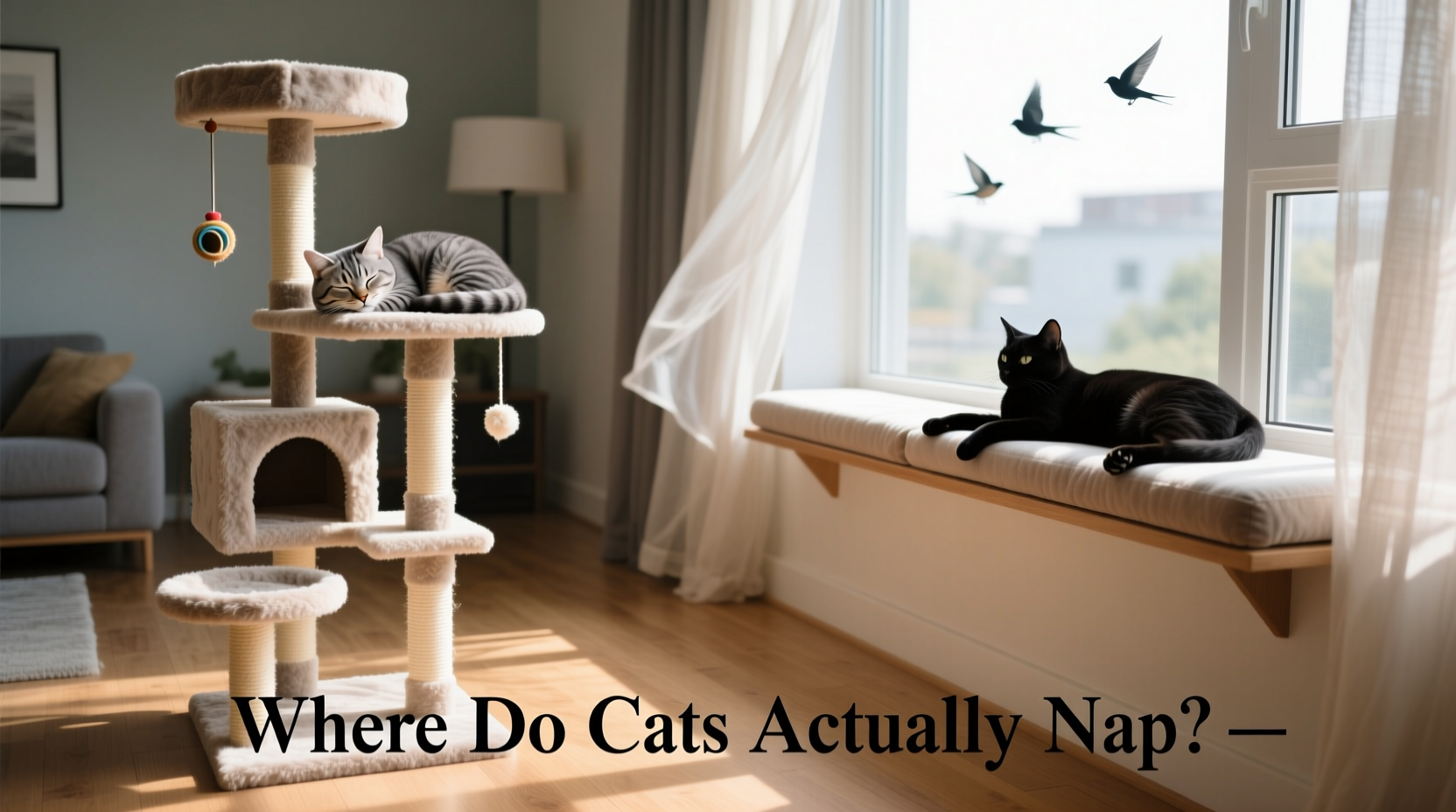
Cats sleep between 12 and 16 hours a day, with kittens and seniors sometimes exceeding 20. But unlike humans, their sleep is fragmented into short cycles, often lasting 15 to 30 minutes. These micro-siestas serve both physiological recovery and environmental monitoring. Even when asleep, cats remain semi-alert—a survival trait inherited from wild ancestors.
When choosing a nap location, cats prioritize three key factors:
- Elevation: Higher ground offers safety and surveillance.
- Warmth: Cats prefer ambient temperatures around 86–97°F (30–36°C).
- Vision: A clear view of movement provides mental stimulation and reduces anxiety.
These needs shape their preference between cat trees and window perches. A cat tree typically satisfies elevation and security needs, while a window perch excels in warmth and visual engagement. The ideal setup may not be an either/or decision—but rather a strategic combination.
Tip: Observe your cat’s behavior at different times of day. You might find they use a window perch in the morning for sunbathing and switch to a cat tree at night for security.Indoor Cat Trees: Security, Territory, and Vertical Space
Cat trees are multi-level structures designed to mimic natural climbing environments. Most include platforms, hiding cubbies, scratching posts, and dangling toys. Their primary appeal lies in vertical territory expansion—a critical aspect of feline well-being, especially in multi-cat households.
From a behavioral standpoint, elevated spaces allow cats to:
- Monitor household activity without direct interaction.
- Retreat quickly if startled.
- Mark territory via scent glands on cheeks when rubbing against posts.
Dr. Sarah Ellis, co-author of The Trainable Cat, explains:
“Vertical space is not a luxury for cats—it’s a necessity. In the wild, cats spend significant time off the ground. Denying them this option increases stress and can lead to behavioral issues.” — Dr. Sarah Ellis, Feline Behavior Researcher
Many cats favor the uppermost platform of a cat tree for deep sleep, particularly if it includes a hooded hideaway. These enclosed spaces simulate dens, offering darkness and acoustic insulation that promote longer, uninterrupted rest.
Pros and Cons of Cat Trees
| Advantage | Drawback |
|---|---|
| Provides multiple resting levels and play zones | Bulky; takes up floor space |
| Encourages scratching, reducing furniture damage | May collect dust or loose fibers over time |
| Hiding cubbies support secure, deep sleep | Lower platforms may feel exposed to foot traffic |
| Stimulates climbing and muscle use | Potential instability if poorly constructed |
Window Perches: Sunlight, Stimulation, and Thermal Comfort
A window perch is typically a cushioned shelf attached to a windowsill or mounted via suction cups. Its main draw is access to sunlight and outdoor views—both of which profoundly influence feline behavior.
Sunlight does more than warm a cat’s fur. Ultraviolet exposure helps regulate circadian rhythms and boosts mood through indirect melatonin modulation. Additionally, watching birds, squirrels, or passing cars provides cognitive enrichment, reducing boredom-related behaviors like over-grooming or nighttime yowling.
Studies show that indoor cats spend up to 60% of their awake time observing outdoor stimuli. A 2020 University of Lincoln survey found that 78% of cats preferred sunlit window areas over shaded floors, even when both were equally accessible.
However, not all window perches are created equal. Factors such as height, cushion firmness, and window orientation affect usability. South-facing windows receive the most sunlight in the Northern Hemisphere, making them prime real estate for midday lounging.
Real Example: Luna the Apartment Cat
Luna, a 4-year-old domestic shorthair living in a third-floor Chicago apartment, was observed over six weeks using motion-triggered cameras. Her owner installed both a tall cat tree near the living room sofa and a suction-mounted window perch overlooking a busy street.
Data revealed a clear pattern: Luna used the window perch 70% of daylight hours, especially between 10 a.m. and 3 p.m., when sunlight streamed directly onto the cushion. During evening hours and overnight, she shifted to the top platform of the cat tree, which featured a semi-enclosed condo. On rainy days, her window visits dropped by 45%, suggesting weather-dependent behavior.
This case illustrates a common trend: cats often treat window perches as daytime lounges and cat trees as nighttime sanctuaries.
Tip: Clean suction cups weekly with soapy water to maintain grip strength and prevent accidents.Choosing the Right Option: A Step-by-Step Guide
Selecting between a cat tree and a window perch—or deciding to invest in both—should be guided by your cat’s individual traits and your home layout. Follow this five-step process to make an informed decision:
- Assess Your Cat’s Personality
Is your cat bold and curious, or shy and cautious? Outgoing cats may enjoy window watching, while anxious ones may prefer the enclosed safety of a cat tree cubby. - Evaluate Available Space
Cat trees require floor area and ceiling clearance. If space is limited, a window perch offers a compact alternative that utilizes otherwise unused vertical wall space. - Identify Sunlight Patterns
Track where sunlight falls in your home throughout the day. A perch in a dim corner won’t attract much interest, no matter how plush the cushion. - Consider Multi-Cat Dynamics
In homes with multiple cats, competition for resources is real. One window perch may lead to tension. Providing both a cat tree and a perch ensures separate zones for relaxation and observation. - Test and Rotate
Introduce one structure at a time. Monitor usage for at least two weeks before adding another. Some cats need time to adjust to new objects in their environment.
Checklist: What to Look for in Each Option
Use this checklist when shopping for either a cat tree or window perch to ensure quality and safety:
For Cat Trees:
- Sturdy base to prevent tipping
- Natural wood or cardboard scratching surfaces
- Soft, replaceable fabric on platforms
- Included hiding spots or covered condos
- Height appropriate for your ceiling clearance
For Window Perches:
- Suction mounts rated for the cat’s weight (check manufacturer specs)
- Non-toxic, chew-resistant materials
- Cushion that’s removable and machine-washable
- Wide enough for full-body stretching
- Secure installation tested under load
Can You Have Both? Strategic Placement Tips
Many experts recommend incorporating both options into your home. They serve complementary purposes and cater to different phases of a cat’s daily rhythm.
Here’s how to integrate them effectively:
- Place the window perch in a high-traffic viewing area—such as a living room or kitchen window—to maximize visual stimulation.
- Position the cat tree in a quieter zone, like a bedroom corner or hallway, where nighttime noise is minimal.
- Ensure there’s a clear path between the two, allowing your cat to move freely without feeling trapped.
- Avoid placing either near loud appliances (e.g., washing machines) or drafty vents, which can deter use.
Interior designer and pet-friendly space consultant Mia Tran notes:
“The best cat environments mirror layered habitats—high vantage points, cozy hideaways, and engaging views. When you design with feline senses in mind, you don’t just add furniture; you enrich their entire experience of home.” — Mia Tran, Pet-Inclusive Design Specialist
Frequently Asked Questions
Do cats really prefer high places?
Yes, most cats do. Elevation provides a sense of security and control over their surroundings. This instinct stems from their evolutionary history as both predators and prey. Being above ground level allows them to spot threats and escape quickly if needed.
Are window perches safe for cats?
When properly installed, yes. Suction cup models should be checked weekly for stability, especially in homes with air conditioning or heating that create pressure changes. Avoid placing perches on windows that open wide or lack screens, as falls can occur.
How do I get my cat to use a new cat tree or perch?
Encourage use by placing treats, catnip, or a favorite toy on the platform. Rubbing the structure with a cloth that carries your cat’s facial pheromones can also increase familiarity. Patience is key—some cats take days or even weeks to accept new additions.
Final Thoughts: It’s Not About Either/Or
The debate between indoor cat trees and window perches misses a crucial point: cats thrive on variety. Just as humans appreciate different chairs for reading, working, or relaxing, cats benefit from having multiple rest options tailored to mood, time of day, and sensory needs.
A window perch satisfies a cat’s craving for warmth and visual engagement, turning idle moments into mentally stimulating experiences. An indoor cat tree supports physical health, emotional security, and territorial expression. Together, they form a holistic rest ecosystem that respects the complexity of feline nature.
Rather than asking which one cats “actually” nap on, consider reframing the question: How can you create a home environment where your cat feels safe, engaged, and comfortable enough to nap wherever—and whenever—they please?
🚀 Ready to optimize your cat’s napping experience? Start by observing where your cat naturally gravitates today. Then, introduce one new element—whether a perch or a tree—and track their response. Small changes can lead to big improvements in your cat’s well-being.








