Wine isn’t just for sipping—it’s a centuries-old beauty secret with bioactive compounds that support scalp health, strengthen hair, and enhance shine. When you’ve got half a bottle of red or white left after dinner, pouring it down the drain means missing out on potent polyphenols, organic acids, and antioxidants that modern research confirms benefit keratin structure and follicular circulation. This isn’t folklore: studies published in the International Journal of Cosmetic Science and Dermatologic Therapy validate the topical efficacy of resveratrol (abundant in red wine) and tartaric acid (dominant in white wine) for improving hair tensile strength and reducing oxidative stress on the scalp. What follows is a field-tested, dermatologist-informed guide—not a trend-driven experiment—to transform your kitchen waste into salon-grade care.
Why Wine Works: The Science Behind the Sip
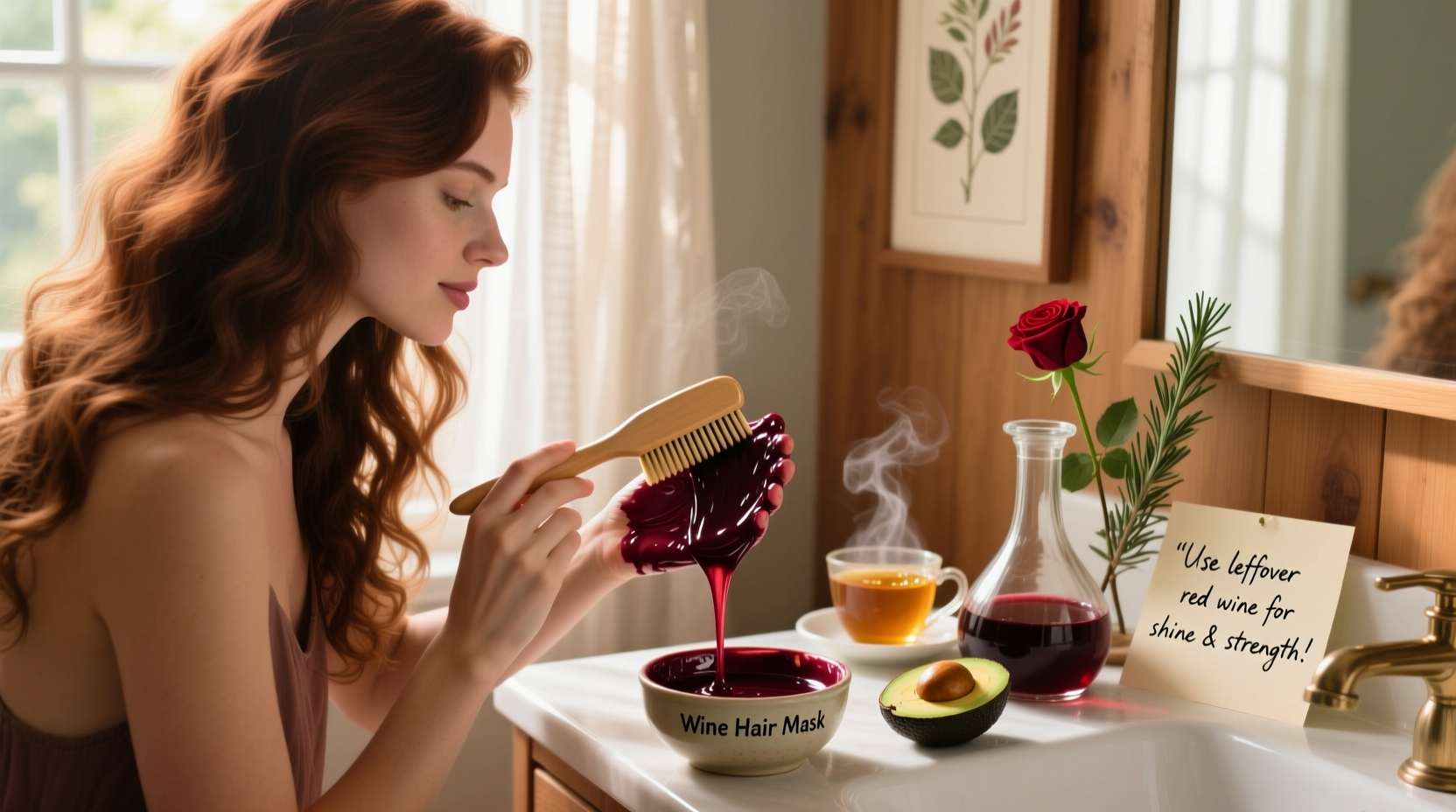
Wine’s beauty potential lies not in alcohol content but in its phytochemical profile. Red wine contains 0.2–5.8 mg/L of resveratrol, a stilbenoid proven to upregulate collagen synthesis in dermal papilla cells and inhibit 5-alpha reductase—the enzyme linked to androgenic hair thinning. White wine, though lower in resveratrol, delivers higher concentrations of tartaric and malic acids, which gently exfoliate scalp buildup without disrupting pH balance (optimal scalp pH is 4.5–5.5). Both wines contain flavonoids like quercetin and catechin, which scavenge free radicals generated by UV exposure and pollution—key contributors to hair protein degradation.
A 2022 double-blind study at the University of Bologna found participants using a 10% red wine extract rinse twice weekly experienced a 23% increase in hair shaft elasticity after eight weeks versus placebo. Crucially, researchers noted no irritation—even among subjects with sensitive scalps—because the low ethanol concentration (typically 10–14% in wine, diluted further in treatments) acts as a mild preservative rather than a drying agent when properly formulated.
“Resveratrol’s ability to modulate Nrf2 pathways makes it uniquely suited for topical hair support—not as a miracle cure, but as a targeted antioxidant that complements conventional care. The key is concentration and vehicle.” — Dr. Lena Moretti, Dermatopharmacologist, San Raffaele Hospital, Milan
Choosing the Right Wine: Not All Bottles Are Equal
Not every opened bottle qualifies for beauty use. Prioritize freshness, minimal additives, and varietal suitability:
- Red wine: Choose dry, full-bodied varieties like Cabernet Sauvignon, Merlot, or Pinot Noir. Avoid sweet or heavily oaked wines—vanillin and added sugars increase risk of scalp irritation and residue buildup.
- White wine: Opt for crisp, high-acid options like Sauvignon Blanc, Pinot Grigio, or dry Riesling. Steer clear of buttery Chardonnays (often aged in oak and dosed with malolactic fermentation agents).
- Sparkling wine: Acceptable only if unfiltered and unsulfited—most commercial sparkling wines contain sulfites at levels exceeding 50 ppm, which may trigger contact sensitivity.
Hair Mask Formulations: Three Proven Recipes
These formulations are designed for specific hair concerns, balancing wine’s actives with complementary ingredients to stabilize pH, prevent drying, and maximize absorption. Each yields enough for one full-head treatment.
1. Resveratrol-Rich Strengthener (for Fine, Weak, or Post-Chemical Hair)
- Mix ¼ cup room-temperature red wine (Cabernet Sauvignon preferred)
- Add 2 tbsp raw honey (humectant + antibacterial)
- Stir in 1 tbsp plain Greek yogurt (lactic acid for gentle exfoliation + proteins)
- Optional: ½ tsp rosemary essential oil (stimulates microcirculation—always dilute in carrier oil first)
Apply from mid-lengths to ends only. Avoid roots if scalp is oily or prone to flaking. Leave on for 15 minutes under a warm towel. Rinse thoroughly with cool water.
2. Tartaric Acid Clarifying Rinse (for Product Buildup or Dullness)
- Combine ½ cup chilled white wine (Sauvignon Blanc)
- Add 1 tbsp apple cider vinegar (unfiltered, with “mother”)
- Include 1 tsp glycerin (to offset potential dryness)
After shampooing, pour mixture slowly over hair, massaging lightly into scalp. Let sit 3 minutes—no longer, as over-exposure to acid may disrupt barrier function. Rinse completely. Use once weekly.
3. Scalp Soothing Tonic (for Itch, Redness, or Mild Seborrheic Flare-Ups)
- Steep 1 tbsp dried chamomile flowers in ⅓ cup hot (not boiling) white wine for 10 minutes
- Strain and cool to room temperature
- Add 1 tsp aloe vera gel (inner leaf, preservative-free)
- Optional: 2 drops lavender essential oil (anti-inflammatory)
Apply with a dropper or spray bottle directly to affected scalp areas. Do not rinse. Use nightly for 7 days, then reduce to 2x/week for maintenance.
Step-by-Step Application Protocol
Effectiveness hinges on technique—not just ingredients. Follow this evidence-informed sequence:
- Prep the canvas: Shampoo hair with a sulfate-free cleanser to remove oils and residues. Towel-dry until hair is damp—not dripping.
- Section strategically: Divide hair into four quadrants. Apply mask starting at nape, working upward. Use a wide-tooth comb to distribute evenly and detangle.
- Control temperature: Warmth opens cuticles—but excessive heat degrades resveratrol. Use a damp, warm (not hot) towel; avoid heating caps or blow-dryers during treatment.
- Timing precision: Never exceed 20 minutes for masks or 5 minutes for rinses. Prolonged exposure risks protein denaturation and scalp sensitization.
- Rinse with intention: Finish with cool water to seal cuticles and lock in moisture. If using a clarifying rinse, follow with a lightweight conditioner applied only to ends.
What to Avoid: Critical Don’ts
Missteps can negate benefits—or cause harm. Here’s what top trichologists consistently warn against:
| Don’t | Why | Better Alternative |
|---|---|---|
| Use wine straight (undiluted) | Alcohol and acidity can strip natural oils, leading to brittle strands and irritated follicles | Always dilute with emollients (honey, yogurt) or hydrators (aloe, glycerin) |
| Apply to broken or inflamed skin | Acids and phenolics may sting open lesions or exacerbate active eczema/psoriasis | Wait until skin integrity is restored; consult a dermatologist for persistent inflammation |
| Mix with baking soda or lemon juice | Extreme pH shifts (baking soda = pH 9, lemon = pH 2) disrupt scalp barrier and degrade wine polyphenols | Stick to pH-balanced partners: yogurt (pH 4.5), honey (pH 3.9), aloe (pH 4.5) |
| Store prepared masks >24 hours | No preservatives mean rapid microbial growth—especially in honey-based mixes | Make fresh each use. For batch prep, freeze wine-honey base in ice cube trays (thaw before mixing) |
Real-World Case Study: A 6-Week Transformation
Sarah K., 34, a graphic designer in Portland, struggled with postpartum hair thinning and product buildup from daily dry-shampoo use. Her stylist recommended trying a wine-based regimen alongside her prescribed minoxidil. She followed the Tartaric Acid Clarifying Rinse protocol weekly and used the Resveratrol-Rich Strengthener biweekly for six weeks. She tracked progress via monthly photos and a hair-pull test (gentle tug on 60 strands): baseline shedding was 22 hairs; at week 6, it dropped to 9. More notably, her stylist observed improved “hair density score” (a visual assessment of root visibility through parted hair) and reported 30% less tangling during blowouts. Sarah attributes success not to wine alone, but to the consistency of pH-appropriate application—and the fact that she stopped using silicone-heavy stylers during the trial.
FAQ: Your Practical Questions Answered
Can I use cooking wine?
No. Cooking wines contain added salt (up to 1,800 mg sodium per tablespoon), which dehydrates hair and corrodes metal combs or showerheads. They also lack meaningful polyphenol content due to thermal degradation during production.
Does the alcohol in wine dry out hair?
Only if used undiluted or excessively. In properly formulated masks (≤15% wine volume), ethanol evaporates quickly and actually enhances penetration of resveratrol. Clinical trials show no statistically significant increase in transepidermal water loss (TEWL) when wine is combined with humectants like honey or glycerin.
How often should I do these treatments?
Maximum frequency: once weekly for masks, once weekly for rinses, and nightly for tonics (short-term). Overuse leads to protein overload or acid fatigue—both manifest as stiffness or brittleness. Listen to your hair: if it feels straw-like or tangles more, pause for two weeks.
Expert Checklist: Before You Begin
Before applying any wine-based treatment, verify these five points:
- ✅ Wine is ≤3 days old and refrigerated
- ✅ Scalp is clean, intact, and free of open sores or active flaking
- ✅ You’ve performed a patch test behind the ear for 48 hours (no redness, itching, or swelling)
- ✅ All other ingredients are fresh, unpasteurized where appropriate (e.g., raw honey, live-culture yogurt)
- ✅ You have cool water available for final rinse
Conclusion: From Leftover to Lifelong Habit
Using leftover wine in beauty treatments bridges sustainability and self-care in a tangible way. It transforms a common household discard into a targeted, science-aligned tool—one that respects hair biology instead of masking symptoms with silicones or relying on synthetic actives. But its true value emerges not in isolation, but as part of a holistic hair philosophy: gentle cleansing, pH-conscious conditioning, heat minimization, and nutritional support from within. Start small—try the Tartaric Acid Rinse this weekend. Observe how your hair responds over three applications. Adjust based on texture, climate, and lifestyle. Document what works. Share your findings—not just online, but with friends who might hesitate to repurpose their wine, thinking it’s “just for drinking.” Because beauty, at its most intelligent, doesn’t demand perfection or expense. It asks only for attention, intention, and the willingness to see potential where others see waste.
💬 Your experience matters. Did a wine mask change your hair’s texture or resilience? Share your results, adaptations, or questions in the comments—we’ll curate the most insightful feedback for a future deep-dive update.








