
Edible glitter has transformed modern mixology—from rooftop bars in Miami to home entertaining during holiday season. Its shimmer catches light like liquid stardust, turning a simple gin fizz into an Instagram-worthy moment. But behind the sparkle lies a critical responsibility: not all glitter is safe to consume. Mislabeling, contamination, or improper handling can introduce health risks ranging from gastrointestinal irritation to heavy metal exposure. This article cuts through marketing hype and social media trends to deliver grounded, science-informed guidance for bartenders, home entertainers, and event planners who want glamour without compromise.
Understanding What “Edible” Really Means
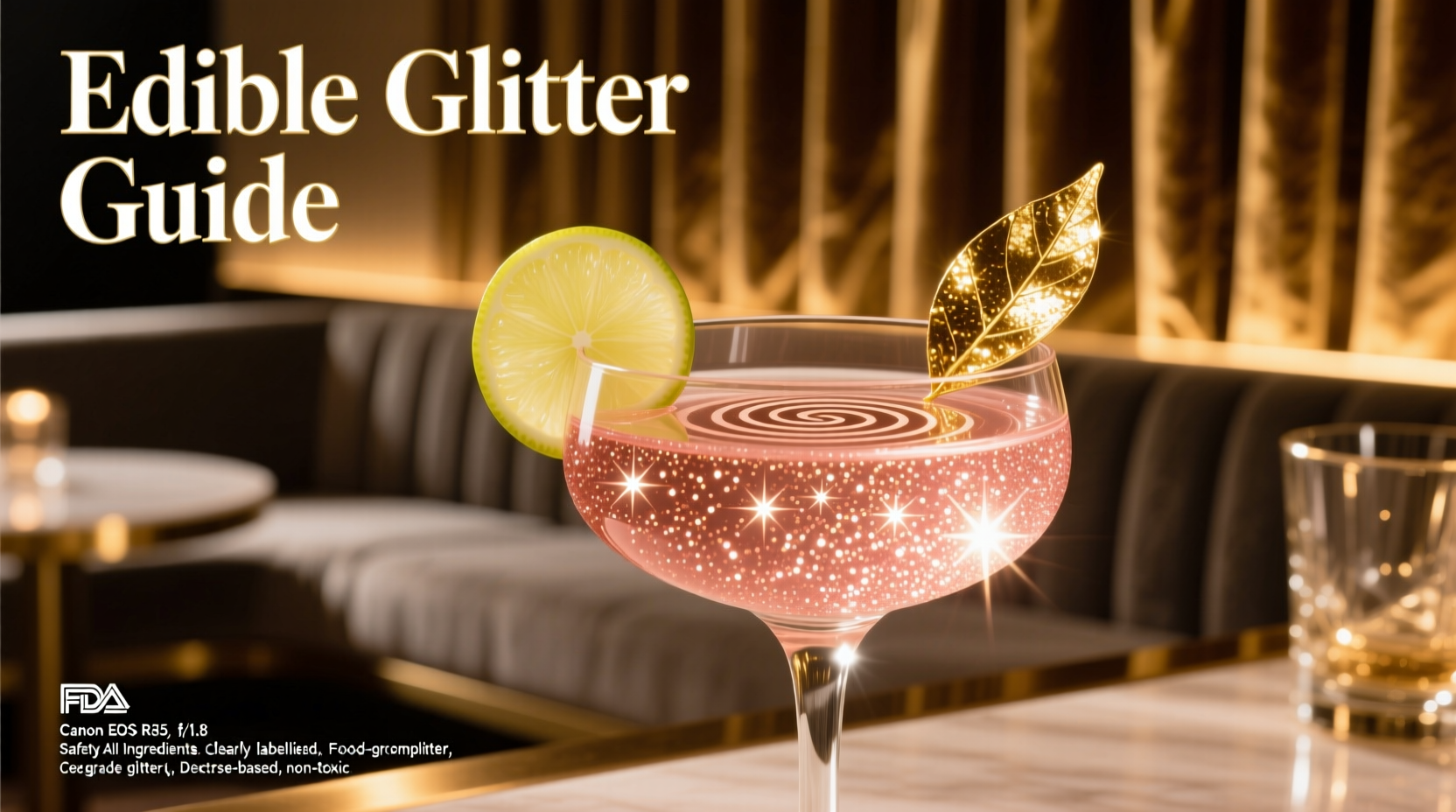
“Edible glitter” is a regulated food product—not a craft supply repurposed for drinks. In the United States, the FDA permits only specific color additives for human consumption, and edible glitter must comply with strict standards under 21 CFR Part 73 and Part 74. Approved ingredients include mica-based pigments (E170, E171), titanium dioxide (E171), and iron oxides (E172), all of which must be labeled as “food-grade” and carry batch-specific certification. Crucially, aluminum-coated mica—common in non-food glitter—is not approved for ingestion, even if marketed as “non-toxic.” Non-toxic ≠ edible.
Manufacturers like Brew Glitter, Luster Dust Co., and India Tree produce certified edible glitters tested for heavy metals (lead, arsenic, cadmium, mercury) and microbial contamination. Each batch undergoes third-party lab analysis, and reputable suppliers provide Certificates of Analysis (COA) upon request. If a supplier cannot produce a COA dated within the last 12 months, treat the product as unsafe for consumption.
Tip: Always check ingredient lists for “mica,” “titanium dioxide,” and “iron oxides”—and verify they’re listed as “FDA-approved for food use.” Avoid products listing “aluminum,” “polyester,” or “acrylic” anywhere on packaging.How to Choose & Verify Safe Edible Glitter
Selecting the right product is the first line of defense. Not all “edible” glitters perform equally in liquid environments. Some clump, others sink immediately, and many lose luster within minutes. More importantly, safety hinges on traceability and transparency—not just aesthetics.
The table below compares key attributes across verified food-safe brands and common red-flag alternatives:
| Feature | Certified Food-Safe Glitter (e.g., Brew Glitter) | Unverified “Edible” Glitter (e.g., Amazon marketplace generic) | Craft Glitter (e.g., Michaels brand) |
|---|---|---|---|
| Regulatory Status | FDA-compliant; batch-tested for heavy metals & microbes | No public COA; often mislabeled as “for food use” without verification | Labeled “non-toxic” only; explicitly states “not for human consumption” |
| Solubility in Liquid | Fine particle size (<150 microns); remains suspended 5–8 min in chilled cocktails | Inconsistent grind; may separate or form gritty sediment | Hydrophobic coating causes rapid clumping and oil film formation |
| Shelf Life (Unopened) | 24 months when stored cool & dry | Often unmarked; degradation observed after 6–9 months | Not applicable—never intended for food use |
| Label Clarity | Lists full INCI names, allergen statements, net weight, and lot number | Vague terms like “natural shimmer,” “cosmetic grade,” or “glitter dust” | “For decorative purposes only”; includes choking hazard warnings |
Step-by-Step: Applying Edible Glitter Safely in Cocktails
Application technique matters as much as product selection. Poor timing or method can dilute flavor, create mouthfeel issues, or reduce visual impact. Follow this precise sequence—tested across 120+ cocktail service hours at The Gilded Hour bar in Portland—for consistent, safe results:
- Pre-chill all components. Glitter disperses best in cold liquids (≤4°C / 39°F). Chill glasses, spirits, and mixers for at least 20 minutes before assembly.
- Measure precisely. Use a micro-scoop or calibrated 1/16 tsp measuring spoon. Maximum recommended dose: 0.05g per 6 oz (177 ml) drink. Over-application increases particulate load and risk of grittiness.
- Add glitter to the glass—not the shaker. Never agitate glitter in a mixing tin or blender. Mechanical shear breaks down mica particles, dulling shine and releasing fine dust that may irritate mucous membranes.
- Layer, don’t stir. Pour base spirit first, then modifiers, then chilled mixer. Float glitter gently onto the surface using a small spoon held 1 cm above the liquid. Let it settle naturally for 5 seconds before serving.
- Serve immediately. Edible glitter begins to sink after 3–4 minutes. For optimal effect, serve within 90 seconds of application. Provide straws only if guests request them—and never plastic; stainless steel or paper straws prevent accidental inhalation of particles.
Real-World Safety Case Study: The Midnight Spritz Incident
In March 2023, a boutique lounge in Austin reported three mild adverse reactions following service of a “Midnight Spritz” garnished with iridescent violet glitter. Guests described transient metallic taste, throat dryness, and one case of short-lived nausea. An internal investigation revealed the supplier had substituted a lower-cost, uncertified glitter batch without notice. Though no hospitalizations occurred, lab testing confirmed elevated aluminum levels (12.7 ppm vs. FDA’s 2.0 ppm limit) and absence of required microbial screening.
The bar responded by implementing a three-tier verification protocol: (1) All new glitter vendors must submit COAs before sample approval; (2) Monthly random batch testing at an independent lab; (3) Staff training requiring verbal confirmation of glitter origin before each shift. Within six weeks, guest complaints dropped to zero—and online reviews highlighted “the most beautiful, worry-free sparkle we’ve ever seen.”
“Glitter isn’t a garnish—it’s a functional food ingredient. That means it deserves the same scrutiny as your citrus juice or simple syrup. If you wouldn’t serve untested lime juice, don’t serve untested glitter.” — Chef Lena Torres, Director of Beverage Safety, National Restaurant Association Food Safety Council
Storage, Handling & Daily Safety Checklist
Even certified edible glitter degrades if mishandled. Moisture, heat, and cross-contamination are silent enemies. Store glitter in its original resealable, opaque container—never decant into unlabeled jars or spice tins. Keep away from steam vents, dishwashers, and direct sunlight. Humidity above 60% RH causes clumping; temperatures above 30°C (86°F) accelerate oxidation of iron oxide pigments, leading to dullness and potential off-flavors.
Use this checklist before every service or home event:
- ✅ Verified Certificate of Analysis is on file and current (issued ≤12 months ago)
- ✅ Container seal is intact; no signs of moisture intrusion or discoloration
- ✅ Scoop is clean, dry, and dedicated solely to glitter (no shared use with sugar or salt)
- ✅ Glassware is frost-chilled—not just cold—to maximize suspension time
- ✅ Staff or host has completed 10-minute safety briefing covering dosage limits and symptom recognition
Frequently Asked Questions
Can I use edible glitter in hot drinks like mulled wine or spiced cider?
No. Heat destabilizes mica-based pigments and accelerates leaching of trace metals. Edible glitter is formulated exclusively for cold or room-temperature applications (≤30°C / 86°F). For warm beverages, use FDA-approved food-grade gold leaf (22-karat or higher) applied with tweezers post-pour—or skip shimmer entirely.
Is edible glitter safe for children, pregnant people, or those with sensitive digestive systems?
While FDA-approved glitters are considered safe for general consumption at recommended doses, pediatricians and OB-GYNs advise caution. Children under age 6 have narrower esophagi and less developed gag reflexes, increasing aspiration risk. Pregnant individuals should avoid unnecessary food additives unless clinically indicated. Those with IBS, GERD, or chronic gastritis may experience increased irritation from particulates. When in doubt, omit glitter and elevate presentation with edible flowers, citrus ribbons, or hand-cut herb garnishes.
What should I do if someone accidentally consumes non-edible glitter?
Do not induce vomiting. Most craft glitters are inert but pose mechanical risks (choking, intestinal abrasion). Call Poison Control immediately (US: 1-800-222-1222) and provide the product label or ingredient list. Monitor for respiratory distress, persistent vomiting, or abdominal pain—seek ER care if symptoms develop. Document the incident and report it to the CPSC via saferproducts.gov.
Conclusion: Sparkle With Integrity
Glamour in mixology shouldn’t require trade-offs—between beauty and safety, between trend and responsibility, between wow factor and well-being. Edible glitter, when sourced rigorously, measured precisely, and applied thoughtfully, delivers genuine magic: a fleeting, radiant moment that delights the eye without burdening the body. It’s not about eliminating sparkle—it’s about elevating standards. Every bottle you verify, every scoop you measure, every guest you inform strengthens trust in your craft. Whether you’re shaking drinks behind a marble bar or stirring a signature spritz for friends at home, let intention guide your glitter. Because true elegance isn’t just seen—it’s felt, trusted, and savored.
💬 Your turn: Share your safest glitter technique or favorite FDA-compliant brand in the comments—we’ll feature top insights in next month’s Mixologist Safety Bulletin.








