Puppies explore the world with their mouths. Nipping and mouthing are natural behaviors, especially during teething and social development. However, when those sharp little teeth latch onto human hands during play, it can become painful—and if left unchecked, may evolve into problematic behavior in adulthood. The key is not to suppress this instinct but to redirect it gently and consistently using positive reinforcement. With patience and the right approach, you can teach your puppy that hands are for petting, not chewing.
Understanding Why Puppies Bite Hands
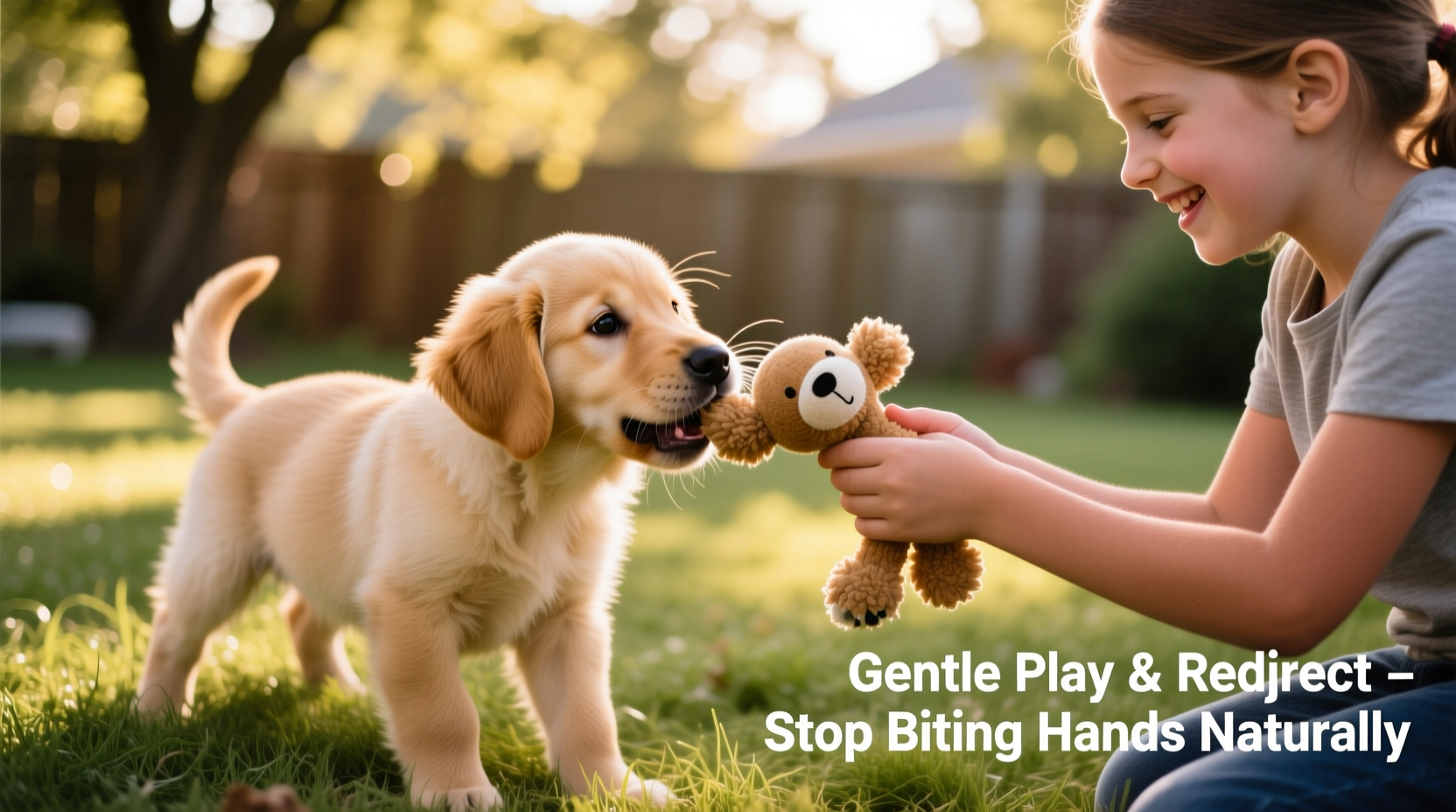
Biting during play isn’t aggression—it’s communication. In a litter, puppies use their mouths to interact with siblings, establish boundaries, and learn bite inhibition. When a pup bites too hard, the other yelps and stops playing, teaching the biter to moderate pressure. Without this feedback from littermates, human interaction becomes the new classroom.
Hands are particularly tempting targets because they move quickly, attract attention, and often appear during exciting moments like feeding or playtime. Your puppy might also bite out of overstimulation, fear, or boredom. Recognizing the root cause helps tailor your response appropriately.
“Puppies don’t come pre-programmed with human rules. They learn through repetition, consistency, and clear consequences.” — Dr. Sophia Yin, Veterinarian and Animal Behaviorist
Gentle Training Techniques That Work
Effective puppy training avoids fear-based methods. Instead, focus on shaping behavior by reinforcing what you want and redirecting what you don’t. Here are five proven, humane strategies:
1. Redirect to Appropriate Chew Toys
The moment your puppy goes for your hand, freeze your movement and offer a toy instead. Keep durable chew items like rubber Kongs, rope toys, or soft plush alternatives within reach during play sessions. This teaches the puppy: “When I feel like biting, there’s something better than skin.”
Tip: Rotate toys regularly to maintain novelty. A stuffed Kong frozen with peanut butter (xylitol-free) can be a powerful distraction tool.2. Use Time-Outs, Not Punishment
If biting persists despite redirection, end the interaction calmly. Stand up, turn away, and leave the room for 20–30 seconds. This mimics how littermates respond to rough play—removing fun as a consequence. Avoid yelling or physical corrections, which can damage trust and increase anxiety.
Be consistent: every bite = immediate pause in play. Over time, the puppy learns that gentle play keeps the game going.
3. Teach Bite Inhibition Through Yelping
When your puppy bites too hard, let out a high-pitched “yelp” similar to a hurt littermate. Immediately stop moving and withdraw attention for a few seconds. Most puppies will pause, startled. Then resume play—if they’re gentle. If they bite again, repeat the process.
This method works best when started early and applied uniformly by all family members.
4. Reward Gentle Touch
Use treats to reinforce calm interactions. While your puppy is near your hand without biting, quietly drop a small treat nearby. Gradually decrease the distance between the treat and your hand until the puppy can tolerate being touched while remaining relaxed.
Pair verbal praise like “good paws” or “gentle” with the reward to build a positive association.
5. Manage Energy Levels
Over-tired or hyperactive puppies are more likely to mouth hands. Schedule regular breaks during play, especially after 5–10 minutes of intense activity. Offer a chew toy or a quiet space with a bed to decompress.
Daily walks, sniffing games, and mental challenges (like puzzle feeders) reduce excess energy that fuels nipping.
Step-by-Step Timeline for Success
Behavior change takes time. Follow this realistic 4-week plan to see measurable improvement:
- Week 1 – Awareness & Redirection: Focus on recognizing bite triggers. Carry a toy at all times. Redirect every instance of hand-biting immediately. Begin using a cue word like “gentle” when offering your hand.
- Week 2 – Introduce Consequences: Start short time-outs (20 seconds) after failed redirection. Be consistent—even one missed correction slows progress. Practice brief handling sessions (touch paws, collar) with treats.
- Week 3 – Increase Duration: Extend calm interactions. Reward sustained periods of non-biting. Practice around distractions. Use the “yelp and pause” technique with increasing sensitivity.
- Week 4 – Generalize Learning: Test progress with different people, locations, and energy states. Invite friends to engage under supervision. Celebrate improvements, even small ones.
By the end of this cycle, most puppies show significant reduction in hand-biting. Full mastery may take longer, especially for high-energy breeds like Border Collies or Jack Russells.
Do’s and Don’ts: What Helps vs. What Hurts
| Do’s | Don’ts |
|---|---|
| DO keep chew toys accessible at all times | DON’T wave hands or feet as toys during play |
| DO use a calm, consistent tone when correcting | DON’T tease or encourage mouthing games |
| DO reward calm behavior with treats and affection | DON’T punish after the fact—timing is critical |
| DO practice short handling exercises daily | DON’T use bitter sprays on hands—they confuse the dog |
| DO involve all household members in training | DON’T allow inconsistent responses (e.g., one person ignores biting, another yells) |
Mini Case Study: Luna the Labrador Retriever
Luna, a 12-week-old black Lab, loved her owners—but had a habit of latching onto fingers during play. Her family initially responded by pulling away sharply, which only excited her more. After consulting a trainer, they implemented a structured routine:
- Kept a basket of chew toys by the couch and front door.
- Used a high-pitched “ouch!” followed by a 30-second timeout whenever she bit.
- Introduced a “gentle” command paired with a treat when she sniffed or licked their hands.
- Limited play sessions to 7 minutes with mandatory rest afterward.
Within three weeks, Luna stopped targeting hands entirely. By week six, she would automatically look for a toy when excited. Her owners noted that consistency across all family members was the biggest factor in success.
Essential Checklist for Puppy Parents
Print or save this checklist to track your progress:
- ✅ Identify your puppy’s bite triggers (excitement, fatigue, hunger)
- ✅ Stock multiple chew toys in key areas (living room, bedroom, crate)
- ✅ Practice “gentle” handling with treats daily
- ✅ Use a consistent verbal cue (“Ouch!” or “Too bad!”) when bitten
- ✅ Apply immediate time-outs (20–30 sec) after biting
- ✅ Involve all family members in the same method
- ✅ End play calmly if biting escalates
- ✅ Monitor progress weekly and adjust as needed
Frequently Asked Questions
Is it normal for my 16-week-old puppy to still bite hands?
Yes. Mouthing typically peaks between 8–16 weeks and gradually declines as bite inhibition develops. Most puppies significantly reduce hand-biting by 5–6 months, though occasional nips may occur during excitement. Consistent training accelerates this timeline.
Should I ever use a spray bottle or shout “No!”?
No. These methods create fear and confusion. Water sprays may startle a puppy into stopping momentarily, but they don’t teach alternative behavior. Shouting can either escalate arousal or make the dog wary of hands altogether. Positive redirection is far more effective long-term.
What if my puppy bites harder when I pull my hand away?
Pulling often triggers a prey drive response—your moving hand becomes a game. Instead, go limp or slowly retract your hand without jerking. Immediately offer a toy. If the behavior continues, stand up and end the interaction. Over time, the puppy learns that chasing hands ends playtime.
Conclusion: Building Trust One Gentle Interaction at a Time
Stopping puppy biting isn’t about dominance—it’s about guidance. Your puppy looks to you to understand what’s acceptable. By using gentle, consistent techniques rooted in empathy and positive reinforcement, you’re not just preventing a nuisance; you’re laying the foundation for a well-mannered, confident adult dog.
Every redirected bite, every calm moment rewarded, strengthens your bond. Progress may be slow some days, but persistence pays off. Remember: you’re not just teaching “don’t bite,” you’re teaching “here’s what to do instead.”
💬 Have a puppy training win to share? Tell us how you helped your pup learn gentle play—we’d love to hear your story and help others learn from your experience!








