Dogs jump on guests out of excitement, not defiance. While it may seem harmless—or even endearing—this behavior can startle visitors, damage clothing, or pose a risk to children and older adults. Many owners rely on treats to redirect the behavior or resort to shouting, both of which can backfire. Treats create dependency, and yelling often escalates arousal. The solution lies in consistency, timing, and teaching alternative behaviors through calm leadership.
With patience and structured training, you can teach your dog that calmness—not jumping—gets them what they want: attention and inclusion. This guide outlines proven, humane methods used by professional trainers to eliminate jumping using only body language, environmental management, and behavioral conditioning.
Understanding Why Dogs Jump
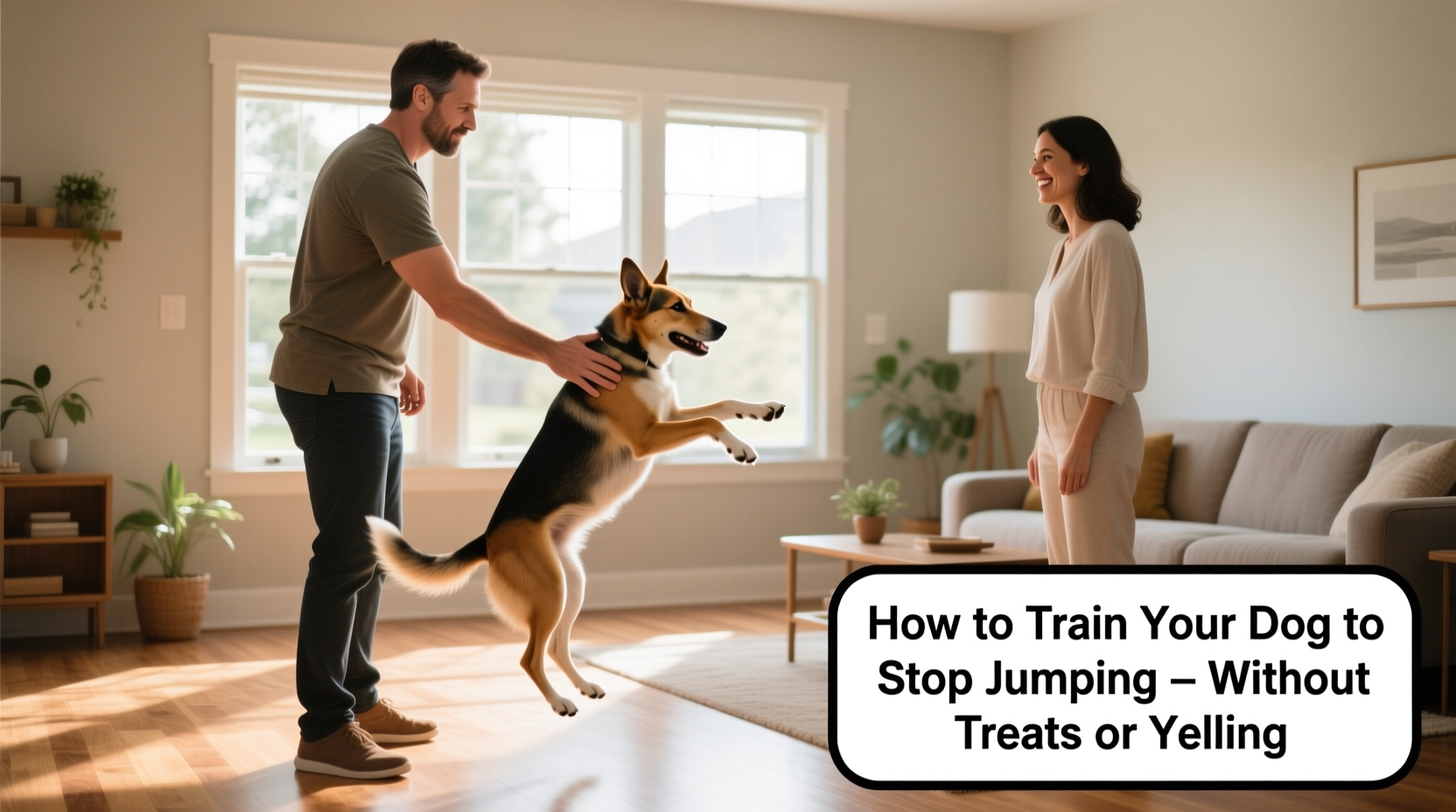
Dogs are social animals hardwired to greet others face-to-face. In the canine world, approaching another dog’s muzzle is a natural greeting ritual. When dogs transfer this instinct to humans, they leap up to make contact at eye level. Puppies especially do this because people respond with attention—petting, talking, laughing—which reinforces the action.
Over time, jumping becomes a learned strategy: “If I jump, I get noticed.” Even negative attention like pushing the dog away or yelling can reinforce the habit if it still involves physical engagement or vocal response. The key is not to react emotionally but to change the outcome the dog receives from jumping.
“Dogs don’t misbehave to annoy us—they behave to get needs met. Our job is to teach them better ways.” — Sarah Thornton, Certified Professional Dog Trainer (CPDT-KA)
Step-by-Step Guide to Stop Jumping Without Treats or Yelling
Eliminating jumping doesn’t require food rewards or forceful corrections. Instead, use these five steps consistently over 2–6 weeks depending on your dog’s temperament and history.
- Manage the Environment First
Before training begins, prevent rehearsal of the unwanted behavior. Use baby gates, leashes, or closed doors when guests arrive. A dog who repeatedly jumps during uncontrolled greetings will struggle to learn a new pattern. Control prevents practice of bad habits. - Teach an Alternative Behavior: Four-on-the-Floor
Instead of telling your dog what not to do, teach them what to do instead. The goal is “four-on-the-floor” calmness. Ask your dog to sit as someone approaches. If they stay seated, they earn calm praise and petting. If they jump, all attention stops immediately. - Use the “Turn and Freeze” Method
When your dog jumps, turn your body sideways and cross your arms. Avoid eye contact, speaking, or touching. Stand completely still until all four paws are on the ground. The moment they settle, acknowledge them calmly. This teaches that jumping = no attention, while calmness = connection. - Practice with Controlled Visitors
Ask friends or family to help with short, structured sessions. Have them approach slowly. If your dog jumps, the visitor turns away. Only when the dog is calm does the person step forward and offer gentle petting under the chin (not over the head, which can excite some dogs). - Reinforce Calm Greetings Daily
Practice multiple times per day—even without real guests. Simulate arrivals using household members. Repetition builds reliability. Over time, your dog learns that self-control leads to positive outcomes.
Do’s and Don’ts of Stopping Jumping Behavior
| Do | Don’t |
|---|---|
| Stay calm and neutral when your dog jumps | Yell, push, or knee your dog—it increases stress and can worsen behavior |
| Reward calmness with quiet praise or gentle petting | Reward jumping with any attention—even scolding counts as attention |
| Use a leash to manage proximity during greetings | Let guests “just say hi” without structure—this undermines training |
| Practice daily with low-stakes scenarios | Only train during high-energy events like parties |
| Gradually increase difficulty as your dog improves | Expect perfection after one or two sessions |
Real Example: Training Max, the Excitable Labrador
Max, a two-year-old yellow Labrador, had a habit of barreling into guests the moment the door opened. His owner, Jen, had tried giving him treats when he sat, but Max would still jump first, then sit only after being told. She also found herself yelling, “Off! Off!” which only seemed to excite him more.
Working with a trainer, Jen began managing arrivals: Max was kept on a leash near the front door. When a guest arrived, they were instructed to ignore Max completely unless all four paws were on the floor. The first few attempts failed—Max jumped, the guest turned away, and left. But by the fourth day, Max started sitting automatically when he saw someone reach for the doorknob.
The turning point came when Jen stopped offering treats altogether and instead allowed calm petting only after sustained calmness. Within three weeks, Max greeted visitors politely without prompts. The change wasn’t instant—but it was lasting because it relied on consequences, not bribes.
Tip: If your dog is too excited to sit, ask them to go to a mat or bed across the room. Distance reduces arousal and sets them up for success.Checklist: How to Train Your Dog to Stay Calm During Greetings
- ✅ Keep your dog leashed or behind a gate during initial training
- ✅ Instruct all household members and frequent visitors on the protocol
- ✅ Practice “turn and freeze” every time jumping occurs—consistency is critical
- ✅ Reward calm behavior with calm interaction (quiet voice, under-chin pets)
- ✅ Avoid reinforcing jumping—even once—as it resets progress
- ✅ Increase difficulty gradually: start with familiar people, then strangers
- ✅ End each session on a positive note, even if brief
Why No-Treat Training Works Better Long-Term
While treat-based training has its place, eliminating jumping is best achieved through consequence-based learning. When a dog learns that jumping leads to nothing—and calmness leads to access to people—they adjust their behavior based on real-world cause and effect.
Treats can interfere because they introduce a third party (the reward) between the behavior and the social outcome. Dogs may begin sitting only for food, not understanding that calmness itself is valuable. Worse, if treats aren’t available during real-life greetings, the dog reverts to old habits.
By relying on attention as the reward, you align training with reality. People don’t carry treats when visiting Aunt Linda. But they *do* offer affection when approached politely. Teaching your dog to earn that affection through self-control creates reliable, generalized behavior.
“Behavior maintained by real-life consequences lasts longer than behavior maintained by food bribes.” — Dr. Ian Dunbar, Veterinarian and Animal Behaviorist
Frequently Asked Questions
What if my dog is too excited to listen when someone arrives?
If your dog becomes overly aroused, they’re beyond the learning threshold. In these cases, remove them from the area before the guest enters. Let them settle in another room with a chew toy or mat. After 30–60 seconds, attempt a controlled introduction. Over time, reduce the wait as your dog gains impulse control.
Can I still use a command like ‘off’ or ‘down’?
You can, but only if followed by immediate consequences. Saying “off” and then allowing attention while the dog is still standing teaches them to ignore the cue. Better to remain silent, turn away during jumping, and only engage when all paws are down. Silence removes confusion.
How long does it take to stop jumping without treats?
Most dogs show improvement within 2–3 weeks of consistent training. Full reliability may take 4–8 weeks, especially in high-distraction environments. Younger, high-energy dogs may need more repetition. Older dogs often adapt faster due to established routines.
Conclusion: Lead with Calm, Not Commands
Stopping your dog from jumping isn’t about dominance or discipline—it’s about communication. Dogs thrive when they understand the rules and see consistency in our responses. By removing emotional reactions, avoiding treats as bandaids, and teaching through natural consequences, you build a dog who chooses calmness because it works.
This method demands patience and unity among everyone in the household. One person who caves and pets a jumping dog can undo days of progress. But when applied correctly, it fosters a well-mannered companion who welcomes guests with dignity, not chaos.
💬 Have success with no-treat training? Share your story in the comments—your experience could inspire another dog owner to stay consistent!








