
Cats are naturally drawn to movement, light, and flickering objects—traits rooted in their instinctive hunting behaviors. This makes twinkling holiday lights, decorative string bulbs, or even the reflection of a ceiling fan alluring distractions. While captivating for felines, these lights pose real dangers: electrical hazards, ingestion of broken ornaments, or tangled cords leading to injury. Training your cat to avoid such temptations isn’t about suppressing curiosity—it’s about guiding that curiosity toward safer outlets. With patience, consistency, and an understanding of feline psychology, you can protect both your pet and your decor.
Why Cats Are Drawn to Twinkling Lights
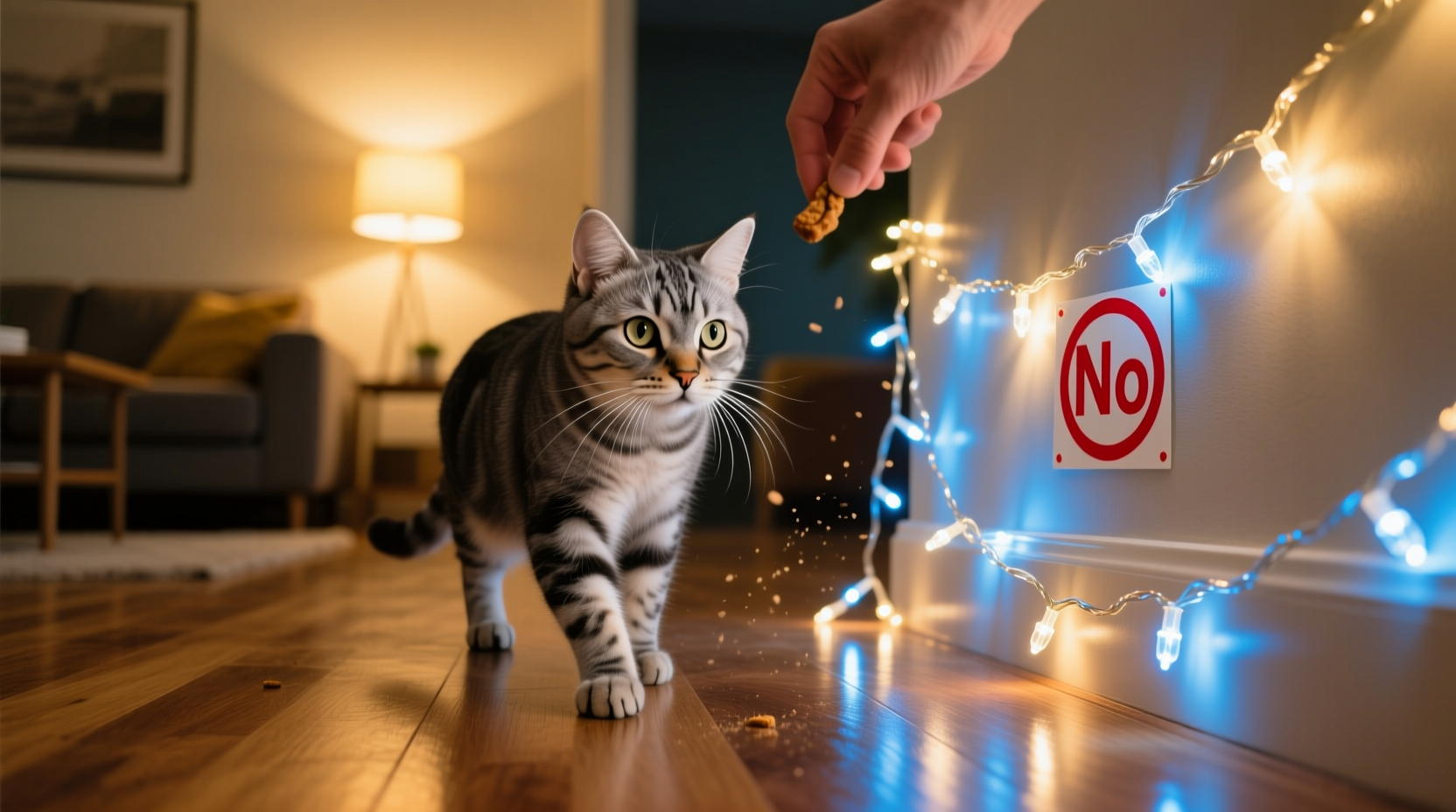
The allure of blinking or shimmering lights stems from a cat’s predatory wiring. Their eyes are highly sensitive to motion and contrast, especially in low-light conditions. Twinkling lights mimic the erratic movements of prey—darting insects, scurrying rodents, or flickering shadows—which trigger a cat’s chase response. Even stationary lights that reflect off surfaces can create moving spots that cats perceive as live targets.
This attraction intensifies during holidays when homes are decorated with elaborate lighting displays. The novelty, combined with changes in routine and increased human activity, can overstimulate cats, making them more likely to investigate—and interact with—dangerous decorations.
“Cats don’t see lights as decorations; they see them as stimuli. Our job is not to punish curiosity but to redirect it.” — Dr. Lena Reyes, Feline Behavior Specialist
Understanding this motivation is the first step in effective training. Attempting to scold or startle a cat after contact with lights only creates fear or confusion. Instead, focus on prevention, redirection, and positive reinforcement.
Step-by-Step Guide to Training Your Cat
Training a cat to avoid twinkling lights requires time and repetition. Unlike dogs, cats respond best to subtle cues and environmental shaping rather than direct commands. Follow this structured approach over several weeks for lasting results.
- Assess the Risk Zones: Identify all areas with exposed lights—Christmas trees, mantle displays, outdoor window strands. Note where your cat spends most of its time and which routes they take through the house.
- Secure or Remove Access: Use cord concealers, adhesive clips, or cable organizers to keep wires flush against walls. Elevate lighted decorations out of reach. If possible, delay decorating until closer to the event date to reduce exposure time.
- Introduce the “Leave It” Cue: Begin training with a harmless object—a small LED keychain or battery-powered tea light placed on the floor. When your cat approaches, say “leave it” in a calm, firm tone. If they stop or back away, immediately reward with a treat or praise. Repeat daily for 5–10 minutes.
- Simulate Real Conditions: Once your cat responds reliably to the cue with safe objects, introduce actual (but secured) twinkling lights in a controlled setting. Monitor closely. Reinforce the “leave it” behavior whenever they show interest.
- Redirect to Alternatives: Keep interactive toys nearby. When your cat heads toward lights, interrupt gently and toss a feather toy or activate a motorized mouse to shift attention.
- Maintain Consistency: Everyone in the household must use the same cues and responses. Inconsistent rules confuse cats and weaken training.
Progress may be slow, but even minor improvements—like pausing before pouncing—indicate learning. Never use physical punishment or spray bottles near lights, as this associates fear with the entire environment, potentially leading to anxiety or avoidance of rooms altogether.
Tip: Practice the “leave it” command during calm moments, not just when lights are present. Generalizing the behavior increases reliability.Environmental Management: Making Lights Unappealing
While training builds long-term habits, immediate safety depends on modifying the environment. A well-managed space reduces temptation and prevents accidents before they happen.
Start by covering cords with spiral wrap tubing or PVC conduit to make chewing unpleasant. Wrap cords in aluminum foil temporarily—most cats dislike the texture and sound. You can also apply pet-safe deterrent sprays (bitter apple or citrus-based) to base areas around lighted zones.
For Christmas trees or light-heavy displays, consider using a physical barrier. A baby gate, freestanding screen, or mesh netting draped loosely over the tree discourages access without blocking the view. Ensure the structure is stable and won’t tip if brushed against.
Another strategy is strategic lighting placement. Avoid placing twinkling lights at ground level or along baseboards. Mount strings higher on walls or ceilings, beyond typical jumping height. Use motion-activated lights sparingly—they increase unpredictability, which can excite cats further.
Do’s and Don’ts of Light Safety Around Cats
| Action | Do | Don’t |
|---|---|---|
| Cord Management | Use cord covers, secure with clips, elevate off floor | Leave loose strands hanging or coiled on surfaces |
| Training Approach | Use positive reinforcement and redirection | Yell, spray water directly at cat, or use shock collars |
| Toy Substitution | Offer wand toys, puzzle feeders, or laser pointers | Use actual string or ribbon as play items |
| Display Placement | Elevate lights, use barriers, supervise interaction | Place fragile or electric decorations within paw reach |
| Deterrents | Apply bitter sprays, use foil or double-sided tape | Use essential oils like tea tree or citrus (toxic to cats) |
Remember: the goal isn’t to eliminate stimulation but to channel it appropriately. A bored cat will seek out trouble. A mentally engaged one has less reason to explore risky areas.
Providing Safer Alternatives to Satisfy Instincts
Cats don’t misbehave out of defiance—they act according to their needs. If those needs aren’t met constructively, they’ll find their own solutions, often involving your holiday lights.
Enrichment is critical. Offer daily interactive play sessions lasting 10–15 minutes, ideally twice a day. Use wand toys with feathers or faux mice to simulate hunting sequences: stalk, chase, pounce, and “kill.” End each session by letting your cat catch the toy and “finish” the hunt, reducing residual frustration.
Rotate toys weekly to maintain novelty. Puzzle feeders that dispense kibble or treats when batted around engage problem-solving skills. Consider installing a bird feeder outside a sunny window—natural movement provides hours of passive entertainment without risk.
Some owners find success with cat-safe LED projectors that cast moving dots or shapes across the floor. These satisfy the visual hunt drive in a controlled way. Always supervise use and turn them off when leaving the room to prevent obsessive behavior.
“Redirect, don’t restrict. Give your cat something better to do, not just something to avoid.” — James Holloway, Certified Cat Behavior ConsultantTip: Schedule playtime before turning on decorative lights. A tired cat is far less likely to investigate.
Real Example: Managing a Curious Kitten During Holiday Season
Sophia, a pet owner in Portland, adopted a 4-month-old Bengal kitten named Milo just before Thanksgiving. Eager to celebrate her first holiday with a pet, she decorated her living room with a fully lit artificial tree, garlands, and string lights along the mantel.
Within hours, Milo was batting at dangling ornaments, climbing the lower branches, and gnawing on a loose cord. Alarmed, Sophia unplugged everything and consulted a local behaviorist. She implemented a three-part plan:
- She installed a mesh skirt around the tree base and secured all cords behind furniture using adhesive raceways.
- She began daily training sessions using the “leave it” command with a flashlight dot on the wall, rewarding Milo with freeze-dried chicken bits when he disengaged.
- She introduced a rotating toy box—feather wands, crinkle tunnels, and a motorized mouse—that she brought out only during evening light hours.
After two weeks, Milo still looked at the tree, but no longer approached it. By Christmas, he would watch the lights from a perch three feet away, then return to his puzzle feeder. The combination of physical barriers, consistent cues, and mental engagement made the difference.
Essential Checklist for Cat-Safe Lighting
Use this checklist to ensure your home remains festive and feline-friendly:
- ✅ Secure all electrical cords with covers or conduits
- ✅ Elevate twinkling lights beyond jumping reach (at least 5 feet)
- ✅ Install physical barriers around high-risk areas (baby gates, nets)
- ✅ Train your cat to respond to the “leave it” command using treats
- ✅ Provide daily interactive play sessions to burn excess energy
- ✅ Rotate enrichment toys to maintain interest
- ✅ Use pet-safe deterrent sprays on base areas near lights
- ✅ Supervise initial exposure to new lighting setups
- ✅ Avoid toxic materials like tinsel, ribbons, or small ornaments
- ✅ Turn off decorative lights when unsupervised or asleep
Frequently Asked Questions
Can I use a spray bottle to stop my cat from touching lights?
While some owners use quick spritzes to deter unwanted behavior, this method risks damaging trust and increasing anxiety. Cats may associate the punishment with your presence rather than the action. Positive reinforcement and environmental controls are more effective and humane long-term solutions.
Are LED lights safer for cats than traditional bulbs?
Yes, LED lights are generally safer. They produce less heat, reducing burn risk if touched or chewed. They’re also more energy-efficient and less likely to overheat. However, the primary danger lies in the cords and potential for electrocution, so proper cord management remains essential regardless of bulb type.
My cat only goes after lights at night. Why?
Cats are crepuscular—most active at dawn and dusk—and many become more alert in low-light conditions. Twinkling lights stand out more in dim rooms, creating stronger visual stimuli. Additionally, nighttime often means quieter surroundings, allowing your cat to focus on small movements. Increase evening playtime to reduce nocturnal exploration.
Conclusion: Building a Safe and Stimulating Environment
Training your cat to stay away from twinkling lights isn’t a one-time fix—it’s part of responsible pet ownership during high-risk seasons. Success comes not from eliminating natural instincts, but from understanding them and offering better alternatives. With consistent training, smart environmental design, and daily enrichment, you can coexist peacefully with both your feline companion and your festive décor.
The safest home isn’t one without lights, but one where curiosity is respected and guided. Start today by assessing your space, introducing one new training cue, or swapping out a risky decoration for a cat-safe version. Small steps lead to lasting change.
💬 Have a story about your cat and holiday lights? Share your tips or challenges in the comments—your experience could help another cat owner stay safe this season.








