Cats are naturally fastidious animals, but even the most instinct-driven feline can develop litter box avoidance. When a cat repeatedly urinates or defecates outside the box—especially after previously using it reliably—it’s easy to label them as “stubborn.” However, this behavior is rarely about defiance. More often, it signals discomfort, stress, or environmental dissatisfaction. Understanding the root cause is essential to correcting the issue and restoring consistent litter box use.
Successfully retraining a resistant cat requires patience, observation, and a tailored approach. With the right combination of behavioral adjustments, environmental modifications, and consistency, most cats can be guided back to proper bathroom habits.
Understanding Why Cats Avoid the Litter Box
Litter box problems in cats fall into two main categories: medical and behavioral. Before implementing training strategies, rule out health concerns. Conditions such as urinary tract infections, bladder stones, arthritis, or gastrointestinal discomfort can make using the litter box painful or difficult. A sudden change in elimination habits should prompt a veterinary visit.
If no medical issue is found, the cause is likely behavioral. Common triggers include:
- Litter box cleanliness: Cats are sensitive to odor and waste buildup. A dirty box may be rejected outright.
- Inaccessible placement: Boxes located in noisy, high-traffic, or hard-to-reach areas deter use.
- Litter type: Unscented vs. scented, clumping vs. non-clumping, fine vs. coarse—cats have strong preferences.
- Box design: Covered boxes may trap odors; small boxes may not accommodate larger cats comfortably.
- Stress or anxiety: Changes in household dynamics, new pets, or loud noises can trigger inappropriate elimination.
- Multi-cat competition: In homes with multiple cats, dominant individuals may guard the box, leading others to avoid it.
Step-by-Step Guide to Reestablishing Litter Box Use
Re-training a cat isn’t about punishment—it’s about creating an environment where the litter box becomes the most appealing option. Follow this timeline-based approach:
- Day 1–3: Eliminate access to problem areas. Block off rooms or spots where your cat has eliminated. Use baby gates, furniture, or temporary barriers. Clean soiled areas thoroughly with enzymatic cleaners to remove lingering odors that attract repeat incidents.
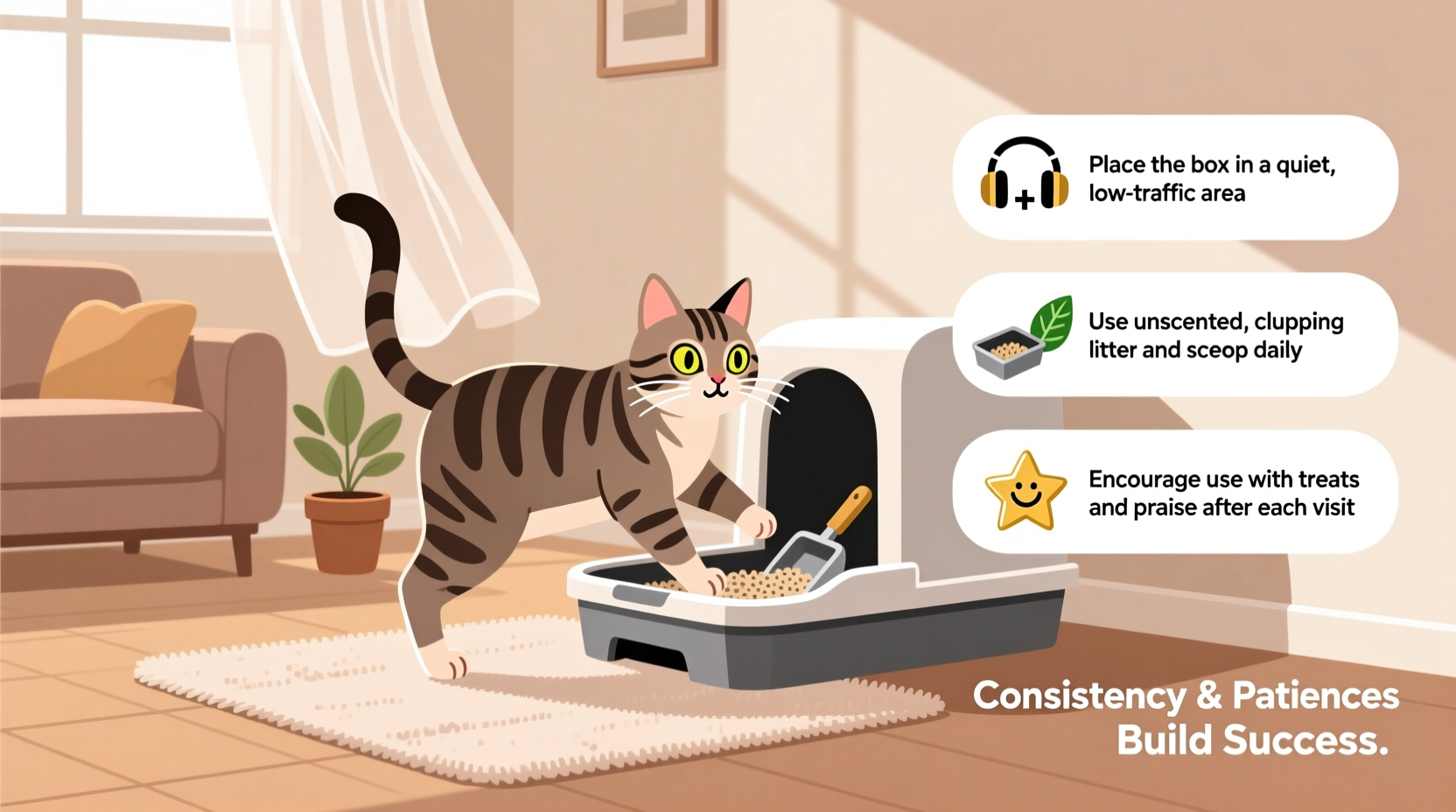
- Day 4–7: Optimize litter box setup. Place clean boxes in quiet, accessible locations. Use unscented, clumping litter at a depth of 2–3 inches. Ensure at least one box is on each floor of a multi-level home.
- Day 8–14: Supervise and redirect. Confine your cat to a smaller room with the litter box, food, water, and bed. Observe for signs of needing to eliminate (sniffing, circling). Gently place them in the box if they show these behaviors.
- Day 15+: Gradually expand territory. Once consistent use is observed over several days, allow controlled access to other areas. Continue monitoring closely and reinforce success with praise or treats.
This process may take weeks, especially for long-standing issues. Consistency is critical—avoid reverting to old setups during setbacks.
Key Behavior Tips for Training Stubborn Cats
Not all cats respond to the same cues. Tailor your approach based on your cat’s personality and history. Consider these evidence-based strategies:
- Use positive reinforcement: Reward your cat immediately after correct litter box use. Offer a treat, gentle petting, or verbal praise. Avoid punishing accidents—they increase fear and worsen the issue.
- Choose the right litter: Some cats prefer soft, sand-like textures; others avoid perfumed or dusty varieties. Test different types in separate boxes to identify preferences.
- Adjust box size and style: Large or elderly cats may struggle with high sides. Consider a low-entry box or modify an existing one by cutting a doorway.
- Maintain daily cleaning: Scoop waste at least once per day. Replace litter completely every 1–2 weeks, depending on usage.
- Avoid covered boxes if uncertain: While they reduce odor spread, some cats feel trapped. If your cat hesitates near a covered box, switch to open-top models.
“Cats don’t misbehave out of spite. Inappropriate elimination is a symptom, not a character flaw. Address the environment first, then the behavior.” — Dr. Sarah Bennett, DVM, Feline Behavior Specialist
Do’s and Don’ts: Litter Box Management Table
| Do’s | Don’ts |
|---|---|
| Provide one box per cat plus one extra | Place only one box for multiple cats |
| Scoop waste daily | Let waste accumulate for days |
| Use unscented, clumping litter unless cat shows preference otherwise | Use heavily perfumed or crystal litters without testing acceptance |
| Place boxes in quiet, low-traffic areas | Put boxes next to loud appliances or in isolated basements |
| Clean accidents with enzymatic cleaner | Use ammonia-based cleaners, which mimic urine scent |
| Gradually transition to new litter types over 7–10 days | Switch litter abruptly |
Mini Case Study: Reversing Long-Term Litter Box Avoidance
Milo, a 4-year-old domestic shorthair, began eliminating behind the sofa six months after his family adopted a second cat. The owners assumed he was being “revengeful,” but after a vet visit ruled out UTIs, a behaviorist was consulted.
The assessment revealed that Milo felt intimidated by the new cat, who often waited near the single litter box. The solution involved placing a second box in a quiet bedroom, switching to unscented litter, and installing a motion-activated deterrent behind the sofa to discourage return visits.
Within three weeks of confinement training and positive reinforcement, Milo used the new box consistently. After two months, both cats were using their preferred boxes without conflict. The key was addressing social stress—not labeling Milo as “stubborn.”
Tip: If your cat eliminates in a specific spot, temporarily place a litter box there, then gradually shift it toward the desired location over several days.Checklist for Successful Litter Box Training
Use this actionable checklist to ensure you’re covering all bases when training a resistant cat:
- ☑ Schedule a veterinary checkup to rule out medical causes
- ☑ Count the number of cats and add one—this is your minimum number of litter boxes
- ☑ Place boxes in quiet, accessible, low-stress areas on every floor
- ☑ Choose unscented, clumping litter unless your cat prefers another type
- ☑ Scoop waste at least once daily and replace litter weekly
- ☑ Clean past accident sites with enzymatic cleaner
- ☑ Observe your cat for elimination cues and gently guide them to the box
- ☑ Reward correct use with treats or affection
- ☑ Avoid yelling, rubbing the cat’s nose in urine, or physical punishment
- ☑ Monitor progress and adjust setup as needed
Frequently Asked Questions
Why does my cat scratch the wall after peeing outside the box?
This behavior mimics burying waste. It indicates your cat recognizes the act as elimination but doesn’t associate it with the litter box. This reinforces the need to make the box more appealing—not to punish the cat.
Can I use a puppy pad or newspaper as a temporary solution?
Yes, but only as a transitional tool. Place pads near the box initially, then slowly move them inside the litter box over several days. Never leave pads permanently, as they may reinforce off-box habits.
What if my cat refuses to use any litter box, even a new one?
Consider underlying anxiety or trauma. Work with a veterinarian or certified feline behaviorist. In some cases, anti-anxiety medication combined with environmental enrichment can support behavioral retraining.
Conclusion: Patience and Precision Lead to Success
Training a stubborn cat to use the litter box isn’t about dominance—it’s about empathy. Cats communicate through behavior, and inappropriate elimination is often a cry for help. By systematically addressing hygiene, accessibility, stress, and individual preferences, you create conditions where proper litter use becomes the natural choice.
Progress may be slow, and setbacks are normal. What matters is consistency, observation, and a commitment to understanding your cat’s needs. With time and the right approach, even the most resistant felines can relearn good habits.
💬 Have a story about turning around your cat’s litter box behavior? Share your experience in the comments—your insight could help another frustrated pet owner find hope and solutions.








