Teaching a parrot to talk is one of the most rewarding experiences for bird owners. Unlike programmed responses, a parrot’s ability to mimic human speech stems from social bonding and environmental enrichment. Yet many people grow discouraged when their bird remains silent or repeats words at inconvenient times. The key isn’t repetition alone—it’s patience, timing, and understanding your parrot’s psychology. Training a parrot to speak without frustration requires a shift in mindset: you’re not forcing behavior, but encouraging communication within a relationship built on trust.
Parrots are intelligent, emotionally complex animals. Species like African Greys, Amazon parrots, and Budgerigars have demonstrated vocabularies exceeding 100 words, with some mimicking tone, context, and even emotional inflection. But pushing too hard leads to stress, avoidance, or behavioral issues. The most effective training happens gradually, through daily interaction and positive reinforcement. This guide outlines a realistic, compassionate approach to help your parrot begin speaking—on its own terms.
Understanding Parrot Communication
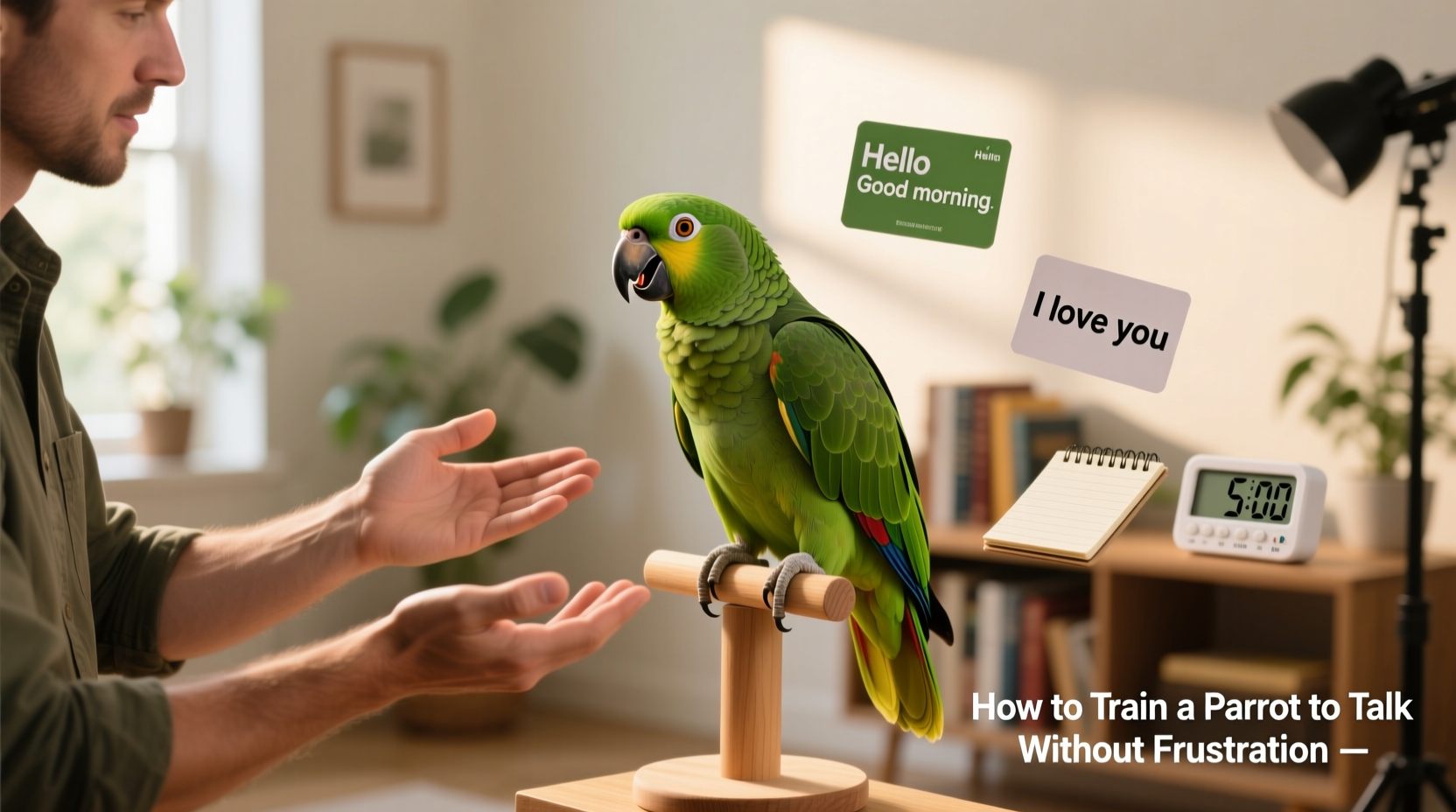
Before teaching words, it’s essential to understand why parrots talk at all. In the wild, parrots use a wide range of calls to maintain flock cohesion, signal danger, or establish territory. Captive parrots view their human families as their flock. When they mimic speech, they’re attempting to integrate into the group, not perform tricks. This social motivation is the foundation of successful training.
Vocal learning in parrots is tied to brain structures similar to those involved in human speech development. Research shows that young birds go through a “sensitive period” between 3 months and 1 year of age, during which they absorb sounds most readily. However, older birds can still learn new words—just more slowly.
Not all parrots will talk, and that’s normal. Factors like species, sex (males often talk more), early exposure, and individual temperament play major roles. A quiet parrot isn’t failing; it may simply prefer whistling, body language, or other forms of expression.
“Speech in parrots isn’t about intelligence alone—it’s about belonging. They mimic us because they want to be part of our world.” — Dr. Irene Pepperberg, Avian Cognition Researcher
Creating the Right Environment for Learning
A stressed bird won’t learn. Before introducing words, ensure your parrot feels safe, engaged, and socially connected. An environment conducive to vocalization includes predictable routines, mental stimulation, and regular interaction.
Place the cage in a common area—such as a living room or kitchen—where daily conversations occur. Parrots learn best by overhearing repeated phrases in context. Avoid loud TVs or chaotic noise, which can overwhelm them. Ideal background sound is calm human speech, not constant audio loops.
Tip: Speak naturally around your parrot during routine activities—“Time for breakfast,” “Let’s open the window,” or “I’m turning off the light”—to associate words with actions.Daily out-of-cage time is non-negotiable. Physical freedom reduces anxiety and increases confidence, both of which support vocal experimentation. Use this time for low-pressure interaction: sit nearby, read aloud, or hum softly. Let your parrot initiate contact rather than forcing attention.
Step-by-Step Guide to Teaching First Words
Start simple. Choose short, clear words with strong consonant sounds—“hi,” “bye,” “no,” “want,” or your parrot’s name. These are easier for birds to reproduce. Follow this timeline over several weeks:
- Week 1–2: Build Trust and Routine
Spend 20–30 minutes daily near the cage, talking calmly. Use the target word in natural contexts: “Hi, Charlie!” each morning. Do not expect a response yet. - Week 3–4: Isolate and Repeat
Say the chosen word clearly 3–5 times in a row during calm moments. Pause and wait. If your parrot makes any sound—chirp, click, babble—reward immediately with praise or a small treat. - Week 5–6: Reinforce Imitation
When your parrot approximates the word—even slightly—respond enthusiastically. Step closer, smile, offer a seed. Avoid overexcitement that might scare them. - Week 7+: Expand Gradually
Once a word is consistently mimicked, introduce a second. Never rush. Mastery of one word builds confidence for the next.
Timing matters. Train after rest periods, such as mid-morning or early afternoon, when your parrot is alert but relaxed. Avoid sessions during molting, illness, or hormonal surges (common in spring), as discomfort impairs focus.
Do’s and Don’ts of Parrot Speech Training
Mistakes in training often stem from human impatience. The following table outlines common pitfalls and better alternatives:
| Do | Don’t |
|---|---|
| Use consistent pronunciation and tone for each word | Change how you say words frequently (e.g., “hi,” “heeey,” “hello”) |
| Keep sessions under 10 minutes, 2–3 times daily | Force long, repetitive drills that cause disengagement |
| Reward effort, not perfection | Ignore attempts because they aren’t “correct” |
| Speak face-to-face at eye level | Yell from another room or mimic from a recording |
| Pair words with actions (“Want food?” before feeding) | Repeat words with no context or meaning |
One of the most damaging habits is punishing incorrect sounds or silence. Parrots don’t understand scolding. Yelling “No!” when they scream teaches them that loud noises get attention—reinforcing the behavior you want to stop.
Real Example: From Silence to First Word
Sarah adopted a 9-month-old Green-Cheeked Conure named Milo. For months, he remained quiet, only chirping occasionally. Frustrated, she tried playing recordings of parrots talking, which made Milo retreat to the back of his cage.
After reading about stress-free training, Sarah changed her approach. She moved Milo’s cage to the kitchen, where she spent mornings preparing coffee. Each day, she greeted him with “Good morning, Milo!” in a warm, steady voice while offering a sunflower seed. She avoided demanding responses.
After six weeks, during a quiet moment, Milo made a raspy sound resembling “M-m-milo.” Sarah smiled and said, “Yes! That’s right!” without reaching for him. Over the next two weeks, the approximation improved. By week ten, he clearly said “Milo” when seeing his reflection or hearing his name.
The breakthrough wasn’t due to drilling—it was consistency, safety, and associating speech with positive outcomes.
Advanced Tips for Expanding Vocabulary
Once your parrot masters a few words, you can introduce phrases and contextual speech. The principles remain the same: clarity, repetition, and relevance.
- Use phrase pairing: Say “Want out?” every time you open the cage door. Eventually, your parrot may use the phrase to request freedom.
- Leverage emotional moments: Calmly say “It’s okay” during mild startling events (e.g., a dropped spoon). Some parrots adopt these phrases for self-soothing.
- Incorporate names: Label family members and pets. “That’s Lucy the dog” helps your parrot link words to individuals.
- Whistle first: If your parrot loves whistling, teach a tune, then add lyrics slowly. Some birds transition from melody to speech more easily.
Never prioritize vocabulary size over well-being. A parrot that speaks five meaningful words with confidence is healthier than one forced to recite twenty without engagement.
FAQ
How long does it take for a parrot to start talking?
There’s no fixed timeline. Some parrots begin mimicking within weeks; others take 6–12 months. Young birds typically start earlier. Consistent, calm interaction improves odds, but genetics and personality ultimately determine pace.
Can older parrots learn to talk?
Yes, though more slowly. Older parrots may resist change, so patience is crucial. Focus on building trust first. Even senior birds have learned new words after years of silence when introduced gently and positively.
Why does my parrot only talk when I’m not looking?
Many parrots vocalize when they think no one is watching because they feel less pressure. It’s a sign they’re practicing privately. Avoid reacting dramatically when catching them “in the act”—a soft “Good job” is enough.
Checklist: Stress-Free Speech Training Plan
Follow this checklist weekly to stay on track without pressure:
- ✅ Spend 20+ minutes daily in calm proximity to your parrot
- ✅ Choose 1–2 simple words to focus on each month
- ✅ Use words in real-life contexts (e.g., “Step up” during handling)
- ✅ Reward any vocal attempt with gentle praise or a preferred treat
- ✅ Keep training sessions short and positive
- ✅ Avoid punishment, repetition fatigue, or comparisons to other birds
- ✅ Monitor body language—look for signs of stress (pinning eyes, fluffed feathers) and pause if needed
Conclusion
Training a parrot to talk without frustration begins with releasing expectations. Success isn’t measured in word count, but in connection. When you shift from demanding performance to nurturing communication, your parrot is far more likely to engage willingly.
The journey reflects the quality of your relationship. A bird that trusts you will want to “talk” in whatever way feels natural—whether that’s clear English, quirky sounds, or expressive silence. Celebrate progress, respect boundaries, and remember: the goal isn’t a talking pet, but a happy companion who feels understood.
💬 Have a story about your parrot’s first word? Share your experience in the comments—your journey might inspire another patient trainer.








