Parrots are intelligent, social birds that form deep emotional bonds with their human caregivers. While this connection is one of the joys of owning a parrot, it can also lead to behavioral challenges—especially separation-related screaming. When you step out of the room, even for a few minutes, your parrot may erupt into loud, persistent shrieks. This isn’t mischief; it’s often a cry of distress, loneliness, or anxiety. The good news is that with patience, consistency, and the right strategies, you can teach your parrot to remain calm when you leave. This guide offers practical, science-backed methods to reduce and eventually eliminate attention-seeking screams.
Understanding Why Parrots Scream
Screaming is a natural behavior for parrots. In the wild, they use vocalizations to maintain contact with flock members over long distances. When a bird loses sight of its companions, it calls out to reestablish connection. Your parrot views you as part of its flock. When you disappear from view, it assumes something has gone wrong and begins calling—sometimes escalating in volume and urgency.
However, not all screaming is separation-related. Some parrots learn that screaming gets results. If every time they shriek, you rush back into the room or respond immediately, they quickly associate noise with attention. This creates a feedback loop: scream → attention → repeat.
To effectively address the issue, you must first determine whether the screaming stems from genuine anxiety or learned behavior. Observe your parrot closely:
- Does the screaming start immediately after you leave, then taper off after 30 seconds?
- Does your bird look toward the door and stop screaming the moment you return?
- Is the screaming high-pitched and frantic, or repetitive and rhythmic?
The answers will help shape your approach. Anxiety-driven screaming requires emotional reassurance and desensitization, while attention-seeking screams need behavioral redirection.
Tip: Never punish your parrot for screaming. Yelling, spraying water, or covering the cage reinforces fear and damages trust.Step-by-Step Behavior Modification Plan
Changing a deeply ingrained behavior like screaming takes time. Follow this structured plan to gradually teach your parrot that your absence is safe and temporary.
- Establish a Calm Baseline: Begin training when both you and your bird are relaxed. Avoid starting during stressful times like early mornings or just before bedtime.
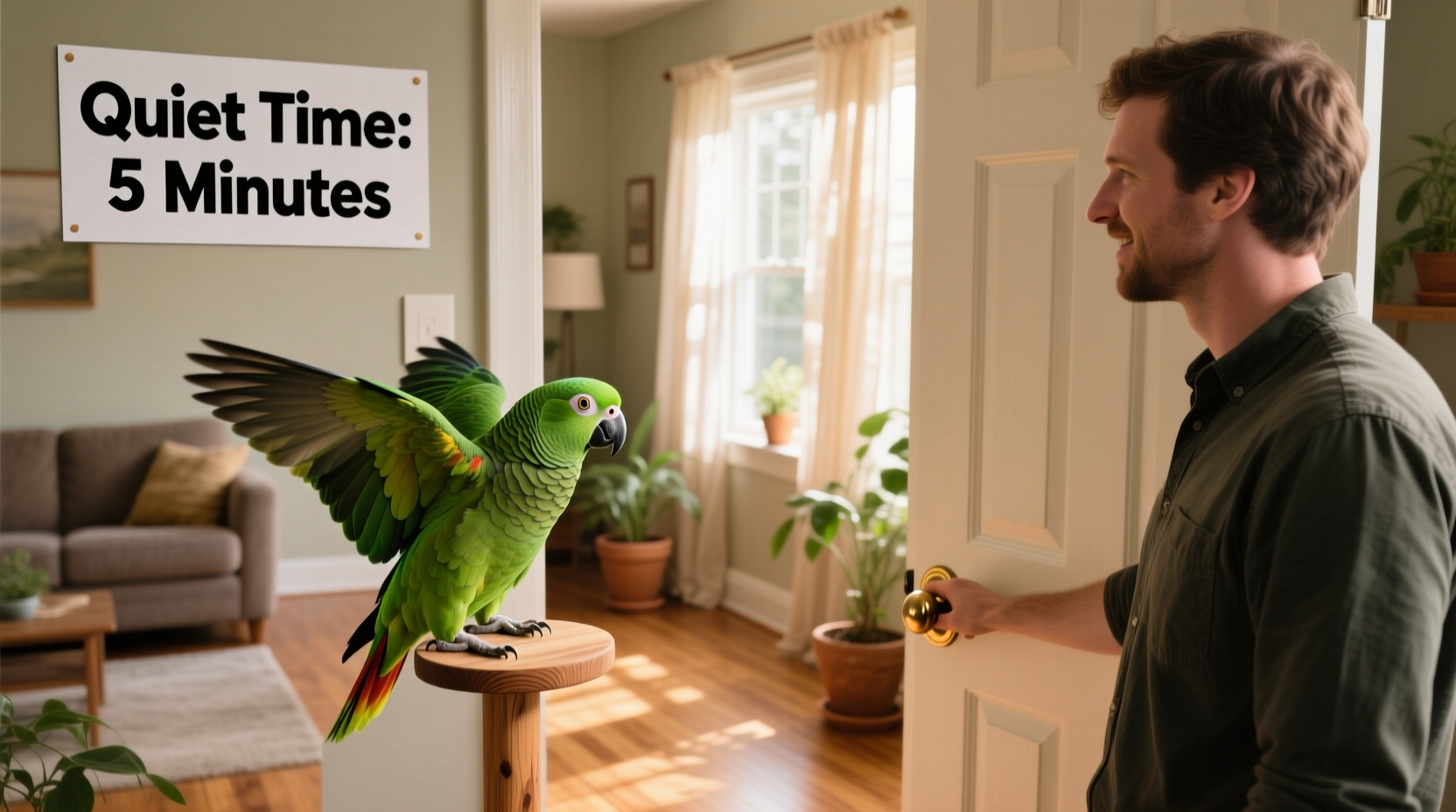
- Introduce Short Absences: Walk out of the room for just 5 seconds, then return without acknowledging the scream. Wait until your parrot is quiet for at least 3 seconds before offering praise or a treat.
- Gradually Increase Duration: Once your parrot tolerates 5-second absences without screaming, extend to 10, then 20 seconds. Use a timer to stay consistent.
- Vary Your Routine: Don’t always follow the same pattern. Sometimes walk to the door and come back immediately. Other times, go to another room briefly. This prevents anticipation-based screaming.
- Add Distractions: Provide engaging toys or foraging activities before leaving. A mentally occupied parrot is less likely to focus on your absence.
- Reward Silence: When your parrot remains quiet during or after your absence, return and offer verbal praise, a favorite treat, or gentle head scratches—only if they enjoy physical contact.
The key is consistency. Every family member must follow the same protocol. Mixed signals—such as one person ignoring screams while another responds—will undermine progress.
Environmental Enrichment to Reduce Anxiety
A bored or under-stimulated parrot is more prone to stress behaviors. Enriching your bird’s environment reduces dependency on constant human interaction.
| Enrichment Type | Examples | Frequency |
|---|---|---|
| Foraging Toys | Paper-wrapped treats, puzzle feeders, shredded cardboard with hidden seeds | Daily |
| Chewable Items | Pine cones, soft wood blocks, palm fronds | Weekly rotation |
| Interactive Play | Training sessions, trick teaching, mirror play (with caution) | 2–3 times/day |
| Sensory Stimulation | Bird-safe music, nature sounds, window perches with outdoor views | Ongoing |
Rotate toys weekly to maintain novelty. Introduce one new item at a time so you can monitor your parrot’s reaction. Avoid mirrors for extended periods—they can cause obsessive behaviors or false social attachment.
“Parrots don’t need constant entertainment, but they do need meaningful engagement. A well-enriched environment replaces dependency with independence.” — Dr. Irene Pepperberg, Avian Cognition Researcher
Common Mistakes That Worsen Screaming
Even well-meaning owners can accidentally reinforce screaming. Be aware of these pitfalls:
- Responding to Screams: Returning to the room or calling back reinforces the behavior, even if you’re saying “Be quiet!” To your parrot, any response is a reward.
- Inconsistent Routines: Erratic schedules confuse parrots. Try to establish predictable patterns for feeding, playtime, and departures.
- Overhandling During Presence: If you only interact when you’re in the same room, your parrot learns that your presence equals attention. Instead, practice “quiet coexistence” where you’re nearby but not actively engaging.
- Neglecting Nighttime Needs: Some parrots scream when left alone at night due to fear of the dark. Consider a dim nightlight near—but not inside—the room.
Mini Case Study: Reducing Max the Cockatiel’s Separation Screams
Max, a 4-year-old male cockatiel, began screaming every time his owner, Sarah, left the living room—even for bathroom breaks. The shrieks lasted up to five minutes and disturbed neighbors. Sarah initially responded by returning immediately, hoping to soothe him, which only strengthened the behavior.
She consulted an avian behaviorist who recommended a structured desensitization plan. For two weeks, Sarah practiced brief exits: 5 seconds at first, then slowly increasing duration. She placed a foraging toy filled with millet sprays in Max’s cage before each departure. She also trained him to step onto a secondary perch near a window, giving him a view of the front door.
Within three weeks, Max’s screaming decreased by 70%. By week six, he remained quiet during 5-minute absences. After eight weeks, he would chirp softly or preen instead of screaming. The breakthrough came when Sarah stopped reacting to screams entirely and only rewarded calm behavior.
Today, Max tolerates 30-minute absences with minimal vocalization. Sarah credits success to consistency, environmental changes, and understanding Max’s emotional needs.
Action Checklist: How to Stop Parrot Screaming
Use this checklist to implement effective changes in your home:
- ☐ Identify the trigger: Is it true separation anxiety or attention-seeking?
- ☐ Remove immediate rewards: Stop returning when your parrot screams.
- ☐ Start desensitization: Practice short, controlled absences with gradual increases.
- ☐ Enrich the environment: Add foraging toys, chewables, and sensory stimulation.
- ☐ Reward silence: Only offer attention after 3+ seconds of quiet.
- ☐ Establish routines: Predictable schedules reduce uncertainty.
- ☐ Involve all household members: Ensure everyone follows the same rules.
- ☐ Monitor progress: Keep a log of screaming episodes and duration.
Frequently Asked Questions
How long does it take to stop a parrot from screaming?
Results vary based on species, age, and history. Some parrots show improvement within 2–3 weeks. Others, especially those with long-standing habits, may take 2–3 months. Consistency is the most critical factor.
Should I let my parrot see me leave?
Yes, but calmly. Avoid dramatic goodbyes or exaggerated soothing. A simple “I’ll be back” in a neutral tone helps signal predictability. Sudden disappearances increase anxiety.
Can medication help with screaming?
In extreme cases of anxiety, a veterinarian may prescribe anti-anxiety medication as a short-term support tool. However, medication should never replace behavioral training. Always consult an avian vet before considering pharmaceuticals.
Conclusion: Building Trust Through Calm Consistency
Teaching your parrot to stop screaming when you leave the room isn’t about silencing a noise—it’s about building confidence. Parrots thrive on safety, routine, and trust. When you respond with patience and structure, you’re not just modifying behavior; you’re deepening your bond. The goal isn’t a silent bird, but a secure one—one that knows you’ll return, even if it can’t see you.
Start small. Stay consistent. Celebrate quiet moments. Over time, your parrot will learn that solitude doesn’t mean abandonment. And you’ll reclaim peace in your home without sacrificing connection.
💬 Have a parrot who’s learning to stay calm? Share your experience or ask questions in the comments—your story could help another bird parent find peace too.








