
Hamsters are intelligent, curious animals capable of learning a surprising range of behaviors when trained with patience and consistency. While many pet owners default to sugary snacks as rewards during training, this approach poses long-term health risks. Hamsters have sensitive digestive systems and are prone to obesity and diabetes—especially dwarf species. Relying on fruit drops or yogurt-covered treats may undermine their well-being, even if it seems harmless in the moment.
The good news is that effective trick training doesn’t require sugar at all. With the right techniques, non-food rewards, and alternative incentives, you can teach your hamster to respond to cues, navigate obstacle courses, and even perform simple tricks—all while supporting their physical health. This guide explores humane, science-backed methods for training hamsters using positive reinforcement strategies that prioritize longevity and mental stimulation over temporary indulgences.
Why Avoid Sugary Treats in Hamster Training?
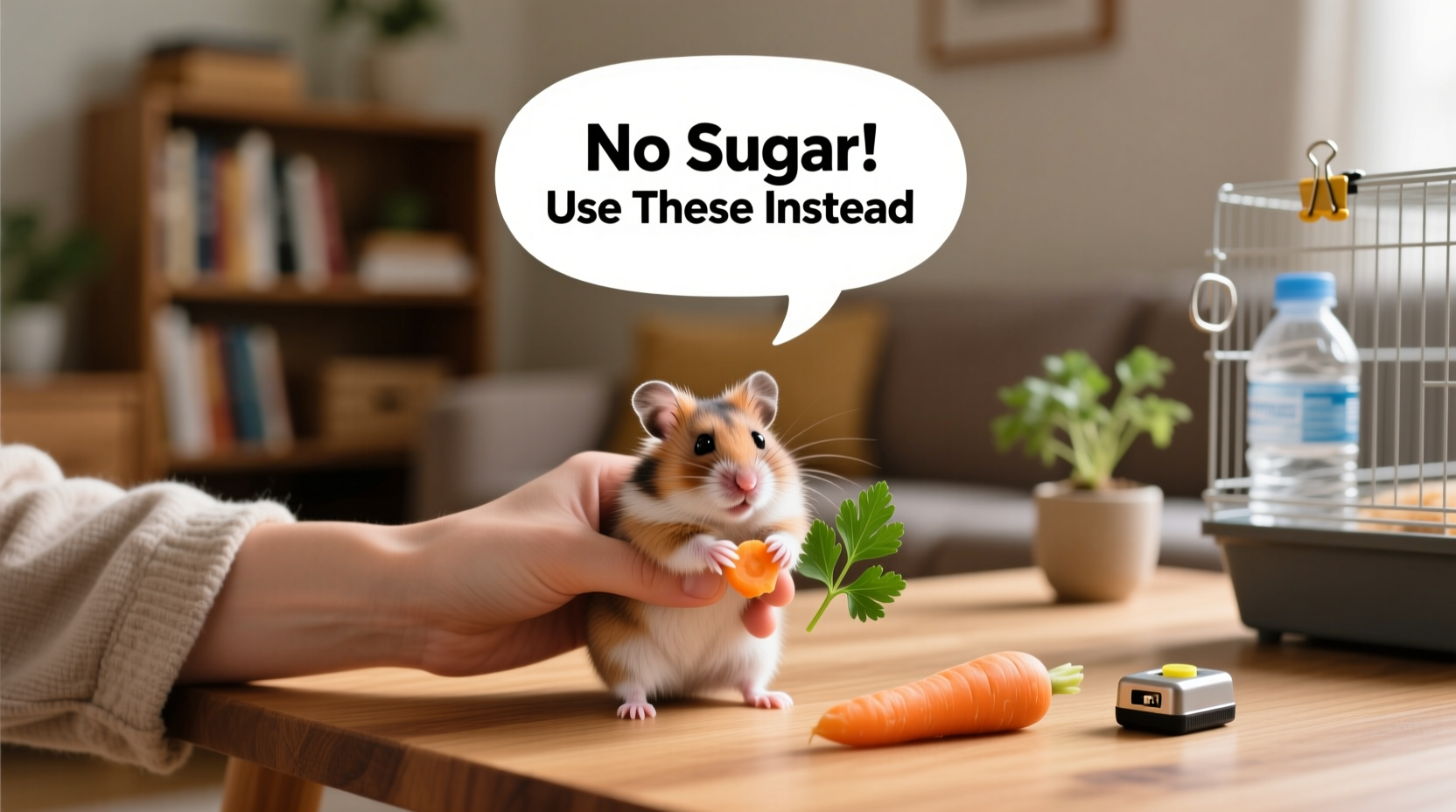
Sugar might seem like a quick motivator, but its consequences for small rodents are serious. Hamsters metabolize carbohydrates differently than humans. Their natural diet consists primarily of seeds, grains, and occasional plant matter—not fruit or processed sugars. Feeding them sugary treats regularly disrupts blood glucose levels, increases the risk of insulin resistance, and contributes to dental decay.
A study published in the *Journal of Small Animal Practice* found that Syrian and dwarf hamsters fed high-sugar diets developed symptoms of metabolic syndrome within 12 weeks. These included weight gain, lethargy, and elevated insulin levels—conditions that mirror type 2 diabetes in humans.
“Using sugary rewards undermines both behavioral progress and long-term wellness. There are far healthier ways to reinforce desired actions.” — Dr. Lena Patel, Exotic Pet Veterinarian
Instead of compromising your pet’s health, focus on alternatives that align with their biological needs and cognitive strengths. The foundation of successful training lies not in what you give, but in how consistently and clearly you communicate.
Understanding Hamster Behavior and Learning Patterns
Before introducing tricks, it’s essential to understand how hamsters learn. They rely heavily on repetition, scent cues, and environmental predictability. Unlike dogs, which thrive on social praise, hamsters respond best to predictable cause-and-effect relationships: perform an action → receive a reward.
Hamsters possess associative memory, meaning they link specific actions with outcomes. For example, if climbing onto your hand leads to a sunflower seed (a safe, high-value food), they’ll begin to associate your hand with something positive. This principle forms the basis of operant conditioning—the same method used in animal training across species.
However, timing is critical. Rewards must follow the behavior within one to two seconds to create a strong mental connection. Delayed reinforcement confuses the animal and weakens learning.
Tip: Always keep your reward ready before prompting a behavior so you can deliver it instantly.Additionally, hamsters have short attention spans—typically 5 to 10 minutes per session. Training should be brief, frequent, and conducted during their active periods (usually dusk or early evening). Stress-free environments free of loud noises or sudden movements improve receptiveness.
Healthy Alternatives to Sugary Treats
Effective training hinges on motivation, but motivation doesn't require sugar. Several nutritious, low-risk options serve as excellent reinforcers:
- Pumpkin seeds (unsalted): High in protein and fat, these are highly palatable without spiking blood sugar.
- Small pieces of cooked plain chicken or egg: Excellent sources of animal protein; use sparingly due to richness.
- Barley or millet sprays: Natural, fibrous, and chewable—ideal for nibbling after a successful attempt.
- Dried dandelion leaves or timothy hay cubes: Encourage natural foraging instincts and double as enrichment tools.
- Chia seeds or flaxseeds: Nutrient-dense and motivating in tiny portions.
Portion control is vital. A single pumpkin seed or half a chia pellet is often enough to reinforce behavior. Overfeeding—even healthy foods—can lead to weight gain.
| Reward Type | Frequency | Portion Size | Benefits |
|---|---|---|---|
| Pumpkin seeds | 3–4 times/week | 1 seed | High motivation, safe fat content |
| Cooked egg | Once/week | Fingernail-sized piece | Protein boost, novelty value |
| Millet spray | Twice/week | 1-inch segment | Encourages chewing, long-lasting |
| Dried herbs | Daily | Pinch | Low-calorie, supports digestion |
| Chia seeds | Every other day | 2–3 seeds | Omega-3s, strong incentive |
Beyond food, some hamsters respond well to tactile rewards. Gentle fingertip strokes along the back (if tolerated) or access to a favorite tunnel or wheel after a task can act as secondary reinforcers—especially once paired with primary rewards like food.
Step-by-Step Guide to Teaching Basic Tricks
Start with foundational behaviors that build confidence and trust. Below is a timeline for teaching “Come When Called” and “Spin in a Circle,” two beginner-friendly tricks.
- Day 1–3: Build Trust and Association
Spend 5–10 minutes daily offering preferred food from your open palm. Let the hamster approach voluntarily. Avoid grabbing or chasing. Say a consistent cue word like “here” each time you offer food. This builds a verbal association. - Day 4–6: Introduce Targeting
Use a small wooden stick or clean paintbrush as a target object. Hold it near the hamster. When they sniff or touch it, immediately reward. Repeat until they reliably approach the target. Then begin moving it slightly forward, rewarding successive approximations toward touching it on command. - Day 7–10: Shape the Spin Trick
With the target tool, guide the hamster in a small circle. As soon as they complete a quarter-turn, reward. Gradually increase the arc required before giving the treat. Within days, most hamsters will complete a full rotation to earn the reward. Add a verbal cue like “spin” just before presenting the target. - Day 11–14: Reinforce Recall
Call your hamster’s name or use “here” while holding a visible reward just outside the cage. When they emerge or move toward you, reward immediately. Increase distance gradually. Never call then retract the reward—that breaks trust. - Day 15+: Refine and Chain Behaviors
Combine learned actions. For example: “spin” followed by “come” earns a double reward. Keep sessions under 8 minutes and end on a success to maintain enthusiasm.
Non-Food Motivators: Expanding Your Training Toolkit
While food remains the most reliable reinforcer, integrating non-food rewards enhances variety and reduces dependency on edible incentives. Consider these alternatives:
- Tunnel Access: Place a favorite tube or hideout behind a barrier. Allow entry only after completing a task.
- Wheel Time: If your hamster loves running, grant 30 seconds of extra wheel access post-task.
- Toys and Novel Objects: Introduce a new cardboard roll or paper ball only after a successful trial.
- Verbal Praise + Gentle Touch: Soft-spoken words combined with slow head scratches (if accepted) can become conditioned rewards over time.
These methods work best when initially paired with food. For instance, say “good job” and offer a seed simultaneously. After repetition, the phrase alone may trigger anticipation. This process, known as classical conditioning, allows trainers to phase out constant feeding while maintaining responsiveness.
“Animals don’t need sugar to learn—they need clarity, consistency, and compassion.” — Dr. Rafael Mendez, Animal Cognition Researcher
Mini Case Study: Training Luna the Roborovski Hamster
Luna, a 9-month-old female Roborovski hamster, lived in a quiet bedroom with minimal handling history. Her owner, Maya, wanted to teach her to come when called but was concerned about using treats due to Luna’s previous episodes of sticky eye—a sign of possible metabolic imbalance.
Maya began by placing a millet spray near the cage door each evening while softly saying “Luna, come.” She waited patiently, never forcing interaction. After five days, Luna approached the spray independently. Maya then held the spray just outside the cage, repeating the cue. By day 12, Luna emerged and ran toward Maya’s hand upon hearing her name—even without visible food.
To reinforce the behavior, Maya introduced a small fabric tunnel as a bonus reward after successful recalls. Over time, Luna learned to spin, climb a mini ladder, and return to her cage on cue—all without a single sugary treat.
The key to success was consistency, patience, and respecting Luna’s pace. “I realized she wasn’t stubborn—she just needed time to trust me,” Maya said. “Now she runs to my hand every night. It’s our special ritual.”
Common Mistakes to Avoid
- Overloading sessions: More than 10 minutes can overwhelm a hamster and reduce retention.
- Inconsistent cues: Using multiple words for the same action (e.g., “come,” “here,” “get over”) confuses learning.
- Punishing mistakes: Hamsters don’t understand punishment. Withdrawing attention is better than scolding.
- Skipping warm-ups: Always start with a known behavior to build confidence before introducing new tasks.
- Training too close to light-on hours: Hamsters are nocturnal; daytime attempts often fail due to sleepiness.
Checklist: Healthy Hamster Trick Training Plan
Training Checklist:- Choose 1–2 safe, healthy rewards (e.g., pumpkin seed, millet)
- Select a quiet, distraction-free space
- Pick clear, consistent verbal cues (one word per trick)
- Limit sessions to 5–8 minutes, once or twice daily
- Begin with targeting or recall—foundational skills
- Reward immediately after desired behavior
- Gradually shape complex actions through small steps
- End each session with a success and gentle return to cage
- Track progress in a journal (optional but helpful)
- Pause if the hamster shows stress (biting, freezing, fleeing)
FAQ
Can I train a hamster without any treats at all?
Yes, though it's more challenging. Non-food rewards like access to toys, tunnels, or wheel time can work, especially when paired initially with food to create associations. However, most trainers find that small, healthy food items remain the most effective primary reinforcer.
How long does it take to teach a hamster a trick?
Simple behaviors like coming when called may take 1–2 weeks with daily practice. More complex tricks like spinning or climbing obstacles can take 2–4 weeks. Progress varies by individual temperament, age, and prior socialization.
Are some hamster breeds easier to train than others?
Roborovskis and Syrians tend to be more responsive due to higher curiosity and tolerance for handling. Dwarf hamsters (Campbell’s and Winter White) can be more skittish but still learn with patience. Chinese hamsters often show keen problem-solving skills and adapt well to structured routines.
Conclusion: Building Trust Through Positive Reinforcement
Teaching your hamster tricks isn’t just about entertainment—it’s an opportunity to deepen your bond, provide mental stimulation, and support their overall well-being. By avoiding sugary treats and focusing on healthy rewards, clear communication, and respect for your pet’s limits, you create a training experience that benefits both body and mind.
Every small success—from touching a target to spinning on cue—represents a step forward in mutual understanding. These moments of cooperation foster trust and enrich your hamster’s life in meaningful ways. Start today with a single five-minute session. Observe, adapt, and celebrate progress, no matter how subtle.
💬 Have you trained your hamster using healthy rewards? Share your story or favorite tip in the comments—your experience could inspire another caring owner!








