Dogs bark for many reasons, but one of the most common—and disruptive—behaviors is excessive barking when delivery personnel arrive. Whether it's a UPS driver, mail carrier, or food courier, the sudden appearance of strangers near your property can trigger an intense reaction in even well-behaved dogs. The instinct to guard their territory is strong, but that doesn’t mean you have to live with daily noise or risk complaints from neighbors.
The good news? You don’t need to resort to punishment or aversive tools like shock collars to address this behavior. Modern, humane dog training emphasizes understanding the root cause of barking and reshaping your dog’s emotional response through positive reinforcement and structured exposure. With patience and consistency, you can teach your dog to stay calm when deliveries arrive—without fear, force, or frustration.
Understanding Why Dogs Bark at Delivery People
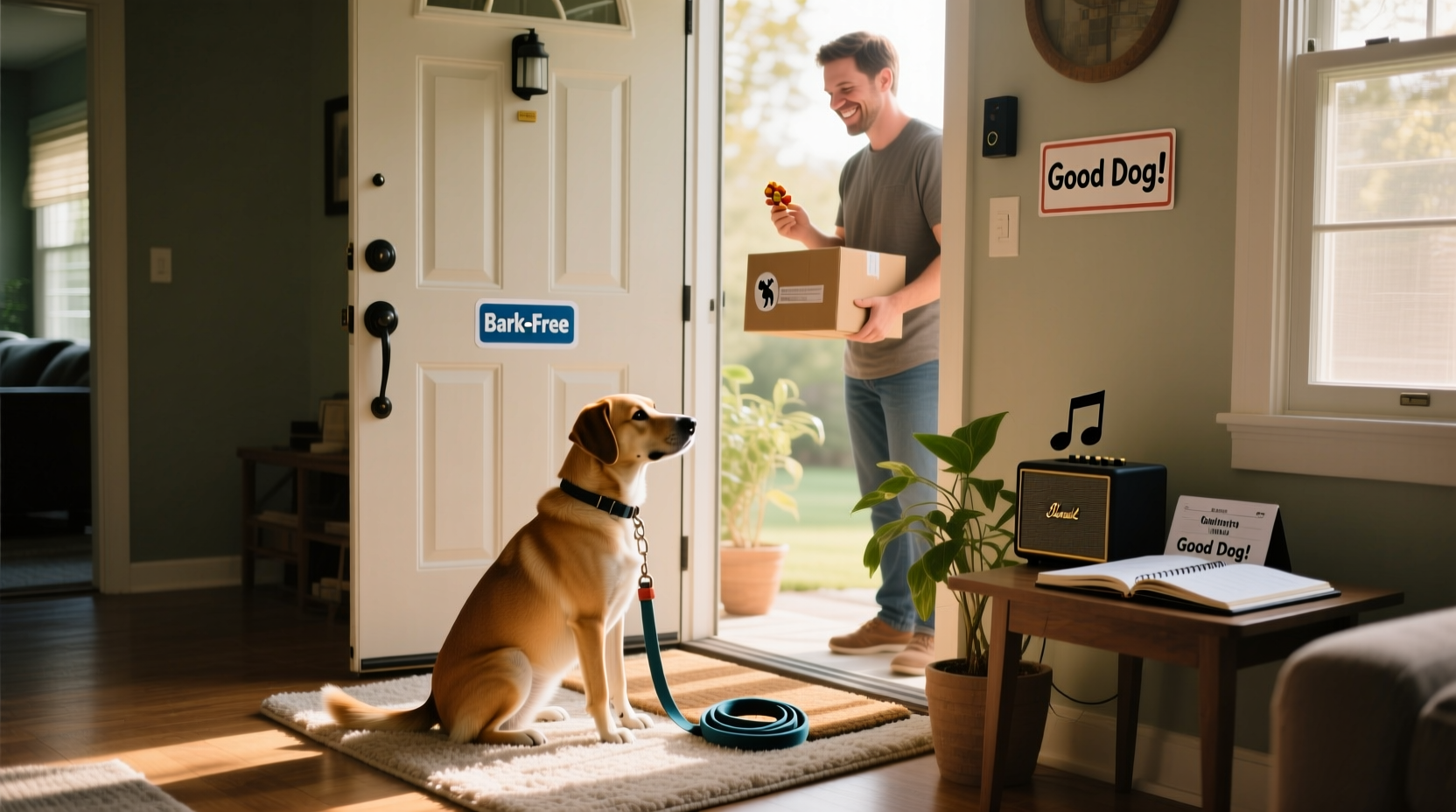
Barking at delivery personnel isn't just \"bad behavior\"—it's usually rooted in natural instincts. Dogs are territorial animals. Their home and yard represent their domain, and anyone approaching—especially someone who comes, lingers briefly, then leaves—can be perceived as a potential threat.
For many dogs, the sequence becomes predictable: doorbell rings → stranger appears → they bark → stranger leaves. From the dog’s perspective, their barking caused the person to go away. This creates a powerful reinforcement loop known as negative reinforcement: the barking removes the \"threat,\" so the dog is more likely to repeat it.
Other contributing factors include:
- Lack of socialization: Dogs not exposed to varied people and situations during puppyhood may react fearfully to unfamiliar roles like delivery workers.
- Overstimulation: Fast movements, uniforms, packages, and vehicles can trigger arousal.
- Barrier frustration: Being behind a window or fence prevents the dog from investigating, increasing anxiety and vocalization.
- Attention-seeking: Some dogs learn that barking brings attention—even if it’s scolding—from their owners.
Addressing barking effectively means changing how your dog feels about the trigger—not just suppressing the sound.
Tip: Never yell “Quiet!” or punish your dog while they’re barking. This often increases anxiety and can strengthen the association between delivery people and stress.A Step-by-Step Guide to Reducing Barking
Changing your dog’s reaction to delivery personnel requires gradual retraining. The goal is to help them associate the arrival of strangers with positive outcomes—like treats, toys, or calm interaction—instead of alarm.
- Identify your dog’s threshold. Observe at what distance or level of exposure your dog starts reacting. Is it when someone steps onto the porch? When the doorbell rings? Knowing this helps you begin training at a safe, non-reactive distance.
- Create a management plan. Until training takes effect, prevent rehearsal of unwanted behavior. Use curtains, baby gates, or closed doors to block your dog’s view of the front yard or street. Consider using white noise or calming music to mask doorbell sounds.
- Train an incompatible behavior. Teach your dog a calm action that can’t coexist with barking—such as going to a mat and lying down. Use high-value treats (like small pieces of chicken or cheese) to reinforce this behavior consistently.
- Use positive associations. When your dog sees a delivery person (from a safe distance), immediately offer treats. The key is timing: the treat should come *as soon as* the trigger appears, not after barking starts. This process, called classical conditioning, helps your dog form a new emotional response: “Stranger = good things happen.”
- Gradually decrease distance. Over days or weeks, slowly expose your dog to closer encounters—always staying below their reactivity threshold. If they remain calm, reward generously. If they bark or show tension, increase distance and try again later.
- Incorporate real-life practice. Coordinate with friends or local delivery drivers (if possible) to simulate arrivals. Ask them to approach slowly and leave without engaging your dog. Reward your dog for calmness throughout.
- Maintain consistency. Training must be repeated regularly. Even after improvement, occasional refresher sessions help prevent regression.
This method, grounded in behavioral science, is far more effective than suppression. It addresses the emotional drive behind barking rather than just the symptom.
Do’s and Don’ts When Addressing Barking
| Do’s | Don’ts |
|---|---|
| Use high-value treats during training sessions | Punish or yell at your dog for barking |
| Practice daily, even for short durations | Allow uncontrolled exposure to triggers |
| Teach a “go to place” command for emergencies | Use shock collars or anti-bark devices |
| Stay calm and neutral during deliveries | Reassure or soothe your dog when they’re anxious (this can reinforce fear) |
| Involve all household members in training | Expect immediate results—behavior change takes time |
Real-Life Example: How Bella Learned to Stay Calm
Bella, a 3-year-old Australian Shepherd living in suburban Denver, barked intensely every time a package was delivered. Her owner, Maria, initially tried shouting “No!” and pulling her away from the window, but the behavior worsened. After consulting a certified dog trainer, Maria shifted to a positive reinforcement strategy.
She began by closing the blinds during deliveries and teaching Bella to go to a designated mat in the back room when the doorbell rang. Each time, she rewarded Bella with boiled chicken. Then, she started playing recorded doorbell sounds at low volume, pairing each ring with treats. Once Bella remained calm, Maria used a friend to simulate deliveries—first walking past the house, then approaching the porch, always rewarding calm behavior.
Within six weeks, Bella no longer rushed to the front windows. Instead, she looked at Maria when she heard the doorbell and went to her mat willingly. Occasional real deliveries were still challenging, but with consistent practice, Bella now stays quiet and relaxed—earning praise and treats for her self-control.
Maria’s success came not from dominance or discipline, but from empathy and structure. She changed Bella’s emotional experience of deliveries—one treat at a time.
“Dogs aren’t misbehaving when they bark at strangers—they’re communicating. Our job is to guide them toward better responses, not silence them through fear.” — Dr. Karen London, Certified Veterinary Behaviorist
Essential Training Checklist
Use this checklist to ensure you’re covering all bases in your training plan:
- ✅ Identify your dog’s barking triggers and threshold distance
- ✅ Set up physical barriers (closed doors, covered windows) to prevent rehearsal
- ✅ Choose high-value treats exclusively for training sessions
- ✅ Teach a reliable “go to place” or “settle” command
- ✅ Practice daily with simulated triggers (recorded sounds, role-playing)
- ✅ Gradually expose your dog to real delivery scenarios at safe distances
- ✅ Involve all family members in consistent training
- ✅ Track progress with notes or a journal
- ✅ Consult a force-free professional if progress stalls
- ✅ Celebrate small wins—calm seconds build into calm minutes
Frequently Asked Questions
Can I stop my dog from barking completely?
Complete elimination of barking isn’t necessary or realistic—barking is a natural form of communication. The goal is to reduce excessive, reactive barking and teach your dog to settle quickly. With training, most dogs learn to alert once or twice and then disengage when cued.
What if I can’t control when deliveries happen?
You don’t need to schedule every session. Instead, use management strategies (like blocking views) on unpredictable days, and dedicate focused training time for controlled practice. You can also request “hold for pickup” at local hubs to reduce unsupervised deliveries.
Are certain breeds harder to train for this behavior?
Some breeds, like German Shepherds, Shetland Sheepdogs, or Terriers, are naturally more alert and vocal. This doesn’t make them untrainable—it means they may need more repetition and earlier intervention. The principles of positive reinforcement work across all breeds and temperaments.
Conclusion: Building Calm Through Compassion
Your dog isn’t trying to annoy you when they bark at delivery people—they’re responding to a world full of motion, strangers, and uncertainty. By replacing fear and reactivity with predictability and positivity, you’re not just reducing noise; you’re building trust and confidence.
The methods outlined here require time and consistency, but they respect your dog’s emotional needs and strengthen your bond. Avoid shortcuts that rely on punishment or suppression. Instead, commit to a patient, science-based approach that fosters long-term calm.
Start today: close the blinds, grab some treats, and begin shaping a quieter, more peaceful home. Your dog—and your neighbors—will thank you.
💬 Have a success story or challenge with dog barking? Share your experience in the comments and connect with other pet owners working toward a calmer home.








