
Bird feather plucking—also known as self-mutilation or feather destructive behavior—is a distressing issue for both birds and their caregivers. While medical causes like infections, parasites, or hormonal imbalances must first be ruled out by an avian veterinarian, the majority of chronic plucking cases stem from psychological and environmental factors. In captivity, birds are highly sensitive to changes in routine, social dynamics, lighting, and enrichment. When their environment fails to meet their complex emotional and cognitive needs, they may resort to plucking as a coping mechanism.
The good news is that with thoughtful adjustments to a bird’s surroundings, many plucking behaviors can be reduced or even eliminated. Unlike quick fixes, environmental modifications address the root causes: stress, boredom, anxiety, and sensory deprivation. This guide outlines practical, science-backed strategies to transform your bird’s living space into a stimulating, secure, and enriching habitat that supports natural behaviors and discourages feather damage.
Understanding Why Birds Pluck: The Environmental Connection
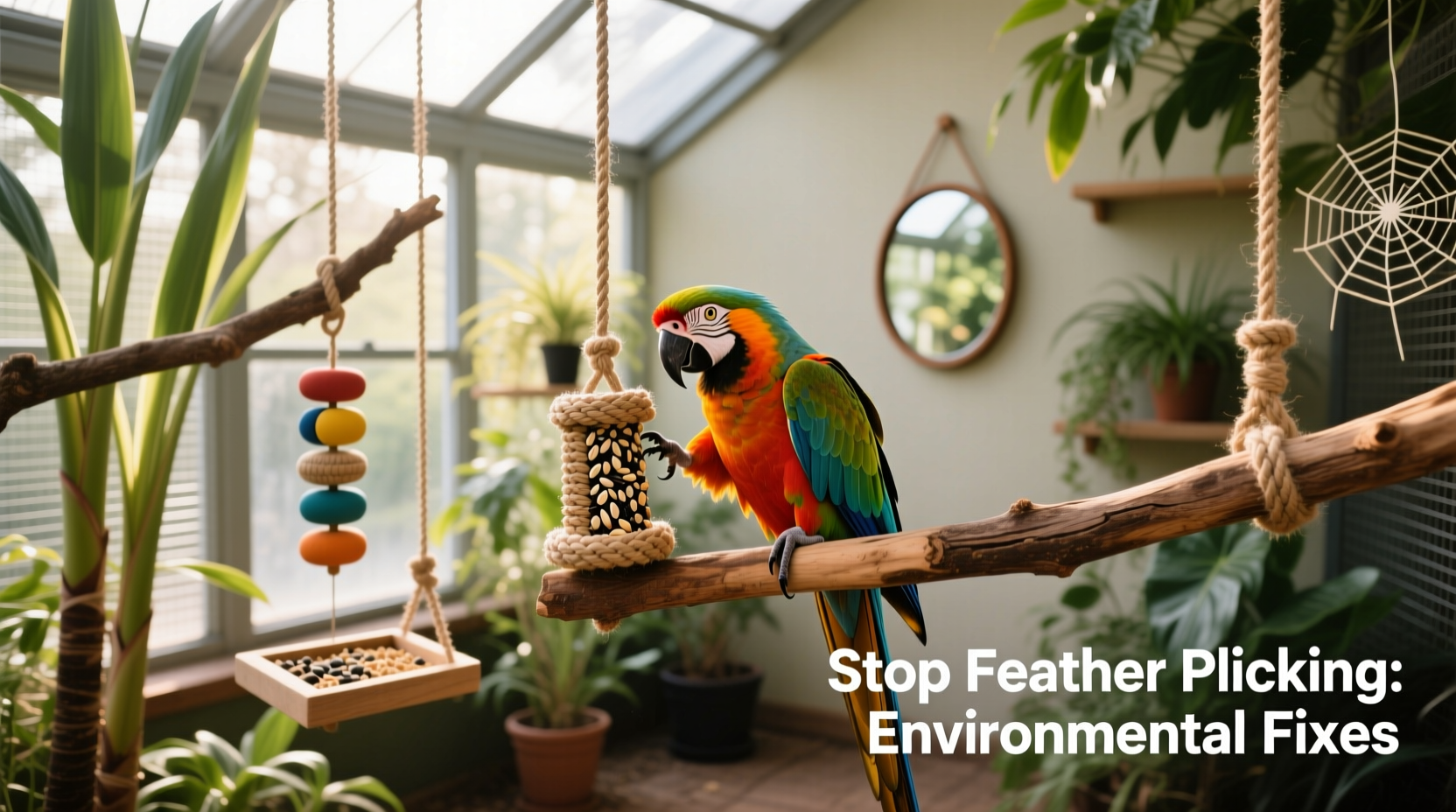
In the wild, birds spend up to 60% of their day foraging, flying, exploring, and interacting socially. Captive environments often fall drastically short of replicating these conditions. A bird confined to a small cage with limited toys, inconsistent light cycles, and little human interaction may develop compulsive behaviors like feather plucking. These actions are not signs of defiance but expressions of psychological distress.
Environmental stressors commonly linked to plucking include:
- Lack of mental stimulation – Few toys, repetitive routines, no problem-solving opportunities.
- Poor lighting – Insufficient exposure to full-spectrum light disrupts circadian rhythms and hormone balance.
- Inadequate social contact – Birds are flock animals; isolation leads to anxiety and depression.
- Noisy or chaotic surroundings – Constant loud sounds (TVs, shouting, appliances) elevate cortisol levels.
- Overcleanliness or sensory deprivation – Sterile cages with plastic perches and no natural materials suppress instinctual behaviors.
Addressing these issues doesn’t require expensive equipment or radical lifestyle changes. Instead, it calls for consistent, attentive care and a willingness to see the world through your bird’s eyes—or rather, its instincts.
Tip: Observe your bird at different times of day. Note when plucking occurs—is it during silence, after interaction, or at dawn/dusk? Patterns reveal triggers.Key Environmental Fixes to Reduce Feather Plucking
1. Optimize Lighting and Natural Cycles
Birds rely on photoperiod—the length of daylight—to regulate sleep, hormones, and mood. Artificial indoor lighting rarely mimics natural sunlight, leading to disrupted melatonin production and seasonal confusion.
Provide 10–12 hours of consistent darkness each night and ensure access to full-spectrum UVB lighting during the day. Natural sunlight through a window helps, but glass blocks most UV rays. Use a quality avian-specific UVB lamp placed within safe distance (follow manufacturer guidelines), and replace bulbs every 6–12 months as output diminishes.
2. Expand Space and Improve Cage Design
A cramped cage restricts movement and increases stress. Even if your bird gets daily out-of-cage time, the primary enclosure should allow wing stretching, climbing, and flight attempts.
Ideal cage features include:
- Minimum size: 24”W x 24”D x 36”H for medium birds (e.g., cockatiels, conures).
- Horizontal bars for climbing.
- Multiple perches of varying textures and diameters (natural wood, rope, cement).
- Strategic placement away from drafts, kitchens (fumes), and high-traffic zones.
Rotate perch locations weekly to encourage exploration and prevent foot sores.
3. Increase Foraging Opportunities
Foraging is one of the most critical natural behaviors for birds. It occupies time, stimulates cognition, and reduces anxiety. A bird that spends hours searching for food is less likely to fixate on its feathers.
Replace free-feeding with structured foraging:
- Hide pellets or seeds in cardboard tubes, paper bags, or puzzle toys.
- Use foraging trays filled with shredded paper and hidden treats.
- Offer whole foods (e.g., sprouted grains, chopped veggies) in concealable containers.
Start simple and increase difficulty gradually. Watch your bird’s response—frustration indicates the task is too hard.
Tip: Rotate foraging toys weekly to maintain novelty. Birds quickly habituate to familiar challenges.4. Enrich Social and Sensory Input
Social isolation is a major contributor to plucking, especially in highly intelligent species like African greys, Amazons, and cockatoos. These birds form deep bonds and perceive their human caregivers as flock members.
To enhance social wellness:
- Dedicate 1–2 hours daily to direct interaction: talking, training, grooming.
- Allow supervised time outside the cage in a bird-safe room.
- Play calming music or nature sounds when you’re away.
- Introduce mirrors cautiously—some birds bond with them, others become obsessive.
Sensory enrichment also matters. Introduce safe natural items: pine cones, balsa wood blocks, fresh branches (from pesticide-free trees). These provide tactile variety and chewing satisfaction.
Do’s and Don’ts: Environmental Management Table
| Category | Do | Don't |
|---|---|---|
| Lighting | Use full-spectrum UVB lights 10–12 hrs/day; maintain dark, quiet nights | Expose to flickering fluorescent lights or constant artificial light |
| Cage Setup | Vary perch types and positions; include natural materials | Use only plastic perches or overcrowd with toys |
| Enrichment | Rotate toys weekly; offer foraging challenges | Leave the same three toys for months |
| Socialization | Engage in positive training sessions; allow flock integration | Yell at plucking or isolate as punishment |
| Cleaning | Spot-clean daily; deep clean weekly | Scrub with harsh chemicals or over-sanitize |
Step-by-Step Environmental Transformation Plan
Implementing changes all at once can overwhelm both bird and owner. Follow this 4-week timeline to create lasting improvements:
- Week 1: Assess and Prioritize
Observe your bird’s plucking patterns. Identify top stressors (e.g., noise, lack of light, few toys). Set two main goals (e.g., add UVB light, introduce foraging). - Week 2: Lighting and Sleep Routine
Install a full-spectrum lamp. Establish a consistent 10–12 hour light-dark cycle using a timer. Cover the cage at night or place it in a quiet room. - Week 3: Enrichment Upgrade
Add two new foraging toys and rotate existing ones. Replace one plastic perch with a natural wood option. Introduce a shreddable material (e.g., manila rope toy). - Week 4: Social and Spatial Expansion
Increase out-of-cage time by 30 minutes daily. Create a bird-safe zone with playstands, ladders, and supervised exploration. Begin basic training (targeting, step-up) to build trust.
Monitor progress weekly. Look for reductions in plucking frequency, increased preening, more vocalizations, or playful behavior. Avoid expecting immediate results—behavioral change takes weeks to manifest.
“Feather plucking is rarely a willful act. It’s a symptom of an unmet need. The environment isn’t just the backdrop—it’s the treatment.” — Dr. Laurie Hess, DVM, Diplomate ABVP (Avian Practice)
Real Example: Luna the Cockatiel’s Recovery
Luna, a 4-year-old female cockatiel, began plucking her chest feathers after her owner started working from home and spending less time interacting. The bird was housed in a small cage near a noisy air conditioner, with the same five toys for over a year. No UVB lighting was used, and her days were spent mostly in dim light.
After a vet visit ruled out mites and infection, the owner implemented gradual environmental changes:
- Moved the cage to a quieter room with natural morning light.
- Added a UVB lamp on a 12-hour timer.
- Introduced a foraging box filled with shredded paper and hidden millet sprays.
- Committed to 45 minutes of daily interaction, including gentle head scratches and whistle training.
Within six weeks, Luna stopped plucking entirely. New pin feathers emerged, and she began preening normally. Her owner noted increased chirping and interest in toys. The transformation wasn’t due to medication or restraint—but to restoring environmental balance.
Frequently Asked Questions
Can changing my bird’s environment really stop plucking?
Yes—when medical causes are ruled out, environmental enrichment is the most effective long-term solution. Birds respond remarkably well to improved lighting, foraging, and social engagement. However, consistency is key. Temporary changes yield temporary results.
Should I use a collar to stop the plucking?
Collars are generally discouraged unless prescribed for short-term medical healing. They don’t address the underlying cause and can increase stress, potentially worsening the behavior. Focus on fixing the environment instead of suppressing symptoms.
How long does it take to see improvement?
Behavioral changes typically appear within 4–8 weeks of consistent environmental upgrades. Full feather regrowth may take several molting cycles (6–12 months). Patience and persistence are essential—relapses can occur during stressful events like travel or household changes.
Action Checklist: Environmental Fixes at a Glance
- ✅ Schedule a vet check to rule out illness.
- ✅ Install a full-spectrum UVB light with a timer.
- ✅ Ensure 10–12 hours of uninterrupted darkness nightly.
- ✅ Upgrade cage size or layout for better mobility.
- ✅ Add at least three new foraging toys or activities.
- ✅ Rotate toys and perches weekly to maintain novelty.
- ✅ Increase daily interaction time with training or play.
- ✅ Provide safe chewable materials (wood, paper, leather).
- ✅ Eliminate sources of chronic noise or fear (e.g., barking dogs, sudden movements).
- ✅ Monitor plucking patterns and adjust strategies monthly.
Conclusion: Healing Starts with Habitat
Stopping feather plucking isn’t about control—it’s about compassion. Your bird isn’t misbehaving; it’s communicating distress through the only means available. By reimagining the cage not as a container but as a dynamic, responsive habitat, you give your bird the tools it needs to heal.
Every adjustment—from a new perch texture to an extra five minutes of attention—contributes to a sense of safety and purpose. Progress may be slow, but each step forward builds resilience. Start today. Observe closely. Adapt thoughtfully. The feathers will follow.
💬 Have you successfully reduced plucking through environmental changes? Share your story in the comments and inspire other bird lovers to create healthier homes for their feathered companions.








