
For pet owners who lead active lives—whether hiking rugged trails, training working dogs, or simply enjoying daily adventures with energetic companions—a reliable dog tag is more than an accessory. It’s a critical safety tool. A flimsy or poorly made tag can break, fade, or become unreadable, leaving your dog without proper identification when it matters most. Selecting a durable, long-lasting dog tag requires careful consideration of materials, construction, engraving quality, and design. This guide breaks down what truly makes a dog tag resilient under real-world conditions.
Choose the Right Material for Maximum Durability
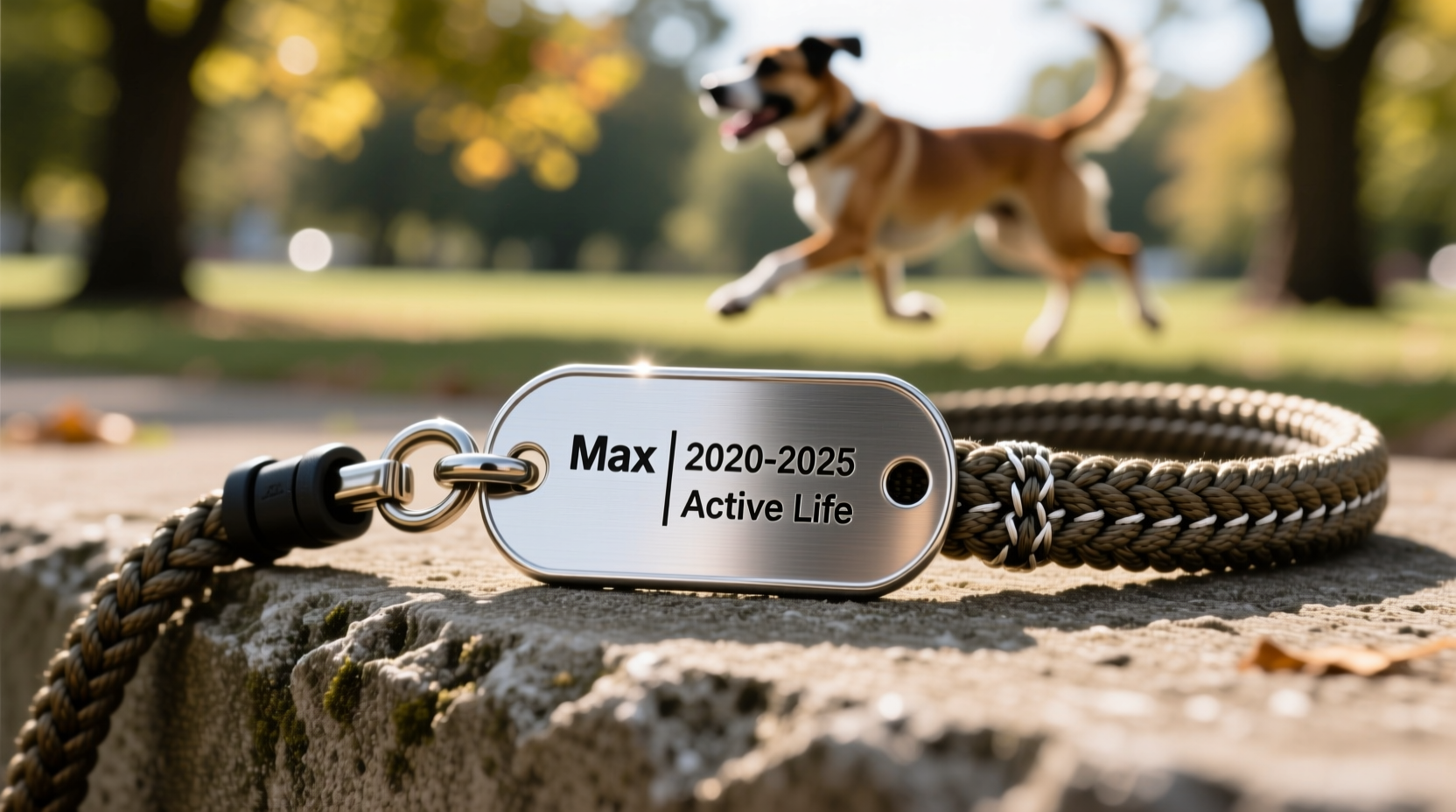
The foundation of a long-lasting dog tag lies in its material. Not all metals are created equal when it comes to resisting wear, corrosion, and impact. The most common options include stainless steel, aluminum, brass, and titanium—each with distinct advantages and drawbacks.
| Material | Durability | Corrosion Resistance | Weight | Best For |
|---|---|---|---|---|
| Stainless Steel | Excellent | High | Moderate | All-day wear, water exposure, working dogs |
| Titanium | Exceptional | Very High | Lightweight | Athletic or outdoor-focused pets |
| Brass | Good | Moderate (tarnishes) | Heavy | Decorative use; requires maintenance |
| Aluminum | Fair | Low to Moderate | Very Light | Short-term or fashion use only |
Stainless steel is widely regarded as the best balance of strength, resistance to rust, and affordability. Look for 316L surgical-grade stainless steel, which is commonly used in marine environments due to its superior resistance to saltwater corrosion. Titanium offers even greater resilience and is ideal for dogs frequently exposed to extreme elements, though it tends to be more expensive.
Tip: Avoid plated or coated tags—over time, coatings chip, exposing base metals to moisture and leading to rapid deterioration.Ensure Deep, Permanent Engraving
A tag may survive physical stress, but if the information fades, it fails its primary purpose. Laser engraving is the gold standard for legibility and longevity. Unlike surface printing or etching, laser engraving removes material to create deep, permanent grooves that resist wear from scratching, chewing, or weather exposure.
When evaluating engraving quality, check the depth and clarity. Shallow engravings—especially on softer metals like aluminum—can disappear after months of collar friction. Opt for tags with at least 0.2mm engraving depth and consider raised lettering for tactile readability. Also, ensure contact details are concise but complete: phone number, and optionally, a short identifier like “Allergic to penicillin” or “Microchipped.”
“Many owners don’t realize that shallow engraving wears off faster than they expect. I’ve seen tags rendered useless in under a year due to poor marking.” — Dr. Lena Torres, Veterinary Emergency Specialist
Design Features That Enhance Longevity
Beyond material and engraving, smart design plays a crucial role in a tag’s lifespan. Consider these often-overlooked features:
- Rounded edges: Reduce snagging on brush, gear, or collars, minimizing stress fractures.
- Double-sided engraving: Ensures information remains visible even if one side becomes damaged.
- Breakaway silencers: Rubber or silicone covers protect the tag from constant metal-on-metal noise while reducing vibration damage to the engraving.
- Reinforced hole design: Look for tags with countersunk or welded loop holes to prevent tearing at the attachment point—the most common failure zone.
Additionally, avoid overly large or thin tags. While slim designs may look sleek, they’re prone to bending or cracking under pressure. A thickness of 1.5–2mm strikes the right balance between sturdiness and comfort.
Step-by-Step Guide to Testing Tag Quality
Before purchasing, evaluate a dog tag’s resilience using this practical assessment:
- Inspect the finish: Run your fingernail over the engraved text. If it catches easily, the engraving may be too shallow.
- Check for uniform weight: Heavier tags made of dense metals like stainless steel feel substantial, not hollow.
- Test edge smoothness: Gently rub the edges. Sharp or jagged edges indicate poor finishing and potential safety risks.
- Review return policy: Reputable sellers offer warranties against fading, breaking, or peeling within 1–2 years.
- Read customer feedback: Look for reviews mentioning long-term use, especially from owners of active breeds like Border Collies, German Shepherds, or hunting dogs.
This hands-on evaluation helps separate marketing claims from actual performance.
Real-World Example: A Working Dog’s Tag That Lasted Five Years
Mark R., a search-and-rescue volunteer in Colorado, relies on his Belgian Malinois, Rex, for high-intensity missions across snow, mud, and rocky terrain. Early in their partnership, Rex lost two aluminum tags within six months—one snapped at the hole, the other faded beyond recognition. Mark switched to a dual-tag system: one thick, laser-engraved 316L stainless steel disc for ID, and a secondary titanium tag with emergency medical info.
Five years later, both tags remain fully legible and intact despite daily exposure to water, dirt, and rigorous activity. “I clean them once a month with soapy water,” Mark says, “but otherwise, they’ve held up on their own. When we were deployed during a flood last year, that tag was the only thing keeping Rex identifiable after he got separated for three hours.”
This case underscores the importance of investing in quality upfront—especially when lives depend on reliability.
Common Mistakes to Avoid
Even well-intentioned owners make errors that compromise tag effectiveness. Watch out for these pitfalls:
- Choosing stylish but fragile materials like pewter or thin plastic composites.
- Using ink-filled engraving that chips or washes out after a few months.
- Attaching multiple heavy tags that bang together, accelerating wear.
- Skipping backup ID—always pair a durable physical tag with a microchip.
FAQ
How often should I replace my dog’s tag?
If properly maintained, a high-quality stainless steel or titanium tag can last 5–7 years. Replace it sooner if the engraving becomes hard to read, the metal shows cracks, or the attachment hole is stretched.
Can dog tags go in water?
Yes, but only if made from corrosion-resistant materials like stainless steel or titanium. Avoid prolonged submersion of brass or aluminum tags, as they degrade faster in wet environments.
Should I include my dog’s name on the tag?
It’s recommended. While some worry that knowing the dog’s name could aid theft, the benefit of quick identification by neighbors or passersby far outweighs this rare risk. Pair the name with your phone number for fastest recovery.
Final Checklist Before Buying
Use this checklist to ensure you’re selecting a truly durable dog tag:
- ✅ Made from 316L stainless steel or titanium
- ✅ Laser-engraved (not printed or etched)
- ✅ At least 1.5mm thick with rounded edges
- ✅ Double-sided engraving for redundancy
- ✅ Reinforced attachment hole (welded or countersunk)
- ✅ Includes warranty or satisfaction guarantee
- ✅ Lightweight enough not to strain the dog’s neck
Conclusion
A long-lasting dog tag isn’t just about surviving a drop or a swim—it’s about remaining functional, readable, and secure through years of active living. By prioritizing robust materials, professional engraving, and thoughtful design, you ensure your dog carries a reliable lifeline no matter where adventure takes them. Don’t wait until a tag breaks to reconsider its quality. Choose wisely today, and give your pet the protection they deserve.
💬 Have a tag that’s stood the test of time? Share your experience or brand recommendations in the comments below—your insight could help another pet owner make a smarter choice.








