Wine barrels carry history—not just in the oak’s grain, but in the craftsmanship of coopers who shaped them to hold centuries of tradition. When retired from vineyards, these vessels often end up landfilled or stacked in storage yards. Yet their structural integrity, natural insulation, and warm aesthetic make them uniquely suited for a second life: as elevated, artisanal pet beds for medium dogs (25–50 lbs). Unlike mass-produced pet furniture, a barrel bed offers breathability, acoustic dampening, and a sense of grounded comfort that aligns with canine instinct—while adding rustic sophistication to living rooms, sunrooms, or covered patios. This isn’t about quick DIY hacks; it’s about thoughtful repurposing rooted in material science, animal welfare, and design integrity.
Why Wine Barrels Work—And Why Medium Dogs Benefit Most
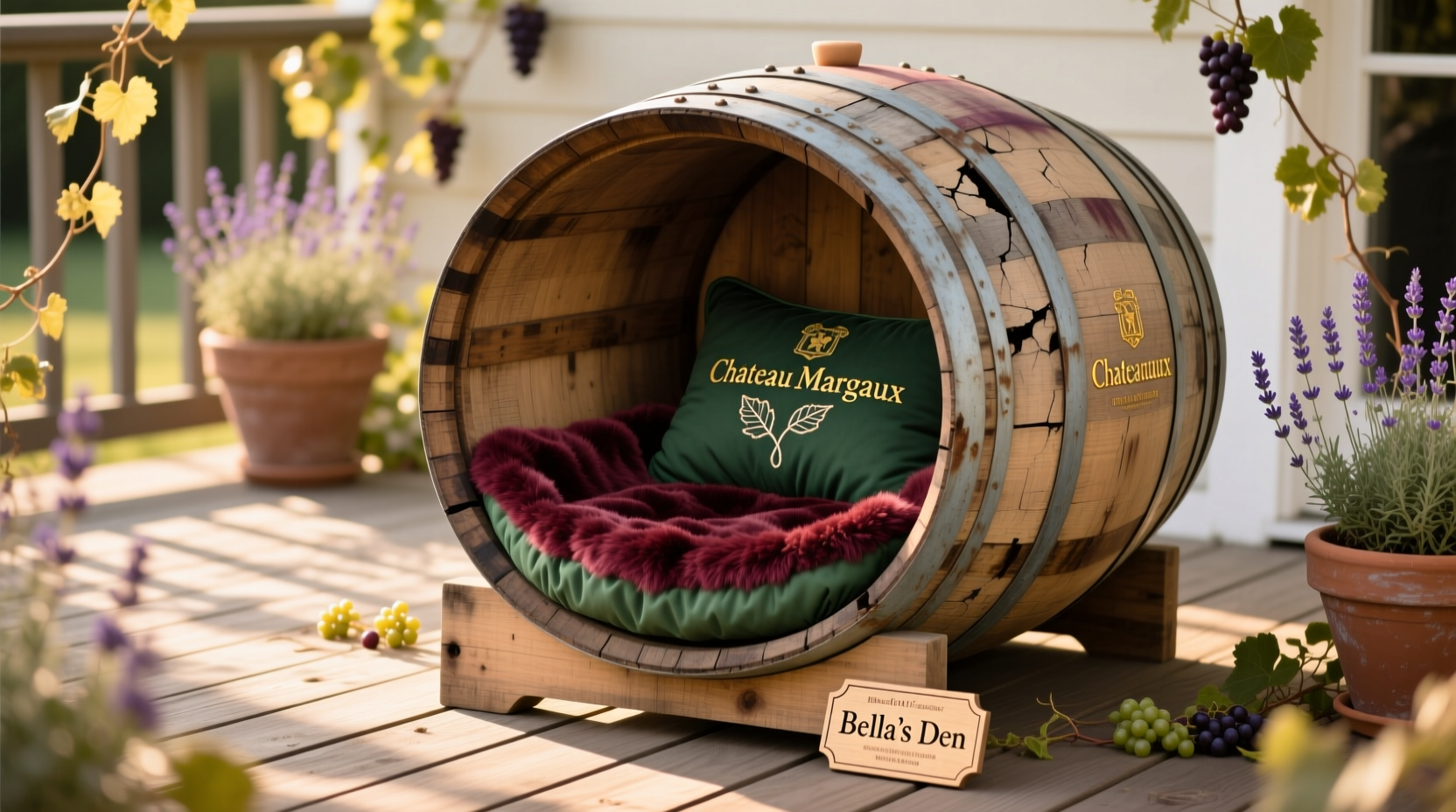
Medium dogs occupy a critical niche in pet furniture design: too large for plush cubes, too small for oversized loungers. Their weight distribution demands support for joints and spine alignment, especially during extended rest periods. A wine barrel’s curved interior naturally cradles the ribcage and lumbar region, encouraging a curled sleeping posture that reduces pressure on hips and shoulders. Its thick staves—typically 1 to 1.25 inches of air-dried French or American oak—provide rigidity without sharp edges, while the open-grain structure allows airflow that prevents overheating—a common issue with foam-filled beds in warmer climates.
Crucially, not all barrels are equal. Authentic used wine barrels—those that held red or white wine for 12–36 months—are ideal because they’ve been steamed, toasted, and coopered to food-grade standards. They contain no residual solvents, formaldehyde-based glues, or synthetic sealants. In contrast, decorative “barrel replicas” made from plywood or laminated veneer often use urea-formaldehyde adhesives and lacquered finishes—both hazardous if chewed or scratched over time.
“Dogs spend 12–14 hours per day resting. The surface they lie on impacts joint health, thermoregulation, and even anxiety levels. A well-prepared oak barrel bed offers passive orthopedic support—no foam required.” — Dr. Lena Torres, DVM, Canine Rehabilitation Specialist at Pacific Pet Wellness Center
Safety-First Preparation: What You Must Inspect & Remove
Before any sanding or cutting begins, every barrel must undergo a rigorous safety audit. Wine barrels are built for liquid containment—not dog occupancy—and their original construction includes elements incompatible with pet use.
Tip: Never skip the “smell-and-scratch test”: Rub a clean cotton swab inside the barrel, then smell it. Any sour, chemical, or moldy odor indicates microbial contamination or off-gassing residue—discard immediately.Here’s what to inspect and address:
- Metal hoops: Original galvanized steel or iron hoops may rust or develop sharp burrs. Replace all hoops with marine-grade stainless steel (316 grade) bands, tightened with non-marring clamps—not hammers.
- Interior charring: Lightly toasted barrels (common for Pinot Noir) are safe. Heavily charred interiors (used for bold Cabernets) can flake ash or release fine carbon particles. Gently scrub with food-grade walnut shell abrasive and rinse with diluted vinegar solution (1:4), then air-dry 72+ hours.
- Stave gaps: Check for cracks wider than 1/16 inch between staves. Fill only with FDA-approved, non-toxic wood filler (e.g., Timbermate Natural Oak). Avoid epoxy or polyurethane fillers—they off-gas volatile organic compounds (VOCs) for weeks.
- Bottom plate: Remove the original bottom entirely. It’s often secured with hidden nails or glue that may leach tannins or harbor moisture. Replace with a custom-cut, ¾-inch birch plywood base, sanded smooth and sealed with two coats of water-based, zero-VOC polyurethane (e.g., AFM Safecoat Polyureseal BP).
Step-by-Step Conversion Process (With Timing & Tool Notes)
This is not a weekend project—it’s a 10-day craftsmanship process prioritizing safety, durability, and sensory comfort for your dog. Rushing compromises structural integrity and introduces hazards.
- Day 1–2: Deconstruction & Inspection
Remove all metal hoops using a hoop driver and rubber mallet. Disassemble the bottom plate carefully. Label each stave with its original position using non-permanent pencil marks. Photograph the barrel’s interior before cleaning to document condition. - Day 3: Deep Cleaning & Sanitization
Scrub interior and exterior with a stiff natural-bristle brush, warm water, and 2 tbsp food-grade citric acid per quart. Rinse thoroughly. Wipe down with 70% isopropyl alcohol to neutralize yeast/bacteria colonies. Air-dry upright in shaded, ventilated area—never in direct sun or garage (UV and fumes degrade oak). - Day 4–5: Sanding & Smoothing
Begin with 80-grit sandpaper on orbital sander for stave edges and interior curves. Progress to 120-grit for uniform texture. Finish by hand-sanding all corners and lip edges with 220-grit—critical for preventing tongue or paw abrasions. Vacuum dust with HEPA filter; wipe entire surface with tack cloth. - Day 6: Base Installation & Structural Reinforcement
Secure the new birch plywood base using eight 1¼-inch stainless steel pan-head screws (counter-sunk and covered with natural oak plugs). Add two internal ½-inch dowel rods across the diameter beneath the base for lateral stability—glued with Titebond III (waterproof, non-toxic when cured). - Day 7–10: Finishing & Conditioning
Apply three thin coats of pure, cold-pressed walnut oil (not “walnut finish” blends containing solvents). Allow 24 hours between coats. Buff lightly with linen cloth after final cure. Oil penetrates deeply, enhancing grain while resisting saliva absorption and inhibiting bacterial growth—unlike surface sealants that peel or chip.
Design Considerations for Medium-Dog Ergonomics
A barrel bed isn’t merely a container—it’s an ergonomic system. Medium dogs require specific dimensional ratios to prevent spinal compression or hip dysplasia progression during sleep. Use this table to match barrel size to your dog’s measurements:
| Barrel Type | Typical Interior Diameter (in) | Recommended Dog Shoulder Height | Max Weight Capacity | Notes |
|---|---|---|---|---|
| Bordeaux (Standard) | 22–23 | 16–20 in | 45–50 lbs | Best all-around choice; ample curl space |
| Burgundy (Slightly Tapered) | 20–21 | 14–18 in | 35–42 lbs | Ideal for leaner breeds (e.g., Basenji, Whippet) |
| Port (Wider, Shorter) | 24–25 | 18–22 in | 48–55 lbs | Lower entry height—easier for arthritic dogs |
| Sherry (Taller, Narrower) | 19–20 | 15–19 in | 30–40 lbs | Less lateral room; best for smaller-medium dogs |
The ideal entry height—the distance from floor to top rim—should be 10–12 inches for most medium dogs. Too low encourages jumping; too high requires excessive neck extension. If your barrel sits higher, build a low-profile ramp (12° incline) from reclaimed cedar, sanded and oiled identically.
Real-World Example: The Maplewood Barrel Bed Project
In Portland, Oregon, veterinarian Dr. Aris Thorne converted two retired Zinfandel barrels into beds for her 38-lb rescue mix, Juno, diagnosed with early-stage elbow dysplasia. She followed the full 10-day protocol but added one refinement: embedding a removable, washable memory foam insert (3 inches thick, CertiPUR-US certified) beneath a breathable, machine-washable hemp liner. “Juno used to pace at night, restless and shifting positions constantly,” Dr. Thorne shared. “Within 36 hours of introducing the barrel bed, her nighttime movement decreased by 70%. Her vet noted improved joint flexion at her 6-week recheck. The barrel didn’t replace medical care—it supported it.”
Dr. Thorne also installed discreet ventilation holes (¼-inch diameter, drilled at 45° angles near the base) to prevent condensation buildup—a detail overlooked in most tutorials but critical for humid coastal climates.
What NOT to Do: Critical Mistakes & Their Consequences
Repurposing barrels carries real risks if shortcuts are taken. Here’s what experienced coopers and veterinary behaviorists consistently flag:
| Mistake | Why It’s Dangerous | Better Alternative |
|---|---|---|
| Using polyurethane or lacquer finishes | Off-gases VOCs for 4–6 weeks; dogs inhale 3x more airborne toxins per pound than humans due to proximity to floor | Cold-pressed walnut or tung oil—non-toxic, food-safe, breathable |
| Leaving original metal hoops in place | Rust creates micro-shards; galvanization contains zinc oxide—highly toxic if ingested during chewing | Replace with marine-grade stainless steel hoops (316), torqued to 18 in-lbs |
| Skipping interior sanitization | Residual tartaric acid + moisture = mold colonies (e.g., Aspergillus) that trigger respiratory allergies | Citric acid wash + isopropyl alcohol wipe + 72-hour UV-free drying |
| Adding thick cushioning without airflow | Traps heat and moisture—creates ideal environment for staph infections and hot spots | Use only 1–2 inch natural latex or organic wool pad, with breathable hemp liner |
Frequently Asked Questions
Can I use a whiskey or rum barrel instead of a wine barrel?
Yes—but with caution. Spirits barrels are often heavily charred (Level 3–4) and may retain residual ethanol or caramel coloring agents. They require triple-rinsing with food-grade hydrogen peroxide (3%) and a minimum 96-hour drying period. Avoid barrels previously used for flavored spirits (e.g., maple bourbon), which may contain undisclosed additives.
How do I clean the barrel bed long-term?
Weekly: Vacuum interior with upholstery attachment. Monthly: Wipe interior with damp microfiber cloth and 1 tsp castile soap per cup of water. Annually: Re-oil with walnut oil after light hand-sanding (220-grit only). Never use bleach, vinegar solutions, or steam cleaners—they degrade oak fibers and accelerate cracking.
My dog is a chewer—won’t they damage the wood?
Properly oiled oak is remarkably resistant to casual chewing. However, if your dog exhibits destructive oral behavior, add a removable, food-grade silicone bumper strip (attached with non-toxic silicone adhesive) along the top 2 inches of the interior rim. This protects both the wood and your dog’s teeth—without compromising aesthetics.
Conclusion: Where Craftsmanship Meets Compassion
Repurposing a wine barrel into a pet bed transcends trendiness. It honors material longevity, respects canine physiology, and reconnects domestic life with artisanal heritage. Every sanded curve, every oiled grain, every reinforced joint reflects intention—not convenience. Your medium dog doesn’t need flashy features or battery-powered gimmicks. They need sanctuary: a quiet, supportive, temperature-regulated space that says, “You belong here.” That’s what a thoughtfully converted barrel delivers—not as furniture, but as habitat.
Start by sourcing one authentic, unblemished barrel from a local winery or cooperage (many offer retired stock for $45–$85). Then commit to the full preparation process—not as labor, but as stewardship. Your dog will settle deeper, sleep longer, and move with more ease. And when guests ask about the beautiful, warm-toned bed in your living room, you won’t just describe a project. You’ll tell the story of oak, time, and quiet care—woven into something alive.
💬 Have you built a barrel bed? Share your dimensions, finish choices, or your dog’s first-night reaction in the comments—we’ll feature standout projects in next month’s reader spotlight!








