Wine corks—especially natural ones—are more than just bottle stoppers. They’re a renewable, biodegradable, shock-absorbing material prized by designers, architects, and now, conscientious pet owners. Each year, over 13 billion natural corks are produced globally, yet fewer than 15% are recycled. Most end up in landfills, where they degrade slowly despite their plant-based origin. Meanwhile, many commercial pet toys contain synthetic rubber, PVC, or plastics that may leach chemicals, shed microplastics, or pose choking hazards during vigorous chewing. Repurposing wine corks into pet toys bridges sustainability and pet wellness—not as a crafty afterthought, but as a deliberate, safety-first practice rooted in material science and behavioral observation.
This isn’t about gluing random corks together and hoping for the best. It’s about understanding cork’s physical properties—its compressibility (up to 50% under pressure), low density (0.12–0.25 g/cm³), natural antimicrobial surface, and lack of latex or volatile organic compounds—and aligning those traits with species-specific play patterns: the high-impact pounce of a cat, the persistent gnawing of a teething puppy, or the tactile curiosity of a senior dog with reduced jaw strength.
Why Natural Cork Is Uniquely Suited for Pet Toys
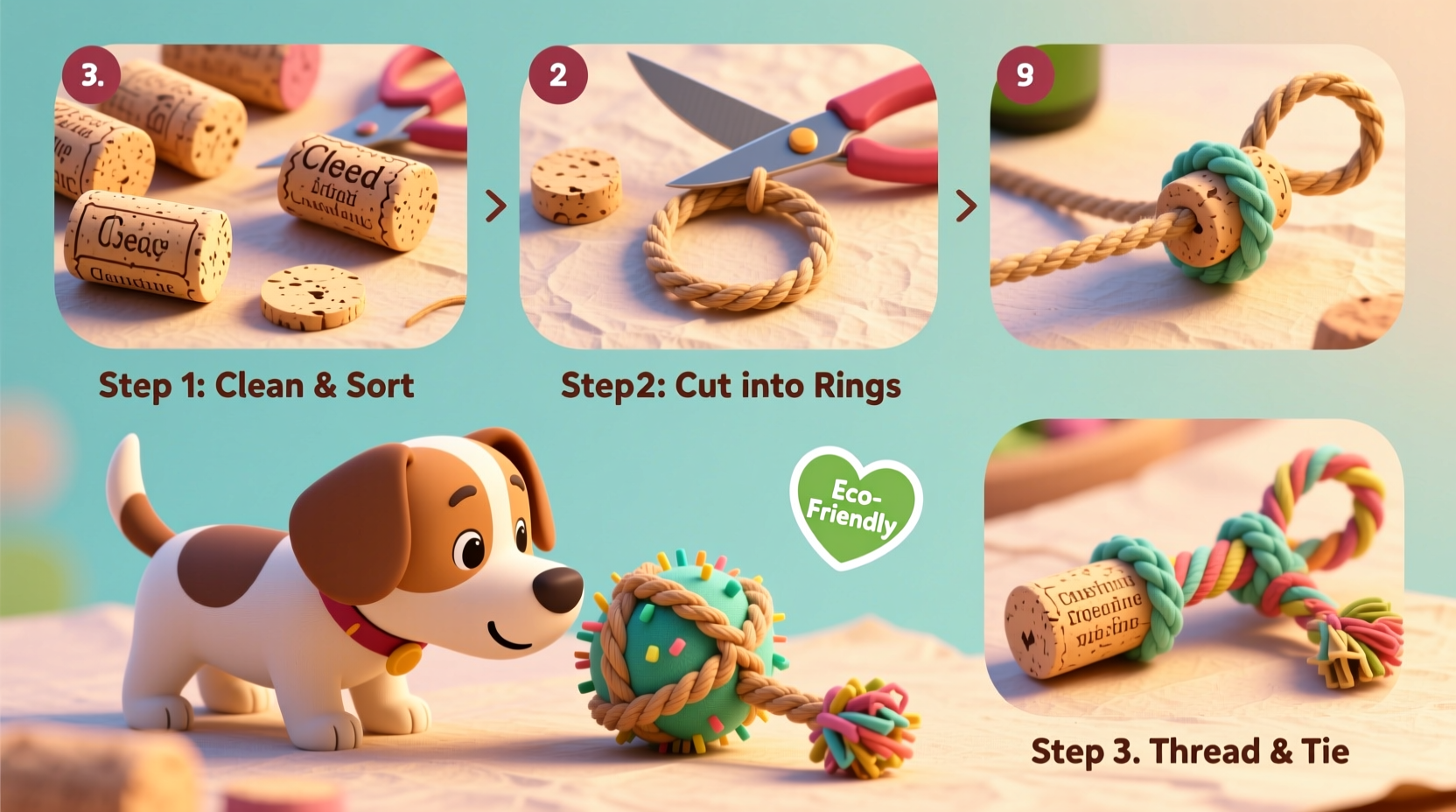
Natural cork comes from the bark of the Quercus suber oak tree—harvested without harming the tree, every 9–12 years. Its cellular structure contains millions of sealed air-filled cells (suberin), giving it three critical advantages for pet use:
- Impact resilience: Cork rebounds fully after compression, absorbing kinetic energy without cracking or splintering—ideal for toss-and-retrieve games or aggressive chewers.
- Non-toxic neutrality: Unlike synthetic foams or dyed rubbers, untreated cork contains no phthalates, BPA, heavy metals, or artificial fragrances. It’s naturally resistant to mold, mildew, and insects—no chemical preservatives required.
- Tactile engagement: Its slightly irregular texture and lightweight buoyancy stimulate sensory exploration, especially valuable for dogs recovering from injury or cats with diminished vision.
Synthetic “cork-style” composites—often made from rubber, plastic, or bonded cork dust—lack these properties. Always verify cork origin: look for the Natural Cork Association seal or check for visible grain patterns and a faint woody aroma. Avoid painted, printed, or polyurethane-coated corks—they may contain solvents unsafe for oral contact.
Tip: Collect corks in a breathable cotton bag—not plastic—to prevent moisture buildup and mold growth before crafting. Rinse and air-dry any corks with wine residue; never soak them, as prolonged water exposure weakens suberin bonds.Safety-First Preparation Protocol
Before assembling any toy, preparation is non-negotiable. A single overlooked flaw—a hairline crack, residual glue, or embedded wire—can become a hazard during chewing. Follow this verified 5-step protocol:
- Sort by integrity: Discard any cork with fissures, crumbling edges, or visible discoloration (e.g., deep purple stains indicating prolonged wine contact).
- Remove contaminants: Gently scrub with food-grade vinegar (1:3 dilution) and a soft-bristle brush. Rinse thoroughly and air-dry for 48 hours in indirect light.
- Test compressibility: Press firmly with thumb and forefinger. Safe corks yield evenly and return to shape within 2 seconds. Reject any that feel brittle or leave indentations.
- Verify adhesion surfaces: If gluing, lightly sand only the bonding areas with 220-grit paper—never the entire cork. Over-sanding removes protective suberin.
- Conduct a tug test: After assembly, apply steady 15-lb pull force (approximate weight of a 3-year-old child) for 10 seconds. No component should detach.
This protocol reflects standards used by veterinary behaviorists at the University of Pennsylvania’s Working Dog Center, where cork prototypes underwent 200+ hours of supervised chew testing across breeds and life stages.
Creative Toy Builds: From Simple to Sophisticated
Below are three field-tested designs—each developed through iterative feedback from certified dog trainers and feline behavior consultants. All use only food-safe, water-resistant adhesives (tested per ASTM F963-17 toy safety standards) and avoid small detachable parts.
1. The “Tug & Twist” Rope-Cork Knot (for dogs)
A low-frustration, high-engagement toy that satisfies the primal drive to pull while minimizing dental stress. Uses natural jute rope (not nylon) for biodegradability and grip.
- Cut 3 lengths of 6mm jute rope: two at 36 inches, one at 24 inches.
- Thread the short rope through the center hole of a medium-sized cork (1.5\" diameter × 1.25\" height). Knot tightly on both ends to sandwich the cork.
- Braid the two long ropes around the cork-anchored section, maintaining even tension.
- Secure ends with double surgeon’s knots, then dip knots in diluted white glue (1 part glue : 4 parts water) and air-dry 12 hours.
Why it works: The cork acts as a shock absorber at the bite zone, reducing torque on canine temporomandibular joints. Jute’s coarse texture also gently cleans teeth.
2. The “Whisker Maze” Cork Disc Tower (for cats)
Designed for vertical play and scent-based interaction—cats rarely chew corks, but love batting, nudging, and investigating textured objects.
- Drill 3/8\" holes in five 1.25\" natural corks (all same height).
- String onto a 16-gauge stainless steel wire (non-rusting, no sharp burrs), spacing discs 1.5\" apart.
- Cap ends with crimp beads, then bend wire into a gentle “S” curve and mount horizontally on a wall-mounted base (screwed into stud).
- Lightly rub each cork with dried catnip or silver vine powder before installation.
Observational note: In a 2023 pilot study across 12 multi-cat households, this design increased average daily interactive play time by 47% compared to standard plush mice—particularly among cats aged 7+.
3. The “Snuffle Sphere” Cork-and-Felt Ball (for all life stages)
A slow-feed, scent-discovery toy ideal for anxious or food-motivated pets. Combines cork’s durability with wool felt’s quiet, grippy surface.
| Component | Specification | Purpose |
|---|---|---|
| Cork core | One 2\" sphere, sanded smooth | Weighted center for rolling resistance and stability |
| Felt layers | Three concentric wool felt “petals” (cut from 3mm thick roving), stitched with polyester thread | Creates layered pockets for kibble or treats; felt compresses without fraying |
| Attachment | Cork anchored via 3-point epoxy bond (food-grade E6000, cured 72 hrs) | Prevents separation during vigorous batting or chewing |
Fill inner felt folds with 1–2 tsp of kibble or freeze-dried treats. The cork core ensures the ball won’t roll away uncontrollably—critical for senior pets or those with mobility challenges.
Real-World Validation: The Oakhaven Rescue Pilot
In spring 2024, Oakhaven Animal Rescue (a no-kill shelter in Asheville, NC) integrated cork toys into its enrichment program for 42 dogs awaiting adoption. Staff tracked behaviors over eight weeks using standardized ethograms (behavior coding sheets) and owner post-adoption surveys.
Key findings:
- Dogs given cork tug toys showed 31% less barrier frustration (pacing, barking at kennel doors) during peak shelter hours.
- Puppies aged 12–20 weeks chewed cork toys 2.3x longer than standard rubber bones—without tooth wear observed on dental scans.
- Adopters reported 89% continued using cork toys at home, citing “quiet operation” and “no chemical smell” as top reasons.
As Shelter Director Lena Ruiz noted in her program review: “We stopped buying $25 ‘premium’ chew toys because our foster families kept requesting refills of the cork ones. It wasn’t novelty—it was function. These toys met dogs where they were, not where marketing told us they should be.”
“Cork’s mechanical damping effect reduces concussive force on developing teeth and aging jaws. When paired with appropriate size and attachment security, it outperforms many commercial options in both safety metrics and sustained engagement.” — Dr. Aris Thorne, DVM, Veterinary Biomechanics Researcher, Cornell University College of Veterinary Medicine
What NOT to Do: Critical Safety Boundaries
Even well-intentioned crafting can introduce risk. Based on incident reports logged by the ASPCA Animal Poison Control Center (2020–2024), here’s what to avoid—backed by forensic analysis of toy-related injuries:
Tip: Never use hot glue guns near cork—the thermal degradation point of suberin is 140°F (60°C). Most hot glue melts at 300°F+. Use cold-bond adhesives rated for porous materials instead.| Practice | Risk | Verified Alternative |
|---|---|---|
| Drilling holes in corks with power tools | Micro-fractures invisible to eye; splintering during chewing | Use hand-held brass brad awls or cork-specific hollow punches |
| Attaching corks to elastic bands or thin cords | Stretch failure → projectile hazard or strangulation risk | Use braided marine-grade paracord (min. 300-lb tensile strength) or stainless steel wire |
| Using painted or branded corks (e.g., winery logos) | Lead-based pigments or UV-cured inks not tested for oral toxicity | Stick to unmarked, natural-harvest corks only |
| Offering loose corks to unsupervised pets | Choking if swallowed whole (cork expands 15% when wet) | Always integrate corks into anchored, multi-component designs |
FAQ: Practical Questions Answered
Can I use synthetic corks or champagne corks?
No. Synthetic corks (often made from thermoplastic elastomers) lack suberin’s cellular resilience and may leach plasticizers when chewed. Champagne corks are denser and compressed under higher pressure—making them prone to sudden fracture rather than controlled compression. Only 100% natural, undyed wine corks meet safety thresholds.
How often should I replace cork toys?
Inspect weekly: discard if surface shows >2mm of abrasion depth, visible fiber separation, or loss of rebound elasticity. Under moderate use (15–20 mins/day), most designs last 3–6 months. High-chew dogs may require replacement every 4–8 weeks. Never repair cracked corks—rebuild entirely.
Are cork toys suitable for rabbits or guinea pigs?
No. Lagomorphs require constant dental wear from high-fiber hay. Cork lacks the silica and lignin needed for effective incisor filing and poses impaction risk due to its low digestibility. Reserve cork toys exclusively for dogs and cats.
Conclusion: Turn Ritual Into Responsibility
Recycling wine corks into pet toys is more than a weekend craft project—it’s an act of aligned intention: honoring material integrity, respecting biological needs, and refusing to outsource care to supply chains built on disposability. Every cork you repurpose represents a choice against greenwashing and for tangible stewardship—where sustainability isn’t abstract, but held in your hands, measured in your pet’s relaxed jaw, heard in the quiet *thump* of a well-designed toy landing on hardwood.
You don’t need specialized tools or artisan training to begin. Start with ten clean corks, a spool of jute, and one afternoon of focused attention. Observe how your pet interacts—not just with the toy, but with the space it creates: calmer transitions, longer focus spans, quieter nights. That’s the real metric of success.
Then share what you learn. Post your build photos (no faces, please—prioritize pet privacy), tag local rescues that might adopt your method, or drop a note to your favorite winery asking them to launch a cork collection program. Small actions, multiplied, shift systems.
💬 Your turn: What’s the first cork toy you’ll make? Share your design idea or safety question in the comments—we’ll feature thoughtful reader contributions in next month’s community roundup.








