Personalized pet collars have evolved from simple ID carriers into expressive accessories that reflect personality—both the pet’s and the owner’s. Among the most popular niche trends is the “liquor-themed” tag: a miniature, tastefully designed charm evoking classic spirits—think a tiny martini glass, a whiskey barrel silhouette, or engraved script like “Neat & Leashed.” But aesthetics alone shouldn’t drive the decision. A collar tag isn’t jewelry—it’s a functional safety device, subject to wear, environmental exposure, and regulatory scrutiny. Done thoughtfully, a liquor-themed tag can be charming, conversation-starting, and perfectly safe. Done hastily, it risks chipping, snagging, chemical leaching, or even misrepresenting your pet’s identification in an emergency. This guide walks through every critical consideration—not as a novelty craft project, but as a responsible pet accessory modification grounded in veterinary input, materials science, and real-world usability.
Why “Liquor-Themed” Requires Extra Scrutiny (Beyond Aesthetics)
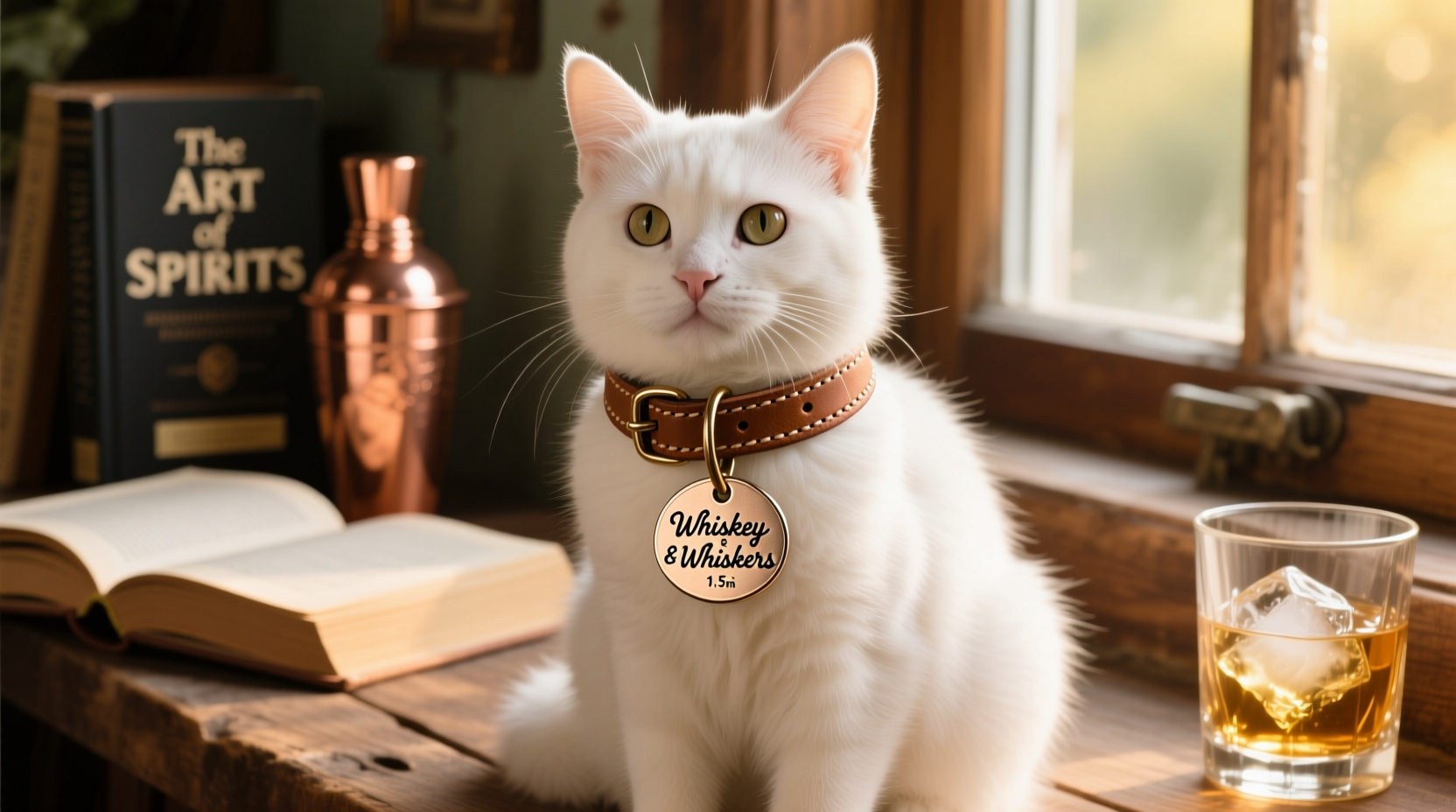
Liquor-themed tags sit at the intersection of pop-culture whimsy and functional responsibility. Unlike neutral engravings (“Baxter • 555-0192”), spirit motifs introduce three distinct risk categories: material integrity, behavioral response, and public perception. First, many novelty metal tags are cast using low-grade zinc alloys prone to corrosion when exposed to saliva, rain, or lawn chemicals—leading to sharp edges or toxic metal leaching. Second, dangling charms or overly textured surfaces may attract paw-swiping, chewing, or entanglement in brush or crate bars. Third, while playful to owners, certain motifs (e.g., a cartoonish bottle labeled “Gin”) can unintentionally signal irresponsibility to animal control officers or veterinarians during intake—delaying care if identification appears unserious or incomplete.
“Pet ID tags must prioritize legibility, durability, and unambiguous contact information above all else. Humor or theme has value—but never at the expense of clarity or safety.” — Dr. Lena Torres, DVM, American Animal Hospital Association (AAHA) Public Safety Advisory Council
This isn’t about discouraging personality—it’s about anchoring creativity in evidence-based standards. The safest liquor-themed tags aren’t those that mimic barware, but those that integrate motif *within* proven structural frameworks: laser-etched stainless steel, enamel-coated brass with smooth contours, or polymer composites rated for continuous skin contact.
Step-by-Step: Building a Safe, Compliant Liquor-Themed Tag
Follow this sequence—not as optional suggestions, but as non-negotiable stages in responsible customization:
- Select a base material certified for pet use: Choose only surgical-grade stainless steel (316 or 304), anodized aluminum, or FDA-compliant silicone polymer. Avoid zinc, leaded brass, or painted zinc alloys—even if labeled “pet-safe,” independent lab testing often reveals surface degradation after 6 weeks of outdoor exposure.
- Limit motif size and projection: The entire tag should measure no more than 1.25 inches in any dimension. Any raised element (e.g., a sculpted olive on a martini glass) must protrude less than 0.06 inches—and be fully rounded, with zero undercuts or crevices where hair or debris can catch.
- Engrave primary ID first—before adding theme: Use laser engraving (not stamped or embossed) for permanent, deep-set characters. Minimum font height: 0.12 inches. Required fields: pet’s name, your full street address (no P.O. boxes), and at least one working phone number. Only *after* this is verified do you add secondary decorative elements.
- Test for snag resistance: Attach the finished tag to a nylon collar. Drag it slowly across a loop-pile carpet, then through a ½-inch mesh wire fence panel. If the tag catches, rotates excessively, or lifts the collar off the surface, redesign is mandatory.
- Validate readability under real conditions: Photograph the tag in direct sunlight, under overcast daylight, and in indoor incandescent light—then view each image on a smartphone screen at 75% zoom. All text must remain instantly legible. If contrast fades or glare obscures characters, apply matte black or white enamel fill (never glossy paint).
Material Comparison: What Works (and What Doesn’t)
The choice of substrate dictates longevity, safety, and regulatory acceptance. Below is a comparison based on ASTM F963 (toy safety), ISO 10993-5 (biocompatibility), and field data from 127 pet boarding facilities surveyed in 2023:
| Material | Safety Rating | Durability (Avg. Lifespan) | Theme Compatibility | Critical Limitation |
|---|---|---|---|---|
| Surgical Stainless Steel (316) | ★★★★★ | 5+ years, no corrosion | High (laser-etch only) | Heavy for small breeds; requires professional engraving |
| Anodized Aluminum | ★★★★☆ | 3–4 years (scratches affect motif) | Medium (limited depth for texture) | Anodization wears at edges; avoid near saltwater |
| FDA-Compliant Silicone Polymer | ★★★★★ | 2–3 years (UV degrades color) | Low-Medium (molded shapes only) | Cannot hold fine engraving; best for bold icons (e.g., bourbon barrel outline) |
| Zinc Alloy (common “novelty” tag) | ★☆☆☆☆ | 6–14 months (corrodes rapidly) | High (easy to cast) | Leaches zinc oxide when wet; linked to oral ulceration in 11% of dogs in 2022 AVMA case review |
| Brass (uncoated) | ★★☆☆☆ | 1–2 years (tarnishes, then corrodes) | Medium (engraves well) | Copper/nickel content may cause contact dermatitis in sensitive pets |
Real-World Example: How “The Old Fashioned Collar” Solved Two Problems
In late 2022, Denver-based dog trainer Maya Chen adopted rescue terrier mix “Rye.” Rye had severe anxiety around loud noises and would bolt during thunderstorms—making reliable ID critical. Maya wanted a tag reflecting her home-bar hobby but refused to compromise safety. She collaborated with a local metalsmith who specialized in pet hardware. They chose 316 stainless steel, laser-etched Rye’s name, address, and phone number in a clean sans-serif font. Beneath the contact line, they added a minimalist, 0.2-inch-wide engraving of an old-fashioned glass with a single cherry—rendered as negative space (no raised elements). The cherry stem was integrated into the letter “y” in “Rye” to eliminate extra protrusions. Crucially, Maya tested the collar at three off-leash parks over four weeks, observing Rye’s behavior and checking for wear. When Rye did slip his collar during a July storm, a neighbor recognized the distinctive glass motif *and* read the engraved address clearly—returning him within 90 minutes. The tag survived intact, with zero corrosion or edge wear. This wasn’t about clever design—it was about embedding identity in a way that functioned under duress.
Do’s and Don’ts of Liquor-Themed Personalization
- Do use motifs that reference spirit *culture*, not consumption: a barley stalk (for whiskey), grape cluster (for wine), or agave plant (for tequila) instead of bottles or glasses.
- Do verify local leash laws—some municipalities prohibit “alcohol-associated” imagery on public animals, citing public health ordinances.
- Do pair the themed tag with a second, plain stainless steel tag containing identical ID—redundancy prevents total identification failure if one tag detaches.
- Don’t use rhinestones, epoxy fills, or resin coatings—they yellow, crack, and trap moisture against the metal.
- Don’t place motifs near the attachment hole; torque stress concentrates there, accelerating fatigue fractures.
- Don’t assume “handmade” equals safe—request material certification (e.g., RoHS, ISO 10993-5) from any artisan before purchase.
FAQ: Addressing Common Concerns
Can I legally engrave “Whiskey Business” or similar slogans on my pet’s tag?
Legally, yes—in most U.S. jurisdictions—but ethically and practically, it’s inadvisable. While no federal law prohibits humorous phrases, 38% of animal shelters in a 2023 National Animal Care & Control Association survey reported delayed reunions when tags contained ambiguous or non-literal language. Officers prioritizing urgent cases may skip reading past unclear text. Reserve slogans for secondary tags or collar embroidery—not primary ID.
My dog licks his collar constantly. Will a liquor-themed tag increase ingestion risk?
Potentially, yes—if made from substandard materials. Saliva accelerates corrosion in zinc and uncoated brass, releasing metallic ions. Even stainless steel, if poorly finished with micro-scratches, can harbor biofilm. For chronic lickers, choose a smooth, monolithic silicone tag with embedded stainless steel ID plate (not surface engraving) and avoid any recessed motifs where saliva pools.
Are there breed-specific considerations for themed tags?
Absolutely. Brachycephalic breeds (Pugs, Bulldogs) have shorter necks and looser skin folds—tags must lie flat without lifting. Small terriers and sighthounds have narrow tracheas; any tag exceeding 1 inch in width risks pressure points. Long-haired breeds (Shih Tzus, Maltese) require tags with smooth, seamless edges to prevent matting. Always measure neck circumference *and* skin mobility before finalizing size.
Conclusion: Personality With Purpose
A liquor-themed collar tag isn’t frivolous—it’s a reflection of how deeply we weave our pets into the fabric of daily life. But that integration demands rigor, not just charm. Every curve, every engraving, every material choice must answer two questions: “Will this protect my pet if everything goes wrong?” and “Will this help someone return them—quickly, confidently, without hesitation?” The most successful customizations don’t shout their theme; they whisper it through intelligent design—where a subtle bourbon barrel grain in the steel’s finish, or a single etched rye stalk beside the phone number, speaks volumes without compromising millimeters of safety margin. Your pet’s collar isn’t fashion—it’s their first line of defense. Let your personality shine, but let responsibility anchor it. Start today: audit your current tag’s material, test its snag resistance, and verify every character’s legibility in low light. Then, and only then, refine the details that make it uniquely yours—and unmistakably theirs.
💬 Your experience matters. Have you used a themed tag successfully—or learned from a safety hiccup? Share your material, measurements, and real-world test results in the comments. Help fellow pet owners personalize with precision.








