Emotional support animals (ESAs), particularly dogs, provide critical comfort and psychological relief to individuals coping with anxiety, depression, PTSD, and other mental health conditions. Unlike service animals trained for specific tasks, ESAs offer therapeutic benefits simply through companionship. However, securing legal recognition for your dog as an emotional support animal requires more than just affection—it demands documentation that meets federal standards. This guide walks you through the correct, lawful process of obtaining a legitimate emotional support dog certificate while avoiding common pitfalls and fraudulent schemes.
Understanding Emotional Support Animal Rights
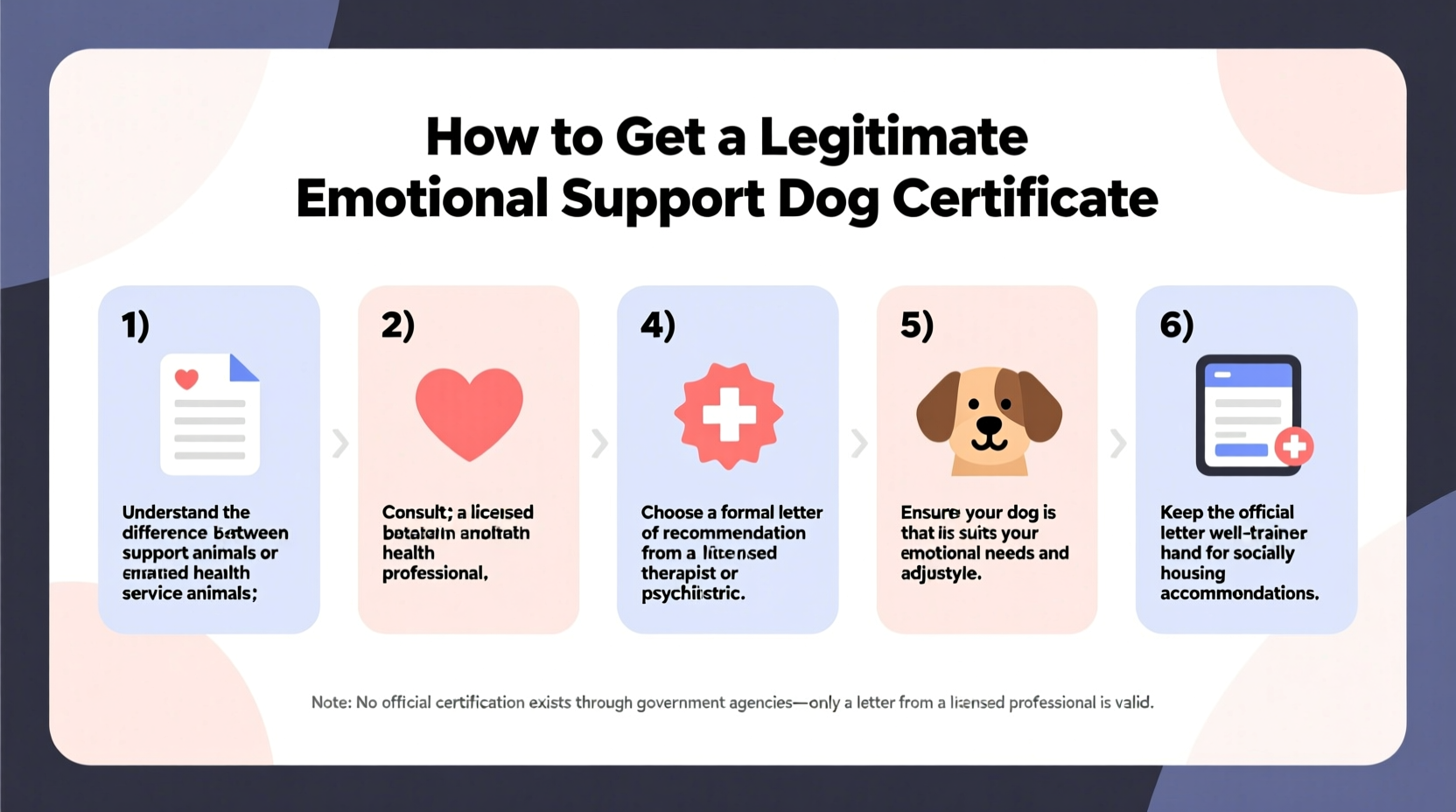
Federal laws in the United States—specifically the Fair Housing Act (FHA) and, historically, aspects of the Air Carrier Access Act (ACAA)—protect the rights of individuals who rely on emotional support animals. Under the FHA, landlords must make reasonable accommodations for tenants with ESAs, even in properties with strict no-pet policies, provided proper documentation is submitted.
It's important to note: there is no official \"ESA certification\" issued by the government. The term “emotional support dog certificate” typically refers to a formal letter from a licensed mental health professional (LMHP) stating that the animal is part of a patient’s treatment plan for a diagnosed condition.
“An ESA letter is not a novelty item—it’s a medical document rooted in clinical evaluation.” — Dr. Rebecca Alvarez, Licensed Clinical Psychologist
Many online services falsely claim to “certify” or register your dog in national databases. These registries have no legal standing and are not recognized by housing authorities or airlines. Only a valid ESA letter from a qualified provider grants legal protection.
Step-by-Step Process to Obtain a Legitimate ESA Letter
Follow these steps carefully to ensure your emotional support dog documentation is both authentic and enforceable under applicable laws.
- Determine if You Qualify Medically
Eligibility hinges on having a diagnosable mental or emotional disability listed in the DSM-5 (Diagnostic and Statistical Manual of Mental Disorders). Common qualifying conditions include generalized anxiety disorder, major depressive disorder, bipolar disorder, and PTSD. - Consult a Licensed Mental Health Professional
This can be your current therapist, psychologist, psychiatrist, or a licensed counselor. If you don’t already have one, telehealth platforms such as BetterHelp or Amwell can connect you with licensed professionals who evaluate ESA eligibility. - Undergo a Clinical Evaluation
The LMHP will assess your symptoms, diagnosis, and need for an emotional support animal. This evaluation may occur during an existing therapy session or through a dedicated consultation via video call. - Receive Your ESA Letter
If approved, the professional will issue an official ESA letter on their letterhead. It should include:- Their license number, type, and jurisdiction
- Date of issuance
- A statement confirming your mental health condition and that the animal provides therapeutic benefit
- Signature and contact information
- Use the Letter Appropriately
Submit the letter to your landlord when requesting housing accommodation. Airlines now largely require additional forms and advance notice, but the ESA letter remains foundational.
What Makes an ESA Letter Legitimate?
Not all ESA letters hold up legally. Landlords and institutions may reject poorly written or suspicious documents. Use the checklist below to verify authenticity.
📋 ESA Letter Checklist- Issued by a licensed mental health professional currently authorized to practice
- Includes the provider’s full license details (number, state, type)
- Printed on official letterhead
- Clearly states the patient has a mental health condition recognized by the DSM-5
- Confirms the emotional support animal is part of the treatment plan
- Contains a signature and date within the past year (some landlords require renewal)
| Do’s | Don’ts |
|---|---|
| Obtain the letter after a genuine clinical assessment | Purchase a letter without speaking to a licensed provider |
| Keep digital and physical copies for housing applications | Assume one letter lasts forever—some situations require annual renewal |
| Verify the provider is licensed in your state | Use expired or generic template letters |
| Use the letter only for eligible purposes (housing, limited travel) | Try to bring your ESA into restaurants or stores—ESAs do not have public access rights like service dogs |
Real-Life Scenario: How Sarah Secured Her ESA Rights
Sarah, a 32-year-old graphic designer from Portland, struggled with severe social anxiety and panic attacks. After months of remote therapy, her psychologist suggested an emotional support dog might help ground her during episodes. She adopted a rescue terrier mix named Milo, who visibly calmed her during sessions.
When her apartment complex denied Milo due to a no-pets policy, Sarah requested an ESA letter from her therapist. After a brief evaluation update, she received a formal letter detailing her diagnosis and the therapeutic role Milo played. She submitted it along with a reasonable accommodation request. Within two weeks, the landlord approved Milo as an ESA, waiving pet fees and deposits.
Sarah avoided several websites offering “instant ESA registration,” recognizing they lacked clinical review. Her success came from working directly with her care provider—a model others can follow.
Frequently Asked Questions
Can I get an ESA letter online?
Yes, but only if it comes from a licensed mental health professional who conducts a real evaluation. Reputable telehealth platforms like Teladoc or specialized ESA services (e.g., ESA Doctors, after proper screening) can issue valid letters. Avoid sites that sell letters without interviews.
How long is an ESA letter valid?
Typically one year from the date of issuance. Some landlords accept older letters, but many require updated documentation annually to confirm ongoing need.
Does my dog need special training to be an ESA?
No formal task-based training is required. However, your dog must behave appropriately in shared living spaces. Excessive barking, aggression, or poor house manners can lead to eviction, even with a valid ESA letter.
Protecting Yourself from Scams
The rise in demand for emotional support animals has fueled a market for fake certifications. Thousands of websites sell “ESA certificates,” ID cards, vests, and database registrations—all of which carry no legal weight.
Be wary of red flags such as:
- Guaranteed approval regardless of mental health history
- No requirement to speak with a licensed provider
- Claims of a “national registry” (no such thing exists)
- One-time lifetime ESA letters (legitimate ones usually require renewal)
Remember: the only essential document is the signed ESA letter. Everything else is optional at best, deceptive at worst.
Conclusion
Obtaining a legitimate emotional support dog certificate isn’t about buying paperwork—it’s about establishing a documented therapeutic relationship between you and your dog through professional medical validation. By working with a licensed mental health provider, understanding your rights under housing law, and avoiding predatory online services, you can secure the accommodations you’re entitled to without compromising integrity.
💬 Have questions about your ESA journey? Share your experience or ask for advice in the comments—help build a community grounded in accurate information and mutual support.








