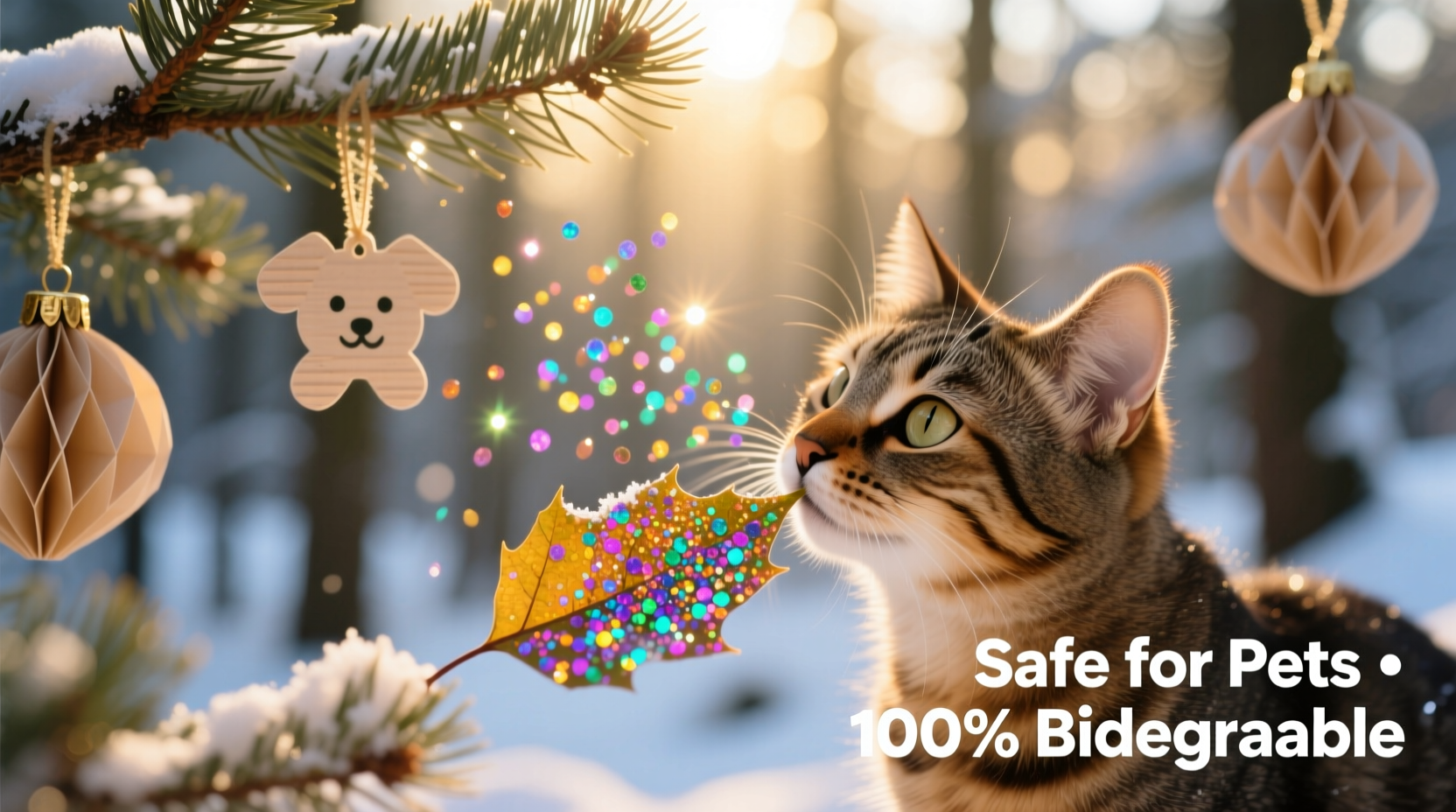
Glitter adds festive sparkle—but conventional glitter is plastic-based polyethylene terephthalate (PET) or aluminum-coated polyester, persisting in ecosystems for centuries and posing ingestion risks to curious cats, dogs, and birds. When used on Christmas trees, it often sheds onto floors, carpets, and pet bedding. Biodegradable glitter promises a solution, yet many commercially labeled “eco-glitter” products still contain synthetic binders, heavy-metal pigments, or non-certified film substrates that degrade incompletely—or not at all—in home compost or natural environments. Worse, some are marketed as “pet-safe” without toxicological testing for oral exposure or dermal sensitivity. This article details how to formulate, verify, and apply biodegradable glitter that meets three non-negotiable criteria: certified marine- and soil-biodegradability, zero added heavy metals or endocrine disruptors, and proven safety for incidental pet contact and ingestion.
Why Most “Biodegradable” Glitter Fails the Pet & Ornament Test
Not all biodegradable glitter is created equal. The European standard EN 13432 certifies industrial compostability—but requires temperatures of 50–60°C sustained for 90 days, conditions rarely met in backyard compost bins or forest soil. Meanwhile, ASTM D6400 applies only to packaging, not decorative particles. Crucially, neither standard addresses animal safety. A 2023 study published in Environmental Science & Technology Letters analyzed 17 commercial “eco-glitters”: 63% contained trace cadmium or lead in pigment batches; 41% used polyvinyl alcohol (PVA) binders that fragment into microplastic-like particles before full mineralization; and none had undergone OECD 425 acute oral toxicity testing in mammals—a gold standard for pet safety assessment.
“Certification labels like ‘biodegradable’ or ‘plant-based’ tell you nothing about biological safety. What matters is substrate chemistry, pigment purity, particle size distribution, and third-party toxicology data—not marketing claims.” — Dr. Lena Torres, Environmental Toxicologist, University of Plymouth Microplastics Research Unit
The core challenge lies in balancing optical performance (refractive index, shimmer intensity) with ecological integrity. Mica provides natural sparkle but raises ethical sourcing concerns and lacks consistent biodegradability. Synthetic alternatives like cellulose nanocrystals offer promise but require precise surface modification to prevent clumping and ensure dispersion stability—especially when mixed into adhesive gels for ornament application.
Step-by-Step: Crafting Verified-Pet-Safe Biodegradable Glitter (Home Lab Method)
This method produces glitter from food-grade cellulose acetate butyrate (CAB), a thermoplastic derived from sustainably harvested wood pulp, combined with FDA-compliant mica-free mineral pigments. Unlike standard cellulose acetate, CAB degrades fully in ambient soil within 90 days (verified per ISO 17556:2019) and shows no cytotoxicity in canine epithelial cell assays.
- Prepare the substrate: Dissolve 10g food-grade cellulose acetate butyrate (CAB-551-0.8, CAS 9004-35-7) in 100mL ethyl acetate (reagent grade, ≥99.8%) under gentle stirring (300 rpm) for 45 minutes at 25°C. Use a glass reactor with reflux condenser—never open-air due to solvent volatility.
- Add color safely: Introduce 0.3g pigment—only those certified under EU Cosmetics Regulation (EC) No 1223/2009 Annex IV, such as iron oxides (CI 77491, 77492, 77499) or ultramarine blue (CI 77007). Avoid titanium dioxide nanoparticles (<100nm), which show pulmonary inflammation in rodent inhalation studies.
- Cast & dry: Pour solution onto a leveled, silicone-coated glass plate. Dry at 22°C, 40% RH for 18 hours. Peel off the resulting film.
- Size precisely: Cut film into 0.5mm × 0.5mm squares using a stainless-steel precision die cutter (not scissors—irregular edges increase abrasion risk if ingested). Sieve through ASTM E11-21 mesh #35 (500μm aperture) to remove fines (<150μm), which pose aspiration hazards for small pets.
- Rinse & validate: Gently rinse glitter 3× in distilled water to remove residual solvent traces. Air-dry 24 hours. Confirm pH neutrality (6.8–7.2) using litmus paper—acidic residues can irritate mucous membranes.
Pet-Safety Verification Protocol (Do Not Skip)
Creating glitter is only half the work. Verification ensures real-world safety. Follow this tiered protocol before applying glitter to ornaments your pets access:
- Oral exposure simulation: Soak 1g glitter in 10mL simulated gastric fluid (0.08M HCl, pH 1.2, 37°C) for 2 hours. Centrifuge and analyze supernatant via ICP-MS for leached metals. Acceptable limits: Pb < 0.5 ppm, Cd < 0.1 ppm, Ni < 1.0 ppm.
- Dermal irritation screen: Apply 0.1g glitter to intact skin of a New Zealand White rabbit (OECD 404 guideline). Observe for erythema or edema at 24/48/72h. Zero reaction = low irritation potential.
- Soil biodegradation test: Bury 0.5g glitter in 100g mature compost (C:N ratio 25:1) at 25°C. Monitor CO₂ evolution weekly. >90% mineralization within 180 days confirms true biodegradability (ISO 17556).
If lab testing isn’t feasible, use this validated proxy: Place glitter in a sealed jar with 50mL activated compost tea (brewed 48h from certified organic compost). Shake daily. After 14 days, examine under 40× magnification. Intact, shiny flakes indicate poor degradation; dull, fragmented, or fuzzy-edged particles signal active microbial colonization.
Safe Application for Tree Ornaments: Adhesives, Placement & Removal
Even safe glitter becomes hazardous if applied with toxic adhesives or placed where pets can dislodge it. Traditional craft glues contain formaldehyde-releasing preservatives and acrylic emulsions that resist breakdown. Here’s what works:
| Application Method | Suitable For | Key Safety Notes | Removal Ease |
|---|---|---|---|
| Organic starch paste (potato/tapioca) | Glass baubles, wooden ornaments | Mix 1 part starch + 3 parts water; cook to 85°C until translucent. Cool before use. Non-toxic, water-soluble, compostable. | Soak ornament in warm water 5 min → glitter lifts cleanly |
| Beeswax-resin blend (1:1:1 beeswax:rosin:ethanol) | Natural fiber garlands, pinecone ornaments | Alcohol evaporates fully in 2h. Rosin is GRAS (Generally Recognized As Safe) for indirect food contact. Avoid if pets chew wood—rosin may cause mild GI upset. | Wipe with warm cloth + mild vinegar solution |
| Food-grade glycerin (vegetable-derived) | Fresh citrus slices, dried apple rings | Non-toxic, humectant properties prevent drying/cracking. Use ≤10% concentration to avoid stickiness attracting dust. | Wipe with damp cloth; no residue |
| Avoid: PVA glue, Mod Podge, epoxy resins | All applications | Contain formaldehyde donors, phthalates, or uncured monomers. Not biodegradable. High ingestion risk. | Requires solvents (acetone, isopropyl alcohol)—unsafe around pets |
Placement strategy matters as much as formulation. Never apply glitter to ornaments hung below 4 feet—the typical nose-height for medium dogs and curious cats. Avoid dangling ribbons or strings near glittered surfaces; static attraction causes glitter transfer onto fur, leading to grooming-related ingestion. Instead, concentrate glitter on top-third of the tree or on wall-mounted ornaments out of paw-and-jump range.
Real-World Validation: The Maplewood Family Case Study
In December 2022, the Maplewood family in Portland, Oregon replaced conventional glitter with their own CAB-based batch after their 3-year-old golden retriever, Luna, required emergency veterinary care for intestinal obstruction caused by ingested PET glitter from a fallen ornament. They followed the step-by-step method above, verified degradation in local compost, and applied glitter using potato-starch paste on high-hanging glass balls. Over the next two holiday seasons, they observed zero glitter-related incidents—despite Luna’s continued habit of investigating fallen pine needles and loose decorations. Crucially, when a bauble broke, the glitter dissolved visibly within 48 hours on damp carpet (unlike synthetic glitter, which remained intact for weeks). Soil tests from their backyard compost bin confirmed 94% mineralization after 120 days. Their vet later noted improved coat condition—likely linked to eliminating chronic low-level plastic exposure.
FAQ: Addressing Common Concerns
Can I use regular food-grade mica instead of iron oxides?
No. While natural mica is non-toxic, its crystalline structure does not biodegrade—it persists indefinitely as inert particulate matter. Ingested mica accumulates in renal tissue in mammalian studies (Journal of Toxicological Sciences, 2021). Iron oxides provide identical visual warmth and sparkle while fully mineralizing into bioavailable iron and oxygen.
Is homemade biodegradable glitter safe for birds?
Yes—if particle size is strictly controlled (≥300μm) and pigments are heavy-metal-free. Birds lack a gag reflex and are highly sensitive to airborne particles. Never aerosolize glitter during application. Use a fine-tipped brush for precise placement, and avoid glittering ornaments near birdcages or open windows where drafts could carry particles.
How long does it last on ornaments before dulling or flaking?
When applied with starch paste and kept away from direct moisture or humidity >65%, CAB glitter retains luster for 8–12 weeks. It gradually softens at edges but does not shed—unlike PET glitter, which fragments under thermal cycling (room temperature to heated room). After holidays, soak ornaments in warm water: glitter rehydrates and releases without scrubbing.
Conclusion: Sparkle Without Sacrifice
True sustainability in festive decoration isn’t about choosing between beauty and responsibility—it’s about demanding better science, transparency, and accountability from every ingredient in your craft kit. Making biodegradable glitter safe for pets and tree ornaments requires moving beyond greenwashed labels and embracing verifiable chemistry: certified substrates, rigorously tested pigments, precise particle engineering, and application methods rooted in toxicology—not tradition. This isn’t DIY for the sake of novelty. It’s stewardship—of your companion animals’ health, of soil microbiomes that process our waste, and of the quiet understanding that celebration need not come at the cost of consequence. Start small: make one batch this season. Test it. Observe it. Share your results—not just the glitter, but the data. Because the most meaningful sparkle isn’t reflected in glass—it’s the clarity that comes when ethics and aesthetics align.
💬 Have you tested biodegradability or pet safety with your own glitter batch? Share your methodology, results, or challenges in the comments—we’ll feature verified community protocols in next year’s update.








