
Living with a cat in a compact urban apartment doesn’t mean sacrificing your pet’s mental and physical well-being. In fact, many indoor cats thrive in smaller spaces when their environment is enriched with thoughtful stimulation. The challenge isn’t space—it’s creativity. With limited square footage and tight budgets, pet owners often assume they need elaborate cat trees or high-tech toys to keep their feline companions engaged. But the truth is, cats are naturally curious, playful, and intelligent animals who respond more to novelty, interaction, and routine than price tags.
This guide explores how to create an engaging, dynamic living space for your indoor cat using everyday household items, clever behavioral strategies, and low-cost solutions. Whether you're in a studio or a one-bedroom, these proven methods will help prevent boredom, reduce stress-related behaviors like overgrooming or aggression, and strengthen your bond with your cat—all without draining your wallet.
Create Vertical Territory with Free or Repurposed Materials
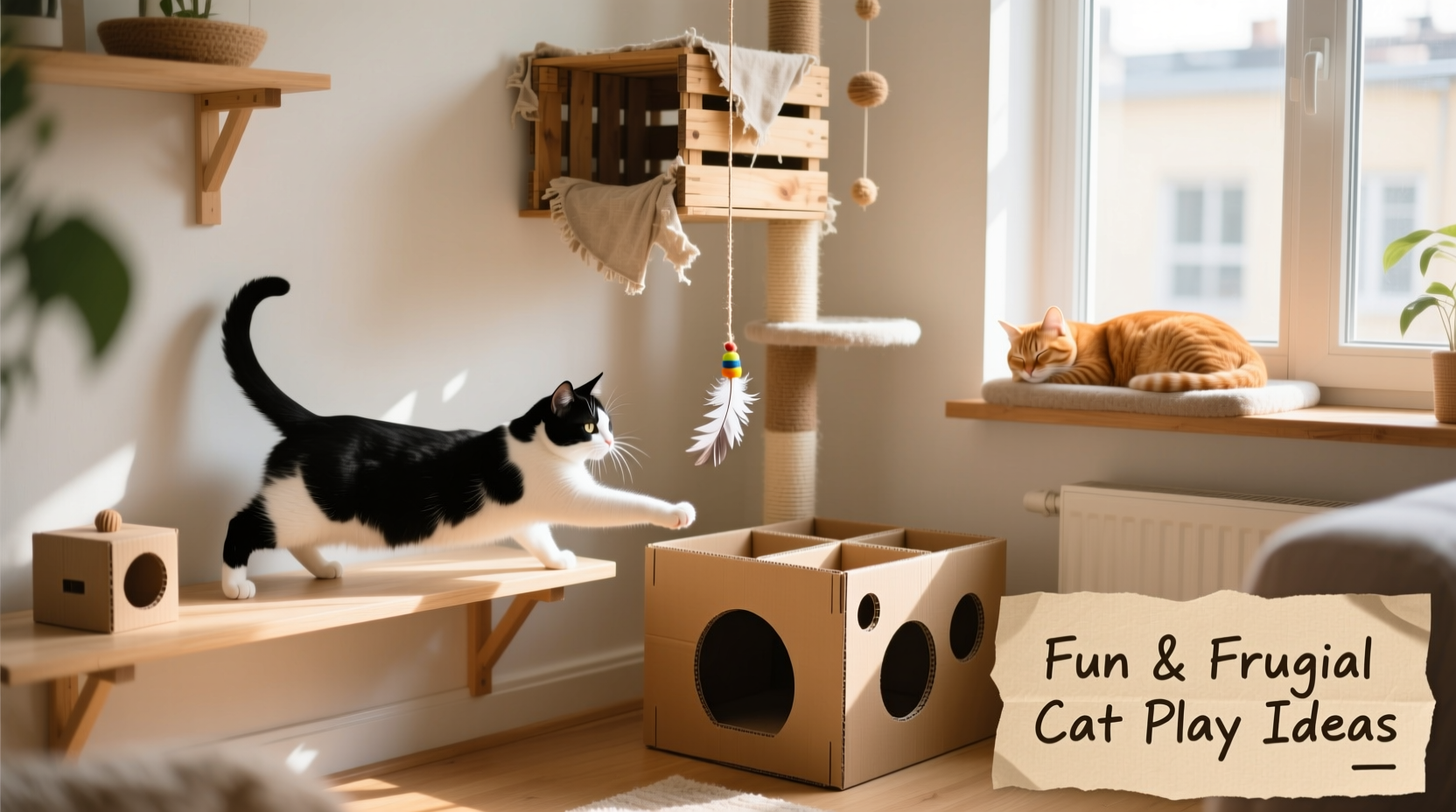
Cats instinctively seek elevated vantage points. In the wild, height offers safety and surveillance; indoors, it provides mental stimulation and territory expansion. Even in a small apartment, vertical space is often underutilized. You don’t need to buy a $150 cat tree to give your cat a perch—look around your home for alternatives.
Sturdy bookshelves (secured to the wall), window ledges, and even stacked wooden crates can serve as climbing platforms. Place soft towels or old sweaters on shelves to make them cozy. If you’re handy, build simple platforms from reclaimed wood and attach them at different heights along a wall. Anchor everything securely—safety comes first.
Tip: Use double-sided tape or shelf liner on perches to prevent slipping—cats love traction under their paws.A windowsill perch is especially valuable. Position a cushioned seat near a south- or east-facing window where your cat can watch birds, squirrels, or passing pedestrians. This passive entertainment is endlessly fascinating and requires zero ongoing cost once set up.
DIY Toys That Mimic Natural Hunting Behavior
Cats are hardwired predators. Their play is practice for hunting: stalking, pouncing, biting, and batting. To keep them mentally sharp, engage this instinct with toys that simulate prey movement. The best part? Most effective DIY toys cost nothing.
- Feather-on-a-string: Tie a feather or crumpled piece of tinfoil to a shoelace or ribbon. Dangle it under furniture or wave it erratically to mimic a fleeing bird.
- Crinkle ball: Wad up aluminum foil into a marble-sized ball. Cats love the sound and unpredictable bounce.
- Toilet paper roll mice: Cut a roll into rings, flatten slightly, and add googly eyes or draw a face. Toss them down a hallway for chasing fun.
- Cardboard boxes: Cut holes in different sides and hide treats inside. Rotate boxes weekly to maintain novelty.
The key is variety and rotation. Keep a “toy box” of five to six homemade items and swap them out every few days. This mimics environmental change and prevents habituation. Store unused toys out of sight—when reintroduced, they feel brand new.
“Cats don’t care about retail value—they care about unpredictability and engagement.” — Dr. Lena Reyes, Feline Behavior Consultant
Establish a Daily Play Routine (That Takes 15 Minutes)
One of the most overlooked aspects of cat care is scheduled interactive play. Unlike dogs, cats aren’t always eager to initiate games, but they benefit immensely from structured sessions that burn energy and satisfy predatory instincts.
Aim for two 7–10 minute play periods daily—one in the morning and one before bedtime. This helps regulate their sleep cycle and reduces nighttime zoomies, which are common in apartment dwellers’ cats.
Step-by-Step Guide: The 10-Minute Hunting Sequence
- Stalk (2 min): Drag a string toy slowly behind a couch or curtain. Let your cat crouch and follow.
- Chase (3 min): Increase speed, zigzagging across the floor. Encourage pursuit.
- Pounce & Capture (3 min): Let your cat “catch” the toy. Allow biting and kicking with their back legs—this is natural behavior.
- Cool Down (2 min): Offer a treat or small meal immediately after. In the wild, hunting ends with eating.
Consistency matters more than duration. A predictable routine reduces anxiety and gives your cat something to anticipate, which is deeply comforting in a confined space.
Enrich the Environment with Scent, Sound, and Rotation
Humans rely heavily on sight, but cats experience the world through smell, sound, and subtle changes in their surroundings. Enrichment doesn’t always involve toys—it can be sensory.
Introduce new scents safely: rub cat-safe herbs like valerian root or silver vine on a scratching post or stuffed sock. These act as natural attractants and can spark investigative behavior. Avoid essential oils, which are toxic to cats.
Play background audio designed for cats. YouTube channels and streaming services offer music with frequencies that mimic bird chirps or purring, which many cats find soothing. Play it softly during work hours when you’re away.
Rotate furniture occasionally. Move a chair to a new corner, flip a rug, or rearrange cushions. Novelty triggers exploration—even minor layout changes feel like a new territory to a cat.
| Enrichment Type | Budget-Friendly Method | Frequency |
|---|---|---|
| Visual | Window perch with outside view | Daily access |
| Olfactory | Scratch post with silver vine | Weekly refresh |
| Auditory | Cat-specific music playlist | 2–3 hrs/day |
| Tactile | Rotating fabric textures (towel, fleece, cardboard) | Every few days |
| Spatial | Reposition furniture or shelves | Monthly |
Real Example: How Mia Transformed Her Cat’s Behavior in One Month
Mia, a graphic designer in Brooklyn, lived in a 500-square-foot apartment with her 3-year-old tabby, Oliver. After moving from a house to the city, Oliver became withdrawn—sleeping all day, over-grooming his legs, and attacking her feet at night.
Instead of buying expensive gear, Mia implemented a no-spend strategy. She mounted two floating shelves near her bedroom window using brackets she already owned. She filled a cardboard box with crumpled paper and placed it under the dining table as a hiding spot. Every evening, she spent 10 minutes playing with a DIY wand toy made from a chopstick and yarn.
Within three weeks, Oliver’s over-grooming stopped. He began napping on the new shelves and pounced on the paper balls she tossed. Mia also started leaving a tablet playing nature sounds when she worked remotely. “He still gets the midnight crazies,” she says, “but now he chases his foil ball instead of my toes.”
Mia’s success wasn’t due to money—it was consistency, observation, and understanding her cat’s needs.
Common Mistakes That Undermine Cat Enrichment
Even well-meaning owners can unintentionally contribute to feline boredom. Watch for these pitfalls:
- Leaving toys out all the time: Constant access dulls interest. Rotate to preserve excitement.
- Using laser pointers without closure: Never end a session with a laser dot your cat can’t catch. Always finish with a physical toy they can “capture.”
- Ignoring individual preferences: Some cats love feathers, others prefer crinkly sounds. Observe what your cat responds to.
- Overlooking feeding enrichment: A food bowl is boring. Use puzzle feeders or scatter dry food on the floor for foraging practice.
Essential Low-Cost Checklist for Apartment Cat Owners
Use this checklist to ensure your cat’s environment stays stimulating and healthy:
- ✅ Install at least one safe elevated perch near a window
- ✅ Create three DIY toys using household materials
- ✅ Schedule two 10-minute interactive play sessions daily
- ✅ Rotate toys every 3–4 days
- ✅ Introduce a new scent (e.g., catnip, silver vine) weekly
- ✅ Provide a cardboard box or tunnel for hiding
- ✅ Use a puzzle feeder or scatter food instead of a bowl
- ✅ Play cat-friendly audio when you’re away
- ✅ Secure heavy furniture to walls to prevent tipping
- ✅ Observe your cat’s behavior weekly for signs of stress or disengagement
Frequently Asked Questions
Can I use toilet paper rolls as cat toys?
Yes—rolled or flattened, they’re safe and engaging. Just remove any glue residue and supervise initially to ensure your cat doesn’t ingest pieces. Replace if frayed.
How do I stop my cat from scratching the sofa?
Provide appealing alternatives: a corrugated cardboard scratcher (under $10) or a DIY sisal post wrapped around a wooden dowel. Place it near the sofa and reward use with treats. Trim claws regularly to reduce damage.
Is it cruel to keep a cat in a small apartment?
Not if their environment is enriched. Cats adapt well to small spaces as long as they have vertical territory, mental stimulation, and social interaction. Outdoor access isn’t necessary—if anything, indoor living increases lifespan and safety.
Final Thoughts: Enrichment Is a Mindset, Not a Purchase
Keeping an indoor cat entertained in a small apartment doesn’t require financial investment—it requires attention. Your presence, curiosity, and willingness to engage are the most valuable resources you offer. By leveraging everyday objects, understanding feline instincts, and establishing routines that mirror natural behaviors, you create a fulfilling life for your cat regardless of square footage.
Start small. Pick one idea from this guide—rotate a toy, build a perch, play for ten minutes tonight. Over time, these actions compound into a richer, more joyful existence for both you and your companion. Cats don’t crave luxury. They crave connection, challenge, and choice. Give them those, and you’ve given them everything.
💬 What’s your favorite free way to entertain your cat? Share your DIY hacks and routines in the comments—your tip could inspire another cat owner to try something new!








