
Ants invading your pet’s food bowl is more than a nuisance—it’s unhygienic and stressful for both pets and owners. These tiny pests are drawn to the scent of kibble, wet food, and even crumbs left behind after meals. While commercial ant deterrents exist, many contain chemicals that aren’t safe around pets or food. The good news? You can stop ants in their tracks using only items already in your home. From natural barriers to clever placement tricks, this guide reveals proven, non-toxic methods that actually work.
Why Ants Are Drawn to Pet Food
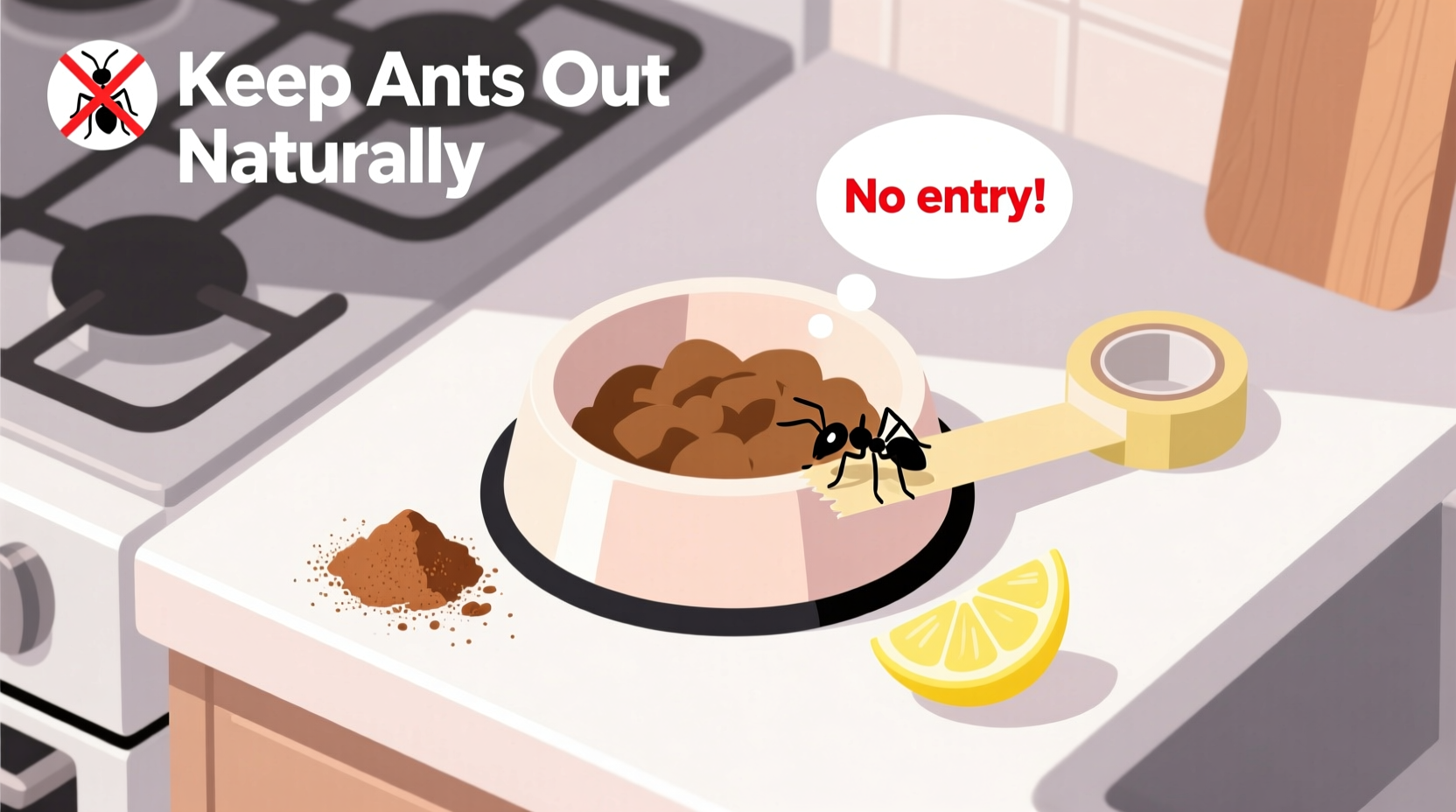
Ants operate on scent trails. Once a scout discovers a food source like pet food, it leaves a pheromone trail for others to follow. This is why you often see single ants turn into an organized line within hours. Dry pet food contains grains, fats, and proteins; wet food adds moisture and strong odors—all highly attractive to species like Argentine ants, odorous house ants, and pavement ants.
The problem worsens if food is left out for long periods, especially in warm or humid environments. Even clean-looking bowls may retain invisible residue that draws ants. Understanding this behavior is key to disrupting their access without resorting to pesticides.
Tip: Clean the area around the feeding zone daily with vinegar to erase scent trails ants use to navigate.Create a Moat: The Water Barrier Method
One of the most reliable household strategies is creating a water barrier between the floor and the food bowl. Ants cannot swim or cross standing water, so placing the pet bowl on a plate or tray filled with water effectively blocks their path.
- Find a shallow dish or baking tray larger than the pet bowl base.
- Place a small upside-down jar cap or heat-resistant coaster in the center.
- Fill the dish with water up to just below the top of the cap.
- Set the pet food bowl securely on the cap.
This setup isolates the bowl, preventing ants from reaching it. Be sure to refresh the water every 1–2 days to prevent evaporation and bacterial growth. For outdoor feeding areas, cover the setup with an elevated canopy to avoid rain overflow.
Maintaining the Water Trap
To enhance effectiveness, add a drop of dish soap to the water. Soap reduces surface tension, making it harder for ants to tread across the water’s surface—even if they attempt to skim the edge, they’ll sink.
Tip: Use distilled or boiled water to reduce mineral buildup and algae formation in indoor setups.Natural Repellent Barriers Using Kitchen Staples
Many common kitchen ingredients naturally repel ants due to their strong scents or chemical properties. These create invisible but effective borders around feeding zones.
Vinegar: Disrupt Scent Trails
White vinegar neutralizes ant pheromones. Wipe down floors, walls, and baseboards near the feeding area with a 50/50 mix of vinegar and water. Reapply every other day or after cleaning. You can also soak cotton balls in vinegar and place them strategically around the bowl (but not close enough for pets to ingest).
Baking Soda and Powdered Chalk Lines
Ants avoid crossing fine powders like baking soda, baby powder, or even crushed chalk. Draw a thick line around the feeding zone—about 1 inch wide—to create a repellent barrier. Baking soda is particularly useful because it’s non-toxic and doubles as a mild deodorizer.
However, these powders lose effectiveness when damp or stepped on. Reapply after meals or if humidity is high.
Spice Barriers: Cayenne, Cinnamon, and Black Pepper
Strong spices irritate ants’ sensory organs. Sprinkle cayenne pepper or ground cinnamon in a ring around the feeding area. These are safe in small amounts around pets, though avoid direct contact with food. Cinnamon oil is more potent, but stick to the ground spice form to prevent accidental ingestion by curious animals.
| Household Item | How It Works | Pet Safety | Reapplication Frequency |
|---|---|---|---|
| White Vinegar | Disrupts scent trails and kills bacteria | Safe when diluted and dried | Every 2–3 days |
| Baking Soda | Creates physical and olfactory barrier | Non-toxic in small amounts | Daily or after spills |
| Cinnamon (ground) | Repels via strong scent | Safe unless inhaled in large quantities | Every 1–2 days |
| Lemon Juice | Acidic and aromatic; deters ants | Avoid direct pet contact | Every 2 days |
| Dish Soap + Water | Breaks surface tension in moats | Keep out of reach | With each water change |
“Ants rely heavily on chemical communication. Disrupting their scent trails with vinegar or essential oils can break the cycle of infestation.” — Dr. Lena Pruitt, Urban Entomologist, University of Florida
Strategic Feeding Practices That Prevent Attraction
Even the best barriers fail if the feeding routine itself invites ants. Adjusting how and when you feed your pet plays a crucial role in prevention.
Portion Control and Timed Meals
Free-feeding—leaving food out all day—is convenient but attracts pests. Instead, serve measured portions and remove uneaten food after 20–30 minutes. This limits exposure time and reduces odor buildup.
Elevated and Isolated Feeding Stations
Move feeding zones away from walls, cabinets, and baseboards where ants travel. Elevate bowls using furniture with legs placed in water cups (similar to the moat method). Avoid carpeted areas, which trap crumbs and are harder to clean.
Deep Cleaning Between Meals
After each feeding, wash bowls with hot, soapy water. Residue—even microscopic—can attract ants. For plastic bowls, which absorb odors over time, occasional soaking in a vinegar-baking soda solution helps neutralize lingering scents.
Tip: Replace old plastic bowls with stainless steel or ceramic—they’re less porous and easier to sanitize completely.Real-World Example: How One Household Eliminated Ants in 72 Hours
Sarah, a pet owner in Phoenix, Arizona, struggled with persistent ant invasions during summer. Her two cats were fed dry food in the kitchen corner, a spot adjacent to a window sill frequented by ants. Despite wiping the floor daily, she noticed increasing activity around mealtime.
She implemented a three-step solution:
- Moved the feeding station to the center of the room, away from walls.
- Placed the food bowl on a small stool with its legs submerged in water-filled jars.
- Wiped the surrounding floor with vinegar twice daily and drew a ring of baking soda around the perimeter.
Within 48 hours, ant sightings dropped sharply. By day three, there were none. Sarah continues the routine, rotating in cinnamon weekly to prevent habituation. “It’s low-cost, safe for my cats, and finally works,” she says.
Step-by-Step Prevention Plan
Follow this daily and weekly routine to maintain an ant-free feeding environment:
- Before Feeding (Daily): Wipe the feeding area with vinegar solution. Check water levels in moat systems.
- During Feeding: Place bowl on isolated stand or water barrier. Ensure no food spills occur.
- After Feeding (Within 30 mins): Remove uneaten food. Wash bowl with hot water and soap.
- Evening (Daily): Reapply powdered barriers if needed. Inspect for new trails.
- Weekly: Deep-clean the entire feeding zone. Soak bowls in vinegar and baking soda. Rotate repellents to prevent adaptation.
Frequently Asked Questions
Can I use essential oils to repel ants near pet food?
While oils like peppermint, tea tree, and citrus repel ants, they can be toxic to pets—especially cats—if inhaled or ingested. It’s safer to avoid diffusing or applying them near feeding areas. Stick to safer alternatives like vinegar or spices.
Will coffee grounds keep ants away?
Coffee grounds have a mixed reputation. While the smell may deter some ants, used grounds retain moisture and can mold, attracting other pests. Fresh grounds are slightly acidic and may help briefly, but they’re inconsistent. Not recommended as a primary method.
What if ants are coming from inside the wall?
If ants emerge from cracks or outlets, the issue is structural. Seal entry points with caulk and use non-toxic boric acid bait stations (placed far from pets) to target nests. Consult a pest control professional if infestations persist.
Final Checklist: Ant-Free Pet Feeding Zone
- ✅ Feed in a central location, away from walls and baseboards
- ✅ Use a water moat or barrier system under the bowl
- ✅ Wipe area with vinegar 1–2 times daily
- ✅ Apply natural repellents (cinnamon, baking soda) around the perimeter
- ✅ Practice portion feeding and remove food after 30 minutes
- ✅ Wash bowls daily with hot, soapy water
- ✅ Replace old plastic bowls with stainless steel or ceramic
- ✅ Monitor for new trails and reapply defenses as needed
Conclusion: A Clean Bowl Is a Safe Bowl
Keeping ants out of pet food bowls doesn’t require expensive gadgets or harsh chemicals. With everyday household items and consistent habits, you can create a feeding environment that’s uninviting to pests and safe for your furry companions. The key lies in breaking scent trails, blocking access, and minimizing food exposure. These methods are sustainable, pet-friendly, and surprisingly effective when applied together.
🚀 Start tonight: Clean the feeding area, set up a water moat, and wipe down surfaces with vinegar. Small changes today lead to an ant-free home tomorrow. Share your success story in the comments!








