
Fruit flies are more than just a seasonal annoyance—they’re persistent, fast-breeding pests that can quickly overrun your kitchen. While many turn to chemical sprays or sticky traps, these solutions often fall short or introduce unwanted toxins into food preparation areas. The good news is that you can eliminate fruit flies naturally, safely, and effectively using common household items and strategic cleaning practices. This guide outlines proven methods that target both adult flies and their breeding grounds, offering long-term relief without reliance on adhesives or synthetic chemicals.
Understanding the Fruit Fly Problem
Fruit flies (Drosophila melanogaster) are attracted to fermenting organic matter—overripe fruit, spilled juice, damp mops, garbage disposals, and even empty bottles with residue. A single female can lay up to 500 eggs in decaying material, and the lifecycle from egg to adult takes as little as eight days under ideal conditions. This rapid reproduction means that by the time you notice a few flies, an infestation may already be underway.
The key to eliminating them isn’t just killing adults—it’s disrupting their breeding cycle. Natural methods focus on luring, trapping, drowning, and removing attractants without introducing harmful substances into your home environment.
“Effective fruit fly control hinges on sanitation first. No trap will work if the breeding source remains active.” — Dr. Laura Bennett, Entomologist at the National Pest Management Association
Natural Elimination Methods That Work
Below are scientifically sound, non-toxic techniques that exploit fruit fly behavior. These methods use simple ingredients like vinegar, dish soap, and essential oils—all readily available and safe around children and pets when used properly.
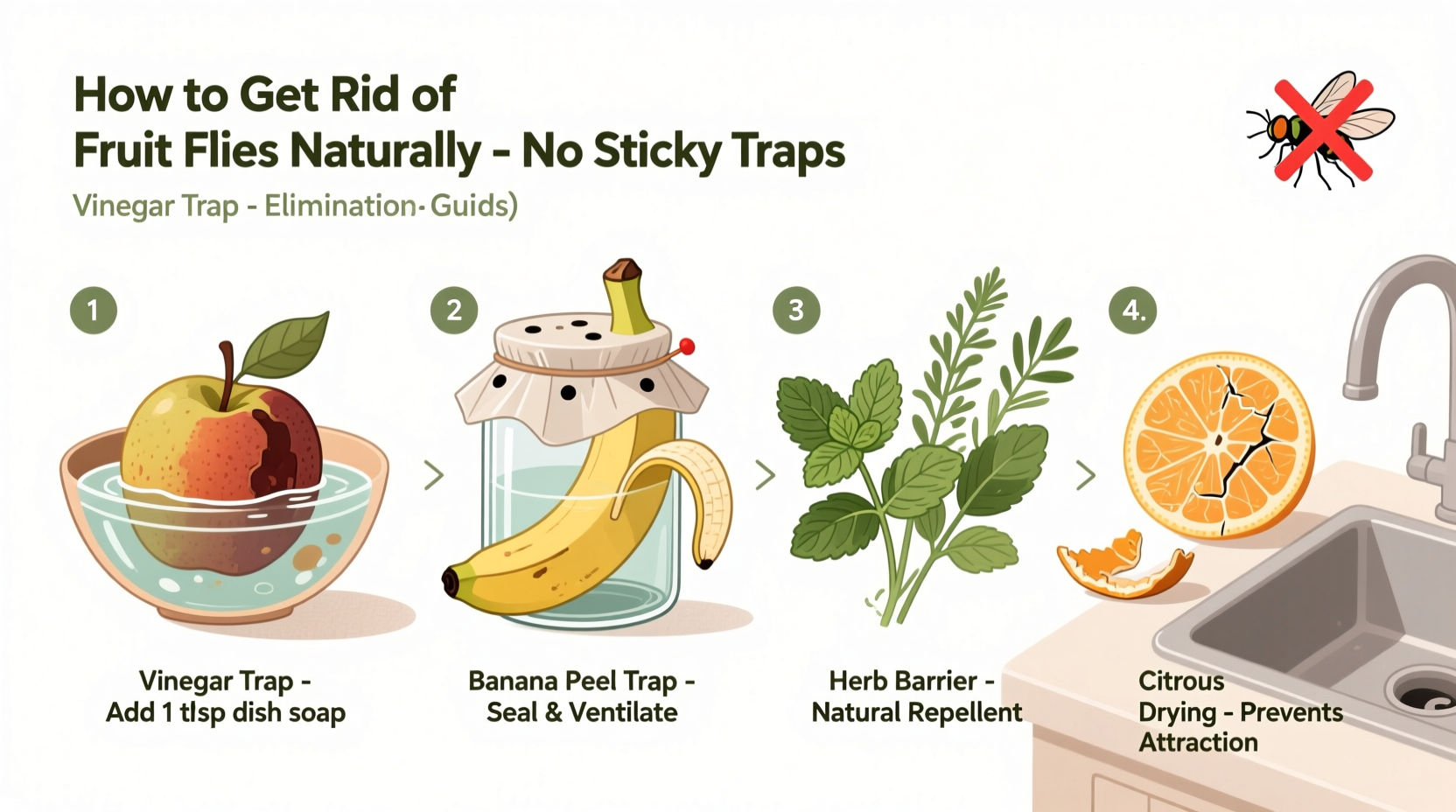
Vinegar and Dish Soap Trap
This is one of the most effective DIY solutions. Apple cider vinegar emits a fermentation scent that mimics overripe fruit, acting as a powerful lure. Adding a few drops of liquid dish soap breaks the surface tension, causing flies to sink and drown.
Tip: Place this trap near problem areas like sinks, trash cans, or fruit bowls—but not directly next to food prep surfaces.- Pour ½ cup of apple cider vinegar into a small bowl or jar.
- Add 5–8 drops of unscented dish soap.
- Cover with plastic wrap and secure with a rubber band.
- Poke several small holes in the top with a fork.
- Leave overnight; check and replace every 2–3 days.
The flies enter through the holes but cannot escape due to the slippery interior and reduced buoyancy caused by the soap.
Boiling Water and Baking Soda Drain Flush
Fruit flies often breed in drains where organic sludge accumulates. Garbage disposals, sink drains, and floor traps provide dark, moist environments perfect for larvae development.
To clean and disinfect:
- Pour ½ cup of baking soda down the drain.
- Follow with 1 cup of white vinegar.
- Let it fizz for 10–15 minutes.
- Flush with boiling water.
Repeat this weekly during an infestation. For deeper cleaning, consider using a plumbing snake or bottle brush to scrub the inner pipe walls where biofilm builds up.
Clean Cloth Fermentation Lid
If you're fermenting foods like kombucha, kefir, or sourdough, improperly sealed jars can attract fruit flies. Instead of plastic wrap or metal lids, use a clean cotton cloth secured with a rubber band. It allows airflow while blocking insects.
Tip: Wash cloths regularly in hot water to prevent microbial buildup that could attract pests.Essential Oil Repellent Spray
Fruit flies dislike strong aromatic compounds found in certain essential oils. Peppermint, eucalyptus, lemongrass, and tea tree oil have been shown to repel flying insects.
Create a deterrent spray:
- Mix 10 drops of peppermint essential oil with 1 cup of water in a spray bottle.
- Add 1 teaspoon of rubbing alcohol to help disperse the oil.
- Shake well before each use.
- Spray along windowsills, countertops, and near entry points.
Reapply daily or after wiping surfaces. Avoid spraying directly on food or porous stone countertops unless tested in an inconspicuous area first.
Prevention Through Smart Habits
Eliminating current fruit flies is only half the battle. Preventing reinfestation requires consistent habits that remove attractants and block access.
Proper Food Storage
Store ripe fruits like bananas, tomatoes, and stone fruits in the refrigerator once they reach peak ripeness. If left on the counter, consume within 1–2 days. Transfer opened canned fruit to sealed containers.
| Do | Don't |
|---|---|
| Refrigerate overripe produce immediately | Leave cut fruit out overnight |
| Use airtight containers for leftovers | Store produce in unventilated plastic bags |
| Compost daily and keep bin sealed | Keep compost indoors for more than 24 hours |
| Clean recycling bottles before storage | Stack dirty bottles in corners |
Dish and Surface Hygiene
Fly eggs thrive in moisture and organic film. Wipe counters after meals, especially near sinks and stoves. Rinse dishes promptly or run the dishwasher daily. Avoid leaving sponges or rags soaking in water overnight—these become breeding sites.
Garbage Management
Take out kitchen trash every evening, especially during warm months. Use bins with tight-fitting lids and line them with odor-blocking bags. Clean the inside of the bin monthly with a vinegar-water solution (1:1 ratio).
Step-by-Step 7-Day Action Plan
For best results, follow this structured approach to break the fruit fly life cycle:
- Day 1: Remove all visible attractants—dispose of overripe fruit, clean spills, and empty indoor compost.
- Day 2: Deep-clean drains using baking soda and vinegar flush. Scrub under rims and around stoppers.
- Day 3: Set up 2–3 vinegar-soap traps in high-traffic zones. Label them to avoid accidental disturbance.
- Day 4: Inspect houseplants. Remove any rotting leaves or overly wet soil, which can harbor larvae.
- Day 5: Spray essential oil repellent around windows, doors, and countertops.
- Day 6: Audit storage areas. Move fruit to fridge, seal pantry items in glass jars.
- Day 7: Evaluate progress. Replace traps, repeat drain treatment if needed, and reinforce hygiene routines.
By day 7, you should see a significant reduction in adult activity. Continue preventive measures beyond this period to avoid recurrence.
Real-World Example: Kitchen Turnaround in Austin, TX
When Sarah M., a home baker in Austin, noticed fruit flies appearing every summer, she initially relied on store-bought sticky traps. They caught some adults but didn’t stop new ones from emerging. After two weeks of frustration, she implemented a natural strategy.
She started by discarding a forgotten peach at the back of her fruit bowl and cleaning her disposal with a baking soda-vinegar flush. She placed three vinegar-soap traps—one near the sink, one by the recycling bin, and one behind the coffee station. Within five days, fly sightings dropped from dozens to fewer than five per day. By day 10, none were seen.
Her lasting change? Refrigerating berries and citrus immediately and switching to daily trash removal. “I didn’t realize how much residue was building up in my drain,” she said. “Now I do a quick vinegar rinse twice a week. No flies since.”
Alternative Natural Traps and Tools
Beyond vinegar, other household items can be used creatively to capture or deter fruit flies.
Rotten Fruit Bait Jar
Place a small piece of overripe banana or apple in a glass jar. Roll a cone-shaped paper funnel and insert it into the mouth of the jar. Flies enter easily but struggle to find the narrow exit. Empty and replace every two days.
Wine or Beer Trap
Pour leftover red wine or flat beer into a shallow dish. Add dish soap. The ethanol and fermentation odors are highly attractive. This works particularly well in late summer when outdoor gatherings increase indoor beverage exposure.
Herb and Citrus Boil
Simmer lemon slices, cloves, and rosemary in a pot of water for 15–20 minutes. The steam releases aromatic compounds that temporarily repel flies and freshen the air. Repeat every few days during peak season.
Tip: Never pour grease or oil down the drain—it combines with food particles to form a thick, fly-friendly sludge.Frequently Asked Questions
How long does it take to get rid of fruit flies naturally?
With consistent effort, most infestations subside within 7–10 days. However, because eggs can hatch over time, continue monitoring for up to two weeks after the last sighting to ensure complete elimination.
Can fruit flies come from houseplants?
Yes. Overwatered soil, especially with decomposing plant matter, can host fruit fly larvae. Allow soil to dry between waterings and remove dead leaves promptly. Consider replacing the top inch of soil with fresh, sterile mix if infested.
Are fruit flies dangerous?
While not directly harmful, fruit flies can carry bacteria from waste or spoiled food and transfer them to surfaces or edible items. Their presence indicates poor sanitation or unresolved moisture issues, which may lead to mold or other pests if ignored.
Final Checklist for Lasting Results
Use this concise checklist to maintain a fruit fly-free kitchen:
- ✅ Store ripe fruit in the refrigerator
- ✅ Clean drains weekly with baking soda and vinegar
- ✅ Run the dishwasher daily or rinse dishes immediately
- ✅ Take out trash every evening, especially in warm weather
- ✅ Use vinegar-soap traps during active infestations
- ✅ Seal compost containers tightly and empty frequently
- ✅ Wipe counters and sweep floors after meals
- ✅ Avoid leaving wet sponges or cloths overnight
- ✅ Apply essential oil spray weekly as a preventative
- ✅ Inspect recycling bottles and cans before storing
Conclusion: Break the Cycle for Good
Getting rid of fruit flies naturally without sticky traps is entirely possible—and often more effective in the long run. Unlike passive adhesives, natural methods actively disrupt breeding cycles while improving overall kitchen hygiene. By combining targeted traps, drain maintenance, and proactive habits, you create an environment that deters fruit flies from returning.
💬 Ready to reclaim your kitchen? Start tonight by tossing overripe fruit, cleaning your sink drain, and setting up a simple vinegar trap. Share your success story or ask questions in the comments—your experience could help others win their own fly-free homes.








