A well-designed home bar is more than a statement piece—it’s a functional hub for hospitality, relaxation, and personal expression. But when pets live in the space, that same bar can become an unintentional hazard zone. Dogs may nose open cabinets for the scent of fruit-infused syrups; cats leap onto countertops drawn by the glint of glassware or the warmth of a recently used shaker; rabbits or small mammals might chew baseboard trim near low-mounted shelving. According to the ASPCA Animal Poison Control Center, alcohol ingestion remains among the top 10 toxin exposures reported in dogs annually—and even small amounts of ethanol (found in wine, beer, cocktails, and liqueurs) can cause dangerous drops in blood sugar, respiratory depression, and coma in pets under 20 pounds.
Designing a pet-safe home bar isn’t about sacrificing style or convenience. It’s about integrating behavioral science, veterinary safety standards, and thoughtful spatial planning from the outset. This article walks through evidence-based, field-tested approaches—grounded in real-world renovations, certified pet behaviorist input, and decades of home safety engineering—to help you build a bar that delights guests *and* keeps your animals physically safe, mentally untempted, and emotionally secure.
1. Prioritize Secure, Pet-Proof Storage Solutions
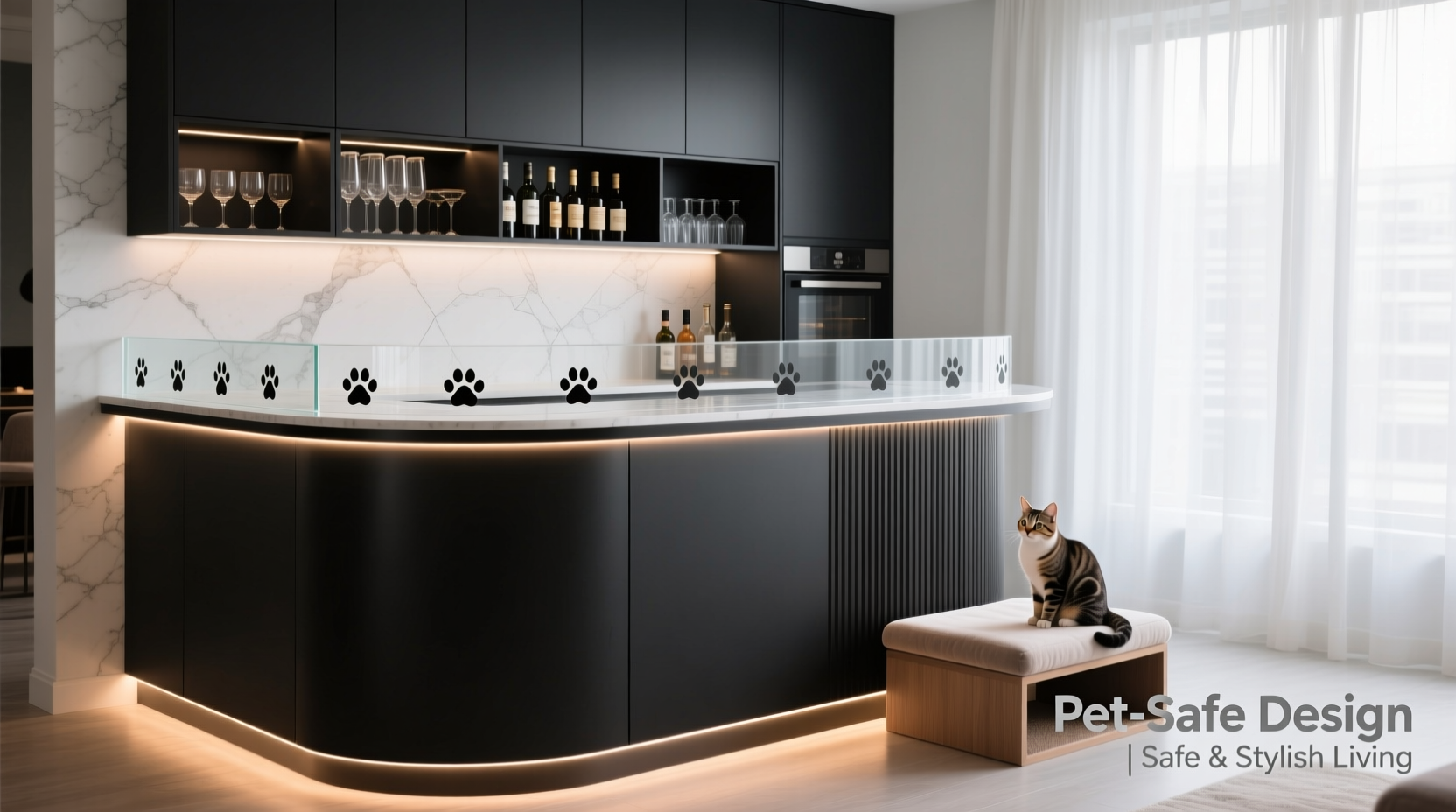
Open shelving and glass-front cabinets look elegant—but they invite exploration. Pets don’t understand “display only.” A curious Labrador can nudge a half-open cabinet door with its nose; a determined cat can hook a paw into a recessed handle. The safest approach combines physical barriers with strategic organization.
Start with hardware: replace standard knobs with magnetic child-safety latches or push-to-open mechanisms that require downward pressure—not lateral force—making them inaccessible to paws and noses. For cabinets housing high-risk items (alcohol, citrus peels, chocolate bitters, essential oil–infused garnishes), install dual-lock systems that require two independent actions to open—such as pressing *and* sliding.
Tip: Store all bottles upright—even those labeled “shake before serving.” Lying bottles increase leakage risk if jostled, and spilled ethanol evaporates rapidly, creating inhalation hazards for small pets nearby.For countertop zones, avoid leaving tools like cocktail shakers, muddlers, or paring knives within paw-reach. Use weighted, non-slip silicone mats under glassware to prevent accidental tipping during pet-led “investigations.” And never store perishable garnishes—like fresh mint, lime wedges, or maraschino cherries—in uncovered bowls. These emit volatile organic compounds that attract pets far more strongly than humans realize.
2. Choose Non-Toxic, Low-Risk Materials & Finishes
Bar surfaces endure spills, condensation, and frequent cleaning—so material selection directly impacts pet safety. Many popular finishes contain hidden risks: polyurethane sealants off-gas formaldehyde for weeks after application; some epoxy resins contain bisphenol-A (BPA) analogues linked to endocrine disruption in mammals; and lead-based paints still lurk beneath layers of vintage bar fronts.
Opt instead for food-grade, zero-VOC sealants on wood surfaces—such as AFM SafeChoice or ECOS WoodShield. For countertops, quartzite and solid surface acrylics (e.g., Corian) are ideal: non-porous, scratch-resistant, and free of antimicrobial additives like triclosan, which has been associated with thyroid dysfunction in rodent studies. Avoid copper or brass bars unless fully lacquered—unsealed copper can leach into damp spills, causing copper toxicity in dogs who lick residual moisture.
| Material | Pet-Safe? | Risk Notes |
|---|---|---|
| Stainless steel (304 grade) | ✅ Yes | Non-reactive, easy to sanitize, no off-gassing |
| Marble or limestone | ❌ Not recommended | Highly porous—absorbs alcohol, citrus oils, and vinegar; difficult to disinfect thoroughly |
| Recycled glass tile | ✅ Yes | Non-porous, inert, but ensure grout is mold-resistant and non-toxic (avoid epoxy grouts) |
| Vinyl plank flooring | ⚠️ Conditional | Choose phthalate-free options; avoid brands with heavy metal stabilizers (check Prop 65 labels) |
3. Design Layout for Behavioral Neutrality
Pets navigate space using scent, sound, and visual contrast—not human logic. A bar positioned near a window becomes a prime perch for cats watching birds; one adjacent to a dog’s favorite nap spot triggers territorial curiosity; and a narrow pass-through between kitchen and living room turns into a high-traffic corridor where tails knock over ice buckets.
Apply “behavioral zoning” principles: place the bar at least six feet from primary pet resting areas, windows with bird activity, and litter boxes or feeding stations. Maintain a clear 36-inch-wide path around the bar perimeter—this prevents accidental cornering of pets during social gatherings and reduces stress-related pacing.
Elevate danger zones out of reach: mount bottle racks at 58–62 inches above floor level (above typical canine vertical jump height). Install under-cabinet LED lighting instead of overhead pendant lights—bright, focused light draws less attention than warm, diffused glow, which mimics natural sun patches that pets instinctively seek.
“Pets aren’t ‘misbehaving’ when they interact with bars—they’re responding to environmental cues we’ve accidentally amplified. Remove the trigger, not the animal.” — Dr. Lena Torres, DVM, Certified Applied Animal Behaviorist and founder of HomeSafe Vet Consulting
4. Step-by-Step: Retrofitting an Existing Bar for Pet Safety
You don’t need to demolish your current setup. With targeted upgrades, most home bars can be made significantly safer in under a weekend. Follow this sequence—designed to minimize disruption while maximizing protection:
- Assess & Audit (Day 1, 30 minutes): Walk through your bar at pet-eye level. Note every item within 18 inches of the floor, every cabinet with accessible handles, and any surface where liquid could pool or drip.
- Secure & Seal (Day 1, 2 hours): Install magnetic cabinet locks on all lower cabinets. Apply non-slip tape to the underside of shelves holding glassware. Seal exposed wood edges with food-grade mineral oil (not walnut or almond oil—both toxic if licked repeatedly).
- Relocate & Reorganize (Day 2, 1 hour): Move all alcohol, syrups, bitters, and garnishes to upper cabinets or wall-mounted lockboxes. Store citrus, grapes, raisins, onions, garlic, and xylitol-containing products (e.g., sugar-free gum) in separate, labeled containers—never in reused liquor bottles.
- Clean & Deodorize (Day 2, 45 minutes): Wipe all surfaces with diluted white vinegar (1:3 ratio) to neutralize scent residues. Avoid citrus- or vanilla-scented cleaners—they mimic food aromas and increase sniffing behavior.
- Test & Observe (Ongoing): For three days, watch how your pet interacts with the updated space. Note lingering interest points—these reveal subtle triggers needing further mitigation (e.g., a reflective backsplash attracting paw swipes).
5. Real-World Example: The Henderson Family’s Dual-Purpose Bar Renovation
The Hendersons—a family with two rescue terriers and a senior cat—installed a sleek, mid-century-style bar in their open-plan living area. Within weeks, their 3-year-old Jack Russell began compulsively licking the base of the bar’s walnut veneer panel. Veterinary testing revealed elevated liver enzymes; further investigation found the panel had been finished with a solvent-based polyurethane containing glycol ether, which volatilized at room temperature and settled as microscopic dust on the floor. Their cat, meanwhile, knocked over a bottle of Campari twice—spilling the bright red liquid onto the rug, where it stained and attracted repeated licking due to its bitter-sweet aroma.
They retrofitted using the step-by-step method above: replaced the finish with water-based, zero-VOC sealant; installed push-latch locks on all lower cabinets; moved Campari and other bitter liqueurs to a wall-mounted, key-locked cabinet 64 inches high; and added a 4-inch-tall stainless steel toe-kick barrier along the base to prevent direct contact with the veneer. Within ten days, licking ceased. Three months later, their vet confirmed normalized liver values. “We didn’t lose style—we gained peace of mind,” says Sarah Henderson. “And our terriers now treat the bar like background furniture, not a puzzle box.”
6. Essential Pet-Safe Bar Checklist
- ✅ All alcohol stored in upper cabinets or lockboxes (minimum height: 58 inches)
- ✅ No open containers of citrus, grapes, onions, garlic, chocolate, or xylitol-containing items visible or accessible
- ✅ Cabinet hardware upgraded to magnetic or dual-action latches
- ✅ Countertops sealed with food-grade, zero-VOC finish
- ✅ Ice bucket, shakers, and sharp tools stored in closed, latched compartments when not in use
- ✅ Floor around bar kept dry and free of standing liquid or condensation
- ✅ No electrical cords dangling within paw-reach (use cord covers or wall-mounted raceways)
- ✅ Trash can secured with lid-lock or placed outside bar zone entirely
7. FAQ: Addressing Common Concerns
Can I still use decorative plants behind my bar?
Yes—but choose carefully. Avoid lilies (toxic to cats), sago palms (fatal to dogs), and English ivy. Opt instead for spider plants, Boston ferns, or parlor palms—all non-toxic and humidity-tolerant. Keep pots elevated on wall-mounted shelves or inside enclosed display cases to prevent digging or chewing.
What should I do if my pet knocks over a full bottle of alcohol?
Act immediately: ventilate the area, wipe up all liquid with absorbent towels (do not use steam cleaners—heat accelerates ethanol vaporization), then wash the surface with diluted vinegar. Monitor your pet closely for 24 hours for lethargy, vomiting, disorientation, or slow breathing—and call your veterinarian or ASPCA Animal Poison Control (888-426-4435) even if symptoms seem mild. Never induce vomiting without professional guidance.
Is it safe to serve cocktails with pet-safe garnishes like cucumber or apple?
Only if served in covered vessels or consumed immediately. Even “safe” foods become hazardous when left unattended: fermented apple slices develop trace alcohol; cucumber skins harbor bacteria that multiply rapidly in warm rooms; and small pieces pose choking hazards for cats and small dogs. Always discard garnishes after service—don’t repurpose them as pet treats.
Conclusion
A pet-safe home bar reflects a deeper commitment—not just to aesthetics or entertainment, but to cohabitation done thoughtfully and respectfully. It acknowledges that your animals are full members of the household, with instincts, sensory experiences, and vulnerabilities that deserve design consideration equal to human comfort and convenience. When you choose magnetic latches over ornamental pulls, select mineral-oil-sealed wood over glossy varnish, and position your shaker station away from your cat’s sunbeam, you’re not compromising your vision—you’re expanding it to include empathy, foresight, and quiet responsibility.
This kind of design doesn’t happen by accident. It emerges from observation, research, and willingness to adapt. Your bar can be stunning *and* serene, sociable *and* secure, expressive *and* ethical. Start with one upgrade this week—swap out a single cabinet latch, reposition a bottle rack, or switch your cleaner to vinegar. Small changes compound into meaningful safety. And when your terrier walks past the bar without pausing, or your cat ignores the gleam of glass for the comfort of her own perch, you’ll know the balance is right.
💬 Your experience matters. Have you redesigned a pet-safe bar? What worked—or what surprised you? Share your story in the comments to help others navigate their own thoughtful renovations.








