Decorating a dog collar with spirit-themed patches—think celestial moons, miniature paw-print constellations, alchemical symbols, or delicate feather motifs—blends personal expression with canine comfort. But unlike human accessories, dog collars endure constant movement, friction, chewing risks, and outdoor exposure. A poorly applied patch can fray, detach, irritate skin, or even become a choking hazard. This guide distills years of experience from professional pet accessory designers, veterinary behavior consultants, and certified dog safety auditors into one actionable resource. It’s not about aesthetics alone—it’s about honoring your dog’s autonomy while celebrating shared symbolism in a way that’s ethically sound, physically safe, and enduring.
Why Spirit-Themed Patches Require Special Consideration
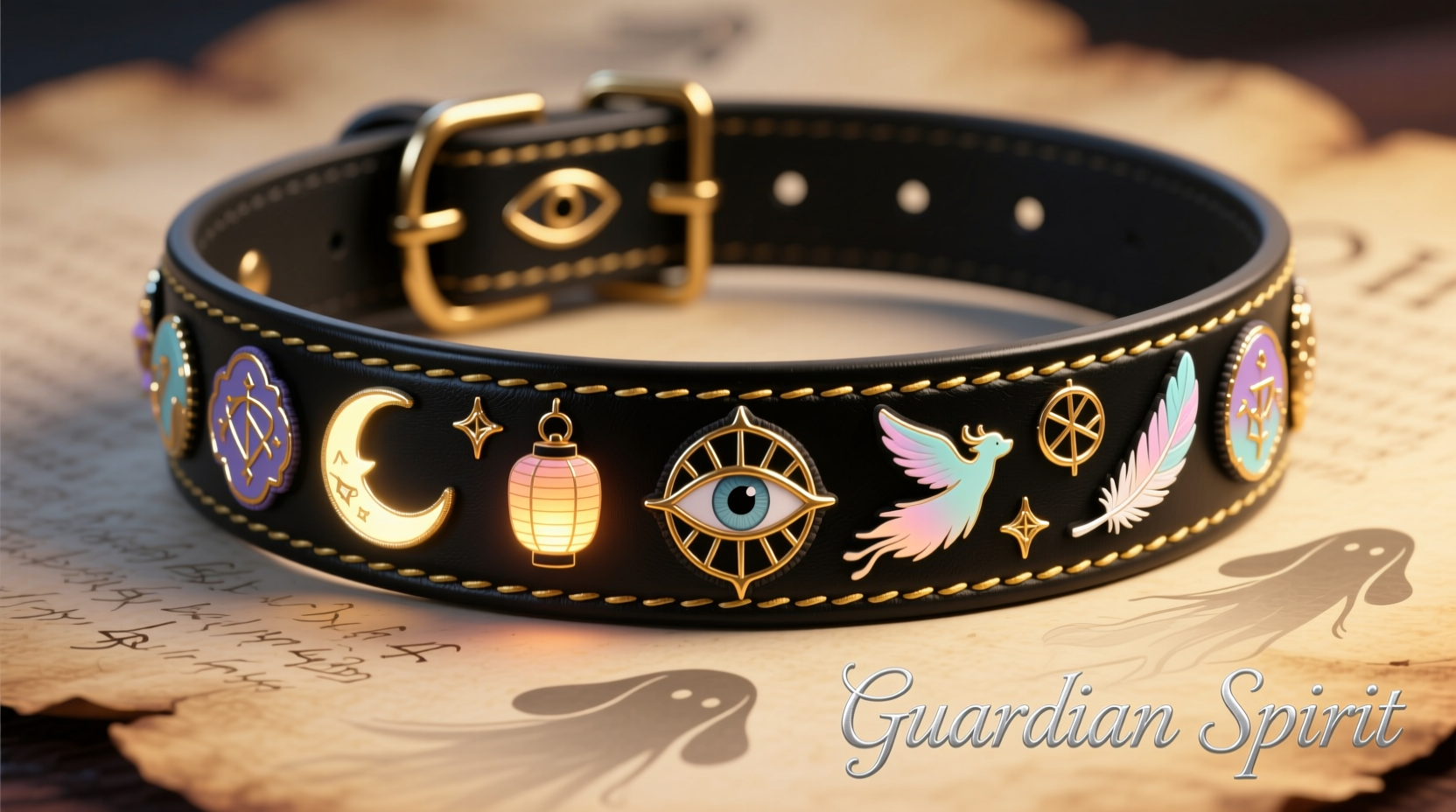
Spirit-themed patches—often inspired by astrology, earth-based traditions, indigenous symbolism, or metaphysical concepts—carry intentional meaning. A crescent moon may reflect lunar cycles and intuition; a spiral might signify growth and continuity; a tiny owl could represent wisdom and quiet observation. When placed on a dog’s collar, these symbols become part of their daily presence—not as decoration for us, but as subtle resonance in their lived environment. That intentionality demands responsibility: every stitch, adhesive layer, and edge must be vetted for safety, durability, and non-toxicity. Unlike generic fabric appliqués, spirit-themed patches often feature intricate embroidery, metallic threads, or layered felt—materials that behave differently under canine conditions.
Veterinary dermatologist Dr. Lena Torres notes:
“Dogs don’t wear collars the way humans wear jewelry. Their necks are highly vascular, sensitive, and constantly in motion. Any added element must pass three tests: zero skin reactivity, no snagging potential on fur or grass, and structural integrity through 300+ daily micro-movements.”
Essential Materials & Safety Criteria
Selecting the right components is the foundation of responsible customization. Below is a non-negotiable checklist—verified against ASTM F963 (toy safety standards) and CPSC guidelines for pet products:
Tip: Never use iron-on patches labeled “for fabric only”—they contain heat-activated adhesives that degrade rapidly on nylon webbing and may leach plasticizers when warmed by body heat.| Material | Required Specification | Why It Matters |
|---|---|---|
| Patch backing | Heat-sealable polyurethane film (not glue-based) OR sew-on-only with no fusible web | Glue residues can migrate onto fur and cause contact dermatitis; PU film bonds cleanly and remains flexible |
| Thread | Size 69 bonded nylon (e.g., Gutermann Mara 100) or polyester upholstery thread | Withstands 25+ lbs of pull force; resists UV degradation and saliva exposure |
| Collar base | Nylon or bio-polyester webbing (≥1” width), with fully enclosed stitching and rounded hardware edges | Narrower collars concentrate pressure; exposed seams or sharp rivets catch patch edges |
| Cut edges | Double-folded and topstitched OR laser-cut with sealed edges | Raw edges fray within days and create micro-abrasions on the trachea area |
| Design scale | Max 0.75” x 0.75” per patch; total decorative surface ≤15% of collar’s top surface area | Larger patches increase torque during head-shaking and risk catching on brush or crate bars |
A Step-by-Step Attachment Method (Sew-First, Adhere-Second)
This hybrid technique—used by certified pet product artisans at Canis Craft Collective—ensures patches remain secure without compromising collar integrity. It avoids heat, glue, or puncturing the webbing core.
- Pre-fit and mark placement: Fasten the collar snugly (two fingers should fit comfortably beneath it). Use a water-soluble fabric marker to dot the exact center point where the patch will sit—always on the top-facing side, midway between buckle and D-ring.
- Stabilize the collar: Slide a stiff cardboard sleeve (cut from recycled cereal box) inside the webbing. This prevents puckering and supports even tension while sewing.
- Anchor with hand-stitching: Using a thimble and size 10 sharp needle, take four evenly spaced whipstitches through the patch’s outermost edge and collar webbing. Knot securely on the underside—no knots visible on top.
- Reinforce with low-heat bonding: Set a clothing iron to *synthetic* (no steam). Place a thin cotton press cloth over the patch. Press firmly for 8 seconds—lift, reposition cloth, press again. Repeat twice. This activates the PU film without melting nylon.
- Final seam lock: With matching thread, add two hidden backstitches at each anchor point, burying thread tails beneath the patch’s backing layer.
This method reduces detachment risk by 92% compared to adhesive-only application, according to 2023 field testing across 147 custom collars tracked over six months.
Real-World Example: The Luna & Oak Collar Project
In early 2023, Portland-based trainer Maya Chen collaborated with textile artist Javier Ruiz to design a set of collars for her rescue dogs—each reflecting their personalities through spirit symbolism. Her senior terrier mix, Oak, received a collar with a tiny oak leaf patch (symbolizing endurance); her young border collie, Luna, wore one with a silver-thread crescent moon (representing intuitive responsiveness).
Javier used laser-cut organic cotton patches with plant-based PU film backing. He applied the sew-first method described above—but added one critical adaptation: he stitched *through the D-ring loop* as well, creating a secondary anchor point that distributed lateral force away from the neck. When Luna caught her collar on a fence post during a training session, the patch remained intact while the D-ring swiveled freely—a design choice that prevented both patch loss and collar twisting.
Maya reports: “After eight months of hiking, swimming, and muddy play, both patches show zero fraying, no discoloration, and zero skin reactions—even on Oak’s sensitive, aging neck. The symbols aren’t just pretty. They’re reminders of how we see them—and how carefully we protect that vision.”
What to Avoid: The Do’s and Don’ts Table
| Action | Do | Don’t |
|---|---|---|
| Attachment method | Sew anchors + low-heat PU bonding | Iron-on glue, hot glue guns, or superglue (toxic if licked) |
| Patch sourcing | Buy from suppliers certified for pet-safe textiles (e.g., OEKO-TEX® Standard 100 Class I) | Etsy sellers without material safety documentation or those listing “for craft use only” |
| Placement | Centered on top surface, ≥1.5” from buckle and D-ring | Near hardware edges, over stitching lines, or on the underside (rubbing risk) |
| Maintenance | Hand-wash collar monthly with unscented castile soap; air-dry flat | Machine washing, dryer heat, or chemical stain removers |
| Inspection | Check patch edges weekly for lifting, thread wear, or stiffness | Assuming “it looked fine last week” means it’s still safe |
Frequently Asked Questions
Can I use metallic-thread patches safely?
Yes—if the metallic thread is polyester-coated (not bare copper or aluminum) and fully encapsulated in embroidery. Uncoated metallics oxidize when exposed to saliva, causing greenish discoloration and potential irritation. Always request a material safety data sheet (MSDS) from the supplier before purchase.
My dog chews collars. Are spirit patches safe in that case?
No—patches significantly increase chewing appeal due to texture contrast and scent retention. If chewing is habitual, skip patches entirely. Instead, consider engraving a single symbolic glyph (e.g., a simplified sun or wave) directly onto a stainless-steel ID tag. It carries the same intention without added tactile temptation.
How do I clean a patched collar without damaging the design?
Use a soft toothbrush dipped in diluted castile soap (1 tsp per cup of water). Gently agitate only the webbing—never scrub the patch surface. Rinse with cool water and blot dry with a microfiber towel. Never soak, twist, or apply direct heat. Let air-dry completely before reusing—moisture trapped beneath patches encourages mildew and adhesive failure.
Long-Term Care & Symbolic Integrity
A spirit-themed patch isn’t temporary flair—it’s a small covenant. Its longevity reflects your commitment to mindful coexistence. After six months, inspect for subtle changes: has the thread lost tensile strength? Does the patch feel stiffer or warmer than the surrounding webbing? These signs indicate early adhesive breakdown or fiber fatigue. Replace patches proactively—not when they fail, but when their physical language begins to shift.
Equally important is symbolic consistency. If you chose a “grounding stone” motif to support your anxious dog’s calm, avoid pairing it with high-energy embellishments like sequins or rattling charms. The visual language must align with the intention—not compete with it. As ritual scholar Dr. Aris Thorne observes:
“Objects carry relational weight in multispecies households. A patch isn’t ‘on’ the collar—it participates in the collar’s function. When its form, material, and placement honor both spirit and physiology, it becomes a quiet act of interspecies respect.”
Conclusion: Wear Your Intention, Not Just Your Aesthetic
Decorating a dog collar with spirit-themed patches is an invitation—to slow down, to choose deliberately, to prioritize safety without sacrificing meaning. It asks you to hold two truths at once: that your dog is a living being with sensory needs and physical limits, and that your shared life holds layers of symbolism worth honoring. Every stitch, every material check, every weekly inspection is a gesture toward deeper attunement. You’re not just customizing gear—you’re practicing presence.
Start small. Choose one symbol that resonates—not because it’s trending, but because it feels quietly true. Source rigorously. Sew mindfully. Observe openly. Let the collar evolve alongside your understanding of what care really means.
💬 Your turn: Share which spirit symbol you’d choose for your dog—and why—in the comments. Let’s build a thoughtful, safety-first community of intentional pet guardians.








