
As urban hospitality evolves, the line between human-centric service and inclusive community space continues to blur—and nowhere is that more evident than in the rise of dog-friendly patio bars. These venues aren’t just about allowing leashed pets; they’re redefining hospitality by welcoming the whole family—including four-legged patrons. Yet many operators mistakenly assume “dog-friendly” means adding a water bowl and calling it a day. True integration demands intentionality: thoughtful beverage design, ingredient safety, staff training, and regulatory awareness. Curating a pet-themed cocktail menu isn’t about gimmicks—it’s about building trust, deepening guest loyalty, and operating responsibly in a space where human indulgence and canine well-being coexist.
This guide distills field-tested practices from certified canine nutritionists, licensed mixologists, and owners of award-winning dog-inclusive venues like The Bark & Bitters (Portland) and Pup & Pour (Austin). It covers everything from foundational safety protocols to creative flavor pairings, legal compliance, and operational workflows—all grounded in veterinary science and real-world execution.
Foundational Safety: What Dogs Can (and Cannot) Consume
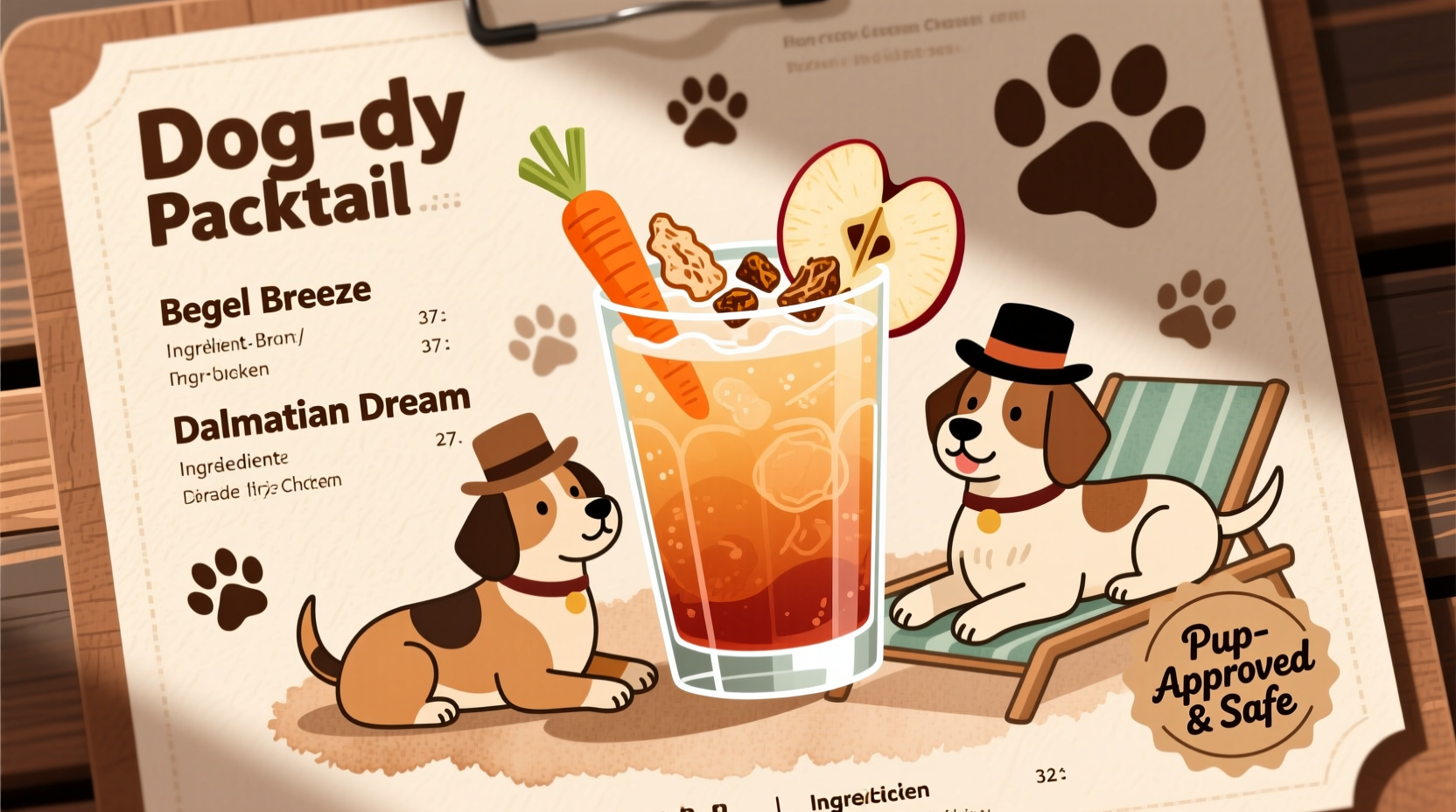
Before any garnish is skewered or syrup infused, every ingredient must pass a dual-screening process: first, veterinary toxicology; second, palatability and digestibility testing. The American Kennel Club and ASPCA Animal Poison Control Center consistently flag common bar staples as hazardous—even in trace amounts. Ethanol, xylitol, grapes, raisins, onions, garlic, hops, macadamia nuts, caffeine, and artificial sweeteners are non-negotiable exclusions.
Crucially, “non-alcoholic” does not equal “safe.” Many house-made syrups contain citric acid at levels that irritate canine gastric linings. Certain herbal infusions—like pennyroyal, wormwood, or excessive mint—can trigger vomiting or neurological responses in sensitive dogs. Conversely, vet-approved functional ingredients exist: low-sodium bone broth, unsweetened coconut water (for electrolyte balance), pureed pumpkin (fiber support), and freeze-dried blueberries (antioxidants, low-calorie).
Tip: Always source ingredients labeled “human-grade” and “free from preservatives, fillers, and artificial flavors”—not “pet-formulated” alone. Human-grade ensures stricter manufacturing oversight and batch traceability.Step-by-Step: Building a Pup-Safe Cocktail Menu
A successful pet-themed menu balances human appeal with canine wellness. It’s not two separate offerings—it’s one cohesive experience where both species feel considered. Follow this sequence to build responsibly:
- Define your canine guest profile: Survey local clientele: Are most guests senior dogs? Puppies? Brachycephalic breeds? This informs texture (soft vs. crunchy garnishes), sodium limits (<100mg per serving for cardiac-sensitive dogs), and portion size (5–30 mL per drink, based on weight).
- Select base liquids: Use filtered water, unsalted bone broth, or chilled, unsweetened coconut water as the foundation—not juice blends (often high in sugar or hidden citrus oils).
- Develop functional “pup-perks”: Infuse bases with dog-safe botanicals: chamomile (calming), dandelion root (liver support), or turmeric (anti-inflammatory, always paired with black pepper for bioavailability). Steep no longer than 8 minutes to avoid bitterness.
- Design dual-purpose garnishes: Every element must serve both species. A rosemary sprig adds aroma to a gin fizz *and* offers mild digestive aid for dogs. Sliced cucumber provides crunch for humans and hydration + vitamin K for pups.
- Test, document, and iterate: Partner with a local veterinary nutritionist to conduct small-batch taste trials (with owner consent and observation). Record reactions: lip licking, tail wagging, refusal, or gastrointestinal signs over 24 hours. Refine before scaling.
Pup-Approved Garnishes: Function, Flavor & Form
Garnishes are the most visible—and most misunderstood—element of pet-themed menus. They’re not decorative afterthoughts. In canine terms, they’re functional bites: nutrient-dense, texturally appropriate, and dosed precisely. Below is a vet-validated reference table of safe, scalable options.
| Garnish | Human Use Case | Canine Benefit | Max Serving Size (per drink) | Prep Notes |
|---|---|---|---|---|
| Freeze-dried blueberries | Stylish rim accent or float | Antioxidants, low-glycemic, supports cognitive health | 2–3 berries (≈5g) | Must be unsweetened, no added sulfur dioxide |
| Sliced seedless cucumber | Cooling rim or skewered garnish | Hydration, vitamin K, low-calorie crunch | 1–2 thin rounds (≈8g) | Peel if serving to senior or sensitive-stomach dogs |
| Chamomile flower buds (dried) | Elegant float in floral cocktails | Natural calming agent, anti-inflammatory | 1–2 whole buds (≈0.2g) | Use food-grade only; avoid if dog is pregnant or on sedatives |
| Unsalted, air-popped popcorn | Textural rim or playful topping | Fiber, whole-grain energy, low-fat snack | 3–5 kernels (≈2g) | Never buttered, oiled, or salted; remove unpopped hulls |
| Carrot ribbons (raw, julienned) | Vibrant color contrast in savory drinks | Beta-carotene, dental abrasion, low-calorie | 1 ribbon (≈3g) | Blanch 10 seconds for puppies or seniors; serve raw for adults |
Note: All garnishes must be pre-portioned in sealed, refrigerated containers and used within 24 hours of prep. Cross-contamination is the leading cause of adverse reactions—never use the same tongs for human and pup items.
Real-World Implementation: The Case of “The Tail Wag Tavern”
When The Tail Wag Tavern opened in Asheville in 2022, its founders aimed to become the Southeast’s first fully integrated dog-human bar—not just “dog-welcoming,” but dog-*designed*. Their initial menu featured “Pup-tinis” with honey-sweetened yogurt swirls and lavender-infused ice cubes. Within three weeks, six dogs experienced mild GI upset. A veterinary nutritionist audit revealed two critical oversights: local wildflower honey contained trace grayanotoxin (toxic to canines), and lavender oil—used in the ice—was improperly diluted, exceeding safe thresholds.
The team paused service for 10 days. They reformulated using pasteurized, single-origin clover honey (vet-verified toxin-free) and swapped lavender oil for food-grade lavender *buds*, steeped at 160°F for exactly 4 minutes. They introduced a “Paw Palette” tasting card—small, QR-coded cards placed beside each drink listing human flavor notes *and* pup benefits (“Cucumber + Mint: Cooling for humans, hydrating for pups”). Staff underwent 8 hours of canine behavior training, learning to recognize stress signals (lip licking, whale eye, stiff tail) before offering any pup item.
Within six months, 72% of their weekend guests arrived with dogs—and 41% returned specifically for the “Pup & Patron Pairings” tasting flight. More importantly, zero adverse incidents occurred post-reformulation. Their success wasn’t built on novelty—it was built on humility, science, and operational discipline.
Legal & Operational Guardrails
Operating a pet-inclusive venue carries tangible liability. While no federal law prohibits serving non-alcoholic items to dogs, state health codes vary widely. In California, for example, Assembly Bill 467 (2023) explicitly permits “complementary non-food items for companion animals” on food-service premises—provided they’re prepared in a separate, designated area with dedicated equipment. Texas requires written disclosure to patrons stating items are “intended for canine consumption only and not evaluated by the FDA.”
Insurance is non-negotiable. Standard liquor liability policies exclude coverage for pet-related incidents. Operators must secure supplemental “animal hospitality endorsement” riders—available through carriers like Nationwide Agribusiness and USLI. Documentation matters: maintain logs of all pup-item prep (time, temp, staff initials), supplier certifications, and veterinary consultation records.
“Menu innovation is exciting—but never at the expense of biological reality. I’ve treated dozens of cases linked to ‘fun’ pet drinks: xylitol-laced ‘puppuccinos,’ hop-infused ‘bark-beers,’ even ‘gin-and-tonic’ mocktails with quinine-heavy tonic. If it’s not vet-reviewed and batch-tested, it doesn’t belong on your menu.” — Dr. Lena Cho, DACVN, Board-Certified Veterinary Nutritionist, UC Davis School of Veterinary Medicine
Do’s and Don’ts Checklist
- DO label every pup-themed drink with clear, bilingual (English/Spanish) signage: “Formulated for canine wellness. Not intended for human consumption.”
- DO train staff to ask *before* offering: “Is your dog on any medications or have known sensitivities?”
- DO store pup items at ≤40°F in a locked, dedicated fridge—physically separated from human prep zones.
- DON’T use any ingredient requiring FDA GRAS (Generally Recognized As Safe) status *for humans only*. GRAS ≠ canine-safe.
- DON’T offer “pup cups” with straws—choking hazard. Serve in shallow, wide-rimmed ceramic bowls only.
- DON’T promote alcohol-adjacent branding (“Tipsy Terrier,” “Drunken Dachshund”)—it undermines credibility and confuses regulatory inspectors.
FAQ
Can I use CBD in my pup-themed drinks?
No—unless you operate in a state with explicit, codified allowances (e.g., Vermont’s Act 162) AND partner with a veterinarian to formulate batch-specific dosing. Federally, CBD derived from hemp remains in legal limbo under the FD&C Act, and the AVMA explicitly advises against routine CBD use in food-service settings due to inconsistent labeling, variable bioavailability, and lack of canine dosing standards.
How do I handle guests who want to share their cocktail with their dog?
Politely decline—and explain why. Say: “We’d love to treat your pup with something made just for them: our ‘Bark & Basil’ cooler has cucumber, chamomile, and coconut water—zero alcohol, zero toxins, and formulated with your dog’s digestion in mind.” Offer it complimentary on first visit to demonstrate goodwill and education.
What’s the shelf life of house-made pup syrups?
72 hours maximum, refrigerated at ≤40°F. Acidic bases (e.g., diluted apple cider vinegar infusions) last only 48 hours. Always discard unused portions at shift end—no “carryover.” Never freeze; freezing alters viscosity and may compromise botanical efficacy.
Conclusion
Curating a pet-themed cocktail menu is less about mixing drinks and more about stewarding relationships—with dogs, their people, regulators, and the broader community. It asks operators to move beyond performative inclusivity and into thoughtful, evidence-based hospitality. When done right, it transforms a patio from a place people *bring* their dogs into a place dogs *belong*—where every garnish tells a story of care, every sip reflects responsibility, and every return visit affirms trust.
This isn’t a trend. It’s the quiet evolution of what “hospitality” means in a world that increasingly recognizes companionship as multispecies. Start small: audit one garnish, consult one veterinarian, train one shift. Document what works. Share your learnings—not just successes, but near-misses and recalibrations. The future of inclusive bars won’t be built by perfect menus, but by humble, iterative, deeply human (and deeply canine) commitment.
💬 Have you launched a pup-inclusive menu—or faced a challenge refining one? Share your experience, lessons learned, or questions in the comments. Let’s build better hospitality—together.








