Pet water fountains are a popular choice among pet owners for encouraging hydration in cats and dogs. By providing a continuous flow of fresh, oxygenated water, these devices mimic the natural appeal of running streams. However, without regular maintenance, they can quickly become breeding grounds for bacteria, algae, and biofilm—commonly known as \"slime.\" This slimy buildup not only looks unappealing but can pose health risks to pets if ingested over time. Cleaning your pet’s water fountain properly and consistently is essential to maintaining hygiene and ensuring your companion drinks safely. This guide walks through the science behind slime formation, best practices for cleaning, and actionable steps to keep your fountain in optimal condition.
Why Slimy Buildup Forms in Pet Water Fountains
Slimy residue in pet water fountains is typically a combination of biofilm, algae, and mineral deposits. Biofilm forms when bacteria adhere to moist surfaces and secrete a sticky matrix that protects them from environmental threats. This film often appears as a slippery coating on pump parts, basins, and tubing. Algae develop when light reaches standing water, especially if the fountain is near a window. Hard water contributes mineral scale, which provides additional surface area for microbes to cling to.
The constant movement of water doesn’t eliminate these issues—it can even accelerate microbial dispersion if the system isn’t cleaned regularly. Pets’ mouths introduce food particles, saliva, and bacteria into the water each time they drink, further feeding microbial growth. Without intervention, this creates a cycle where contaminants multiply faster than they’re flushed out.
“Biofilm in pet water systems is more common than most owners realize. It’s not just dirt—it’s a living microbial community that requires mechanical and chemical disruption to remove.” — Dr. Laura Simmons, Veterinary Preventive Care Specialist
A Step-by-Step Guide to Deep Cleaning Your Pet Water Fountain
Cleaning your pet’s fountain should go beyond simply refilling it. A thorough cleaning routine removes invisible residues and prevents long-term damage to internal components. Follow this detailed process weekly to maintain cleanliness and functionality.
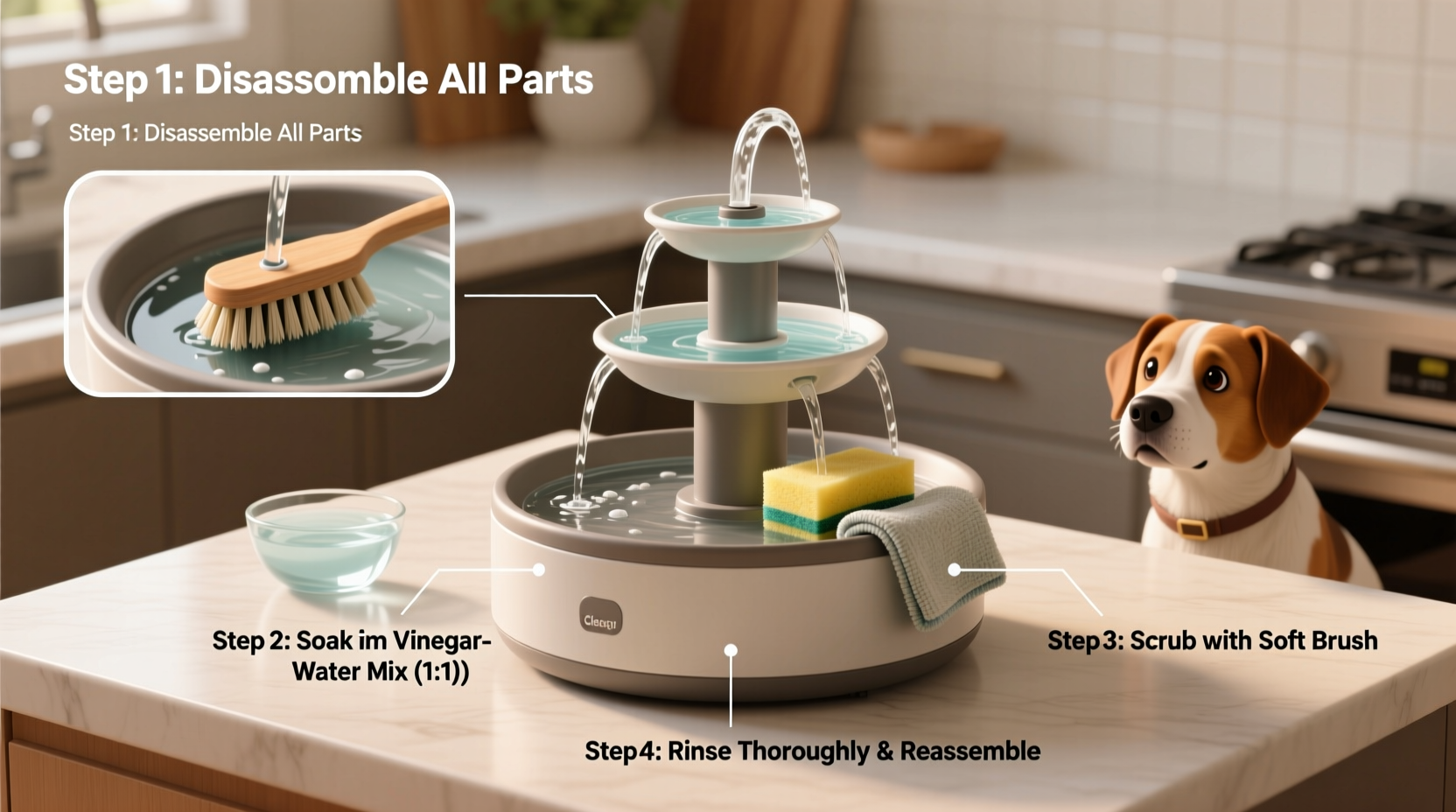
- Unplug and disassemble the fountain. Always disconnect the unit from power before cleaning. Remove the pump, filter, fountain top, and any detachable trays or reservoirs. Lay out all pieces on a clean towel for access.
- Rinse all parts with warm water. Use a soft brush or sponge to remove loose debris. Avoid abrasive pads that could scratch plastic surfaces, which can harbor bacteria in micro-scratches.
- Soak components in a cleaning solution. Prepare a mixture of one part white vinegar to three parts water. Submerge all non-electrical parts—including the pump housing—for 15–30 minutes. Vinegar dissolves mineral deposits and disrupts biofilm without harsh chemicals.
- Scrub hard-to-reach areas. Use a small bottle brush or toothbrush to clean tubing, crevices, and impeller chambers. Pay special attention to corners where gunk accumulates. For persistent slime, sprinkle baking soda on the brush for gentle abrasion.
- Clean the filter according to manufacturer instructions. Most filters are either replaceable or washable. If reusable, rinse under running water and soak in vinegar solution. Replace disposable filters monthly or sooner if visibly soiled.
- Rinse everything thoroughly. After cleaning, flush all components with clean water multiple times to remove any vinegar or loosened residue. Residual vinegar may deter pets from drinking.
- Reassemble and refill. Once dry, reattach the pump and reassemble the fountain. Fill with fresh, cold water and plug in. Let it run for 5 minutes before allowing your pet to drink, ensuring proper flow and air release.
Do’s and Don’ts When Cleaning Pet Water Fountains
Mistakes during cleaning can reduce effectiveness or damage equipment. The following table outlines key practices to follow and avoid.
| Do’s | Don’ts |
|---|---|
| Use white vinegar and baking soda for natural cleaning | Use bleach unless absolutely necessary (and never without full rinsing) |
| Disassemble fully for deep cleaning | Leave the pump submerged in liquid cleaner (electronics are sensitive) |
| Clean weekly, even if water looks clear | Wait until you see visible slime to clean |
| Replace filters on schedule | Use dish soap with artificial fragrances or dyes |
| Dry components before storage or reassembly | Ignore cracks or wear on plastic parts—replace damaged pieces promptly |
Real Example: How One Owner Reversed Chronic Cat Dehydration
Sarah, a cat owner in Portland, noticed her 8-year-old tabby, Milo, was drinking less despite having a modern ceramic fountain. She refilled it twice a week but hadn’t performed a deep clean in over a month. After Milo began showing mild signs of urinary discomfort, she consulted her vet, who suggested checking water quality. Upon disassembling the fountain, Sarah discovered a thick, translucent film inside the pump and tubing—biofilm had formed undetected beneath the surface.
She followed a strict weekly cleaning regimen using vinegar and a soft brush. Within two weeks, Milo’s water intake increased by nearly 40%, monitored via timed observation and reduced litter box concentration. His urine specific gravity normalized at his next checkup. Sarah now maintains a cleaning log and uses filtered water to minimize mineral buildup. Her experience highlights how invisible contamination can impact pet health—even in seemingly clean devices.
Essential Cleaning Checklist for Every Pet Owner
Keep this checklist handy near your cleaning supplies or save it digitally for quick reference. Completing these tasks weekly ensures consistent hygiene and prolongs the life of your fountain.
- ☐ Unplug the fountain and empty remaining water
- ☐ Disassemble all removable parts (pump, filter, bowls, lids)
- ☐ Rinse components under warm running water
- ☐ Soak non-electric parts in vinegar solution (1:3 ratio) for 20 minutes
- ☐ Scrub interior surfaces, tubing, and pump housing with a soft brush
- ☐ Clean or replace the filter
- ☐ Rinse all parts thoroughly until no vinegar smell remains
- ☐ Dry components with a lint-free cloth or air-dry completely
- ☐ Reassemble and refill with fresh water
- ☐ Plug in and test operation before offering to pet
Frequently Asked Questions
Can I use bleach to disinfect my pet’s water fountain?
You can use diluted bleach (1 teaspoon per gallon of water) for periodic disinfection, especially if mold or strong odors are present. However, this should be done no more than once every few months. After soaking for 10 minutes, rinse each part thoroughly under running water at least five times to eliminate all traces. Bleach residue is toxic to pets. Always follow up with an air-dry period before reassembly.
How often should I replace the entire fountain?
With proper care, most pet fountains last 1–3 years. Signs it’s time to replace include persistent slime despite cleaning, cracks in the reservoir, pump failure, or discoloration that won’t come off. Plastic models degrade faster than stainless steel or ceramic versions, which resist bacterial adhesion better. Consider upgrading to a BPA-free, dishwasher-safe model for easier maintenance.
Is tap water safe for pet fountains?
In most municipalities, tap water is safe, but high mineral content (hard water) accelerates scaling and biofilm formation. Using filtered or bottled water reduces limescale and extends time between cleanings. If you notice white crust forming within days, consider installing a home water filter or switching to filtered pitcher water for your pet’s fountain.
Preventing Future Buildup: Long-Term Maintenance Tips
While weekly cleaning is non-negotiable, several habits can reduce the rate of slime accumulation between sessions. Position the fountain away from direct sunlight to discourage algae growth. Feed your pet away from the water source to minimize food particles entering the system. Some owners place a mat underneath to catch splashes and make floor cleanup easier.
Using a pre-filter sponge around the pump intake can trap hair and debris, especially helpful for long-haired cats or shedding dogs. These sponges should be rinsed weekly and replaced monthly. Additionally, running the fountain continuously (as designed) prevents stagnation, but ensure the water level never drops below the minimum line, as this overheats the pump and burns off lubricating layers, making it more prone to gunk buildup.
“Owners often underestimate how quickly microbial colonies establish in wet environments. Even with daily water changes, internal surfaces need scrubbing to break biofilm bonds.” — Dr. Alan Zhou, Small Animal Hygiene Researcher
Conclusion: Make Clean Water a Priority for Your Pet’s Health
Clean water is as vital as nutritious food when it comes to pet wellness. A neglected water fountain does more than look unpleasant—it compromises your pet’s immune defenses and can contribute to urinary, digestive, and dental issues over time. The effort required to clean a fountain weekly is minimal compared to the health benefits it delivers. By understanding how slime forms, following a structured cleaning routine, and adopting preventive habits, you create a safer, more inviting hydration station your pet will love.
💬 Take action today: Schedule your first deep clean and share your experience. Have a tip that works for your household? Leave a comment to help fellow pet owners keep their furry friends healthy and hydrated!








